
Reviewed · DMZ TOURS
Seoul DMZ Tour with 3rd Tunnel and Red Suspension Bridge
The most striking part of this day is the contrast: you move from Seoul’s busy center to a quiet border zone where war history still shapes daily life. You’ll walk through the 3rd Tunnel, look toward North Korea from Dora Observatory, and cross a red suspension bridge tied to a bloody 1951 battle.
I like the strong mix of history and scenery, and I like that guides such as Winnie, Thomas, Kenny, Grace, and Leo make the long bus ride useful with clear explanations and stories. The catch is physical: the tunnel requires a steep walk, the ceiling is low, and the climb to the bridge can be demanding.
Key points to know before booking
- The 3rd Tunnel is the main physical challenge: Expect a steep descent and climb, a low ceiling, and some stooping.
- Dora Observatory depends on weather: On a clear day, you may see North Korean sites including Gaeseong and Songaksan.
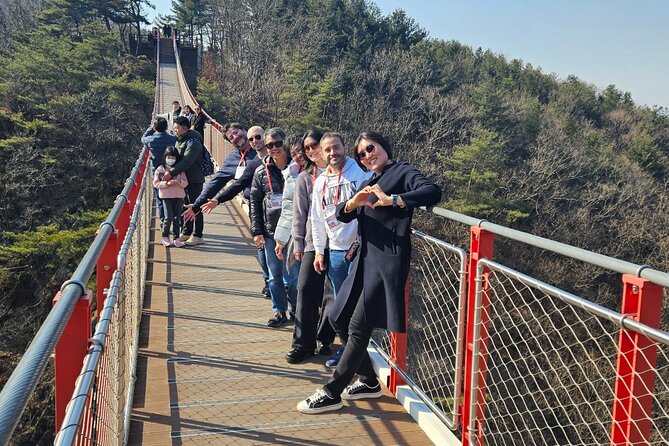
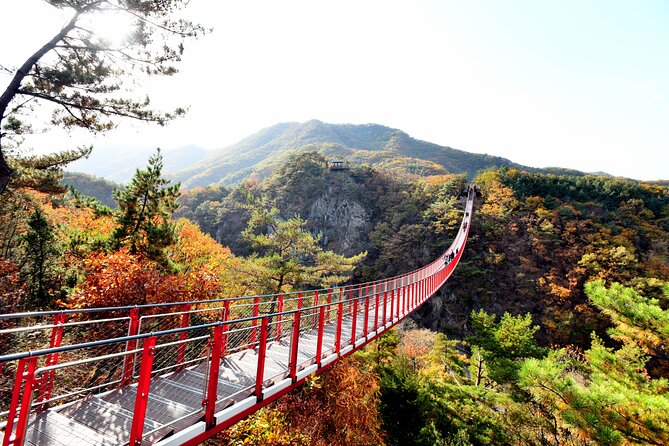
- Gamaksan Chulleong Bridge adds a scenic and moving stop: The 150-meter bridge recalls the Battle of Solma-ri, also called the Battle of Gloster Hill.
- Imjingak gives the tour emotional context: Mangbaedan, the Bridge of Freedom, and Dokgae Bridge connect the border to families separated by war.
- The day is good value at $45: Transport, a professional guide, and admission tickets are included.
- Bring your passport and proper shoes: Flip-flops, slippers, and heels are poor choices for this route.
Why this DMZ day trip is worth your time
A DMZ visit can easily become a quick photo stop with little explanation. This outing works better because it links several places that tell different parts of the Korean conflict.
At Imjingak, you begin with memory and separation. At the tunnel, you confront military planning in a cramped underground passage. At Dora Observatory, the focus shifts to the present border. The final stop at Gamaksan adds a wartime story involving British troops and a steep walk through wooded hills.
I like that shape. You are not simply driven to one lookout, handed a few facts, and sent back to Seoul. The day gives you several ways to think about the border, though the pace is full and the walking is real.
The tour lasts about eight hours and begins and ends in the Myeong-dong area. A commonly used meeting point is near Myeong-dong subway station. You ride in an air-conditioned vehicle, with a guide providing context along the way. Hotel pickup and drop-off are not included, so plan to reach the designated meeting point on your own.
At $45 per person, the price is fair. You receive transport, admission tickets, and a guide, while meals and drinks are extra. There is no formal lunch stop, but Imjingak and other points along the way provide chances to buy snacks and coffee. I would bring water and something filling, since the tunnel and bridge make this more active than a standard sightseeing bus ride.
A few more DMZ trips worth comparing
- Best DMZ Tour Korea from Seoul (Red Suspension Bridge Optional)
★ 5.0 · 41,422 reviews - DMZ Tour: 3rd Tunnel, Option(Suspension Bridge, Boat) from Seoul
★ 5.0 · 21,373 reviews - DMZ tour south Korea from Seoul (NK experience hall, defector)
★ 5.0 · 20,599 reviews
Imjingak Park: beginning with separation and hope
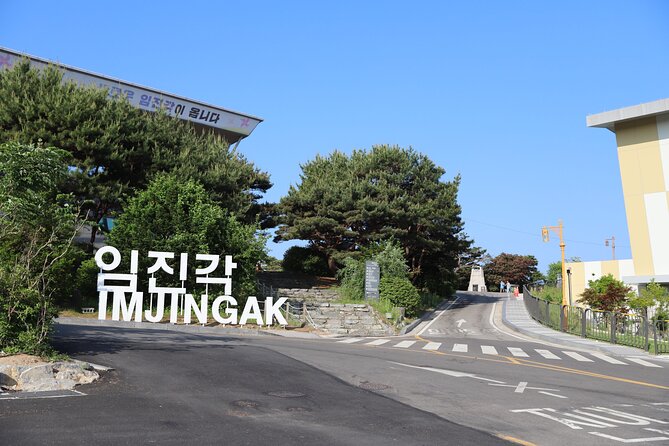
Imjingak Pyeonghoa-Nuri Park sits about seven kilometers from the Military Demarcation Line. The park was created in 1972 with the hope that the Korean Peninsula might one day reunite. That idea gives the opening stop a solemn tone without making it difficult to understand.
You have about 30 minutes here. The three-story Imjingak building is surrounded by monuments, Unification Park, and the North Korea Center. The stop also works as a practical break early in the day, with time for the restroom and, depending on the schedule, a small breakfast or snack.
Mangbaedan is one of the most affecting places nearby. People who left family members in the North visit here on New Year’s Day. The site makes the division personal. It is not only a military line on a map. It is also a barrier between parents, children, siblings, and family traditions.
You also see the Bridge of Freedom and Dokgae Bridge. Dokgae Bridge was destroyed during the Korean War and later rebuilt. These structures help you picture how movement, escape, and military supply routes shaped the region.
I would pay attention here even if the first stop feels less dramatic than the tunnel. Imjingak provides the human setting for everything that follows. Without it, the later military sights can feel like isolated attractions.
The 3rd Tunnel: a demanding walk underground
The 3rd Tunnel was discovered by South Korea in 1978. It extends for 1,635 meters and is about two meters wide and two meters high. The tunnel was believed to be capable of moving approximately 30,000 soldiers through it in a short period.
Only part of the tunnel is open to visitors. The walk includes a steep descent, a low-ceilinged section, and the return climb. One account of the route describes roughly 800 meters down before the passage levels out for about 180 meters. Exact walking conditions can vary, but the basic warning is consistent: this is not an easy stroll.
The tunnel is cool, and you wear a safety helmet. At the lower section, you may need to walk bent forward. At 176 centimeters tall, one person reported repeatedly bumping the helmet against the ceiling, so taller people should expect to stoop.
I consider the physical effort part of the lesson. Underground, the scale feels more serious than it does in a diagram. You are not just hearing that a military force planned an approach beneath the border. You are moving through a narrow route designed for that purpose.
Still, be honest about your fitness. The return climb can be strenuous, and the tunnel may be unsuitable for anyone uncomfortable with steep walking, low ceilings, or confined spaces. Older people and those who are usually sedentary should think carefully before booking.
Wear walking shoes with a good grip. The operator specifically advises against flip-flops, slippers, and high heels. Bring water and keep your hands free where possible. The guide will explain the route, but no guide can remove the physical demands.
Dora Observatory: views shaped by weather
At Dora Observatory, you look toward North Korea and several notable sites, including Gaeseong, Songaksan, the Kim Il-sung statue, and the Geumamgol Cooperation Farm. The stop lasts about 30 minutes.
The view is weather dependent. Haze can reduce what you see, while a clear day may reveal buildings, fields, and distant activity. You might even see people living or working on the other side, though there is no guarantee.
That uncertainty is part of the experience. The observatory is not a guaranteed panorama. You are looking across a heavily controlled border, and visibility changes with weather and distance. Take the guide’s explanation seriously, then use the viewing time to look carefully rather than expecting a dramatic skyline.
This stop also gives the tour a modern focus. Imjingak looks back at families divided by war, while the 3rd Tunnel shows military planning. Dora Observatory asks you to consider the border as it exists now.
I recommend keeping expectations modest. If the air is hazy, the view may be limited. You still gain useful context from the location and the guide, but the visual payoff depends on conditions beyond anyone’s control.
Same base, a completely different sort of day:
- DMZ Insider Tour: 3rd Tunnel, NK Defector Meet & Red Bridge
★ 4.9 · 15,214 reviews - Seoul: DMZ Tour with Optional Suspension Bridge
★ 4.8 · 5,277 reviews - Signature DMZ Tour: Exclusive Defector Talk & Suspension Bridge
★ 5.0 · 4,459 reviews - Thrilling Korean DMZ 3rd Tunnel Tour from Seoul + Red Bridge Rush
★ 5.0 · 3,097 reviews
Gamaksan Chulleong Bridge and the Battle of Solma-ri
The final major stop is Gamaksan Chulleong Bridge, a red suspension bridge in Solma-ri. It measures about 150 meters long and 1.5 meters wide. The route to it includes a climb from the road, with one account describing roughly 400 steps before reaching the bridge.
The bridge is linked to the 1951 Battle of Solma-ri, also called the Battle of Gloster Hill. British troops fought here during the Korean War, and many were killed defending the area. The setting is scenic, but the story keeps the stop from becoming just a pleasant walk and photo opportunity.
I like this combination of scenery and memory. The bridge gives you a change of pace after the enclosed tunnel, yet it carries a serious historical weight. You can appreciate the wooded hills and the view while remembering why this ground matters.
The climb can be tiring, especially after the tunnel. Several stops involve walking, and the total day can add up to more than 20,000 steps for some people. If you have knee, balance, or stamina concerns, take the bridge section slowly and ask your guide about the meeting time and route.
The bridge is 1.5 meters wide, so it may feel narrow when other people are crossing. It is best approached as a scenic and historical stop, not as a place to linger without watching the clock. The tour has a full schedule and must return to Seoul.
Guides make the long day work
The guide can make or break a border tour. You need more than a person who points toward North Korea. You need someone who can explain the Korean War, connect the stops, manage timing, and answer questions without turning the subject into a lecture.
This experience uses several guides, including Winnie, Thomas, Kenny, Grace, Leo, Stella, and Chloe. The strongest pattern in the feedback is praise for their clear explanations, humor, patience, and ability to keep the group moving.
Winnie, also called Mama Winnie, is described as warm, funny, and especially good at making the history understandable. Thomas receives praise for turning difficult material into lively stories and keeping the group on time. Kenny is noted for his humor and friendly manner, while Grace is praised for clear English, taking photographs, and using videos and pictures during the bus ride.
The exact guide depends on the date, so you cannot choose a particular person with certainty. What you can expect is a guide-led experience rather than a silent transfer between attractions. That matters because the DMZ has rules, restricted areas, and a complicated political background that is hard to understand from signs alone.
A full vehicle can hold a large number of people, with the stated maximum reaching 500. Actual group size may vary, but this is not a private tour. You should expect organized movement, fixed meeting times, and less flexibility than you would have with a private guide.
Timing, food, and the return to Seoul
The tour generally takes about eight hours. Some departures leave around 9 a.m. and return near 6 p.m., which is a useful choice if you do not want the very early start offered by some other DMZ outings.
There is no formal meal included. You may find opportunities to buy coffee, snacks, or local treats near the stops, including food around the border area. Still, I would pack a snack and a drink. Waiting until the end of the day to eat is a poor plan when you are walking steep paths and climbing out of a tunnel.
The tour returns you to the Myeong-dong area, but confirm the exact end point for your departure. The stated end point is Myeong-dong subway station, and one person had to take a taxi after being dropped at a station about two kilometers from the original meeting point. That detail is worth keeping in mind if you have evening plans or heavy luggage.
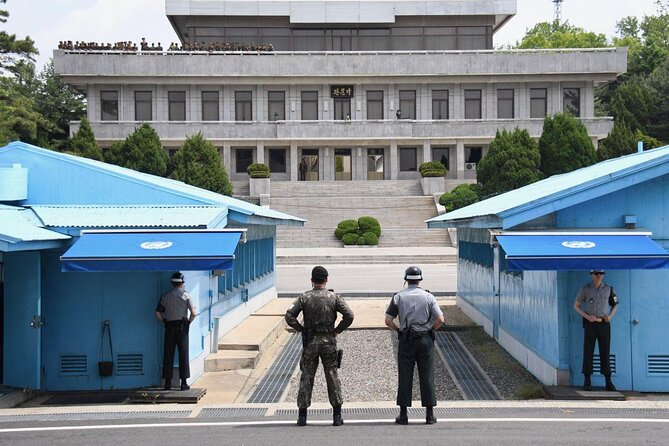
Because the DMZ is operated by the military, the route can be canceled without prior notice. Access rules can change, and the tour does not include the Joint Security Area, also called the JSA. If visiting the JSA is your main goal, this is not the right outing.
You must bring a current, valid passport on the day of travel. Without it, you may not be allowed to enter the controlled areas. The operator also offers free cancellation when you cancel at least 24 hours before the start time, but military-related changes can affect the schedule separately.
Who should book this tour?
I would choose this tour if you want a broad introduction to the DMZ, prefer a guide to explain the setting, and are comfortable with a full day outside central Seoul. It suits solo visitors, couples, and families with older children or teenagers who can manage the walking.
The tour is especially useful if you have only a few days in Seoul. It handles transport and admissions while giving you several major stops in one day. You also avoid shopping-center detours such as ginseng stores or amethyst factories, which keeps the focus on the border and the war.
I would hesitate if you have limited mobility, dislike confined spaces, or want a relaxed day with long breaks. The 3rd Tunnel and Gamaksan climb can be hard, and the schedule leaves little room to slow down. The $45 price is attractive, but the value depends on being ready for the physical work.
Should you book the Seoul DMZ tour?
Book it if you want history you can see and physically feel, not just a distant viewpoint. The 3rd Tunnel is the strongest reason to go, while Imjingak and Mangbaedan give the day its emotional center. Dora Observatory adds present-day border context, and the red suspension bridge brings a moving Korean War story to the final stretch.
Pack your passport, water, snacks, and sturdy shoes. Expect a serious walk, a low ceiling, a weather-sensitive view, and a long day. If that sounds appealing, this is a well-priced and thoughtfully arranged way to understand one of the world’s most closely watched borders.
FAQ
How long does the Seoul DMZ tour take?
The tour lasts approximately eight hours. Some departures run from about 9 a.m. to around 6 p.m., though the exact timing can vary.
Where does the tour start and finish?
The listed meeting area is in Myeong-dong, Jung District, Seoul, near Myeong-dong subway station. The tour also ends in the Myeong-dong area.
Is hotel pickup and drop-off included?
No. Hotel pickup and drop-off are not included. Pickup is arranged according to the designated meeting point selected when booking.
Do I need to bring my passport?
Yes. You must bring a current, valid passport on the day of the tour.
How difficult is the 3rd Tunnel?
The 3rd Tunnel requires a steep descent and climb. Parts of it have a ceiling around two meters high, and the lower section requires stooping. A moderate level of physical fitness is recommended.
Is the Gamaksan suspension bridge difficult to reach?
The walk to the bridge includes a steep climb from the road. One account describes about 400 steps, so you should wear comfortable walking shoes and allow for a physically active visit.
Is food included?
No. Meals and beverages are not included. Bring snacks and drinks, since the tour does not have a formal lunch break.
Does this tour visit the JSA?
No. A visit to the Joint Security Area is not included.
Newest DMZ trips on the site
- Seoul: DMZ & Live Talk with North Korean Defector★ 4.9 · 50 reviews
- Seoul: DMZ Tour with Japanese-Speaking Guide★ 5.0 · 28 reviews
- Seoul: DMZ 2nd Tunnel and Suspension Bridge Tour★ 4.8 · 56 reviews
- Seoul: DMZ, 3rd Tunnel, Odusan or Suspension Private Tour★ 5.0 · 4 reviews
- Seoul: Closest DMZ Observatory with North Korea View (1.4km)★ 4.9 · 10 reviews
- From Seoul: Private DMZ and Odusan Observatory Full-Day Tour★ 4.9 · 34 reviews
- Private DMZ SPY Tour from Incheon Airport★ 4.6 · 7 reviews
- From Seoul: DMZ Tour and North Korea Experience Hall★ 4.7 · 34 reviews
DMZ Tours, compared.
Best DMZ Tour Korea from Seoul (Red Suspension Bridge Optional)
Read our review →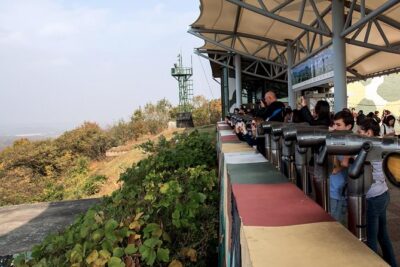
DMZ Tour: 3rd Tunnel, Option(Suspension Bridge, Boat) from Seoul
Read our review →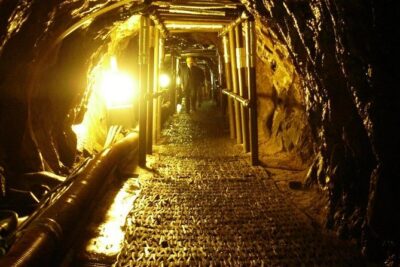
DMZ tour south Korea from Seoul (NK experience hall, defector)
Read our review →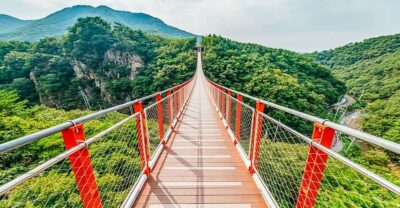
DMZ Insider Tour: 3rd Tunnel, NK Defector Meet & Red Bridge
Read our review →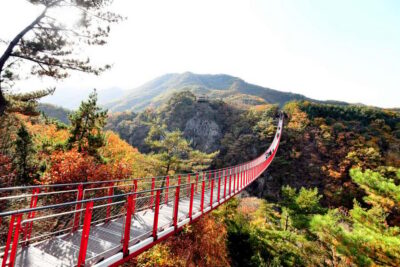

Signature DMZ Tour: Exclusive Defector Talk & Suspension Bridge
Read our review →
Thrilling Korean DMZ 3rd Tunnel Tour from Seoul + Red Bridge Rush
Read our review →
DMZ Past and Present: Korean Demilitarized Zone Tour from Seoul
Read our review →Browse the lists this tour appears in