
Reviewed · SEOUL TOURS
Seoul Fun Food Tour: 12 different food tastings
Gwangjang Market is the star here. In three hours, you move from old market stalls to sit-down Korean meals, a make-your-own ramen shop, a city stream, and the cafe lanes of Ikseon-dong. The food count is listed as 12 tastings, though the portions and variety can add up to something closer to several small meals.
I like the way the tour joins classic Korean dishes with local context, rather than treating food as a checklist. I also like the small group format, with up to eight people advertised for a personal outing, although the additional tour information allows as many as 10. Guides such as Suha, Soo-ha, and June are praised for clear English, warm hosting, and patient explanations.
The main drawback is simple: you need to arrive hungry. Past menus have included far more than 12 bites, with pancakes, soups, rice dishes, banchan, fish cakes, sweets, drinks, and ramen. Walking and outdoor time can also be adjusted in winter or poor weather, so this is not a fully indoor plan.
Key points to know before booking
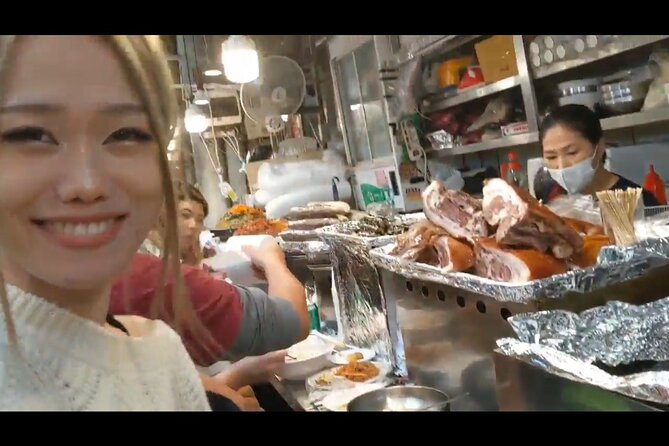
- Gwangjang Market comes first: Spend about an hour sampling food in one of Seoul’s oldest and largest traditional markets.
- Expect more than 12 bites: Portions may feel closer to small meals, so plan very little food before or after the tour.
- Ramen is hands-on: At a 24-hour Jongno shop, you choose and prepare your own noodles from a large selection.
- The route changes scenery: Cheonggyecheon Stream adds a short, peaceful walk between the market and the food stops.
- Ikseon-dong ends the outing: Visit a converted hanok neighborhood for a cafe drink and more atmosphere.
- The price includes the food: At $88 per person, the value depends on how much you eat, how much guidance you want, and whether you would find these places alone.
Why this Seoul food tour works
I see this experience as an easy way to get your bearings in central Seoul through food. Instead of spending your first days guessing at menus, ordering one dish at a time, and wondering what you missed, you follow a local guide through several kinds of Korean eating places.
The route also gives you more than market snacks. Gwangjang Market provides the traditional setting, Jongno adds a playful modern stop, and Ikseon-dong supplies the cafe and neighborhood atmosphere. The short walk beside Cheonggyecheon Stream ties these areas together without turning the outing into a long sightseeing march.
The strongest feature is the guide. Suha is repeatedly praised for her energy, fluent English, care with the group, and ability to explain both the food and Korean customs. Soo-ha is also described as engaging and well prepared, while June is praised for explaining the stories behind the dishes. The guide matters here because many Korean foods are best understood through texture, preparation, etiquette, and local habits, not just their English names.
More Food Tours in Seoul:
- Seoul Street Food Market Tour
★ 5.0 · 1,226 reviews - Seoul: Night Market Food Tour with Local Guide
★ 4.9 · 943 reviews - Downtown Seoul Guided Food & Market Tour with 8+ Local Tastings
★ 5.0 · 580 reviews
Gwangjang Market: an hour of classic Korean food
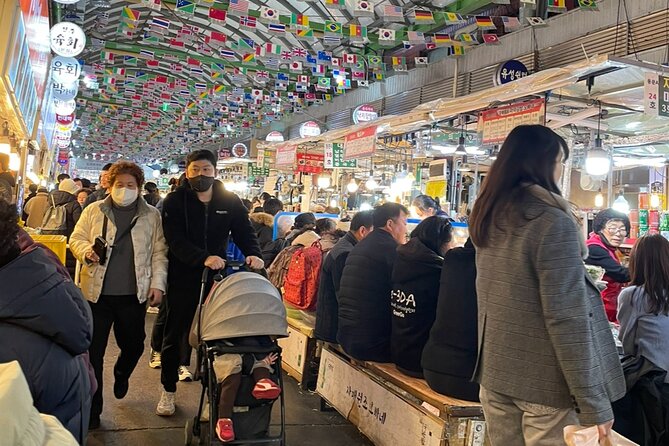
The tour begins at Jinju Yukhoe 3rd Branch, at 403 Dongho-ro in Seoul’s Jongno District. From there, the guide takes you into Gwangjang Market for about an hour of tastings.
This is the part I would value most if you are new to Korean food. A market can be exciting, but it can also be hard to read. Stalls are busy, menus may not be easy to understand, and portions are often larger than you expect. With a guide, you can try several dishes without committing to a full serving of each one.
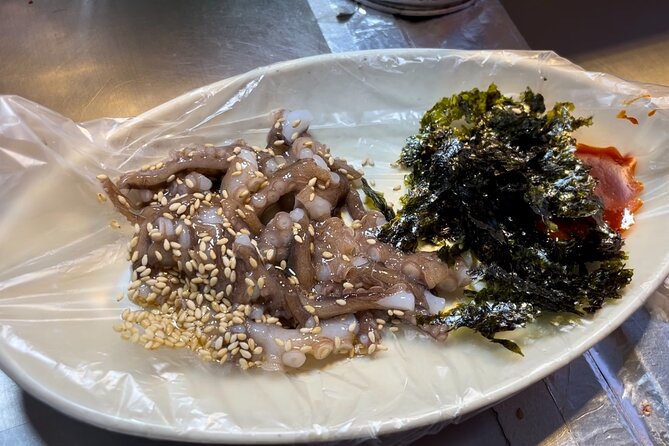
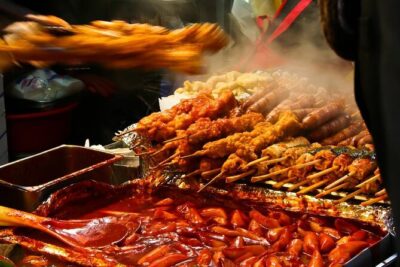
The exact menu can change with the season and the day. The food described by past participants includes tteokbokki, soybean pancakes, fish cakes, bulgogi, beef and vegetable soup, banchan, fluffy egg soup, and other market favorites. One menu even included live octopus tentacles, still moving after preparation. That is optional according to the account, so you can decide for yourself rather than being pushed into it.
You may also eat at several sit-down restaurants rather than standing at a stall. This is a useful detail for anyone who wants time to talk, listen, and eat without balancing food in a crowded aisle. The market remains the setting, but the meal can feel more comfortable than a quick street-food stop.
I would not expect each tour to serve exactly the same dishes. One group reported about 17 foods, another about 19 foods and drinks, while the official description promises 12 tastings. Think of 12 as the baseline, not a strict ceiling. Seasonal changes are part of the appeal, but they also mean you should not book this expecting a fixed menu.
Cheonggyecheon Stream: a short change of pace
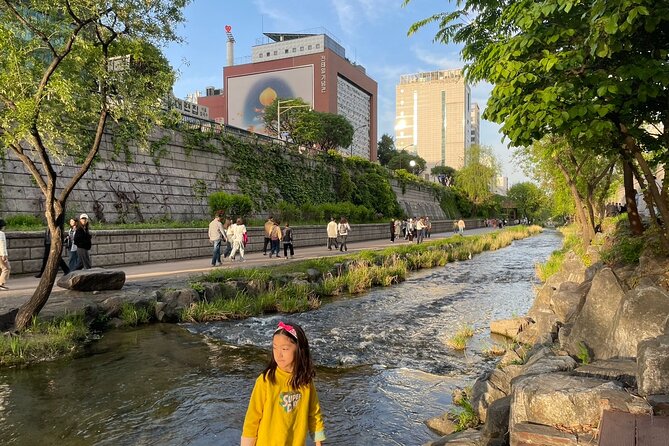
After the market, the route includes about 20 minutes near Cheonggyecheon Stream. This gives you a break from eating and a chance to see a quieter side of central Seoul.
The walk is not a major sightseeing stop, but it helps the tour breathe. You may cross the stream using stepping stones and find good photo spots along the water. The guide can also use this time to explain the area and answer questions about Korean life and language.
Weather matters here. The walk may be adjusted during winter, and the tour requires good weather. In heavy rain, the guide may move quickly between sheltered spots or alter the route. Wear shoes you can walk in and bring weather protection, since this section is outdoors and the tour continues through several neighborhoods.
The Jongno ramen shop: choose, cook, and eat
The next stop is a 24-hour convenience-style ramen store in Jongno, where you make your own noodles. The visit lasts about 40 minutes.
This is a fun contrast to the market food. Rather than simply receiving another tasting, you choose your flavor and prepare the ramen yourself. The shop reportedly offers more than 70 kinds, so the guide’s help is useful if the selection feels excessive.
This stop also shows a familiar Korean food habit: convenience-store and instant ramen culture treated with surprising care and variety. You get a small hands-on activity, not just another plate placed in front of you. It is one of the more memorable parts for families, curious eaters, and anyone who likes trying unusual flavors.
The tradeoff is that ramen can be filling. By this point, you may already have eaten several savory dishes, so the sensible move is to listen to the guide about portion size and pace yourself. The tour is designed around sharing and tasting, but you should still expect to leave full.
Same base, a completely different sort of day:
- Seoul: Gyeongbok Palace, Bukchon Village, and Gwangjang Tour
★ 4.9 · 2,321 reviews - Full Day Tour In The Soop BTS Ver in PyeongChang Filming Location
★ 5.0 · 1,709 reviews - Best Seoul City Tour (Gyeongbokgung Palace,Insadong,Namsan Tower)
★ 5.0 · 1,647 reviews - Small-Group Royal Palace and Seoul City Tour (hotel pick-up)
★ 5.0 · 1,474 reviews
Ikseon-dong: hanok lanes and a cafe finish
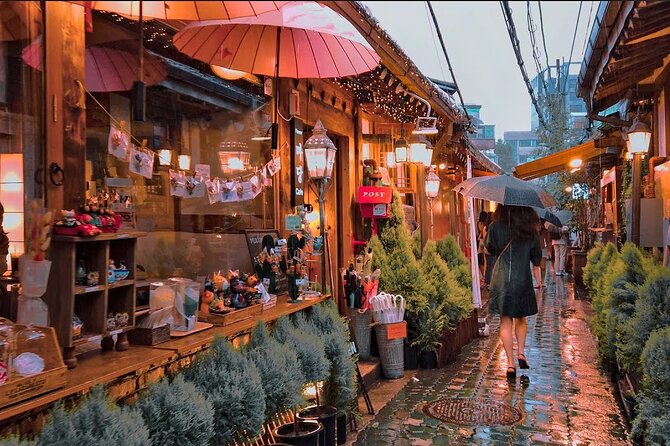
The final major stop is Ikseon-dong, a traditional hanok neighborhood that has been converted into cafes and restaurants. The area gives the tour a different look from Gwangjang Market and Jongno.
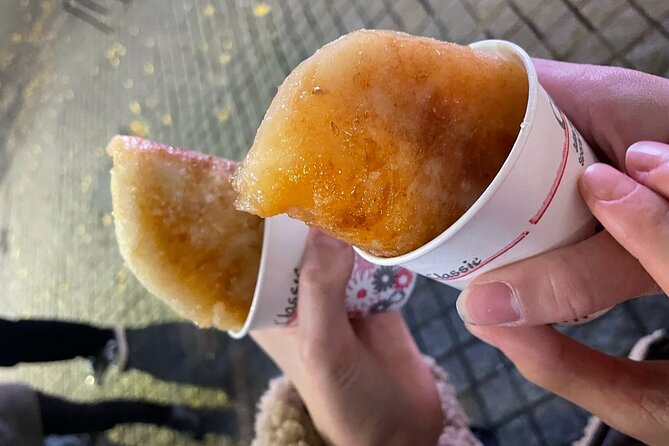
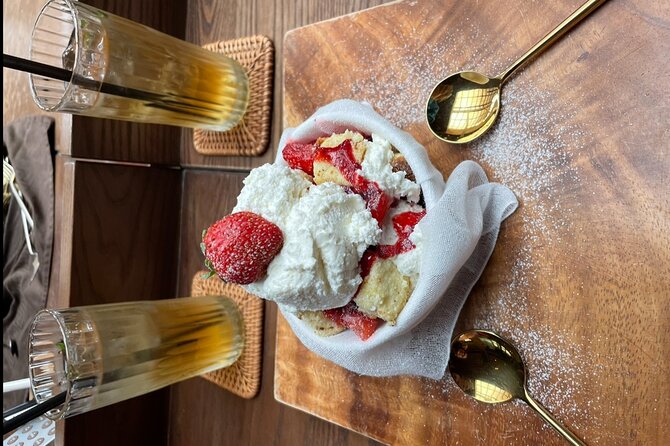
You finish with tea or coffee at a cafe, along with a dessert stop on some outings. One particularly generous menu included shaved ice with fresh fruit and red beans, ice cream, and chocolate ice cream. Since the tour promises snacks and a cafe drink but not a fixed dessert menu, you should treat that as a possible highlight rather than a guarantee.
Ikseon-dong is a good ending because it slows the pace. You can sit down, talk with the group, and ask the guide about dishes you have just tried. The neighborhood also gives you time to take photos and notice how older Korean architecture has been adapted for modern eating and shopping.
The area is popular, so it may feel busier than a quiet historic quarter. Still, the contrast between preserved hanok buildings and newer cafes makes this a worthwhile final stop, especially if you would not think to pair a food walk with neighborhood exploring.
What you actually eat, and how much
The phrase 12 different food tastings understates the possible quantity. The tour includes food at several market restaurants, ramen, snacks, and a drink. Past menus have included:
- Tteokbokki and fish cakes
- Soybean pancakes
- Bulgogi
- Beef and vegetable soup
- Banchan
- Egg soup
- Instant ramen
- Shaved ice, fruit, red beans, and ice cream
- Bottled water and other small snacks
You should not assume that every item appears on every departure. The guide adjusts the menu, and one person specifically appreciated that Suha kept the food current with the season.
I would schedule this tour when you can keep the rest of your day flexible. Several people found they did not need another meal afterward. If you want to sample everything, skip a large breakfast and avoid booking a major dinner immediately afterward.
Vegetarian, allergy, and dietary questions should be raised before booking, since the provided details do not state what substitutions are available. The same applies to adventurous dishes such as octopus. The guide may explain what you are eating, but the information does not promise a particular dietary program.
Is $88 a fair price?
At $88 per person, this is not the cheapest way to eat in Seoul. You could spend much less by choosing one or two market dishes yourself. The price makes more sense when you count the guide’s time, the number of tastings, the English explanations, the ramen activity, the cafe visit, and the planning involved in moving between several stops.
The food also appears generous enough to replace several meals. If you eat at least 12 items and receive larger shared portions, the cost becomes easier to justify. You are paying for access and organization as much as for the food itself.
I would consider it good value for a first visit to Seoul, especially if you feel uncertain about Korean menus or want a social evening without planning every stop. It is less compelling for experienced Seoul visitors who already know Gwangjang Market and are comfortable ordering independently.
Public transportation costs an additional ₩2,000 per person. The meeting point is near public transportation, and the tour ends at Jongno 3-ga Station. The mobile ticket is convenient, but check the starting address carefully because the group begins at a specific restaurant branch.
Group size, pace, and guide style
The experience is advertised as a small group of up to eight people, while the additional information gives a maximum of 10. Either way, it is much smaller than a large coach outing.
That size matters in a market. A good guide can keep the group together, secure seats, explain dishes before they disappear, and make sure everyone gets a chance to ask questions. Suha is praised for doing exactly that, including helping quieter people take part.
The pace appears active but manageable. You walk between stops, eat several times, and spend time sitting at restaurants or cafes. It is suitable for most people who can participate in a normal three-hour city outing, though the supplied information does not give a specific walking distance or detailed accessibility notes.
The guide also teaches Korean words and pronunciation along the way. That is a small bonus, but a useful one. Knowing how to say the name of a dish can make later ordering less intimidating.
Who should book this experience?
I would recommend it to first-time visitors who want a fast, friendly introduction to Korean food. It also suits solo visitors and couples who would like company for an evening meal, families with older children, and anyone who enjoys trying many things instead of ordering one large dish.
It is especially useful if you are nervous about eating at a traditional market. You do not need to identify every food yourself or figure out which stall is worth choosing. The guide handles the route and gives you enough background to understand what you are tasting.
You may want to skip it if you prefer a slow, private meal, have strict dietary needs, or dislike eating a large amount in a short period. It is also not ideal if you have already planned a major dinner right afterward.
The tour offers free cancellation if you cancel at least 24 hours before the start time. Changes made within 24 hours are not accepted for a refund. Poor weather or failure to meet the minimum group size can lead to a different date, another experience, or a full refund.
Should you book the Seoul food tour?
Book it if you want a generous first taste of Seoul, with a guide who can explain the food, language, and customs while leading you through several central neighborhoods. The combination of Gwangjang Market, homemade ramen, Cheonggyecheon Stream, and Ikseon-dong gives you more range than a simple street-food stop.
My practical advice is to book early if the timing suits your plans, arrive very hungry, wear comfortable shoes, and keep your evening free of another large meal. If Suha is leading your departure, you can expect an especially personal style based on the repeated praise for her patience, humor, and care with the group. Even with another guide, the format offers strong value for anyone who wants to eat broadly without having to solve Seoul’s food scene alone.
FAQ
How long does the Seoul food tour last?
The tour lasts about three hours.
How many foods are included?
The tour includes 12 different food tastings. Some outings have included more than 12 foods and drinks, depending on the menu and season.
Where does the tour start?
It starts at Jinju Yukhoe 3rd Branch, 403 Dongho-ro, Jongno District, Seoul.
Where does the tour end?
The tour ends at Jongno 3-ga Station in Jongno District.
Is transportation included?
Public transportation is not included. The listed transportation cost is ₩2,000 per person.
How large is the group?
The tour is described as a small group of up to eight people, while the additional information lists a maximum of 10 travelers.
Is the tour offered in English?
Yes. The experience includes a friendly, English-speaking local Korean guide.
Can I cancel for a full refund?
Yes, if you cancel at least 24 hours before the experience start time. Cancellations within 24 hours are not refunded. If poor weather or insufficient numbers cause the tour to be canceled, you will be offered another date or experience, or a full refund.
Newest Seoul trips on the site
- Seoul : Must-see & Hidden Gems Private Walking Tour★ 4.9 · 8 reviews
- Seoul: Lotte World Aquarium Ticket★ 4.5 · 10 reviews
- Seoul: Max Out Must Visit City Highlights Panoramic Day Tour★ 5.0 · 7 reviews
- Seoul: K-Fashion Shopping Tour with a Professional Stylist★ 5.0 · 5 reviews
- From Seoul: Korea Spring Cherry Blossom Day Tour★ 4.8 · 6 reviews
- Seoul: Guided Street Food Tour at Namdaemun Market★ 5.0 · 10 reviews
- Seoul: Jisan Forest Winter Ski Day Tour with Basic Lesson★ 4.4 · 6 reviews
- Jisan Forest Resort: Ski Full-Day Tour or Shuttle from Seoul★ 5.0 · 4 reviews
Seoul Tours, compared.
Gyeongbok Palace, Bukchon Village, and Gwangjang Tour
Read our review →
Full Day Tour In The Soop BTS Ver in PyeongChang Filming Location
Read our review →
Best Seoul City Tour (Gyeongbokgung Palace,Insadong,Namsan Tower)
Read our review →
Small-Group Royal Palace and Seoul City Tour (hotel pick-up)
Read our review →
Seoul City Sightseeing Tour Including Gyeongbokgung Palace, N Seoul Tower, and Namsangol Hanok Village
Read our review →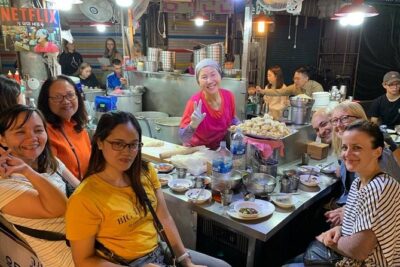
Gyeongbok Palace, Bukchon Village, and Gwangjang Tour
Read our review →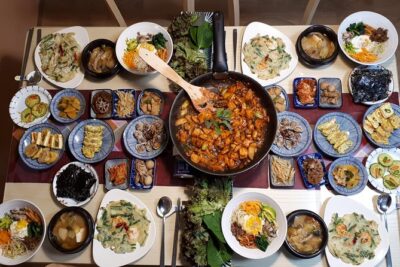
Local Home Korean Cooking Class & Market Adventure in Seoul
Read our review →Browse the lists this tour appears in