
Reviewed · SEOUL TOURS
Small-Group Seoul Tour with Gyeongbokgung Palace (hotel pick-up)
Seoul’s royal heart comes into focus quickly on this 3.5-hour morning tour. You move from the city-center calm of Jogyesa Temple to Gwanghwamun Gate, where colorful guards stage their changing ceremony, then into Gyeongbokgung Palace and the National Folk Museum. It is a compact way to meet several major sights before lunch.
I like the hotel pickup and the small maximum of 15 people. I also like the guides’ personal touch: Sookhee, Young, Junie, Brian, and others are praised for clear English, strong history explanations, patience with family groups, and help with photographs. The main drawback is the Korean ginseng stop, which can feel more like a sales visit than a museum.
The palace grounds require plenty of walking over gravel, cobblestones, and steps. In hot, cold, or wet weather, the pace may change, and the guard ceremony can be canceled by rain. Check the day carefully: Gyeongbokgung is closed on Tuesdays, when the tour uses Changdeokgung and its Secret Garden instead.
Key points to know before booking
- See Seoul’s royal highlights in one morning: Jogyesa Temple, Gwanghwamun Gate, Gyeongbokgung Palace, the National Folk Museum, and Blue House Square fit into roughly three and a half hours.
- The guard ceremony is timed into the route: Your guide positions the group near Gwanghwamun Gate, but rain or other operating conditions can cancel it.
- Guides make the difference: Sookhee, Young, Junie, Brian, and other guides are praised for history, English communication, family care, and taking photographs.
- Tuesday uses a different palace: Changdeokgung and the Secret Garden replace Gyeongbokgung, and the royal guard ceremony is not available that day.
- Expect a ginseng sales stop: You can taste ginseng tea, but the visit may include pressure to buy costly products.
- You finish in central Seoul: Drop-off is listed at City Hall or Insadong, with the tour commonly ending in Insadong.
A fast, useful introduction to Seoul’s old center
This tour is designed for you if Seoul is new and your time is tight. It does not attempt to cover the whole city. Instead, it gives you a focused morning around Jongno and Gwanghwamun, two areas where Buddhist worship, royal government, museums, and modern Korean politics sit close together.
The route begins with pickup from centrally located hotels in a climate-controlled vehicle. The stated start time is 9 a.m. Some booking information also gives a meeting point at 55 Ujeongguk-ro, so confirm the exact pickup arrangement before the morning of your tour. The company has contacted people the night before with pickup details, and several guides have been praised for arriving promptly.
The vehicle saves you from sorting out Seoul’s transport system at the start of the day. It also helps link sights that are easy to recognize on a map but less simple to combine efficiently on foot. Group size is capped at 15, although on quieter dates the outing may feel almost private.
More Palace Tours in Seoul:
- Seoul: Gyeongbok Palace, Bukchon Village, and Gwangjang Tour
★ 4.9 · 2,321 reviews - Best Seoul City Tour (Gyeongbokgung Palace,Insadong,Namsan Tower)
★ 5.0 · 1,647 reviews - Small-Group Royal Palace and Seoul City Tour (hotel pick-up)
★ 5.0 · 1,474 reviews
Jogyesa Temple brings Buddhism into the city
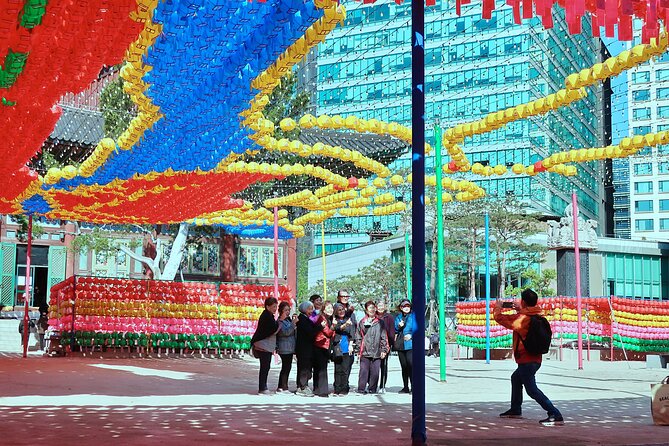
Jogyesa Temple is the first stop, with about 30 minutes set aside. Its location near busy Jongno is part of the appeal. You leave commercial streets and enter a working Buddhist compound without traveling far from the center.
The guide explains Zen Buddhism in Korea and points out key parts of the colorful grounds. This is not a long religious tour, but it gives you a useful frame for understanding Korean culture before the palace portion begins. The temple is active, and access inside can depend on worship times. If a service is taking place, you may see more from the courtyard than from the interior.
One practical point matters here: the temple portion can be partly self-guided. Listen closely when your guide introduces the site, then use your short free moments to look at the details around you. Thirty minutes passes quickly, so this is a place for a first impression rather than a slow study.
Blue House Square and the road past Cheong Wa Dae
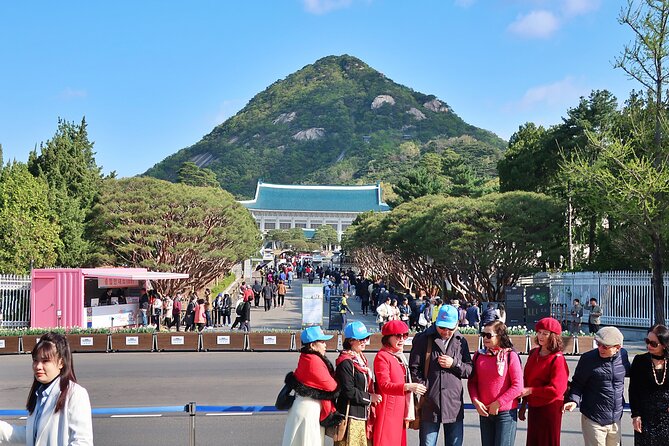
The route then passes Blue House Square for photographs of Cheong Wa Dae, the former presidential office and residence. The blue-tiled roof gives the building its familiar name, Blue House. You do not go inside, but the stop adds a modern political layer to a morning otherwise centered on older Seoul.
Mt. Bukak forms the background for the photographs. The stop is brief, so think of it as a view and orientation point rather than a formal visit. Your guide can explain the building’s role and help place the old palace district within present-day Seoul.
The route passes along the front road, so do not book this tour expecting an interior tour of Cheong Wa Dae. That distinction is easy to miss when planning from a list of Seoul attractions.
Gwanghwamun Gate and the changing of the guards
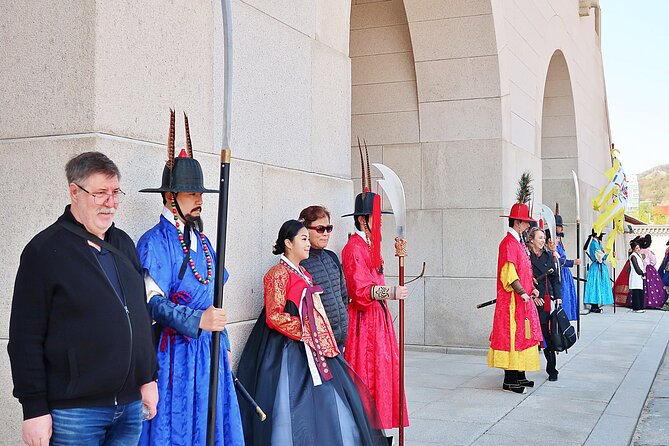
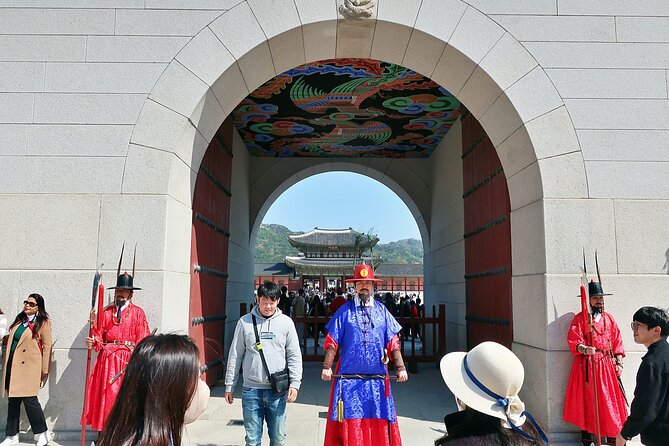
At Gwanghwamun Gate, allow about 20 minutes for the royal guard changing ceremony. This is one of the morning’s most visual moments, with traditional uniforms, ceremonial movement, and a strong setting in front of the palace entrance. Keep your camera ready, as the timing is fixed and the group will not wait indefinitely.
A good guide does more than point toward the ceremony. Sookhee was praised for positioning the group well, while other guides have explained the meaning and purpose of the display. That context turns a colorful performance into a short lesson about royal security and court ceremony.
The ceremony is not guaranteed. Rain has canceled it, and the Tuesday palace closure means there is no Gyeongbokgung guard ceremony that day. If this is the main reason you are booking, avoid Tuesday and keep an eye on the weather. Even when the ceremony is canceled, the gate remains an important entrance to Seoul’s royal district.
A few more Seoul trips worth comparing
- Full Day Tour In The Soop BTS Ver in PyeongChang Filming Location
★ 5.0 · 1,709 reviews - Seoul City Sightseeing Tour Including Gyeongbokgung Palace, N Seoul Tower, and Namsangol Hanok Village
★ 5.0 · 1,423 reviews - Seoul Street Food Market Tour
★ 5.0 · 1,226 reviews - Seoul: Gyeongbok Palace, Bukchon Village, and Gwangjang Tour
★ 5.0 · 1,044 reviews
Gyeongbokgung Palace needs more than a quick photograph
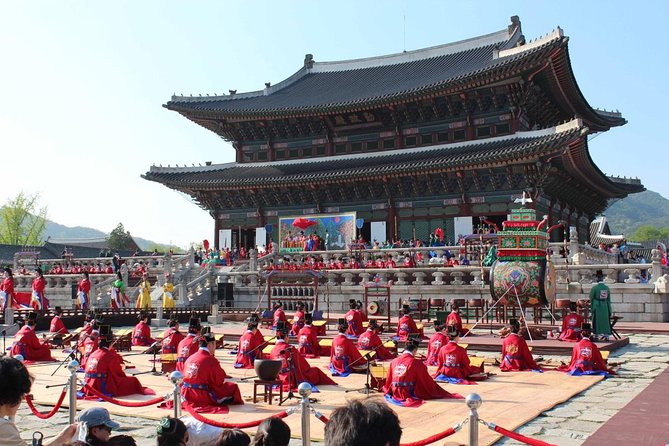
Gyeongbokgung Palace receives about an hour, including admission. It was the main royal palace of the Joseon period, and the tour uses its courtyards and buildings to explain how royal families and court attendants lived and worked.
I like having a guide here because the scale can otherwise be confusing. The palace is large, and a short visit can become a walk from one impressive roof to another without much understanding of what you are seeing. Your guide gives the buildings a human purpose, explains court life, and connects the ceremonial spaces to the people who used them.
Do not expect a quiet, private palace experience. The grounds can be crowded, especially at popular times, and the visit is paced to fit several stops into one morning. Some people have felt rushed through the palace, particularly in hot weather. If you want long periods for architecture photographs or a detailed look at every courtyard, book a longer palace visit separately.
The ground is not effortless. Expect gravel, cobblestones, steps, and a fair amount of walking. The tour requires moderate physical fitness and is not recommended for people with back problems, heart complaints, or other serious medical conditions. On a hot day, guides such as Junie and Lua have adjusted the pace, found shade, and helped families stay comfortable. That care is useful, but it cannot remove the basic demands of the site.
The National Folk Museum adds daily life to royal history
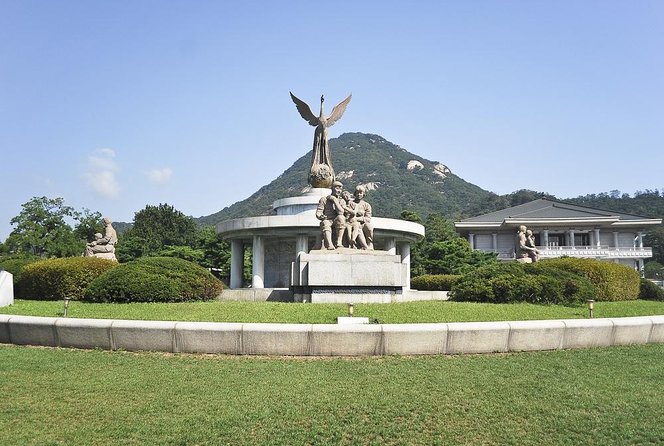
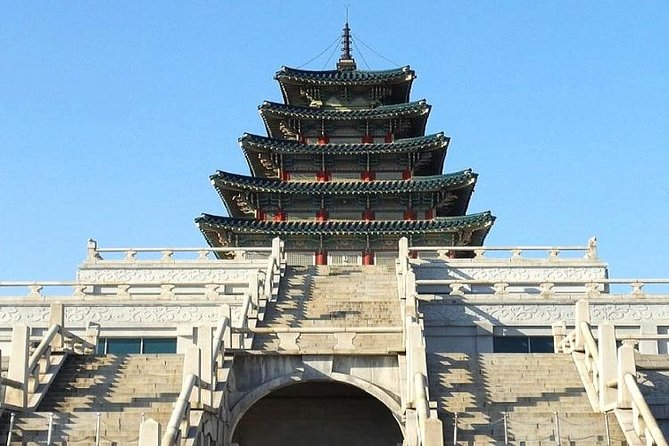
Inside the palace compound, the National Folk Museum of Korea receives about 20 minutes. Its focus is daily life from the Goryeo dynasty, which lasted from 918 to 1392, through the Joseon dynasty, from 1392 to 1910.
This is an important contrast with Gyeongbokgung. The palace shows the world of kings, queens, officials, and court attendants. The folk museum shifts attention toward ordinary routines and social customs. Displays help explain how people lived, worked, and organized family life across earlier periods.
Twenty minutes is enough for an introduction, not a full museum visit. You may wish for more time to explore independently, especially if historical objects and daily customs interest you. The schedule favors breadth, so the guide may select a few displays and keep the group moving.
The ginseng center is the tour’s weak link
Before drop-off, the group stops at the Cheongha Korea Ginseng Museum, described as a government-approved Korean ginseng center. You can taste ginseng tea and see products made from one of Korea’s best-known traditional exports.
This stop is also the clearest point of caution. Some guides explain the products politely, but the visit can turn into a strong sales pitch for expensive ginseng. The stop is listed as about 30 minutes, yet some outings have spent much longer there. If you do not want to buy anything, decide that in advance and say so clearly.
The ginseng center is not a deal-breaker for everyone. You may enjoy learning why ginseng matters in Korea or sampling the tea. But if your priority is cultural sightseeing, this time would be better spent at the palace or folk museum. The stop is part of the experience, so do not assume you can skip it.
What the $39.73 price really covers
At $39.73 per person, the price is sensible for a short introduction to Seoul. You receive a professional guide, central hotel pickup, transportation, bottled water, admission fees, and several major sights. Gyeongbokgung admission alone is not the only cost being covered, since the price also includes the guide and vehicle.
The value is strongest if you want orientation rather than an exhaustive palace study. A first-time visitor can see a Buddhist temple, a presidential landmark, a royal gate, a guard ceremony, a palace, and a museum without spending a full day arranging tickets and transport.
The value is weaker if the ginseng visit takes too much time or if you already know Seoul’s royal district well. You are paying for convenience and explanation, not for a slow, specialized history tour. Food is not included, and hotel drop-off is not included either.
Weather, clothing, and practical timing
The tour runs in the morning and lasts approximately three and a half hours. Winter can be very cold in open palace courtyards, while summer heat can make the walking tiring. Dress for the forecast, and use comfortable shoes with good support.
Bring water even though bottled water is included. A hat or rain protection can help because much of the experience takes place outdoors. The guard ceremony may be canceled during rain, and heavy weather can make palace walking less pleasant.
The tour ends in central Seoul, with City Hall or Insadong listed as possible drop-off points. Other details specify Insadong for the final drop-off. This is convenient for lunch, shopping, and continued sightseeing, but it is not a return to your hotel. If you have an afternoon booking, allow extra time after noon, especially if traffic or group logistics slow the finish.
Who will get the most from this half-day route
I would choose this tour for a first morning in Seoul, especially if you want a guide to explain what you are seeing rather than simply collect photographs. Solo visitors can benefit from the pickup and small-group setting, while families may appreciate guides who help with photos and adjust the pace.
It also suits people with a limited schedule. The route gives you a useful foundation before you explore Insadong, City Hall, markets, or another part of the city on your own.
I would hesitate if you need step-free sightseeing, dislike sales stops, or want an in-depth palace visit. The grounds are uneven, the museum time is short, and the ginseng center can distract from the stronger cultural stops. You should also avoid Tuesday if Gyeongbokgung and the guard ceremony are essential.
Should you book it?
Book it if you want a practical, affordable introduction to Seoul’s central sights, with hotel pickup and a guide who can supply the historical connections. The strongest parts are Jogyesa Temple, the guard ceremony when it operates, and the explanation of Gyeongbokgung Palace.
Before paying, check two things: the day of the week and your tolerance for the ginseng stop. Choose a non-Tuesday date for Gyeongbokgung and the royal ceremony. If you accept the sales visit as part of the price of a compact city tour, this is a useful first look at Seoul. If not, seek a palace-only tour with more time inside the grounds.
FAQ
How long does the Seoul tour last?
The tour lasts approximately 3 hours and 30 minutes, beginning at 9 a.m.
What sights are included?
The route includes Jogyesa Temple, Blue House Square, Gwanghwamun Gate, Gyeongbokgung Palace, the National Folk Museum of Korea, and the Cheongha Korea Ginseng Museum.
Is hotel pickup included?
Yes. Pickup is offered from centrally located hotels in Seoul.
Where does the tour end?
Drop-off is listed at City Hall or Insadong. The tour details also specify Insadong as the final drop-off location, so confirm the exact point when booking.
Is the Gyeongbokgung Palace entrance fee included?
Yes. Palace admission and other fees and taxes are included.
Does the tour include food?
No. Food is not included.
Does the tour return me to my hotel?
No. Hotel drop-off is not included. You are taken to a central drop-off location.
What happens on Tuesdays?
Gyeongbokgung Palace is closed on Tuesdays. The tour visits Changdeokgung Palace and the Secret Garden instead, and the royal guard ceremony is not available.
Is the changing of the guards guaranteed?
No. The ceremony can be canceled, including during rainy weather. It is also unavailable on Tuesday because the regular palace route changes.
How many people can join the group?
The tour has a maximum of 15 participants. It may be canceled if fewer than four people are booked.
Is the tour suitable for people with limited mobility?
The tour requires moderate physical fitness and includes walking over cobblestones, gravel, and steps. It is not recommended for people with back problems, heart complaints, or other serious medical conditions.
Newest Seoul trips on the site
- Seoul : Must-see & Hidden Gems Private Walking Tour★ 4.9 · 8 reviews
- Seoul: Lotte World Aquarium Ticket★ 4.5 · 10 reviews
- Seoul: Max Out Must Visit City Highlights Panoramic Day Tour★ 5.0 · 7 reviews
- Seoul: K-Fashion Shopping Tour with a Professional Stylist★ 5.0 · 5 reviews
- From Seoul: Korea Spring Cherry Blossom Day Tour★ 4.8 · 6 reviews
- Seoul: Guided Street Food Tour at Namdaemun Market★ 5.0 · 10 reviews
- Seoul: Jisan Forest Winter Ski Day Tour with Basic Lesson★ 4.4 · 6 reviews
- Jisan Forest Resort: Ski Full-Day Tour or Shuttle from Seoul★ 5.0 · 4 reviews
Seoul Tours, compared.
Gyeongbok Palace, Bukchon Village, and Gwangjang Tour
Read our review →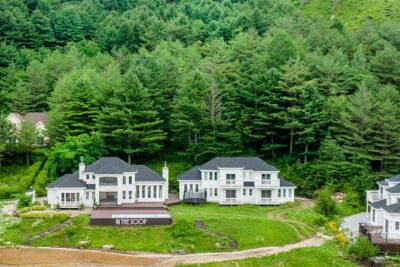
Full Day Tour In The Soop BTS Ver in PyeongChang Filming Location
Read our review →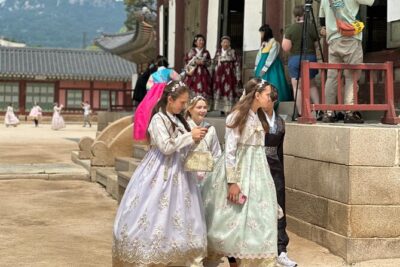
Best Seoul City Tour (Gyeongbokgung Palace,Insadong,Namsan Tower)
Read our review →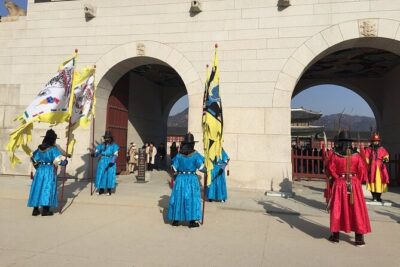
Small-Group Royal Palace and Seoul City Tour (hotel pick-up)
Read our review →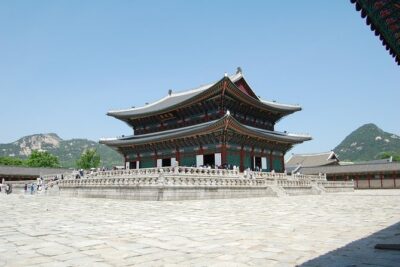
Seoul City Sightseeing Tour Including Gyeongbokgung Palace, N Seoul Tower, and Namsangol Hanok Village
Read our review →
Gyeongbok Palace, Bukchon Village, and Gwangjang Tour
Read our review →
Local Home Korean Cooking Class & Market Adventure in Seoul
Read our review →Browse the lists this tour appears in