
Reviewed · BUSAN TOURS
Busan: Haeundae 100-Minute Walking Tour
Haeundae is easy to mistake for a beach-and-skyscraper stop, but this walking tour shows how a fishing village became one of South Korea’s best-known places. Guide Kim Ingyu connects the old railway, a seaside hot spring, the Korean War, and Busan’s rapid growth into one clear story. I like the small historical details and the way the walk links ordinary streets to major events.
I also like the relaxed pace, useful local suggestions, and the chance to ask questions as you go. The main consideration is the route’s timing: it is described as both 90 minutes and 100 minutes, and it covers about 2 kilometers with a hill roughly 50 meters high. That is easy for most walkers, but not entirely flat.
Key points
- Former Haeundae Station: See how the Donghae-Nambu railway helped turn Haeundae into a destination, and how the old station area now connects with the Blue Line Park.
- Gunam-ro and the seaside hot spring: Learn how Gunam Oncheon, once enjoyed by Korean royalty, shaped Haeundae’s social life.
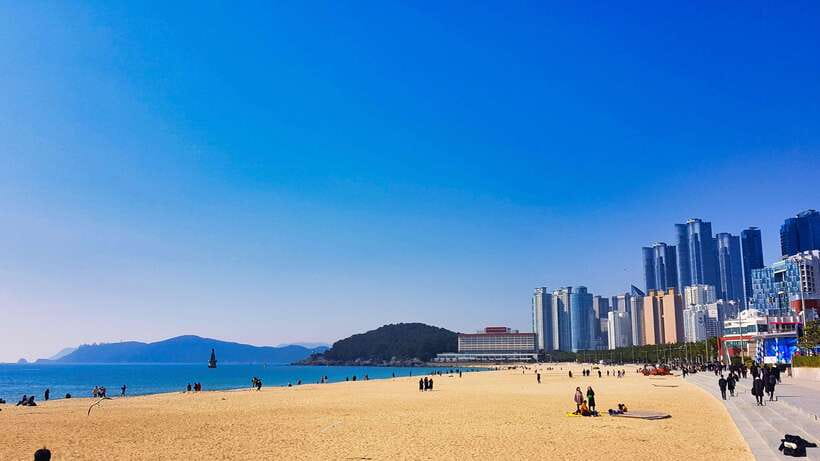
- Haeundae Beach beyond the postcard: Hear about the beach’s use as a U.S. military base after the Korean War and its place in the story of divided Korea.
- Dongbaek Island finale: Walk coastal paths tied to Choi Chi-Won, the scholar associated with Haeundae’s name.
- A guide who tells the story well: Kim Ingyu speaks clear English, answers questions patiently, and has written about Busan.
- Simple logistics: Meet near Exit 4 of Haeundae Station, bring water and comfortable shoes, and expect complimentary earphones for the wireless guiding system.
Why Haeundae deserves more than a beach visit
Haeundae is one of South Korea’s most visited destinations, drawing about 10 million people each year. Most people come for the sand, sea, restaurants, and tall hotels. Those are good reasons to visit, but they reveal only the newest layer of the area.
This tour gives you a useful timeline. Haeundae began as a quiet coastal settlement, gained importance through its seaside hot spring, changed again when rail service arrived, and later became part of Busan’s modern expansion. You are not just looking at old facts in isolation. You are seeing how transport, tourism, war, and urban growth changed the same small stretch of coast.
I find that approach more useful than a tour that simply points out attractive places. By the time you reach Dongbaek Island, the beach and skyline have a much clearer meaning.
More Walking Tours in Busan:
- Busan: Jagalchi Market & Gamcheon village Walking Tour
★ 5.0 · 7 reviews - Seoul moonlight walking tour with local historian
★ 5.0 · 940 reviews - Seoul: Nighttime Hidden Gems Walking Tour
★ 5.0 · 775 reviews
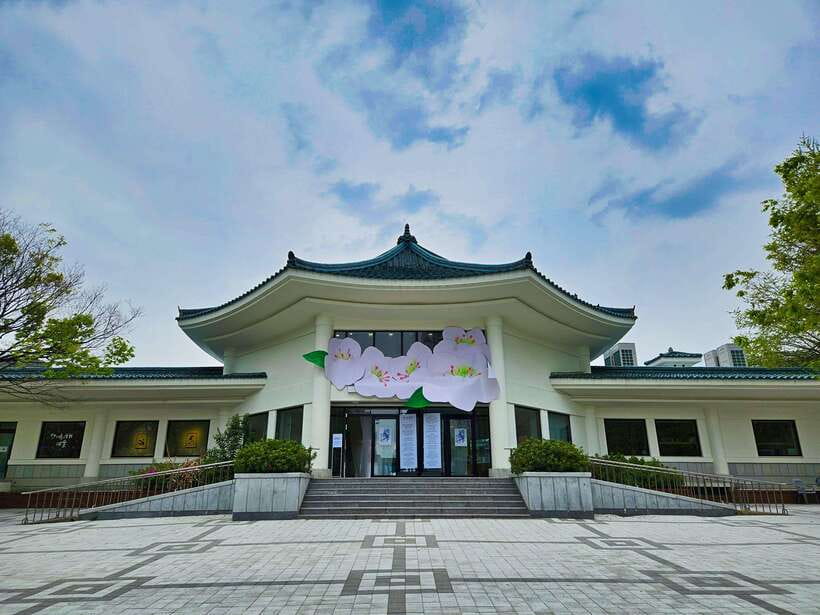
Starting at the former Haeundae Station

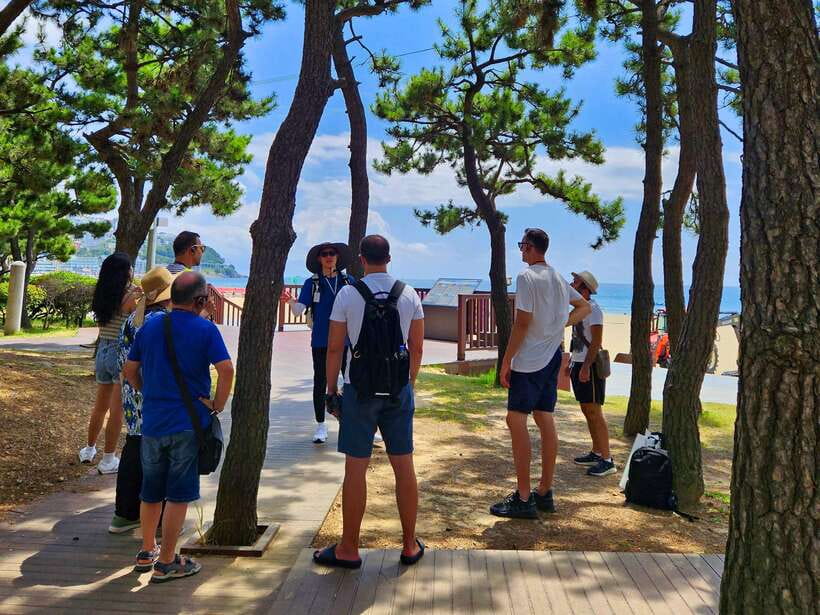
The meeting point is at Haeundae Atelier Chik Chik Pok Pok, the former Haeundae Station, at 621 Haeundae-daero. From Haeundae Station on Busan Metro Line 2, leave through Exit 4. A public plaza is on your right, where you should look for the guide holding a flag.
The tour starts with the old station’s role during the Japanese colonial period. The station was part of the Donghae-Nambu Line, and the railway helped bring more people to Haeundae. That connection matters because it explains why this area developed as a leisure destination instead of remaining a small fishing village.
You will also hear how the former railway route has been given a new life through attractions such as Blue Line Park. This is a useful example of Busan’s habit of preserving traces of the past while adapting them for present-day use.
The old station area is a strong starting point because it gives you context before you reach the famous beach. You begin with movement and infrastructure, not just scenery. The one limitation is that the stop may interest history-minded visitors more than anyone looking for immediate sightseeing photographs.
Gunam-ro and the story of Gunam Oncheon
From the station area, the walk continues toward Gunam-ro, the central street of Haeundae’s commercial life. The guided explanation here lasts about eight minutes, but the subject reaches well beyond the length of the stop.
Gunam-ro takes its name from Gunam Oncheon, described as Korea’s only seaside hot spring. The hot spring was once popular with Korean royalty and helped shape Haeundae’s early cultural and social development. That detail changes how you see the area. Haeundae was not created solely by the beach or by modern hotels. Its appeal also came from bathing, health, leisure, and the chance to meet other people.
This part of the route is especially useful if you plan to stay in Haeundae for several days. Instead of passing through the streets as a collection of restaurants and shops, you begin to understand why they developed here.
The walk between stops is short, though the total route includes several stretches of walking. You may want to keep your water handy, particularly in hot weather. The tour recommends comfortable shoes, and that is sound advice even though the overall difficulty is classed as easy.
Haeundae Beach and the Korean War connection

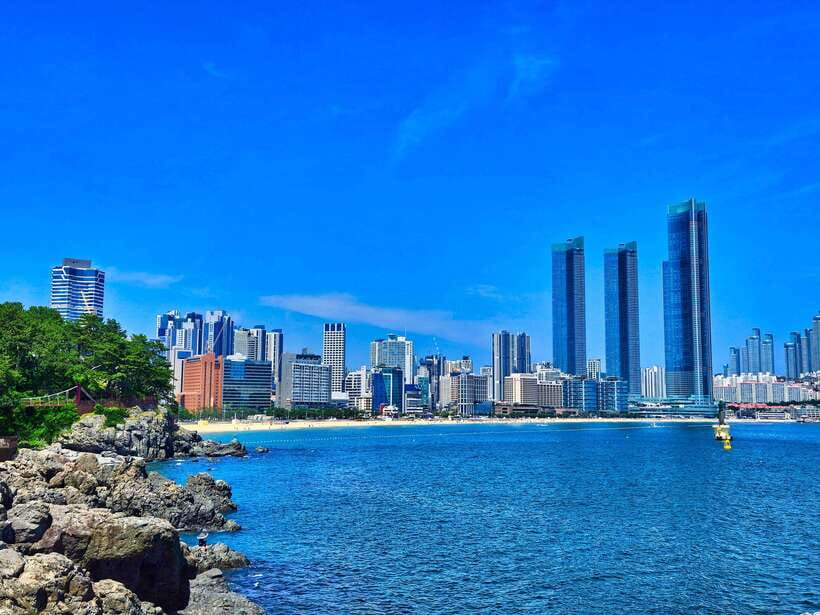
The beach section lasts about 20 minutes. This is the most recognisable stop, but the guide treats it as more than a scenic pause.
You will learn about Haeundae Beach after the Korean War, when the area became a U.S. military base. The discussion also places Haeundae within the relationship between South and North Korea. That gives the beach a serious historical layer beneath the holiday atmosphere.
I value this part of the tour because it connects a familiar place with events that shaped modern Korea. Haeundae is often presented as proof of South Korea’s prosperity and international appeal. The tour also asks you to consider the conflict and division that form part of the country’s modern story.
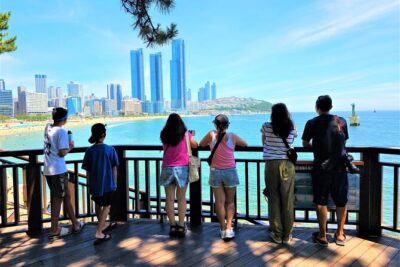
The beach is likely to be the busiest part of the route, especially during popular periods. You will have the sea and open views, but you may also encounter crowds and noise. The guide uses a wireless transmitter and receiver, with complimentary earphones provided, so you can hear the explanation without needing to stand directly beside the guide. Personal wired earphones with a 3.5-millimeter plug are recommended for hygiene.
A few more Busan trips worth comparing
- Small Group Full Day Busan Tour (Max 6 Pax)
★ 5.0 · 1,464 reviews - Busan Private Tour with licensed tour guide + private vehicle
★ 5.0 · 1,143 reviews - Busan: Coastal Treasures Beach Train, Culture Village & More
★ 4.7 · 832 reviews - Busan’s Cultural Wonders with Beach Train & Gamcheon Village etc
★ 4.5 · 663 reviews
The walk toward Dongbaek Island
After the beach, the route continues on foot before reaching Dongbaek Island. The walking sections listed for the tour include stretches of about five, 12, and 18 minutes. The route is manageable, but it is not a series of stops connected by transport.
There is also a hill approximately 50 meters high. That is not a major climb for most people, yet it is worth considering if you have limited mobility or dislike inclines. The tour is described as wheelchair accessible, but the hill and the mixed walking route make it sensible to confirm the exact conditions before booking if you use a wheelchair.
If the sun is strong, bring a sun umbrella for shade. The route is outdoors, and you should bring your own drinking water. Rain can also affect the experience. On one rainy occasion, the guide used a historical presentation and conversation to keep the visit worthwhile, but you should still check the forecast and dress sensibly.
Dongbaek Island and Choi Chi-Won
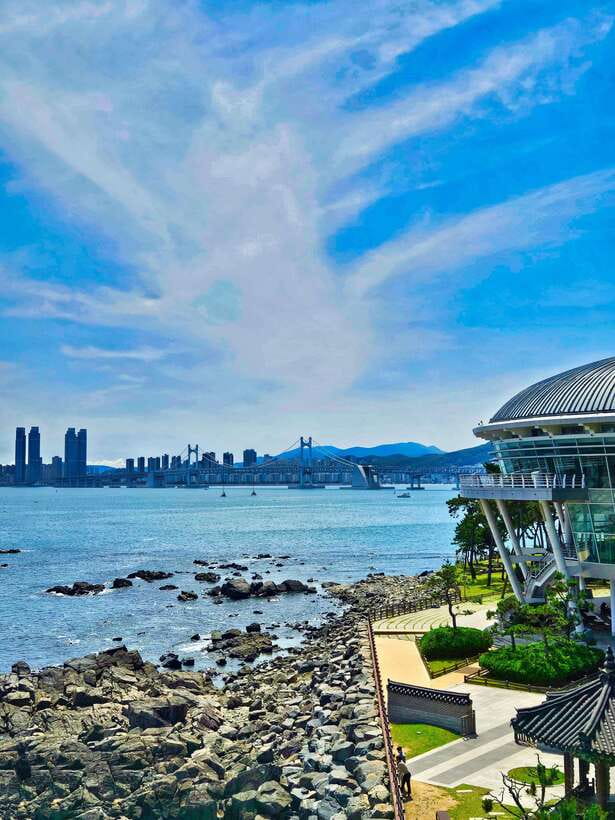
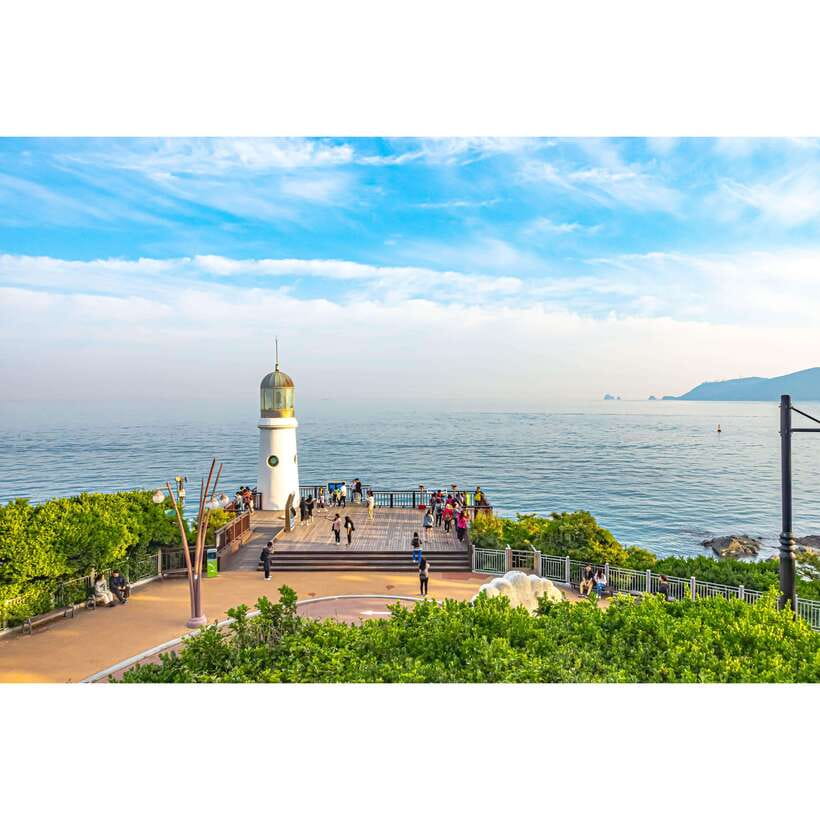
The final guided stop is Dongbaek Island, with about 15 minutes set aside for the explanation. Here the tour turns to Choi Chi-Won, the scholar connected with the naming of Haeundae.
Dongbaek Island provides a calmer finish than the main beach. You can take in coastal views while hearing about a historical figure whose connection to the area is easy to miss if you are exploring alone. The stop works well as a conclusion because it brings together scenery, literature, and local identity.
This is also the best part of the walk for photographs and a little quiet reflection. The tour does not simply finish at the most crowded point. It leads you toward a more peaceful coastal setting, where the earlier stories about Haeundae’s past can settle into place.
What makes Kim Ingyu an important part of the experience
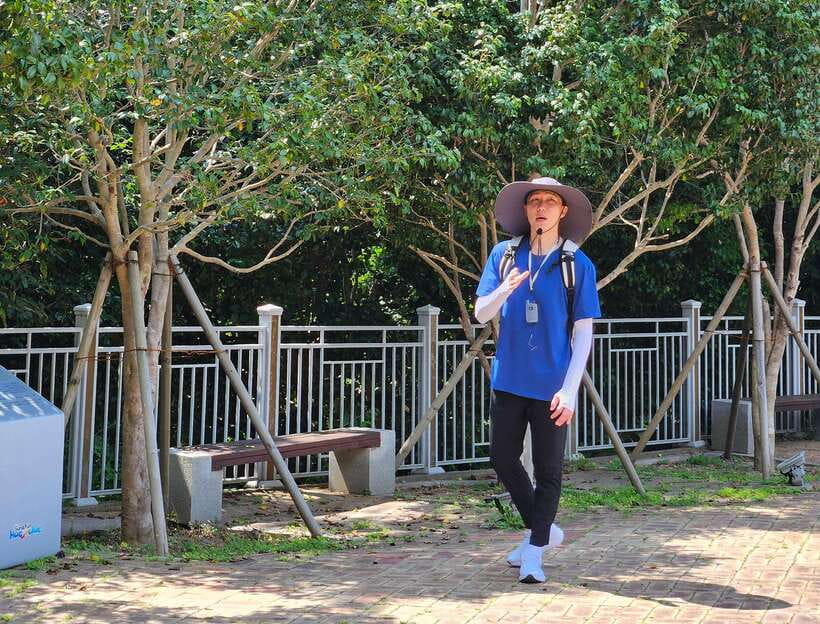
The route matters, but the guide is central to its success. Kim Ingyu is described as fluent in English, friendly, patient, and skilled at explaining Korean history without making the walk feel like a lecture. He has also written a book about Busan, which helps explain the unusually local focus of the tour.
The strongest feature is his storytelling. He does not just give dates and names. He connects the former railway, Gunam-ro, the beach, and Dongbaek Island to the larger development of Busan. You can ask questions along the way, and the format allows the conversation to move beyond a fixed script when the group is small.
That small-group feel may not be guaranteed, but the tour can sometimes have only one or two bookings. If that happens, you get more time for questions and local suggestions. Even with a larger group, the wireless audio equipment should make the explanations easier to follow.
Past participants have especially valued Kim’s clear English, humour, and ability to explain a complicated subject in a concise way. He has also suggested restaurants and other places to visit in Busan. I would ask him for advice at the end, while keeping in mind that recommendations are personal rather than a formal part of the tour.
Is $29 a fair price?
At $29 per person, this is not the cheapest way to see Haeundae. You can walk along the beach and visit Dongbaek Island without paying an entrance fee. If all you want is scenery, you do not need a guided tour.
The price makes more sense if you want interpretation. You are paying for an English-speaking guide, a planned route, historical context, and the chance to ask questions about Haeundae and Busan. The route also takes you to places that may look ordinary without explanation, such as the former station and Gunam-ro.
For a first day in Busan, I consider the price reasonable if you care about history or want to get your bearings quickly. It is less useful for repeat visitors who already know the area or for anyone focused mainly on shopping, food, or taking beach photographs.
The experience includes the guide and wireless transmitter and receiver. Travel insurance is not included. Cancellation is free up to 24 hours before the tour, and you can reserve now and pay later, which helps if your Busan schedule is still shifting.
Who should book this Haeundae walk?
I would choose this tour if you:
- Want historical context for Haeundae rather than only a scenic walk
- Are visiting Busan for the first time
- Prefer a compact tour that fits into a morning or afternoon
- Enjoy asking questions and talking with a local guide
- Want to understand how war, railways, hot springs, and urban growth shaped the city
- Are comfortable walking about 2 kilometers and climbing a modest hill
The tour is not suitable for children under 10 or people over 70, according to the stated restrictions. That rule may seem broad, since fitness varies widely, so families and older visitors should not assume the route is suitable without checking directly.
The route is labelled easy and is suitable for most fitness levels, but the distance, hill, heat, and possible crowds still matter. Bring water, wear shoes with good support, and plan for sun protection.
Best time to fit it into your Busan plans
The tour lasts around 90 minutes according to the activity details, while other descriptions call it a 100-minute walk or one hour and 40 minutes. Allow about two hours so you are not rushing to your next booking.
It makes sense early in your Haeundae stay. You can use the guide’s suggestions for later meals and sightseeing, and you will understand what you are seeing when you return to the beach or old station area on your own.
You could also schedule it before lunch, as the compact length leaves time for a meal afterward. Just remember that it is an outdoor walk, so a hot or sunny day may feel more demanding than the distance suggests.
Should you book the Haeundae 100-Minute Walking Tour?
Book it if you want Haeundae to make sense, not just look attractive. The beach, former station, Gunam-ro, and Dongbaek Island are all worthwhile, but the guide’s explanations turn them into parts of one story about Busan and modern Korea.
Skip it if you only have time for photographs, dislike guided walks, or cannot manage the hill and roughly 2 kilometers on foot. For most first-time visitors who want history, clear English, and a personal introduction to Haeundae, $29 is a fair exchange for a focused two-hour orientation.
FAQ
How long does the Haeundae walking tour last?
The activity details state 90 minutes, while the tour description refers to 100 minutes or one hour and 40 minutes. Allow around two hours in your schedule and confirm the exact start time when booking.
Where does the tour meet?
Meet at Haeundae Atelier Chik Chik Pok Pok, the former Haeundae Station, at 621 Haeundae-daero. From Haeundae Station on Metro Line 2, use Exit 4 and look for the guide with a flag in the public square on the right.
What language is the tour in?
The live tour guide speaks English.
What places does the route visit?
The route includes the former Haeundae Station, Haeundae Beach, Gunam-ro, and Dongbaek Island. It includes guided explanations at the beach, Gunam-ro, the old station area, and Dongbaek Island.
How much walking is involved?
You will walk approximately 2 kilometers. The route is considered easy, but it includes a hill about 50 meters high.
Is the tour wheelchair accessible?
The activity is described as wheelchair accessible. Since the route includes a hill and several outdoor walking sections, contact the provider in advance to confirm that the current route fits your needs.
What should I bring?
Bring comfortable shoes and your own drinking water. A sun umbrella is recommended in sunny weather.
Are earphones provided?
Complimentary earphones are provided with the wireless transmitter and receiver. Personal wired earphones with a 3.5-millimeter plug are recommended for hygiene reasons.
Can I cancel or pay later?
You can cancel up to 24 hours in advance for a full refund. The reserve-now, pay-later option lets you book without paying immediately.
Newest Busan trips on the site
- Busan: Sky Capsule+ Huinnyeoul+ Gamcheon+ Songdo+ Night View★ 4.9 · 10 reviews
- Busan: Jagalchi Market & Gamcheon village Walking Tour★ 5.0 · 7 reviews
- Busan: Night Small Group Photo Tour (Max 7)★ 5.0 · 33 reviews
- Busan: Private Chartered Car Tour★ 4.1 · 7 reviews
- Busan: Haeundae LCT Tower ‘X the Sky’ Entry Ticket★ 4.7 · 23 reviews
- Busan: Hidden Gems Private Tour with a Certified Guide★ 4.9 · 53 reviews
- Busan: Naejangsan National Park Autumn Foliage One Day Tour★ 4.8 · 4 reviews
- Busan: Geoje Coastal Escape, Sea Breeze, Oedo Botania Island★ 4.7 · 44 reviews
Busan Tours, compared.
Coastal Treasures Beach Train, Culture Village & More
Read our review →
Busan’s Cultural Wonders with Beach Train & Gamcheon Village etc
Read our review →
Private Busan Tour -Explore Cultural Landmarks with a Local Guide
Read our review →
Gamcheon Village and Haeundae Blueline Park Tour
Read our review →

Busan Coastal Charm & Culture: Gamcheon Village & opt Sky Capsule
Read our review →
Browse the lists this tour appears in