

Reviewed · DMZ TOURS
Seoul: Half-Day DMZ Tour Led by a Retired Military Officer
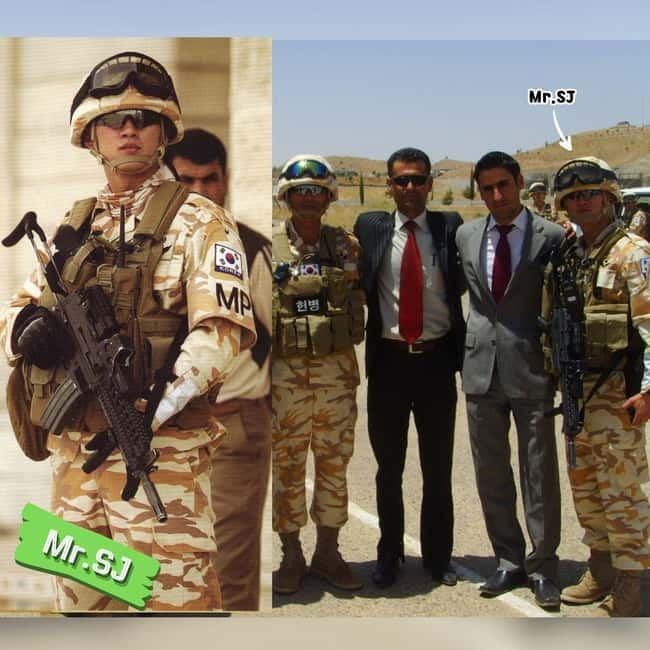
The most unusual part of this DMZ tour is the guide. You may be led by SJ, a former Special Forces major and Iraq veteran, Tiger, a former artillery commander, Eddie, an infiltration-tunnel specialist, or Jason, a retired intelligence officer. You are not getting a standard history lecture. You are hearing from men who served near the border.
I like the first-hand military stories, which give the Korean conflict a human scale, and I like the practical six-hour format, which gets you back to Seoul around mid-afternoon. The Third Infiltration Tunnel is another strong point: it is physical, tense, and far more memorable than simply looking at a display.
The main drawback is that the tunnel requires a steep walk and a long crouching stretch. You also need your passport, and the DMZ can close suddenly because it remains an active military area. If you want a relaxed sightseeing day with no rules or exertion, this is not the right outing.
Key points to know before you book
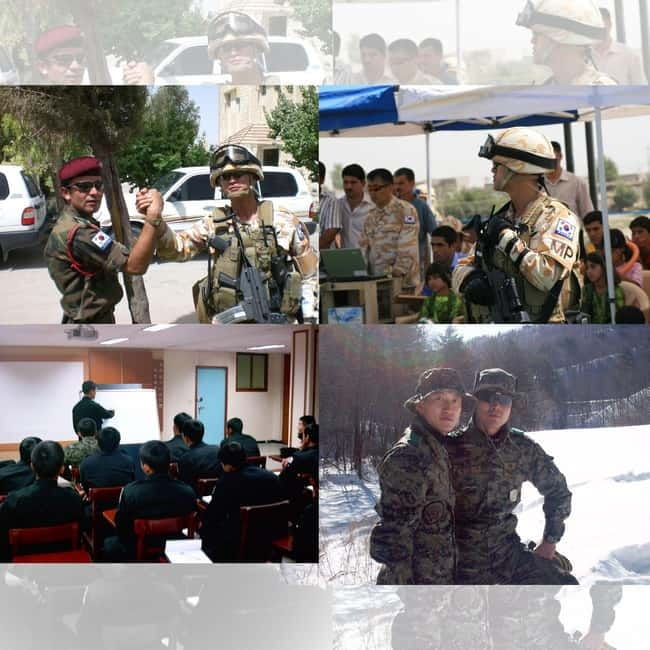
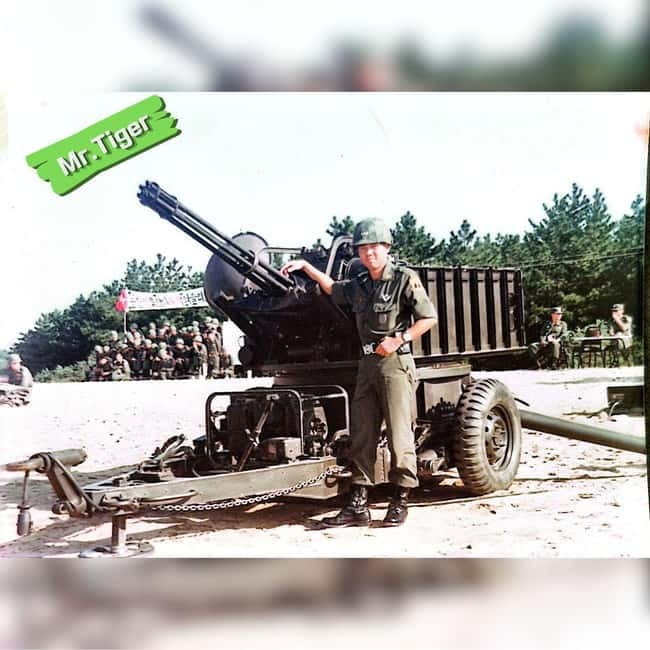
- Retired officers lead the tour: SJ, Tiger, Eddie, and Jason bring service experience from different parts of South Korea’s military and intelligence system.
- The observatory is chosen for the day: The operator checks conditions with security cameras and local staff before deciding between Odusan and Dora Observatory.
- Tunnel 3 is a real workout: Expect a downhill walk, a low ceiling, and a climb back up. Comfortable shoes are essential.
- The tour covers the human cost of division: Freedom Bridge, Mangbaedan Altar, Imjingak, and Unification Village connect military history with separated families.
- The price covers the basics: At $57, you get round-trip Seoul transport, the English guide, DMZ admission, and the tunnel walk, but not lunch.
- The military rules are real: Bring a valid passport, leave large bags behind, and accept that access can change without notice.
Why a retired officer changes the DMZ visit

A visit to the Korean Demilitarized Zone can easily become a string of viewing platforms, signs, and solemn monuments. This tour gives those places a voice. The guides explain what you are seeing through their own service experience, while still making room for questions about the Korean War, the border, North Korean tactics, separated families, and the current security situation.
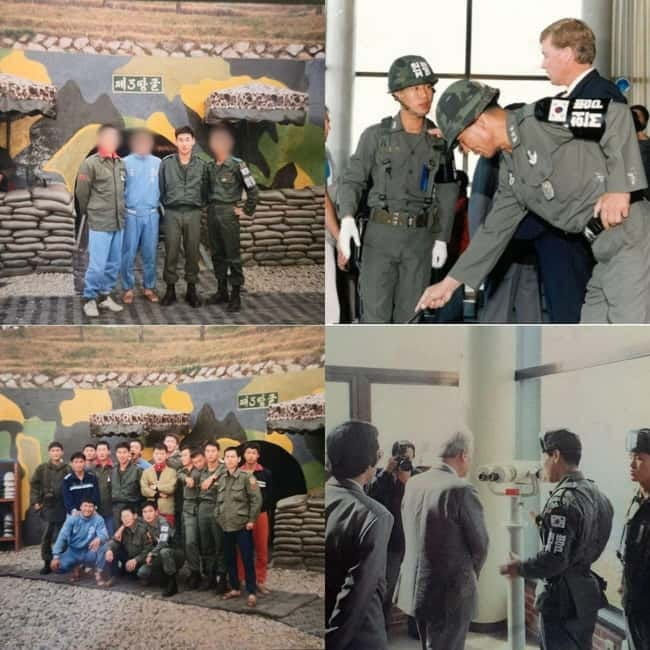
The guide roster is a major part of the experience. SJ served in Special Forces and was a 707 Special Mission Battalion major. Tiger spent 20 years in the front line and commanded an artillery battalion. Eddie is associated with the Third Infiltration Tunnel and briefed senior American and Korean officials. Jason served for 31 years in South Korean intelligence and retired as a lieutenant colonel.
You cannot select a particular guide from the information provided, so book this for the structure and subject matter rather than for one named person. The guide you receive may differ. The common thread is a military perspective, clear English commentary, and a willingness to answer questions.
That personal angle can be especially useful if you know little about the Korean War. Eddie, for example, has used stories from his service to explain life along the border, including an odd episode involving North Korean soldiers playing table tennis in an effort to show South Korean troops that life on their side was better. Details like this make the political conflict feel less remote.
Other DMZ days people book alongside this one:
- Best DMZ Tour Korea from Seoul (Red Suspension Bridge Optional)
★ 5.0 · 41,422 reviews - DMZ Tour: 3rd Tunnel, Option(Suspension Bridge, Boat) from Seoul
★ 5.0 · 21,373 reviews - DMZ tour south Korea from Seoul (NK experience hall, defector)
★ 5.0 · 20,599 reviews
The ride from Seoul to the border
The morning begins at a designated Seoul meeting point, with the exact location depending on the option you book. The ride toward the border takes about an hour. That time is not wasted. Your guide can explain the division of Korea, the 1953 armistice, and the rules you will face inside the military zone.
The group uses transport designated by the Korean military after meeting near the DMZ area. The bus has been described as comfortable, and the day is tightly organized. That matters here because military access times can affect every later stop. A guide who keeps people moving helps protect your time at the observatory and tunnel.
Expect an early start. Some departures begin around 8 a.m., with return times around 2 to 3 p.m. depending on your drop-off point and conditions. Traffic, weather, and military permission can shift the schedule, so do not book a tight afternoon connection.
The tour is offered as a group experience, with a private option available. Groups of 10 or more can receive free hotel pickup in Seoul. For smaller groups, pickup and drop-off arrangements depend on the selected booking option.
Choosing between Odusan and Dora Observatory
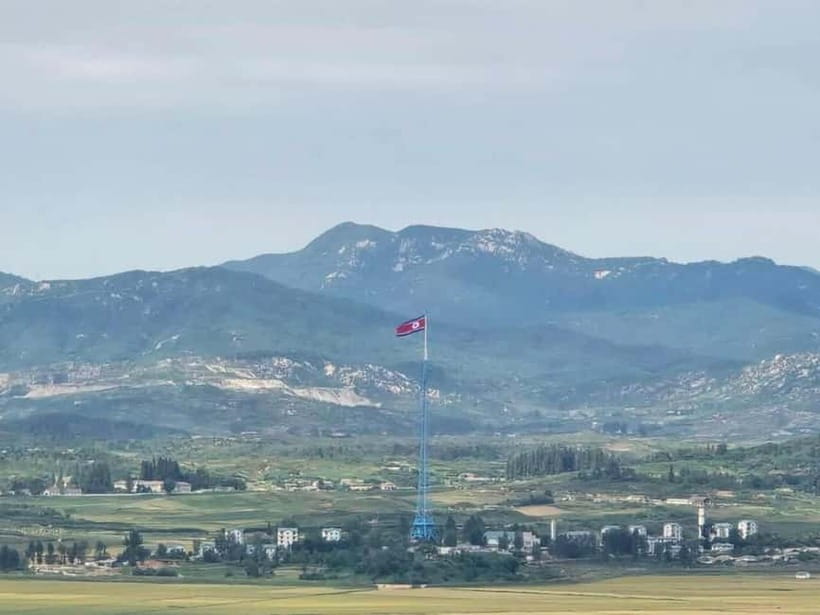
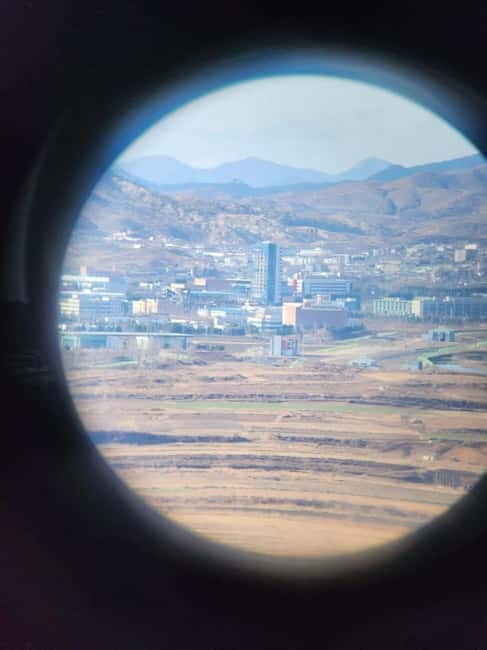
The tour does not simply promise one fixed viewpoint regardless of conditions. On the day, the operator checks security-camera information and speaks with local observatory staff to decide whether Odusan or Dora offers the clearest view of North Korea.
That is a sensible approach. Border views depend heavily on weather, haze, and visibility. On a clear day, the observatory can be the emotional high point of the morning. You may look across the river and see North Korean territory through binoculars, with guard posts, villages, or people sometimes visible in the distance. On a hazy day, the view may be much less satisfying.
This is the part of the tour most affected by weather, so keep your expectations steady. You are not guaranteed a postcard view. Several people have found the experience more rewarding on a clear day, and that is good advice. If you can choose among dates, visibility should matter.
The observatory visit also shows the strange contrast at the DMZ. You are in a public viewing area, yet the rules and military setting remain close at hand. Listen carefully to instructions about photography and movement. Your guide will explain what you can see and place the view in context rather than leaving you to guess at distant shapes.
Imjingak, Mangbaedan, and the human side of separation
Imjingak Park brings the conflict out of the military zone and into public memory. The stop includes the Freedom Bridge, the Mangbaedan Altar, a steam locomotive, and other memorial features. You also pass through the Imjingak area as part of the route.
Mangbaedan Altar is tied to families separated by the division of Korea. It represents the people who cannot easily visit ancestral homes or graves north of the border. The site adds a personal layer to the military story. Instead of thinking only about troop movements and weapons, you are reminded of parents, children, siblings, and grandparents separated for decades.
The Freedom Bridge carries its own weight. It was used by prisoners of war and returnees after the Korean War, and its name points toward a hope that remains unfinished. Your guide can help connect the bridge with later efforts at family reunion and reconciliation.
The old steam locomotive is another powerful object. Damaged during the war and left as a physical reminder, it gives you something concrete to look at while hearing about the destruction of the peninsula. These stops are not long museum visits. They work best when you take a few quiet minutes, listen to the guide, and consider what each place represents.
Imjingak can feel more public and visitor-friendly than the tunnel or observatory. That is useful for orientation, restrooms, and snacks, but it also means the visit has less of the restricted border atmosphere. Think of it as the memorial and emotional part of the morning.
A few more DMZ trips worth comparing
- DMZ Insider Tour: 3rd Tunnel, NK Defector Meet & Red Bridge
★ 4.9 · 15,214 reviews - Seoul: DMZ Tour with Optional Suspension Bridge
★ 4.8 · 5,277 reviews - Signature DMZ Tour: Exclusive Defector Talk & Suspension Bridge
★ 5.0 · 4,459 reviews - Thrilling Korean DMZ 3rd Tunnel Tour from Seoul + Red Bridge Rush
★ 5.0 · 3,097 reviews
Walking through the Third Infiltration Tunnel

The Third Infiltration Tunnel is the most demanding stop and, for many people, the most memorable. North Korea constructed the tunnel as part of an attempted route into South Korea. It was not an escape tunnel, a point that is easy to misunderstand before the visit.
You walk down into the tunnel and then back up. Much of the passage is low, so you will need to crouch for a substantial stretch. The return climb can be tiring, particularly after the descent has already taken energy from your legs.
Wear sturdy, comfortable shoes. This is not a place for thin sandals, slippery soles, or fashionable footwear you do not want to scuff. Warm clothing is also useful because the tunnel can feel cold, even when the weather above ground is mild.
The tunnel is narrow and physical, but that is exactly why it works as a historical site. A diagram or photograph can explain its purpose. Walking through the rock lets you grasp the effort involved in constructing it and the fear created by the possibility of a surprise attack.
Eddie has worked with security operations connected to the tunnel, so you may receive especially detailed explanations if he is your guide. Regardless of who leads the group, expect clear instructions and a controlled visit. The tunnel is inside a military area, and access rules are not casual.
If you have mobility limits or struggle with steep paths, think carefully before booking. The activity is specifically not recommended for people with mobility impairments. You can still find value in the other stops, but the tunnel is a central part of the advertised experience.
What the schedule really gives you
The published duration is six hours, though some outings run closer to seven hours depending on traffic and military timing. The route includes transport from Seoul, an observatory, the DMZ area, the Third Infiltration Tunnel, Imjingak, Mangbaedan, and Freedom Bridge.
That is a lot for a half-day. You are not getting long, unhurried museum visits. Instead, you get a compact tour that covers the main accessible sites in one organized run. I like this format for a first visit because the DMZ is not easy to explore independently. Military checkpoints, changing access, and scattered locations make a guide and bus practical.
The tradeoff is pace. You need to stay with the group and respect meeting times. One person arriving late or losing a passport can affect the entire bus. Keep your belongings simple, pay attention to instructions, and use rest breaks wisely.
Lunch is not included. The schedule provides time for snacks and restrooms, but you should plan to eat before departure or carry a small permitted snack if allowed by the tour staff. Large bags and luggage are not allowed, so do not arrive with airport baggage.
The usual drop-off areas include Hongik University Station and Myeongdong, with timing commonly around 2 to 3 p.m. The exact location and time can change because of traffic, weather, and military permission.
Is $57 a fair price?
At $57 per person, this is a good value if you want the major DMZ sights without arranging transport, admission, and access details yourself. The price includes round-trip transfer from Seoul, the English-speaking guide, DMZ admission, and the guided walk through the Third Infiltration Tunnel.
The strongest value is the guide. A basic bus trip can show you the border, but it cannot give you the same personal military context. Here, the service background of people such as SJ, Tiger, Eddie, and Jason is part of what you are paying for.
Lunch and insurance are not included. A private option is available, and the War Memorial of Korea in Yongsan is included only with the private afternoon option. That is useful if you want to extend the military theme, but it is not part of the standard half-day visit.
The tour has a 4.9 rating from 1,399 reviews, with particularly strong marks for guide quality and transport organization. The repeated praise centers on Eddie, SJ, Tiger, and Jason, though other guides, including Julie, Lucy, Cindy, and Dylan, have also led well-received departures. The practical lesson is simple: the guide roster is broad, and the military-led format is the dependable feature.
Tips for making the day easier
- Bring your passport. It is required for DMZ access, and a copy is not identified as an acceptable substitute.
- Wear shoes with a firm sole for the Third Infiltration Tunnel.
- Dress for changing conditions. The border can feel cold, and the tunnel is especially chilly.
- Leave large luggage behind. Bags are restricted.
- Keep your afternoon flexible because the return time can shift.
- Go on the clearest available day if viewing North Korea matters most to you.
- Ask questions on the bus. The guides are prepared to discuss military service, border life, Korean history, and the meaning of the sites.
- Expect rules, checkpoints, and possible changes. The DMZ is an active military area, not an ordinary sightseeing district.
Who should book this DMZ tour?
I would choose this tour if you want a strong introduction to the Korean War and the modern division of the peninsula, especially if you value personal stories over a polished scripted presentation. It also suits families with older children and teenagers who can manage the tunnel walk and stay with a group.
It is a good match for history fans, military-history enthusiasts, and first-time Seoul visitors who want an experience outside the city. The half-day length leaves the afternoon open for Seoul sightseeing, while still giving you several major DMZ landmarks.
I would hesitate if you dislike early starts, fixed schedules, crowded group transport, or physical walking. You should also reconsider if you need guaranteed access to a particular site or a fixed return time. Weather can reduce the view, and military decisions can change the route without warning.
Should you book it?
Book this tour if you want the human story behind the border, not just a photo from an observation deck. The retired officers give the day a perspective that is difficult to reproduce on a standard sightseeing bus, and the Third Infiltration Tunnel adds a real physical sense of the danger that shaped the DMZ.
The best reasons to go are the military-led commentary, the chance to compare changing views from Odusan or Dora, and the powerful combination of Freedom Bridge, Mangbaedan, Imjingak, and Tunnel 3. Just bring your passport, wear proper shoes, and accept that the DMZ operates on military time.
FAQ
How much does the half-day DMZ tour cost?
The tour costs $57 per person. The price includes the English-speaking guide, round-trip transfer from Seoul, DMZ admission, and the guided walk in the Third Infiltration Tunnel.
How long does the tour last?
The stated duration is six hours. Some departures may take closer to seven hours because of traffic, weather, or military permission times.
Which observatory will the tour visit?
The tour chooses between Odusan Observatory and Dora Observatory on the day. The decision is based on current visibility, security-camera information, and advice from local observatory staff.
Do I need my passport?
Yes. Every participant must bring a valid passport to enter the DMZ.
Is the Third Infiltration Tunnel difficult?
The tunnel requires a walk downhill and uphill, with a long crouching section under a low ceiling. Comfortable shoes are essential, and the tour is not suitable for people with mobility impairments.
Is lunch included?
No. Lunch is not included in the tour price.
Can I bring luggage?
Large bags and luggage are not allowed. Bring only what you need for the day.
Can the DMZ close on the day of the tour?
Yes. The DMZ can close suddenly because it is a military area. If access is unavailable, an alternative tour is provided, but no refund is offered for that closure.
Newest DMZ trips on the site
- Seoul: DMZ & Live Talk with North Korean Defector★ 4.9 · 50 reviews
- Seoul: DMZ Tour with Japanese-Speaking Guide★ 5.0 · 28 reviews
- Seoul: DMZ 2nd Tunnel and Suspension Bridge Tour★ 4.8 · 56 reviews
- Seoul: DMZ, 3rd Tunnel, Odusan or Suspension Private Tour★ 5.0 · 4 reviews
- Seoul: Closest DMZ Observatory with North Korea View (1.4km)★ 4.9 · 10 reviews
- From Seoul: Private DMZ and Odusan Observatory Full-Day Tour★ 4.9 · 34 reviews
- Private DMZ SPY Tour from Incheon Airport★ 4.6 · 7 reviews
- From Seoul: DMZ Tour and North Korea Experience Hall★ 4.7 · 34 reviews
DMZ Tours, compared.
Best DMZ Tour Korea from Seoul (Red Suspension Bridge Optional)
Read our review →
DMZ Tour: 3rd Tunnel, Option(Suspension Bridge, Boat) from Seoul
Read our review →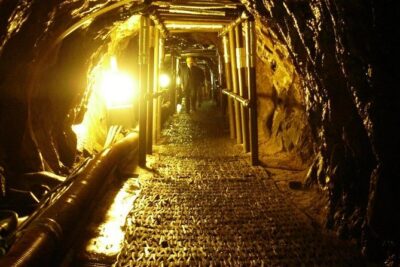
DMZ tour south Korea from Seoul (NK experience hall, defector)
Read our review →
DMZ Insider Tour: 3rd Tunnel, NK Defector Meet & Red Bridge
Read our review →

Signature DMZ Tour: Exclusive Defector Talk & Suspension Bridge
Read our review →
Thrilling Korean DMZ 3rd Tunnel Tour from Seoul + Red Bridge Rush
Read our review →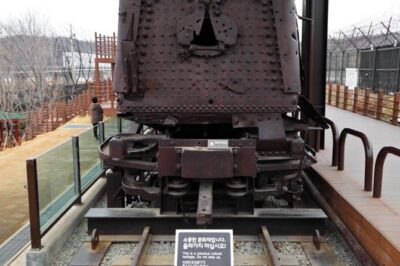
DMZ Past and Present: Korean Demilitarized Zone Tour from Seoul
Read our review →Browse the lists this tour appears in