
Reviewed · DMZ TOURS
DMZTour from Seoul:3rd Tunnel,North Korea View&UNESCO Valley
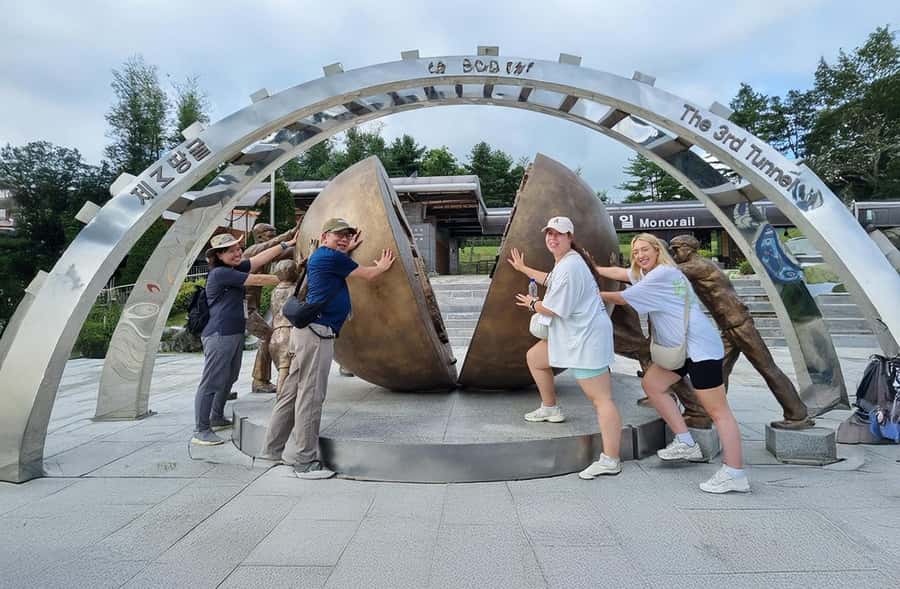
The most unusual part of this day is the sharp change in mood. You begin with Korea’s tense border zone, walk through a tunnel built for a possible North Korean attack, and look across the frontier from Dora Observatory. Later, the setting shifts to Jaein Waterfall, where forest, rock, water, and a suspension bridge offer a calmer side of Gyeonggi Province.
I like the mix of serious history and outdoor scenery. I also like that the guide does more than shuttle you between photo stops: guides such as Alex Kim and Apollo have been praised for explaining the political background in a clear, personal way. The main drawback is the early start and long day. One tour began at 6 a.m. so the group could reach the DMZ ticket queue before daily limits caused delays.
Key points to know before booking
- The Third Tunnel gives the DMZ real physical impact: you walk into an underground passage dug by North Korea.
- Dora Observatory provides a direct view toward North Korea: visibility and the exact view can depend on conditions.
- Jaein Waterfall adds nature to a serious historical day: it is part of Hantan UNESCO Geopark.
- An early departure matters: only 1,000 people at a time are allowed into the DMZ area.
- Passport information is required: you must provide your name, passport number, date of birth, and gender.
- The $125 price covers the main structure: round-trip transport, attraction admission, and a professional guide are included, but lunch and personal spending are not.
Why this DMZ day feels different from a standard Seoul tour
Many Seoul excursions stay within the city, where royal palaces, markets, and museums tell the story of Korea through buildings and daily life. This trip takes you north into Gyeonggi Province, where the division between North and South Korea remains visible and tightly controlled.
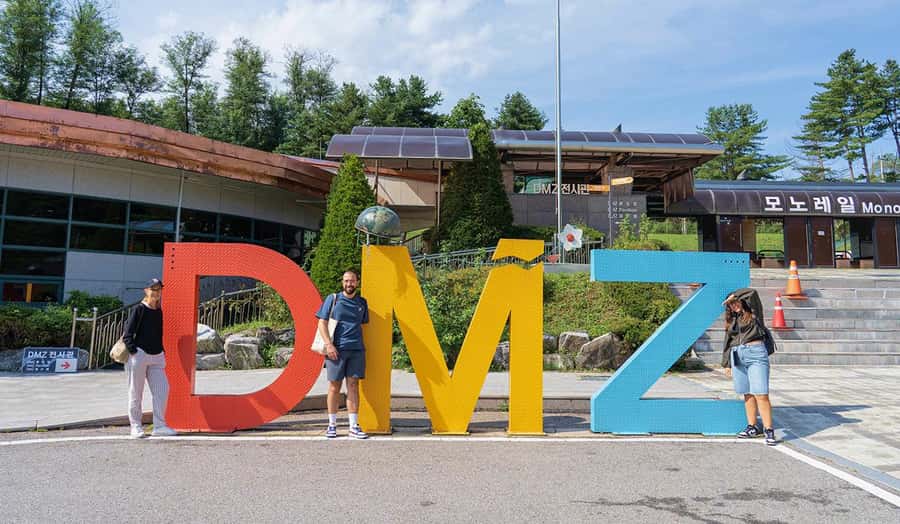
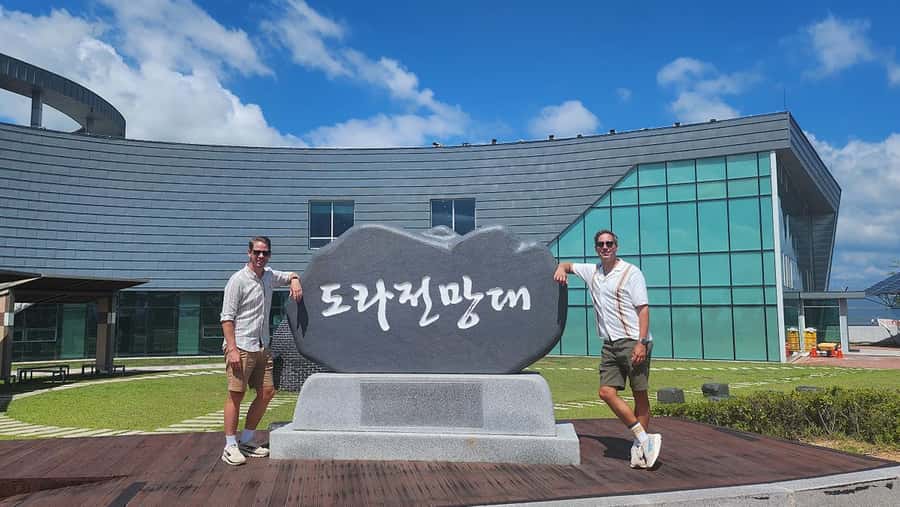
You visit several places connected to that division, including Imjingak, the Third Tunnel, Dora Observatory, and Tongilchon. The tour then adds Jaein Waterfall in Hantan Geopark, giving you a useful contrast. The morning deals with borders, surveillance, and military planning. The later stop lets you slow down beside water and woodland.
That combination is the chief reason I find the itinerary appealing. The DMZ can be hard to grasp from a textbook or a city museum. Walking through the Third Tunnel and looking toward North Korea gives the subject a physical scale. Then Jaein Waterfall prevents the whole day from feeling grim or repetitive.
The experience is best for you if you want context rather than a quick photo beside a border sign. It suits first-time visitors to Korea who want a serious day outside Seoul, as well as anyone interested in modern Korean history and outdoor scenery.
More UNESCO Sites in DMZ:
- From Busan: Gyeongju UNESCO World Heritage Guided Day Tour
★ 4.8 · 1,250 reviews - Jeju: Eastern Jeju UNESCO Spots Day Tour
★ 4.9 · 1,148 reviews - East Jeju Essentials – Seongsan Ilchulbong (UNESCO) & Haenyeo
★ 5.0 · 939 reviews
The early departure and the DMZ ticket queue
Your meeting point depends on the option you book, so check the exact pickup details carefully. Round-trip transportation is included, and the activity returns you to the meeting point at the end.
Plan for an early morning. One group left at about 6 a.m., not because the guide wanted to make you suffer before breakfast, but because access to the DMZ is controlled. Only 1,000 people at a time are allowed into the area, and the guide needs to join the ticket queue early.
That detail matters. A late start could mean a long wait or less time at the main sites. The early departure is inconvenient, especially if you are adjusting to a new time zone, but it serves a clear purpose. Bring water and arrange breakfast before departure if your meeting time does not allow time to buy food.
The group size can vary by booking. One outing had only five people, which made it easier to hear the guide and ask questions. You should not assume every departure will be that small, but the possibility of a compact group is a useful advantage.
Imjingak and monuments built around hope
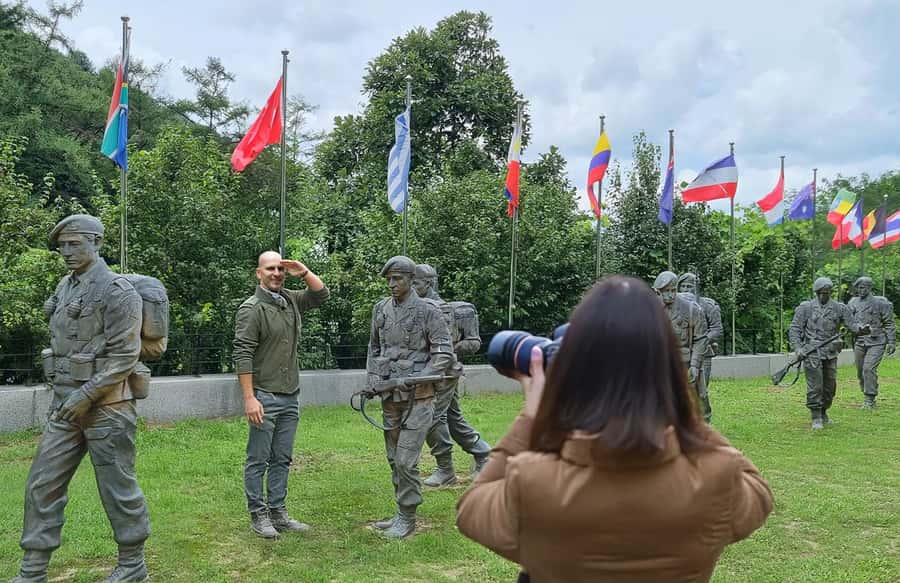
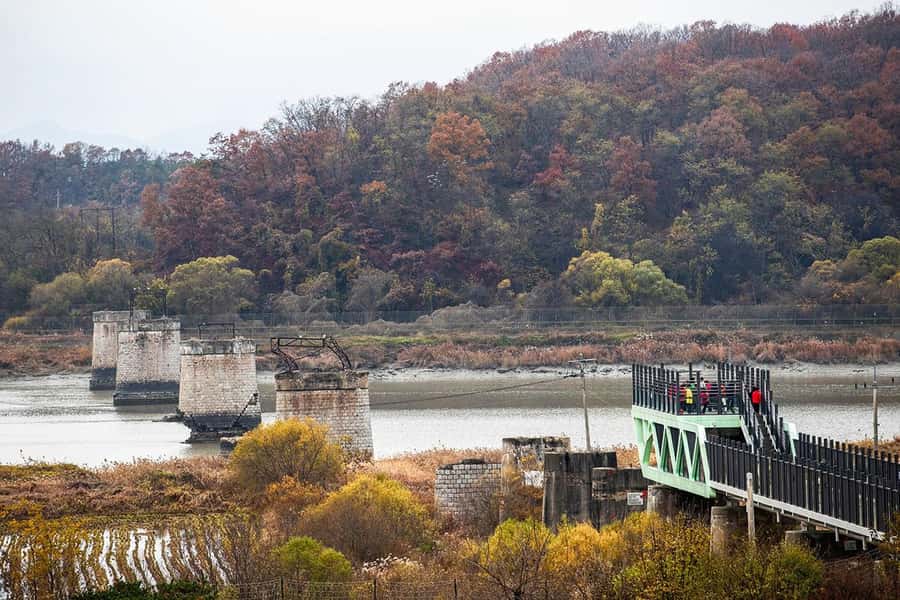
Imjingak is more than a place to stretch your legs. It is a site connected to peace and reunification, with monuments that express the human cost of Korea’s division and the hope that families and communities may one day be less separated.
This is a good early stop because it gives you emotional and political context before the more controlled DMZ sites. You can take photographs, but the monuments deserve more than a quick background pose. Listen closely as your guide explains what the site represents and how ordinary Korean families have been affected by the border.
The experience does not turn Imjingak into a simple feel-good stop. The message of hope sits beside a difficult reality. The division remains active, and the border is not just a historic line from a finished conflict.
I appreciate that the tour allows you to approach the subject through both symbols and facts. The monuments help you connect the political story to real people, while the later stops show how the border functions today.
Walking through the Third Tunnel

The Third Tunnel is the most hands-on part of the DMZ visit. It is an underground passage dug by North Korea and discovered by South Korea. Walking through it gives you a much clearer sense of what military planning meant on the ground.
You are not simply told that tunnels existed. You enter one. The enclosed setting makes the story feel immediate, even though the passage itself is quiet and empty now. The visit can be physically more demanding than a normal sightseeing stop, so sturdy shoes and a reasonable level of walking comfort will help.
The tunnel is also a reminder that the DMZ is not a theme park version of history. Its importance comes from the danger it represented and the security measures still surrounding the area. Your guide’s explanation is especially valuable here, since the tunnel’s significance is easy to miss if you only see it as a dark passage underground.
You may find the tunnel less comfortable than the scenic portions of the day. That is part of its value. It asks you to engage with an uncomfortable piece of the conflict rather than simply admire a viewpoint.
A few more DMZ trips worth comparing
- Best DMZ Tour Korea from Seoul (Red Suspension Bridge Optional)
★ 5.0 · 41,422 reviews - DMZ Tour: 3rd Tunnel, Option(Suspension Bridge, Boat) from Seoul
★ 5.0 · 21,373 reviews - DMZ tour south Korea from Seoul (NK experience hall, defector)
★ 5.0 · 20,599 reviews - DMZ Insider Tour: 3rd Tunnel, NK Defector Meet & Red Bridge
★ 4.9 · 15,214 reviews
Dora Observatory and the view toward North Korea
At Dora Observatory, you look toward North Korea across the border. The view can be striking, but do not expect a dramatic skyline or a theatrical reveal. The power of the stop comes from knowing what you are seeing and understanding how close the two countries are despite their separation.
Visibility will affect your experience. Clear conditions should give you a better view, while haze or cloud may soften the details. Even so, the stop remains worthwhile because your guide can point out the meaning of the area and explain what the border represents.
Bring a camera, but also take a moment without it. A photograph cannot fully capture the odd feeling of looking across a boundary that is politically immense but visually difficult to see. You may see open ground, distant buildings, and mountains rather than a clear dividing wall.
This is one place where a strong guide makes a major difference. Alex Kim and Apollo are two names associated with particularly warm, energetic guiding on this experience. Their role is not simply to provide directions. It is to help you understand what the view means.
Tongilchon and the living border region
Tongilchon adds another perspective to the DMZ area. Together with Imjingak, the Third Tunnel, and Dora Observatory, it helps form a fuller picture of the region rather than reducing the visit to a single military attraction.
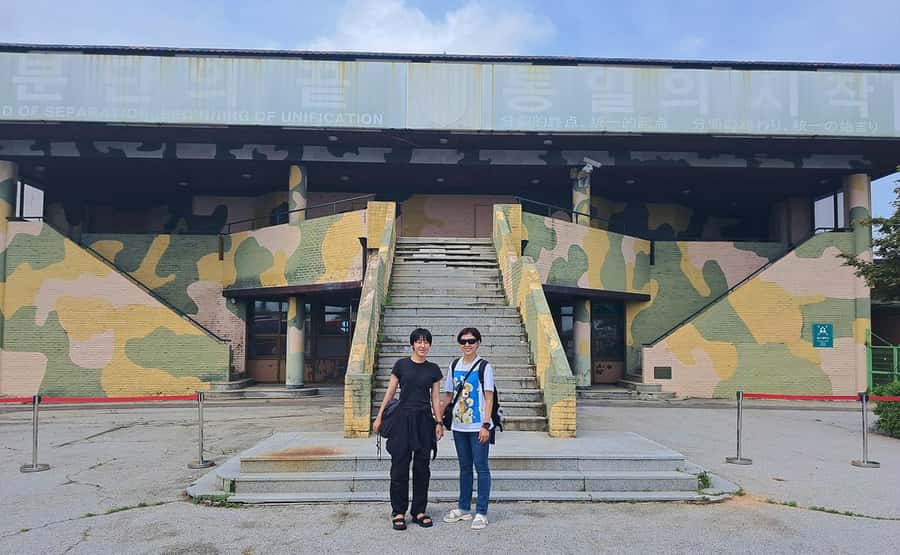
The name and setting connect to the idea of unification, and the stop helps show that the DMZ is not an isolated museum exhibit. It sits within a wider part of Korea with communities, roads, farms, monuments, and carefully managed access.
Exact time at each place can vary because DMZ entry is regulated. That is another reason to treat the itinerary as a guided day rather than an independent hop between attractions. You are relying on the guide and local arrangements to move through an area where access is not as flexible as it is in Seoul.
From military history to Jaein Waterfall
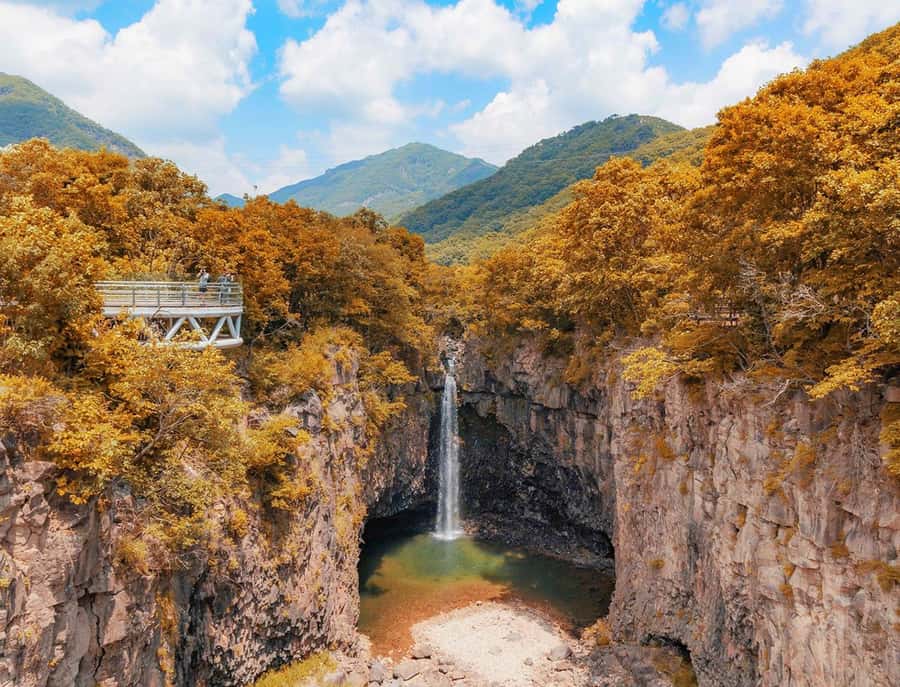
The change of scenery at Jaein Waterfall is one of the tour’s smartest features. After the controlled and serious DMZ sites, you reach Hantan Geopark in a setting of forest, rock, and moving water.
Jaein Waterfall is part of the UNESCO Geopark site. The waterfall and surrounding paths give you a chance to enjoy Korea’s natural scenery without leaving the day’s educational focus behind. You can take photographs, walk along scenic trails, and enjoy a quieter pace after the morning’s border stops.
The suspension bridge adds a little excitement. It is not just a lookout with a railing and a quick photo opportunity. Crossing it gives you a different angle on the area and adds a physical element to the visit.
Conditions matter here too. One outing benefited from bright sunshine, which made the waterfall and surrounding scenery especially attractive. In dull weather, the stop may feel more subdued, but the forest and geological setting still provide a welcome change from the DMZ.
Do not treat Jaein Waterfall as a minor add-on. It is what gives the tour its wider appeal. If you want only military history, a standard DMZ excursion may be enough. If you want a day that combines Korea’s political story with a UNESCO natural site, this itinerary offers more variety.
What the $125 price really covers
At $125 per person, this is not the cheapest way to see the DMZ, but the value depends on how much planning you want to avoid. The price includes round-trip transportation, admission to the attractions, and a professional guide.
The guide and transport are important here. The DMZ has controlled access, an early ticket queue, and passport requirements. Having someone manage the route and explain the sites can save you considerable effort, especially if you are unfamiliar with the area.
Admission to the listed attractions is also included, so the price is not simply a vehicle transfer. You are paying for a full day built around several distinct stops, including the Third Tunnel, Dora Observatory, Imjingak, Tongilchon, and Jaein Waterfall.
Lunch is not included, and personal expenses are extra. Plan for that before setting out. Since the day can begin early and run long, carrying a snack is sensible if no meal stop is confirmed for your particular option.
The value is strongest for you if you want a guided, organized visit and care about the explanations. It is weaker if you are looking for a relaxed half-day outing or dislike fixed schedules.
Who should book this experience
I would recommend this tour to you if you want to see the DMZ while also visiting a significant natural site. It is especially suitable for first-time visitors who want the major sights explained in plain terms.
It also suits people who prefer a small-group feel when available. The five-person outing described for one departure allowed plenty of contact with the guide, though group size can differ by date and option.
You should think twice if you need a late start, dislike walking, or want complete control over your schedule. The early departure is a practical response to DMZ access limits, not a flaw in the planning, but it still may not fit your holiday rhythm.
The tour also requires accurate passport information for every participant. You must provide your name, passport number, date of birth, and gender so the group can enter the DMZ. Have those details ready when booking.
Languages offered are English, Chinese, and Korean. That gives you a useful choice when selecting an option, particularly for a subject where clear explanation matters.
Final verdict: a strong choice for history and scenery
You should book this tour if you want more than a quick look at the border. The Third Tunnel gives the day physical weight, Dora Observatory provides the striking northward view, and Imjingak adds a human message of peace and reunification.
Jaein Waterfall is the bonus that makes the $125 price easier to justify. It turns a serious historical outing into a varied day with trails, a suspension bridge, and UNESCO Geopark scenery.
The trade-off is clear: get up early, expect a long day, bring money or food for lunch, and accept that access times depend on security rules. In return, you receive transport, attraction admission, and a guide who can make the DMZ easier to understand.
If you want a thoughtful introduction to Korea’s division with a rewarding nature stop at the end, this is a well-rounded choice. If your priority is a slow morning or a short city excursion, choose something closer to Seoul.
FAQ
How much does the DMZ and Jaein Waterfall tour cost?
The tour costs $125 per person.
What is included in the price?
Round-trip transportation, admission to the listed attractions, and a professional tour guide are included.
Is lunch included?
No. Lunch expenses and other personal expenses are not included.
What passport information is required?
For every participant, you must provide the name, passport number, date of birth, and gender.
Which languages are available?
The tour is offered in English, Chinese, and Korean.
Where does the tour start and finish?
The meeting point may vary according to the option booked. The activity ends back at the meeting point.
Can I cancel or pay later?
You can reserve and pay later, so nothing is due today. You can also cancel up to 24 hours in advance for a full refund.
Newest DMZ trips on the site
- Seoul: DMZ & Live Talk with North Korean Defector★ 4.9 · 50 reviews
- Seoul: DMZ Tour with Japanese-Speaking Guide★ 5.0 · 28 reviews
- Seoul: DMZ 2nd Tunnel and Suspension Bridge Tour★ 4.8 · 56 reviews
- Seoul: DMZ, 3rd Tunnel, Odusan or Suspension Private Tour★ 5.0 · 4 reviews
- Seoul: Closest DMZ Observatory with North Korea View (1.4km)★ 4.9 · 10 reviews
- From Seoul: Private DMZ and Odusan Observatory Full-Day Tour★ 4.9 · 34 reviews
- Private DMZ SPY Tour from Incheon Airport★ 4.6 · 7 reviews
- From Seoul: DMZ Tour and North Korea Experience Hall★ 4.7 · 34 reviews
DMZ Tours, compared.
Best DMZ Tour Korea from Seoul (Red Suspension Bridge Optional)
Read our review →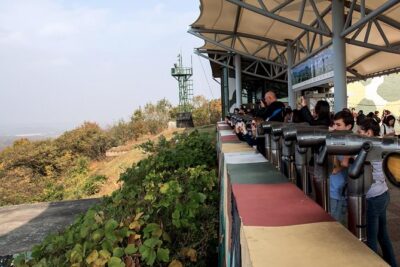
DMZ Tour: 3rd Tunnel, Option(Suspension Bridge, Boat) from Seoul
Read our review →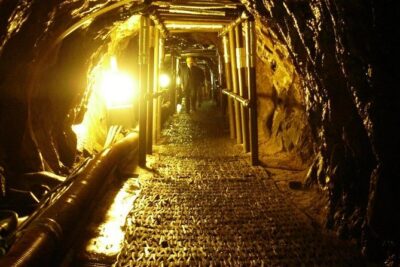
DMZ tour south Korea from Seoul (NK experience hall, defector)
Read our review →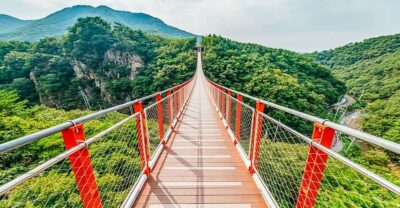
DMZ Insider Tour: 3rd Tunnel, NK Defector Meet & Red Bridge
Read our review →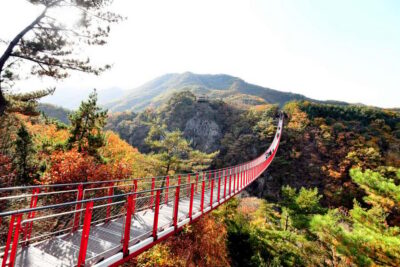

Signature DMZ Tour: Exclusive Defector Talk & Suspension Bridge
Read our review →
Thrilling Korean DMZ 3rd Tunnel Tour from Seoul + Red Bridge Rush
Read our review →
DMZ Past and Present: Korean Demilitarized Zone Tour from Seoul
Read our review →Browse the lists this tour appears in