
Reviewed · SEOUL TOURS
From Seoul: 5-Day Tour of Korea with UNESCO Sites
Korea’s best-known sights are spread far beyond Seoul, and this five-day route links them in one brisk sweep. You’ll see royal tombs, old fortresses, Buddhist temples, a preserved Joseon village, Busan’s seafood market, and Mt. Seorak without arranging several separate train trips or hotel changes yourself.
I especially like the mix of UNESCO sites and everyday Korea, from Gongsanseong Fortress to Jagalchi Fish Market. The included breakfasts, air-conditioned transport, and English-speaking guide also make the $999 price easier to weigh. The tradeoff is pace: you cover a lot of ground, and some stops may feel short if you prefer slow museum visits.
Key points at a glance
- Gongju and Gyeongju: Visit major Silla and Baekje-era sites, including royal tombs, fortresses, Bulguksa Temple, and Seokguram Grotto.
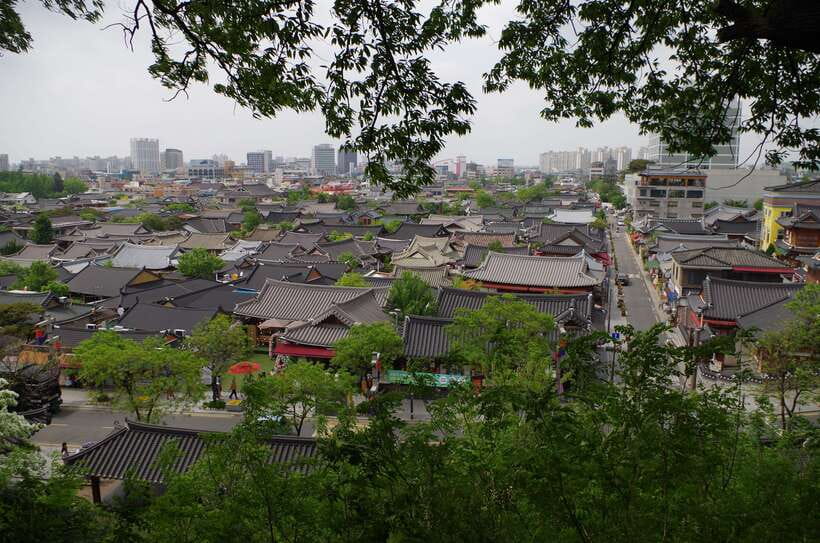
- Jeonju Hanok Village: Stay close to traditional tiled-roof homes and narrow lanes, with time to explore after the day’s transfer.
- Gwangju and Yeosu: Learn about Korea’s democratic movement and follow sites linked to Admiral Yi Sun-sin.
- Busan in a few strong stops: Eat or browse at Jagalchi Fish Market, then see Haeundae Beach and Dongbaek Park.
- Andong Hahoe Village: Walk through a preserved Joseon-era settlement once visited by Queen Elizabeth II.
- Seoraksan condition: The final mountain visit can be restricted in October, and the optional cable car costs extra.
Why this route works for a first look at Korea
This tour is built for you if Seoul is only part of your Korean holiday. Instead of staying in the capital and making day trips, you move south and east through several important cultural regions, then return by way of Pyeongchang and Seoraksan.
The route covers a remarkable range in five days. You’ll see Baekje remains in Gongju, traditional homes in Jeonju and Andong, memorial sites in Gwangju, naval history in Yeosu and Jinju, Silla monuments in Gyeongju, and modern coastal Korea in Busan.
That variety is the main reason to book. You are not signing up for five days of temples or five days of scenic viewpoints. You get a changing picture of the country, though you also spend plenty of time on the road. The exact vehicle size depends on the number of people joining, so the group atmosphere and amount of personal space can vary.
The tour begins at the Donghwa Duty Free Shop Building by Gwanghwamun Intersection. Meet your guide at Exit 6 of Gwanghwamun Station, where the guide holds a K-shuttle sign. Hotel pickup in Seoul is not included, so allow time to reach the meeting point.
More UNESCO Sites in Seoul:
- Seoul: Ganghwa Island UNESCO World Heritage Private Tour
★ 5.0 · 8 reviews - From Busan: Gyeongju UNESCO World Heritage Guided Day Tour
★ 4.8 · 1,250 reviews - Jeju: Eastern Jeju UNESCO Spots Day Tour
★ 4.9 · 1,148 reviews
Day one: Gongju’s royal tomb and fortress walls
The first stop is the Tomb of King Muryeong, one of the UNESCO-listed sites connected with Gongju’s Baekje heritage. The tomb gives you a direct link to the kingdom that ruled parts of the Korean Peninsula before the Silla period. It is a more focused historical stop than a giant museum complex, so your guide’s explanation matters here.
Next comes Gongsanseong Fortress, also a UNESCO site. Its walls and elevated position help you understand why Gongju mattered as a capital. Wear shoes with a firm grip, since fortifications often mean slopes, steps, and uneven walking surfaces.
After the morning’s historical sites, the group travels to Jeonju. You stay at the Jeonju Ramada Hotel or a similar property near Jeonju Hanok Village. That location is useful because the traditional quarter is close enough to explore without arranging another ride.
Jeonju Hanok Village is one of the tour’s more atmospheric stops. The old-style homes, tiled roofs, and lanes give you a chance to see Korean design at street level rather than only behind a temple gate. Depending on the day’s timing, you may have limited independent time, so ask your guide when you can walk out on your own.
Day two: Gwangju, Suncheon, and Admiral Yi in Yeosu
After breakfast, you travel to Gwangju, known here for its connection to Korea’s modern democratic movement. The May 18th National Cemetery is a serious, reflective visit. It commemorates those connected with the May 18 Democratic Uprising, and it adds modern political context to a trip otherwise centered on older dynasties.
This is not a light sightseeing stop, so give it your attention. The cemetery may be especially meaningful if you want to understand how Korea’s recent past shaped its present political life.
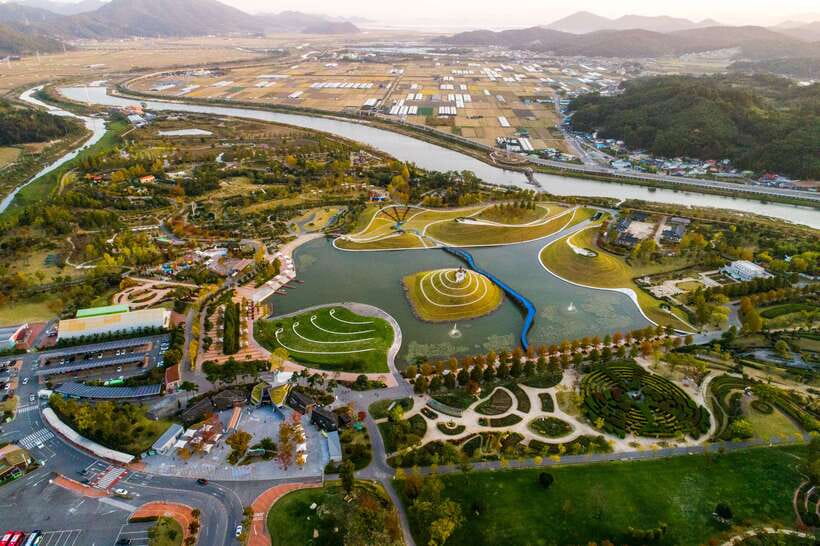
The group then continues to Suncheon Bay Garden. This is a major scenic change after the memorial. Gardens and wetlands form the focus, with paths and planted areas designed for walking and viewing. It is worth confirming the opening status before departure. One recent departure encountered a monthly closure that had not been clearly announced, and a stop like this can be difficult to replace at short notice.
The day ends in Yeosu, a port city with strong naval connections. You follow a historic path associated with Admiral Yi Sun-sin, the Korean commander linked with the country’s defense during the Japanese invasions of the 1590s. The stop is valuable because it connects a coastal setting with a figure you will hear about again when visiting Jinju.
Overnight accommodation is at the Ramada Plaza by Wyndham Yeosu or a similar hotel. You should have time to settle in, but this remains a full day with three distinct themes: democracy, gardens, and naval history.
Day three: Jinju and Busan’s seafood quarter
Jinjuseong Fortress introduces another chapter in Korea’s wartime past. The fortress is linked with the Japanese invasion of 1592, and the Chokseoknu Pavilion gives the site a strong visual focal point. The river setting and old defensive walls make this more than a quick photo stop, although the overall schedule does not allow a long, unstructured walk.
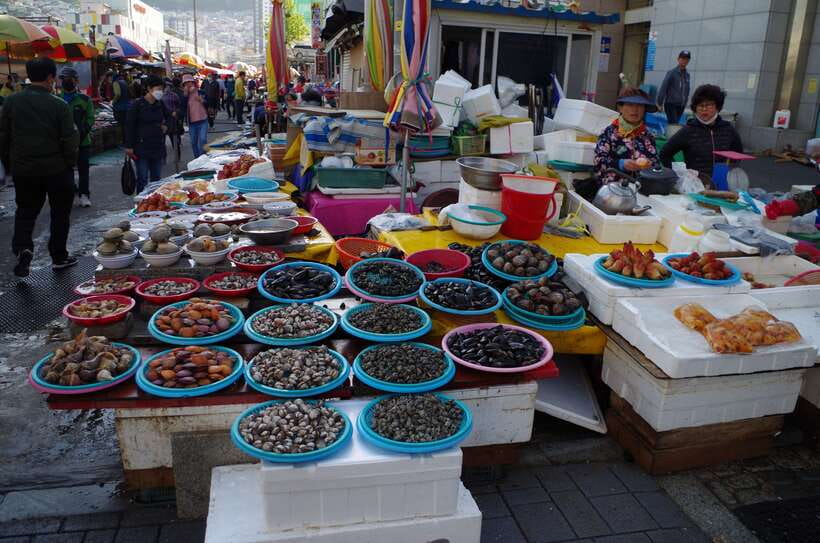
From Jinju, the route heads to Busan. Jagalchi Fish Market is the city’s largest seafood market and one of the best places on this itinerary to encounter present-day Korean food culture. You can look at the displays, absorb the market atmosphere, and decide what local seafood you might want to eat. Lunch and dinner are not included, so this is a natural place to plan your own meal if the timing allows.
You then visit Haeundae Beach and Dongbaek Park. Haeundae gives you Busan’s famous seaside view, while Dongbaek Park offers a greener walking setting around the coast. Together, the stops show why Busan feels so different from the inland historical towns earlier in the trip.
The day ends with the transfer to Gyeongju and hotel check-in at the Gyeongju Commodore Hotel or a similar property. This is a lot of movement, but it sets up the following morning near some of Korea’s most important Silla-era monuments.
Same base, a completely different sort of day:
- Seoul: Gyeongbok Palace, Bukchon Village, and Gwangjang Tour
★ 4.9 · 2,321 reviews - Full Day Tour In The Soop BTS Ver in PyeongChang Filming Location
★ 5.0 · 1,709 reviews - Best Seoul City Tour (Gyeongbokgung Palace,Insadong,Namsan Tower)
★ 5.0 · 1,647 reviews - Small-Group Royal Palace and Seoul City Tour (hotel pick-up)
★ 5.0 · 1,474 reviews
Day four: Seokguram, Bulguksa, and Andong Hahoe
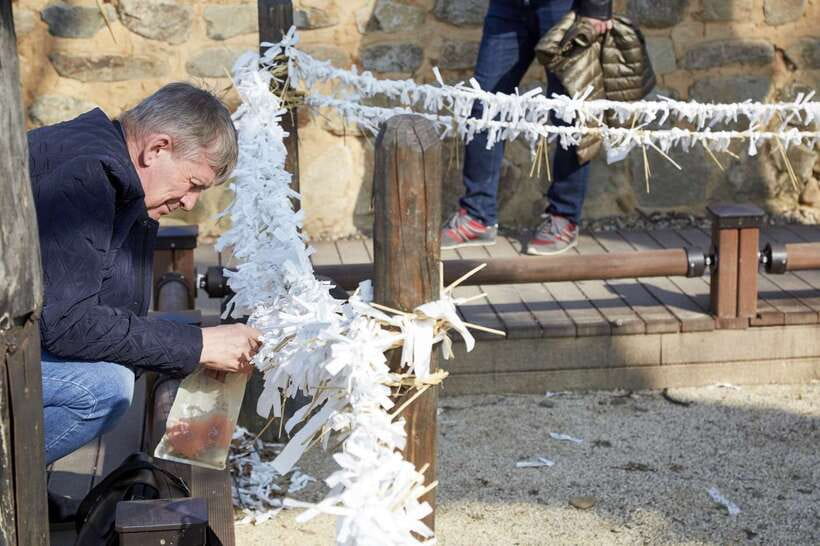
Gyeongju supplies the tour’s biggest concentration of major heritage sites. The morning begins at Seokguram Grotto, a UNESCO World Heritage Site known for its Buddhist sculpture and mountain setting. The visit is relatively specialized, and you may appreciate having a guide explain what you are seeing rather than treating the grotto as just another temple stop.
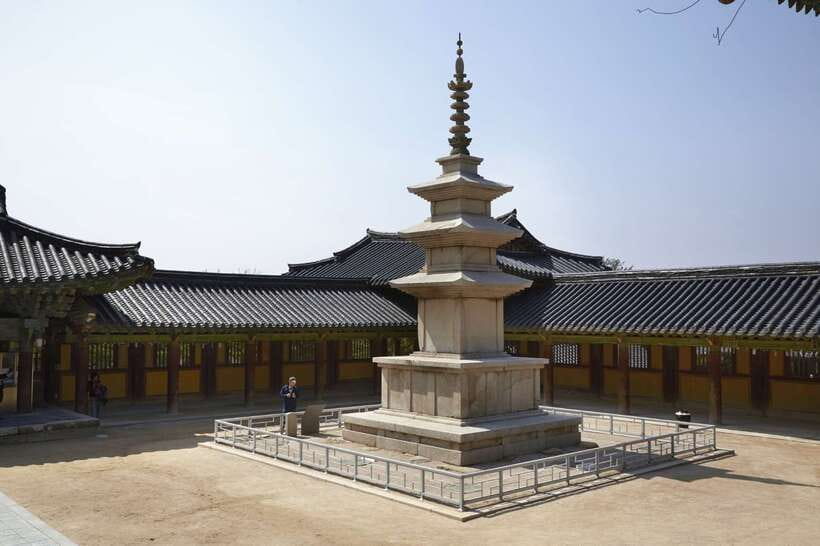
Bulguksa Temple follows. Its stone terraces, gates, halls, and religious history make it one of Korea’s essential temple visits. You will want comfortable shoes and a bit of patience, since the site involves walking across an uneven historic complex. It is also one of the places where a short schedule can leave you wishing for more time.
The route then turns toward Andong Hahoe Folk Village, another UNESCO site. This is a living settlement rather than a single monument. Traditional houses, lanes, and the wider setting help you picture Joseon-era village life. The village was also visited by Queen Elizabeth II, a detail that often helps put its international importance into perspective.
Hahoe is especially good for you if you enjoy architecture and ordinary domestic spaces. You are not only looking at a ceremonial building. You are seeing how homes, roads, and village patterns fit together.
The final transfer takes you to Pyeongchang, where you stay at the Ramada Hotel PyeongChang or a similar property. This is the longest-feeling day for many people because it combines two major Gyeongju sights with Andong and then another hotel move. The upside is that the next day begins in the mountain region rather than requiring a long early transfer from Gyeongju.
Day five: Seoraksan and the return to Seoul
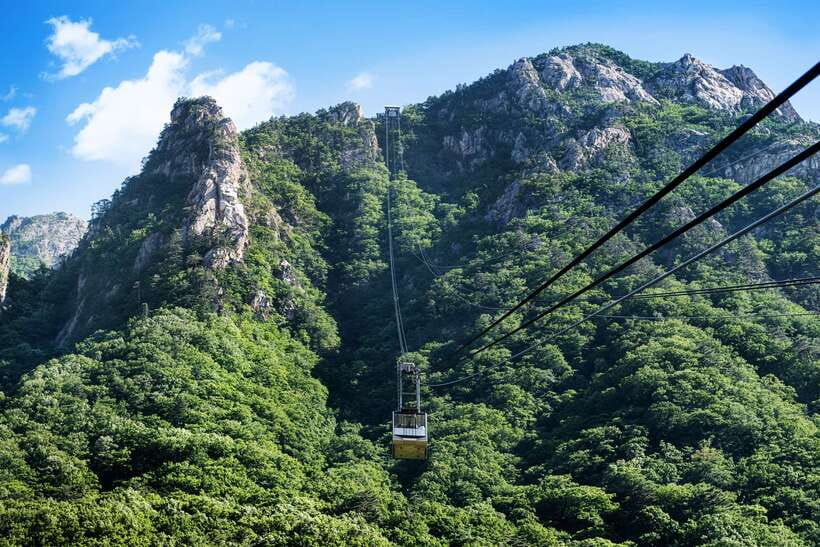
The last morning is reserved for Mt. Seorak National Park, described as a UNESCO Biosphere Preservation District. The park is known for mountain peaks, rocky valleys, and clear water running through the terrain. The scenery provides a welcome change after several days of buildings, memorials, and historic walls.
An optional cable car ride takes you toward Gwongeumseong Fortress for a higher view. The cable car is not included, and availability or waiting time can affect how much of the park you see. If you skip the cable car, the alternative mentioned for the area is Shinheungsa Temple.
October needs special care. Bus access into Seoraksan may be restricted, and you may need to walk 3.6 kilometers from the parking area to the entrance. The visit can also be skipped in October under the stated conditions. If Mt. Seorak is a major reason you want this tour, check the seasonal situation before paying and bring shoes suitable for a long walk.
The group returns to Gwanghwamun at about 5 p.m. That scheduled arrival is useful if you have an evening plan in Seoul, but I would avoid booking a tight flight or a fixed appointment immediately afterward.
Hotels, meals, and the real value of $999
At $999 per person, the price includes four nights of twin or triple-share accommodation, four hotel breakfasts, an English-speaking guide, selected admission tickets, and air-conditioned transport. You pay separately for lunch, dinner, travel insurance, the Seoul meeting-point transfer, and the optional Seoraksan cable car.
The value comes from the distance covered. Booking each hotel, arranging transport between nine or more destinations, and purchasing individual admission tickets would take time and could cost more, especially if you are not comfortable navigating regional Korea. The tour also removes the worry of returning to Seoul after each excursion.
The hotels are listed as the Jeonju Ramada, Ramada Plaza by Wyndham Yeosu, Gyeongju Commodore, and Ramada PyeongChang, or similar properties. Accommodation quality has generally been a strong part of the experience, with breakfast buffets receiving particular praise. Still, room category matters. One recent departure found rooms facing a road or parking area, so you should not assume every room has a pleasant view or quiet position.
Twin or triple sharing keeps the price down, but it also means you should be comfortable sharing. Solo occupancy details are not provided, so ask the operator before booking if you need a private room.
Bring enough Korean won before leaving Seoul. Currency exchange can be difficult during the route, and you will need money for meals, personal purchases, and optional extras.
Guides, pace, and what the schedule feels like
The tour offers live guidance in English and Korean. Justin and Mr. Kim have recently led departures, and the available feedback gives particular credit to their work. A capable guide is important here because the route has many short historical stops, and the meaning of a tomb, fortress, or memorial is easy to miss without context.
The schedule is efficient, not leisurely. You will change hotels every night, with the exception of the broader rhythm of the route, and you will often travel after visiting a site. One recent assessment suggested that an extra day or two would allow a better pace. I agree with that as a planning point, especially if you want time for museums, cafés, shopping, or independent walks.
The upside is that the tour lets you see places that are awkward to combine on your own in only five days. The downside is that you may have to choose between photographing a site, listening to the explanation, and simply sitting for a few quiet minutes. Keep your expectations realistic and this structure works much better.
Who should book this five-day tour?
I would choose this tour if you want a broad first look at Korea outside Seoul and prefer a guide to handle the long transfers. It suits you especially well if UNESCO sites, temples, traditional villages, and modern Korean history all appeal to you.
It is also a good fit if you have limited holiday time. In five days, you reach Gongju, Jeonju, Gwangju, Suncheon, Yeosu, Jinju, Busan, Gyeongju, Andong, Pyeongchang, and Seoraksan. That is a lot of Korea for one booking.
I would hesitate if you dislike early starts, hotel changes, or long road journeys. You may also prefer a slower independent itinerary if food, shopping, nightlife, or extended time in Busan matters more to you than heritage sites.
The rating is strong at 4.8 from 22 evaluations, and the most consistent positives are the organization, hotel quality, breakfasts, and guides. Balance that with the two practical cautions: Suncheon Bay Garden’s operating calendar needs checking, and Seoraksan can be restricted in October.
Should you book it?
Book this tour if you want the hard work handled and value seeing many sides of Korea in a short window. The mix of Gongju, Gyeongju, Andong, Busan, Gwangju, and Seoraksan is its real strength.
Before booking, confirm the October Seoraksan plan, ask about room arrangements, and be ready for a quick pace. If you can add one or two days to your Korea trip, use them before or after this tour for slower time in Seoul or Busan. At $999, the tour offers solid value for transport, hotels, breakfasts, guidance, and selected entries, as long as you value coverage more than free time.
FAQ
Where does the tour begin in Seoul?
Meet at the Donghwa Duty Free Shop Building at Gwanghwamun Intersection. It is near Exit 6 of Gwanghwamun Station, and your guide will hold a K-shuttle sign.
Where does the tour finish?
The tour returns to Gwanghwamun in Seoul at about 5 p.m. on day five.
Are Seoul hotel transfers included?
No. Pickup and drop-off from your Seoul hotel are not included. You need to reach the Gwanghwamun meeting point yourself.
What accommodation is included?
The package includes four nights in twin or triple-share rooms. Listed hotels include Jeonju Ramada Hotel, Ramada Plaza by Wyndham Yeosu, Gyeongju Commodore Hotel, and Ramada Hotel PyeongChang, or similar properties.
Are meals included?
Hotel breakfasts are included. Lunch and dinner are not included, so bring enough Korean won for meals during the route.
Is the tour available in English?
Yes. The live tour guide service is available in English and Korean.
Is the Seoraksan cable car included?
No. The cable car to Gwongeumseong Fortress is optional and is not included in the stated package price. Shinheungsa Temple is another option in the area.
Can the Seoraksan visit be restricted?
Yes. The visit may be restricted or skipped in October. Bus access can be limited, and you may need to walk 3.6 kilometers from the parking area to the entrance.
Newest Seoul trips on the site
- Seoul : Must-see & Hidden Gems Private Walking Tour★ 4.9 · 8 reviews
- Seoul: Lotte World Aquarium Ticket★ 4.5 · 10 reviews
- Seoul: Max Out Must Visit City Highlights Panoramic Day Tour★ 5.0 · 7 reviews
- Seoul: K-Fashion Shopping Tour with a Professional Stylist★ 5.0 · 5 reviews
- From Seoul: Korea Spring Cherry Blossom Day Tour★ 4.8 · 6 reviews
- Seoul: Guided Street Food Tour at Namdaemun Market★ 5.0 · 10 reviews
- Seoul: Jisan Forest Winter Ski Day Tour with Basic Lesson★ 4.4 · 6 reviews
- Jisan Forest Resort: Ski Full-Day Tour or Shuttle from Seoul★ 5.0 · 4 reviews
Seoul Tours, compared.
Gyeongbok Palace, Bukchon Village, and Gwangjang Tour
Read our review →
Full Day Tour In The Soop BTS Ver in PyeongChang Filming Location
Read our review →
Best Seoul City Tour (Gyeongbokgung Palace,Insadong,Namsan Tower)
Read our review →
Small-Group Royal Palace and Seoul City Tour (hotel pick-up)
Read our review →
Seoul City Sightseeing Tour Including Gyeongbokgung Palace, N Seoul Tower, and Namsangol Hanok Village
Read our review →
Gyeongbok Palace, Bukchon Village, and Gwangjang Tour
Read our review →
Local Home Korean Cooking Class & Market Adventure in Seoul
Read our review →Browse the lists this tour appears in