
Reviewed · DMZ TOURS
From Seoul: Aegibong Starbucks Observatory & DMZ View
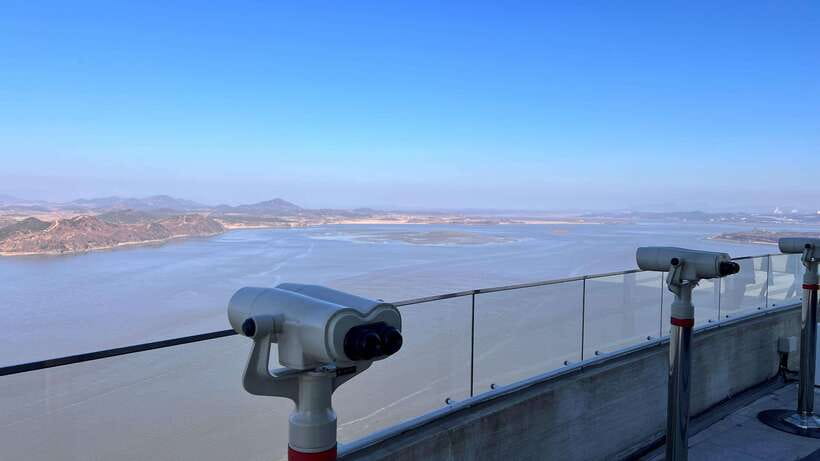
The unusual draw here is simple: you can sit at the closest Starbucks to the DMZ while looking across the Jogang River toward North Korea. The view is not a stage-managed border spectacle. It is a quiet, distant look at villages and fields on the other side, paired with a short history lesson and a walk through Aegibong Peace Park.
I like the short five-hour schedule and the easy round-trip transport from Seoul. I also like the mix of sights: the 112-meter suspension bridge, exhibition spaces, outdoor viewpoints, and the observatory all give you something different to do. The main consideration is weather. Fog and cloud can soften the North Korean view, so this is best for you if the setting and the historical context matter as much as a clear photograph.
Key points to know before booking

- North Korea is about 1.4 kilometers away: Jogang Observatory gives you one of the closest public viewpoints in the area.
- The Starbucks is part of the visit: You can buy a drink or snack and look through the large windows toward the river.
- The suspension bridge is 112 meters long: It links the Themed Gardens with Sky Forest Garden and adds a bit of excitement to the park visit.
- The tour takes about five hours: You get a border-area experience without giving up an entire day in Seoul.
- English-speaking guides add the context: Guides including Hana, Eva, Gogo, Crystal, and Yuna have led groups with clear explanations and practical help.
- Bring your passport: It is specifically required for this border-area excursion.
Why this Aegibong trip feels different from a standard DMZ day
Aegibong Peace Park offers a quieter and more focused way to see the Korean border. You are not spending the day moving from one major military attraction to another. Instead, the tour centers on one park, one observatory, the river view, and the story of the people who once lived along this waterway.
The park sits on Aegibong, a small mountain at Hill 154 in Gimpo. Its older name was Ssukgatmeori Mountain, referring to its resemblance to a daisy crown. The site also carries a traditional story about the Governor of Pyeongan Province and Aegi during the Qing invasion of Joseon.
The location later became a military position during the Korean War. That history gives the visit more weight than a simple scenic lookout. You can look across a peaceful river while hearing how the same area became a place of conflict and separation.
I find the contrast particularly effective. The park has gardens, art, exhibition rooms, a modern cafe, and a suspension bridge. Across the water, North Korea remains visible but remote. The setting is calm, yet the border is never far from your thoughts.
More Observation Decks in the DMZ
- Closest Observatory to DMZ & Suspension Bridge Tour from Seoul
★ 5.0 · 664 reviews - Premium Private DMZ Tour & (Suspension Bridge or N-Tower) include lunch
★ 5.0 · 348 reviews - Closest Observatory to DMZ: North Korea View(Starbucks Tour)
★ 4.9 · 97 reviews
Leaving Seoul and riding to Gimpo
You can choose among starting points in Seoul, including Myeong-dong, Hongik University Station Exit 3, and The Plaza Seoul, Autograph Collection. The exact meeting point depends on the option you book, so check the pickup details carefully before you leave your hotel.
The tour ends at Hongik University Station Exit 4. That is useful if you want to continue exploring Seoul afterward. You can have lunch, shop, or visit another neighborhood without building a full day around the excursion.
Transport is one of the strongest practical features. The tour uses a bus or minibus, and several groups have described the ride as smooth, comfortable, and air-conditioned. Some vehicles are described as comfortable Mercedes minibuses. The trip is a much easier choice than trying to organize public transport and park access on your own.
The road time also gives your guide a chance to explain the border area. Guides such as Gogo, Eva, Hana, Crystal, Alice, Yuna, and Lina have been praised for clear English and engaging explanations. Your guide will vary, but the repeated strength of this tour is the human side: history is explained in a conversational way, questions are welcomed, and guides may help take photographs.
Aegibong Peace Park: art, gardens, and a serious past
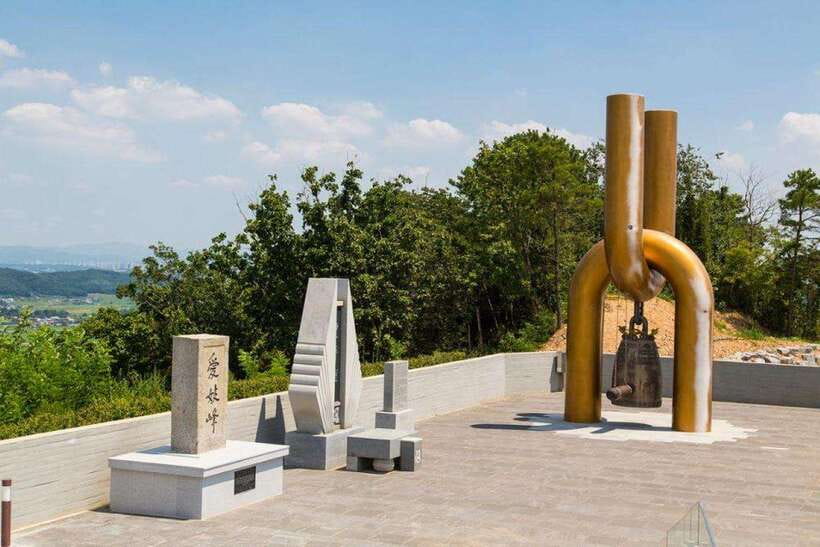
Your main stop is Aegibong Peace Park, where you spend about an hour and a half. The park combines open-air spaces, themed gardens, exhibition areas, and views toward the river.
This is not a place to rush through for one photograph. You have time to walk, listen to the guide, and look at the area from several angles. The mix of art, tradition, and modern visitor facilities makes the park feel more layered than a basic military lookout.
The park’s setting also explains why the tour can feel emotional. Before the Korean War, the Jogang River area included a village of roughly 100 households. After the 1953 ceasefire agreement designated the river mouth as Neutral Waters at the Hangang River Estuary, residents lost their homes and scattered.
That story is important because it moves the border from an abstract line on a map to a place where ordinary families once lived. The park’s name and local legends add another layer, connecting the current viewpoint with older Korean stories.
You will also hear about the river’s natural side. The Jogang is downstream from the Hangang, where the Imjingang, Hangang, and Yeseonggang Rivers meet before flowing into the West Sea. Its name refers to a large river or grandfather river, an apt description of its broad appearance.
Because people avoided this river basin for decades, it became home to a wide range of wildlife, including endangered and protected species. The park therefore gives you more than a political view. It also shows how a divided zone can become an unexpected refuge for nature.
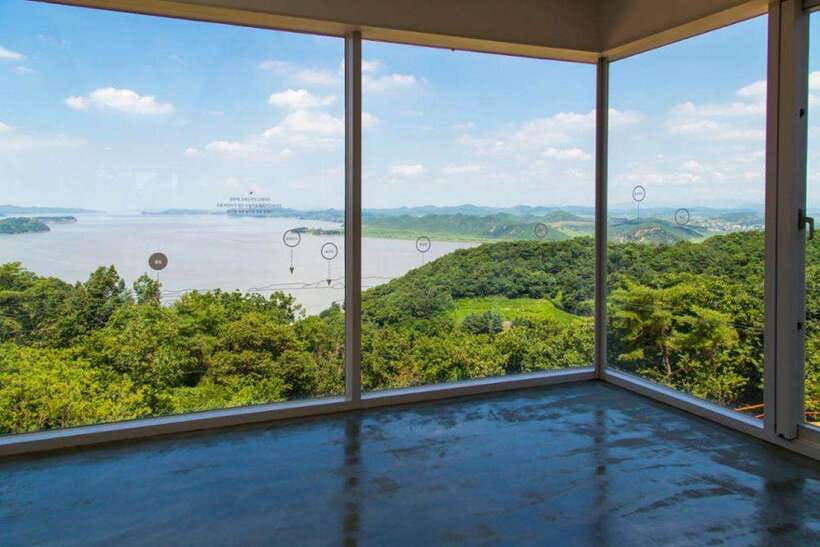
The exhibition hall and its large river-facing window
The exhibition hall is a useful first stop because it gives you a sheltered way to understand the area. From the large front window, you can look toward the Jogang River area while learning about its past and present.
Videos related to the river play inside the exhibition hall. This helps when weather is less cooperative or when the distant details are hard to see outside. A cloudy day does not erase the visit, although it can reduce the clarity of North Korea in the distance.
The hall is also on the second floor, where the river view opens up from inside. If you want a break from walking or need a quieter place to study the setting, this part of the park is useful.
Your guide may keep the history concise or offer more detail depending on the group. Guides Eva, Gogo, Alice, and Yuna have been singled out for making Korean War history understandable without turning the visit into a lecture. That balance matters. The subject is serious, but the experience remains approachable.
Same base, a completely different sort of day:
- Best DMZ Tour Korea from Seoul (Red Suspension Bridge Optional)
★ 5.0 · 41,422 reviews - DMZ Tour: 3rd Tunnel, Option(Suspension Bridge, Boat) from Seoul
★ 5.0 · 21,373 reviews - DMZ tour south Korea from Seoul (NK experience hall, defector)
★ 5.0 · 20,599 reviews - DMZ Insider Tour: 3rd Tunnel, NK Defector Meet & Red Bridge
★ 4.9 · 15,214 reviews
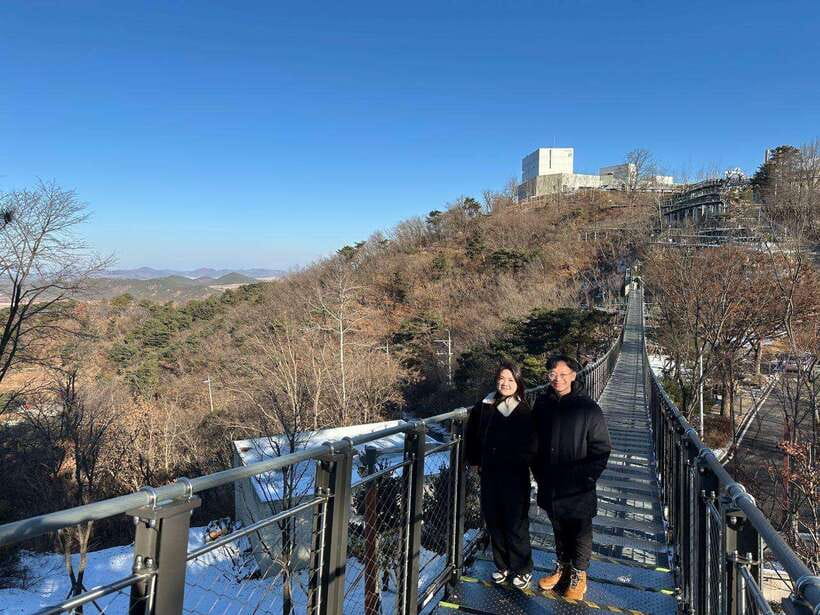
Crossing the 112-meter suspension bridge
The suspension bridge connects the Themed Gardens with Sky Forest Garden. At 112 meters, it is long enough to add a little thrill without becoming the whole purpose of the visit.
I like this part because it breaks up the viewing and listening. You move through the park, cross above the surroundings, and get another angle on the peaceful setting. The bridge is a natural spot for photographs, but it also gives the tour a physical element that a standard observatory visit might lack.
The description of the bridge emphasizes exhilaration and joy in a peaceful place. That contrast fits Aegibong well. The border story is heavy, while the bridge and gardens make the visit more relaxed and accessible for families or anyone who prefers a mixture of history and outdoor activity.
Still, you should not book this tour expecting a long hike. The bridge is a feature within the park, not a demanding trekking route. The main focus remains the observatory and the view across the river.
Jogang Observatory and the North Korean view

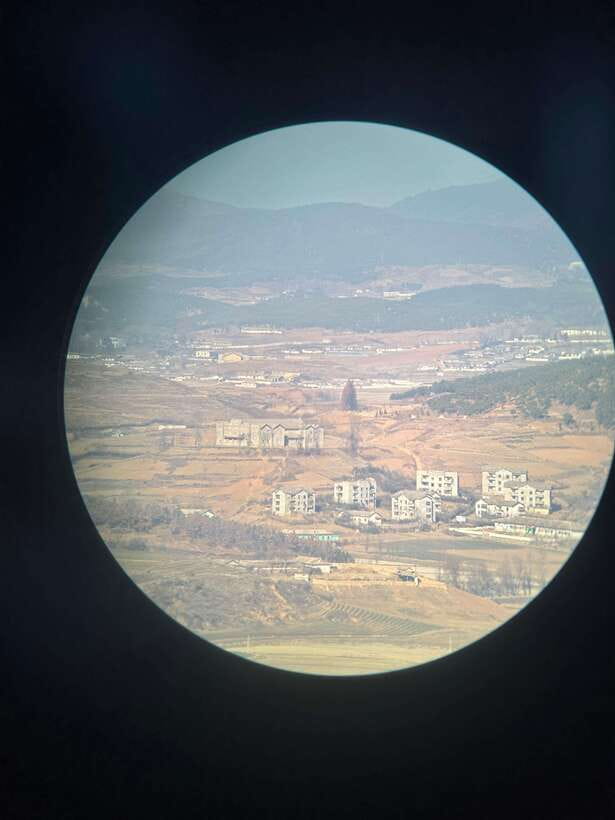
Jogang Observatory is the most important stop. It is an outdoor viewpoint looking toward Gaepung-gun in North Korea from about 1.4 kilometers away, making it the closest observatory described in this experience.
The distance is close enough to make the view feel real, but not so close that every detail will be sharp with the naked eye. Telescopes are available, and clear weather can reveal North Korean villages and people moving around. Several visitors have described the view as especially impressive when conditions are good.
Bring patience. The river, distance, haze, and weather all affect what you can see. On a cloudy or foggy day, the view may be less precise. Even then, the physical closeness of the opposite bank and the history of the area still make the stop worthwhile.
You have roughly an hour and a half for the park and observatory portion of the visit. That is enough time for a guided explanation, photographs, telescope viewing, and a drink at Starbucks without feeling hurried. It is also a better fit for you if you want a compact border experience rather than a full-day schedule.
The observatory is not just a place to point a camera. Look at the shape of the river, the open space on the opposite side, and the difference between seeing a country from a distance and learning about its people through a guide. Guides have discussed subjects including education in North Korea, separation across generations, and the present border situation. The exact discussion will vary, but the setting invites serious questions.
Starbucks with a view toward North Korea
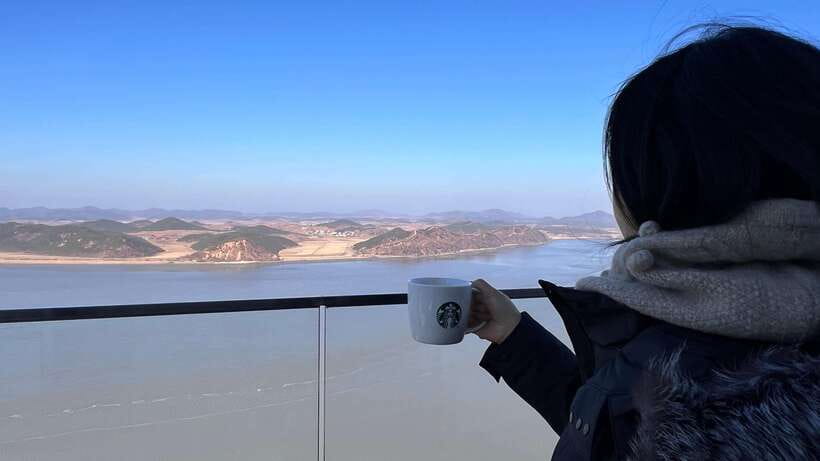
The Starbucks sits on the top floor of the park’s visitor facilities. It is an unexpected place to stop for coffee, but that is part of the appeal. You can buy a drink or a bite, sit by the windows, and look toward the Jogang River and North Korea.
Food and drinks are not included in the $45 price, so budget separately if you want coffee. The cafe is not the only reason to book the tour, but it gives the outing a comfortable pause and makes the experience easy to remember.
I would not treat the Starbucks as a substitute for the outdoor observatory. The cafe windows provide a broad view, while the outdoor space and telescopes are better for studying the opposite bank. Used together, they give you two moods: a quiet coffee stop and a more direct border lookout.
This is also a good feature for groups with different interests. One person can take photographs, another can use the telescopes, and someone else can sit indoors with a drink. The park does not force every moment into a formal presentation.
What the $45 price actually covers
At $45 per person, the tour offers solid value if you want a guided border visit without spending a full day away from Seoul. The fee includes round-trip transportation, an English-speaking guide, and all entrance fees.
That matters because the destination is outside central Seoul and access involves more than simply finding a cafe. You are paying for the ride, the park admission, the guide’s interpretation, and the convenience of a planned return to the city.
The price does not include food or drinks. That is a small extra cost, but remember it if the Starbucks stop is part of your plan. You should also bring your passport, which is required.
The strongest value comes from the time saved. You receive a five-hour outing and can be back near Hongik University Station with much of the day remaining. This worked especially well for people who wanted to see the DMZ area but did not want a long military-focused excursion.
Who will enjoy this tour most
You should consider this trip if you want:
- A short introduction to the DMZ area from Seoul
- A direct view toward North Korea without a full-day commitment
- A guide who can explain the Korean War and local history in English
- A calm park setting with gardens, a bridge, and exhibition spaces
- Comfortable transport and a simple return to Seoul
- Time for coffee and photographs rather than a tightly packed schedule
It is especially well suited to a second border visit. If you have already seen the better-known DMZ sights around Paju, Aegibong offers a different viewpoint and a less crowded-feeling alternative.
You may want to choose another experience if your main goal is an extensive military tour, underground tunnels, or a long list of separate DMZ sites. Those features are not part of this outing. Aegibong is more focused: one park, one river, one close viewpoint, and the story around them.
Families can also find the pace manageable. One guide described including children in the explanations, and another helped with a baby car seat and stroller. Those details do not guarantee the same arrangements on every departure, but they show why the tour can work for a mixed-age group.
Weather, timing, and useful planning tips
Clear skies give you the best chance of seeing villages and movement across the river. Cloud and fog can limit the view, so keep your expectations flexible and pay attention to the park itself, the exhibition material, and the guide’s explanation.
Wear shoes suitable for walking around gardens and crossing the suspension bridge. The tour is not described as strenuous, but you will spend time outside and on your feet.
Bring your passport. Do not leave it at the hotel, since it is specifically required for this activity.
If you want coffee, plan to pay for it separately. The Starbucks is a highlight, but the beverage is not included in the tour price.
Finally, confirm the exact pickup location. Available starting points include Myeong-dong, Hongik University Station Exit 3, and The Plaza Seoul, but your selected option determines the meeting point. Clear instructions are important in Seoul, where nearby station exits can lead to very different streets.
Should you book Aegibong Starbucks Observatory?
Book this tour if you want a well-priced half-day trip with a real view toward North Korea, an English-speaking guide, and a comfortable ride from Seoul. The combination of Jogang Observatory, the river story, the suspension bridge, and a coffee stop gives you more variety than the title first suggests.
I would choose it on a clear day if possible, but I would not cancel the idea simply because the forecast is imperfect. The view may be softer, yet the park, exhibition hall, and historical setting still provide a worthwhile visit.
Skip it only if you need a full DMZ military itinerary or want to spend the entire day at multiple border sites. For everyone else, Aegibong is a compact, thoughtful way to see how close North Korea is to South Korea while leaving time for the rest of Seoul.
FAQ
How long does the Aegibong Starbucks Observatory tour take?
The tour lasts about five hours, including transport from Seoul and the visit to Aegibong Peace Park and Jogang Observatory.
What is the price of the tour?
The listed price is $45 per person.
What is included in the price?
Round-trip transportation, an English-speaking live guide, and all entrance fees are included.
Are food and drinks included?
No. Food and drinks, including anything purchased at Starbucks, cost extra.
Where can the tour start?
Starting options include Myeong-dong, Hongik University Station Exit 3, and The Plaza Seoul, Autograph Collection. The meeting point depends on the option booked.
Where does the tour finish?
The tour finishes at Hongik University Station Exit 4.
How far is North Korea from Jogang Observatory?
The observatory looks toward Gaepung-gun in North Korea from about 1.4 kilometers away.
Can I see North Korean villages from the observatory?
On clear days, you can see North Korean villages and possibly people moving around. Weather conditions affect visibility.
What language is the tour conducted in?
The live tour guide speaks English.
Do I need to bring my passport?
Yes. A passport is specifically listed as required for the tour.
Newest DMZ trips on the site
- Seoul: DMZ & Live Talk with North Korean Defector★ 4.9 · 50 reviews
- Seoul: DMZ Tour with Japanese-Speaking Guide★ 5.0 · 28 reviews
- Seoul: DMZ 2nd Tunnel and Suspension Bridge Tour★ 4.8 · 56 reviews
- Seoul: DMZ, 3rd Tunnel, Odusan or Suspension Private Tour★ 5.0 · 4 reviews
- Seoul: Closest DMZ Observatory with North Korea View (1.4km)★ 4.9 · 10 reviews
- From Seoul: Private DMZ and Odusan Observatory Full-Day Tour★ 4.9 · 34 reviews
- Private DMZ SPY Tour from Incheon Airport★ 4.6 · 7 reviews
- From Seoul: DMZ Tour and North Korea Experience Hall★ 4.7 · 34 reviews
DMZ Tours, compared.
Best DMZ Tour Korea from Seoul (Red Suspension Bridge Optional)
Read our review →
DMZ Tour: 3rd Tunnel, Option(Suspension Bridge, Boat) from Seoul
Read our review →
DMZ tour south Korea from Seoul (NK experience hall, defector)
Read our review →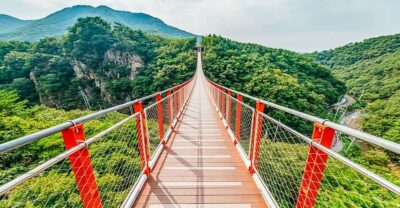
DMZ Insider Tour: 3rd Tunnel, NK Defector Meet & Red Bridge
Read our review →

Signature DMZ Tour: Exclusive Defector Talk & Suspension Bridge
Read our review →
Thrilling Korean DMZ 3rd Tunnel Tour from Seoul + Red Bridge Rush
Read our review →
DMZ Past and Present: Korean Demilitarized Zone Tour from Seoul
Read our review →Browse the lists this tour appears in