
Reviewed · SEOUL TOURS
Half day Morning Seoul City Tour(Temple & Gyeongbok Palace)
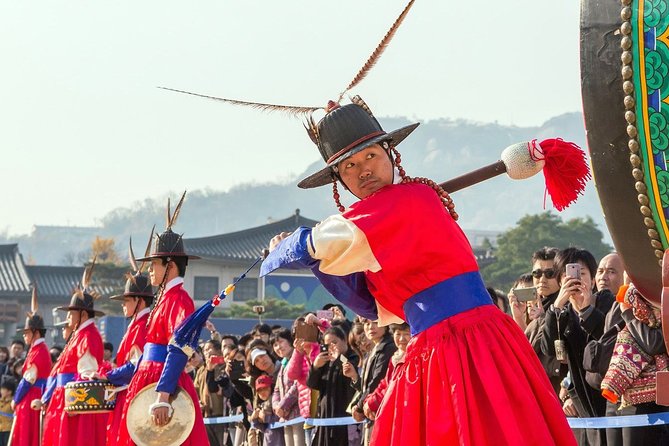
Gyeongbokgung Palace is the star here, especially if you arrive in time for the royal guard changing ceremony at Gwanghwamun Gate. In four hours, you also visit Jogyesa Temple and the National Folk Museum, giving you a useful first look at Seoul’s Buddhist, royal, and everyday traditions.
I like the hotel pickup and included admissions, which remove some morning hassle. I also like the English-speaking guides, including Cathy, Molly, Rose, KC, and others who have been praised for lively explanations and help with photos. The tradeoff is time: this tour moves quickly, and the ginseng museum stop may feel less useful than extra minutes at the palace.
Key points
- Royal Seoul before the crowds build: The morning schedule aims to reach Gyeongbokgung in time for the guard ceremony and better photo positions.
- Three different sides of Korean culture: Jogyesa Temple, the palace, and the National Folk Museum each tell a different story.
- Hotel pickup at 8:30 a.m.: Transportation helps you move between central sights without working out every subway connection.
- A quick, active four hours: You see a lot, but the palace and museum deserve more time than this schedule allows.
- Insadong finish: The tour ends in one of Seoul’s best areas for browsing, cafés, galleries, and lunch.
- Ginseng shopping included: The stop offers context about Korean ginseng, but some people may see it as sales time.
A fast start with Seoul’s royal past
This is a good first-morning tour if you want the major cultural sights before setting off on your own. The schedule begins at 8:30 a.m., with pickup at your Seoul hotel and transport between stops.
The tour has a maximum of 44 people, so do not assume you are booking a tiny private outing. The actual feel will depend on the day and the guide, but you should be ready to keep up, listen for instructions, and regroup promptly.
The strongest part of the tour is its mix. You do not spend four hours looking at palace gates alone. You move from a working Buddhist temple to the Joseon royal complex, then into a museum about ordinary Korean life. That range gives you useful context for the rest of a Seoul visit.
The 4.8 rating from 54 reviews and 93 percent recommendation suggest a strong record, especially for guides and organization. The main caution is repeated in the schedule itself: four hours is short for this much ground.
More Temple Tours in Seoul
- Best Things to Do – Half Day Seoul Trip (Seoul Palace & Temple)
★ 5.0 · 190 reviews - Seoul Mountain Hike: Temples, Folklore & Traditional Meal
★ 5.0 · 42 reviews - Korean Palace and Temple Tour in Seoul: Gyeongbokgung Palace and Jogyesa Temple
★ 4.5 · 38 reviews
Jogyesa Temple: a quiet first stop downtown
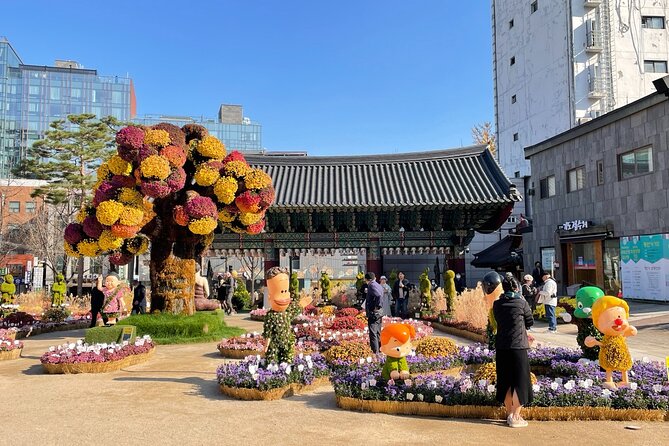
Jogyesa Temple provides a sharp contrast to Seoul’s busy center. Founded in 1935, it is an active Buddhist sanctuary rather than a preserved palace or museum display.
You have about 30 minutes here. That is enough to see the main setting, notice the atmosphere, and hear an introduction to Korea’s living Buddhist tradition. It is not enough for a slow, reflective visit or a detailed study of every building and object.
This stop works well at the start because it gives you a different way to think about Korean culture. Gyeongbokgung represents royal power and court life. Jogyesa points toward religious practice that continues in the modern city.
Your guide is important here. A rushed walk around temple grounds can feel like little more than a photo stop, while a clear explanation can help you notice why this place matters. Guides named Molly, Cathy, Rose, June, JJ, KC, and Moon have received praise for making history easy to follow and answering questions.
Gwanghwamun Square and the palace guards
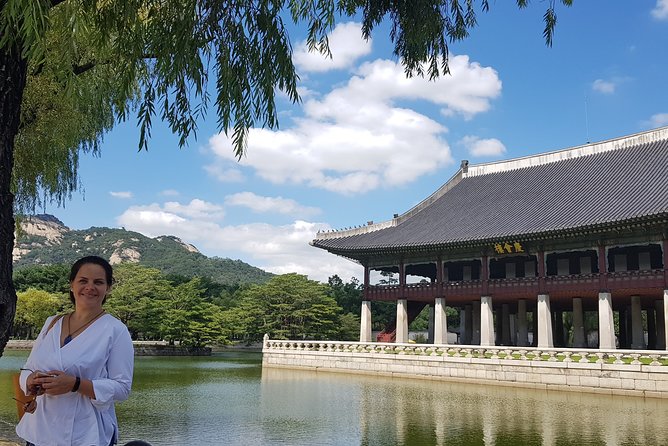
Gwanghwamun Square is a major civic space in central Seoul and the approach to Gyeongbokgung. The square is associated with Korea’s cultural and political past, and it provides a useful introduction before you enter the palace grounds.
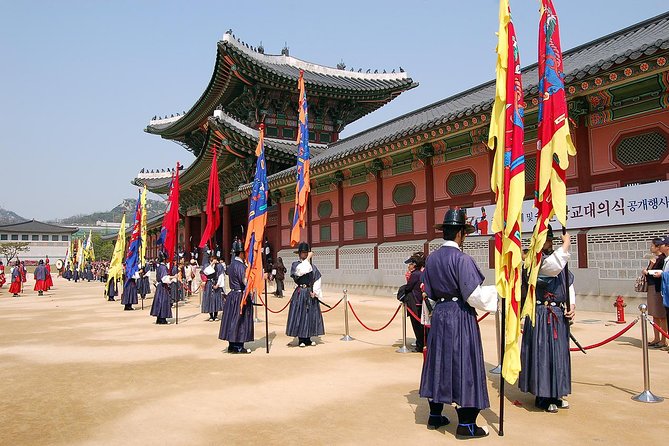
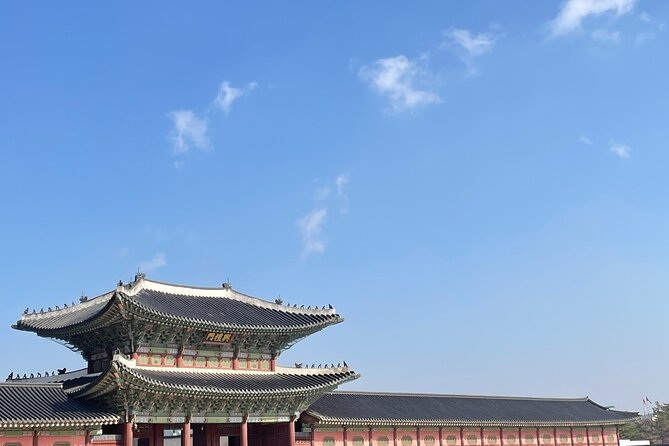
The itinerary allows about an hour at Gyeongbokgung Palace. The visit includes admission, and the timing is designed around the royal guard changing ceremony at Gwanghwamun Gate.
The ceremony is one of the tour’s most memorable photo opportunities. You can watch the guards change duty and confirm identities in a carefully staged display based on royal-era customs. If you have never seen it, it gives the palace visit a clear sense of occasion.
Try to stay close enough to hear your guide’s instructions and explanation. One guide, Cathy, was praised for reaching the palace early enough to find good positions for photographs. That timing matters because the gate and square can become crowded.
The palace itself is large. You will see important structures and hear about the Joseon dynasty, but you will not have time to inspect every courtyard or linger wherever you wish. One useful way to treat this stop is as an orientation. Note the areas you want to revisit later, then return independently if your schedule allows.
The ceremony is canceled in rainy weather. Gyeongbokgung is also closed on Tuesdays, when the itinerary changes to another attraction. Check the operating details before booking if the ceremony or palace is your main reason for going.
The National Folk Museum and everyday Korean life
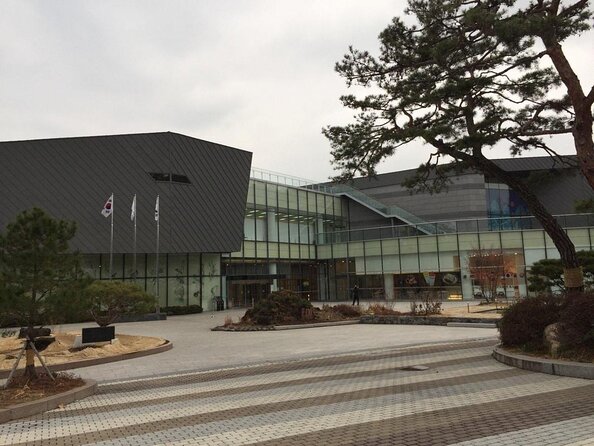
The National Folk Museum of Korea sits within the Gyeongbokgung grounds, so you do not need another long transfer. The visit lasts about 45 minutes and is included in the price.
This museum shifts the focus away from kings and court buildings. Its exhibits cover the daily life of Korean people across different periods, using artifacts and displays to explain customs, work, family life, and material culture.
I consider this one of the most valuable stops for first-time visitors. Palace architecture can be impressive, but a museum about ordinary routines helps you understand how people lived beyond the royal compound. It also gives your guide more ways to connect historical events with daily life.
Forty-five minutes is enough for an introduction, not a full museum visit. If you find yourself wanting more time, note the museum for a return visit. One guide, KC, was praised for keeping the group moving while covering many stops, and that is exactly the balance required here.
Families may find this stop useful because it breaks up the outdoor walking. One family reported that the children stayed engaged while the group covered the main cultural sights in one morning. Still, the pace may not suit young children who need frequent breaks.
More Palace Tours in Seoul:
- Seoul: Gyeongbok Palace, Bukchon Village, and Gwangjang Tour
★ 4.9 · 2,321 reviews - Best Seoul City Tour (Gyeongbokgung Palace,Insadong,Namsan Tower)
★ 5.0 · 1,647 reviews - Small-Group Royal Palace and Seoul City Tour (hotel pick-up)
★ 5.0 · 1,474 reviews - Seoul City Sightseeing Tour Including Gyeongbokgung Palace, N Seoul Tower, and Namsangol Hanok Village
★ 5.0 · 1,423 reviews
A look toward Cheongwadae and the Blue House
The vehicle passes by Cheongwadae Sarangchae, the area associated with the Presidential Blue House. The stop is listed as 15 minutes, but the group may not be permitted to pass close to the Blue House because of security restrictions.
That makes this more of a brief orientation than a full attraction visit. You may hear about Cheong Wa Dae, a name translated as Blue House, and its role as the Korean presidential residence.
Keep your expectations modest here. If access is restricted, the guide cannot turn this into an extended stop. The value is mainly in connecting Seoul’s royal center with its modern government district.
The ginseng museum stop and the tour’s main compromise
The final stop is the Cheongha Korea Ginseng Museum, with about 20 minutes for the museum and shopping. You learn about ginseng and the processes involved in preparing it, then have an opportunity to browse packaged products.
This is the part most likely to divide opinion. Some people appreciate learning about a well-known Korean product and may want to buy a gift. Others would prefer those 20 minutes at Gyeongbokgung or the National Folk Museum.
The sales element is not necessarily aggressive, but it is part of the stop. If shopping is not your interest, treat it as a short commercial pause rather than a core cultural sight. This is also why the tour can feel rushed toward the end, especially if the palace ceremony, walking, and museum explanations run close to schedule.
The ginseng stop does not make the tour poor, but it affects the value calculation. At $32 per person, the price is reasonable for transportation, a professional English-speaking guide, and palace and museum admission. It is less attractive if you mainly want extended time at the historic sites and have no interest in shopping.
Why the guide can make or break the morning
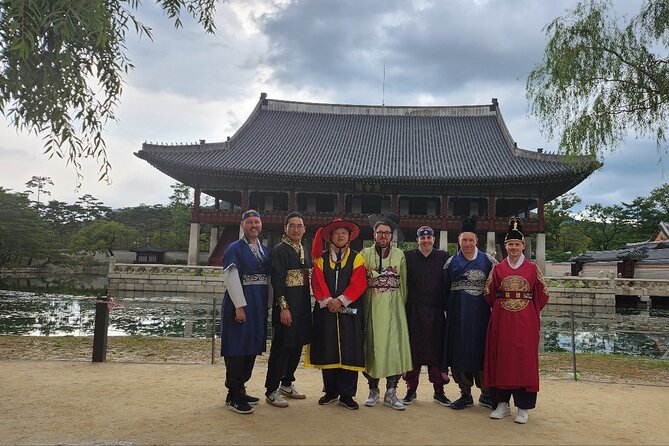
The guides receive the strongest praise in the available feedback. Molly was described as friendly, detailed, and strong on Korean architecture and the Joseon dynasty. Cathy was praised for adjusting the route on a hot, humid day and finding better positions for photographs. Rose was singled out for making Korean culture easier to understand.
Other guide names include KC, June, JJ, Lee, and Moon. Moon was praised for explaining Korea’s history and development with enthusiasm, while JJ was noted for useful historical explanations and a friendly manner.
That range tells you something practical: the guide is a major part of the experience, and the exact style can vary. You might get a lively history lesson, a photo-conscious escort, or a guide who focuses on keeping the group on schedule.
One small issue has also been noted: a guide’s microphone was sometimes difficult to understand. In a group that can reach 44 people, audio clarity matters. Stay near the guide when possible, especially at the palace and museum.
Transport, timing, and the Insadong finish
Hotel pickup is one of the tour’s best practical features. Seoul is easy to navigate by subway, but getting from a hotel to a specific morning meeting point can add stress, especially on your first day. Transportation between sights also keeps the schedule moving.
The advertised end point is Insadong. That is a useful place to continue your day, with shopping, arts, cafés, and food nearby. Several guide recommendations also pointed people toward lunch and further exploring after the tour.
The supplied details contain a small inconsistency: drop-off service is listed as not included, while the main description says the tour ends with drop-off in Insadong. Some experiences have also ended near Bukchon Village. Confirm the exact drop-off arrangement with Cosmojin Agency before booking, particularly if you have a timed reservation afterward.
Lunch is not included. That is not a problem because Insadong gives you a natural place to eat, but leave room in your plan after the tour. Do not book a tight afternoon activity across town unless you are comfortable allowing extra time for traffic and the final drop-off.
Who should book this four-hour tour?
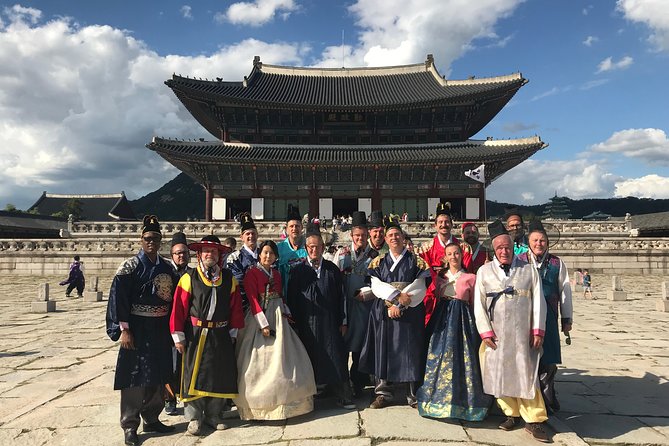
I would choose this tour if you have limited time in Seoul, want an organized first look at Korean culture, or prefer not to arrange transportation between central sights. It is also a useful choice for families who appreciate hotel pickup and a guide to keep the morning moving.
It suits first-time visitors who want a framework. After four hours, you will know which places deserve a longer return visit, and you will have learned enough about the Joseon dynasty, Buddhism, Korean daily life, and modern government to make later sightseeing more meaningful.
I would be more cautious if you are a serious palace enthusiast, a slow museum visitor, or someone who dislikes shopping stops. You may enjoy a self-guided day more, with two or three hours reserved for Gyeongbokgung and the National Folk Museum alone.
The tour is also not ideal if seeing the guard ceremony is nonnegotiable. Rain can cancel it, and Tuesdays replace the palace visit with another attraction. Those conditions are clear, but they matter when comparing this tour with a flexible independent visit.
Is the $32 price good value?
At $32, the value is solid for a four-hour morning that includes hotel pickup, transport, an English-speaking guide, and admission fees. You are paying for convenience as much as for sightseeing.
The cost works best when you count the time saved. You do not need to plan the route between Jogyesa, Gyeongbokgung, the museum, and the Blue House area. You also get historical explanations that can make the buildings and displays easier to understand.
The weaker part of the value is the limited time at each major site. If you have several days in Seoul, you may prefer to visit the palace independently and spend longer inside the museum. If you have only one or two days, the tour’s efficient coverage becomes more useful.
Free cancellation is available up to 24 hours before the 8:30 a.m. start time for a full refund. Changes or cancellations inside that window are not refunded, and the tour requires a minimum number of people to operate.
Should you book it?
Book it if you want a well-organized cultural introduction to Seoul, especially on your first morning or during a short stay. The palace ceremony, Jogyesa Temple, and National Folk Museum give you a good spread of sights, and the guides are often the reason the history comes alive.
Skip it if you want a slow palace visit or dislike a ginseng-shopping stop. For most people with limited time, though, $32 buys a useful morning and a clear plan for what to explore next in Seoul.
FAQ
What time does the tour start?
The tour starts at 8:30 a.m.
Is hotel pickup included?
Yes. Hotel pickup is included, along with transportation between the tour stops.
What happens if Gyeongbokgung Palace is closed?
Gyeongbokgung Palace is closed on Tuesdays, and the tour replaces it with another attraction.
Does the tour include the royal guard changing ceremony?
The itinerary is timed to include the ceremony at Gwanghwamun Gate, but the ceremony is canceled when it rains.
Is lunch included?
No. Lunch is not included in the tour price.
Where does the tour end?
The main description says drop-off is in Insadong. Because the supplied details also say drop-off is not included and some accounts mention Bukchon Village, confirm the final drop-off point with Cosmojin Agency before booking.
More Morning Tours in Seoul
- Morning Bike Tour along the Han River with a Local
★ 5.0 · 71 reviews - Jeju Island: Sunrise Guided Tour with Hotel Pickup
★ 4.7 · 4 reviews
Newest Seoul trips on the site
- Seoul : Must-see & Hidden Gems Private Walking Tour★ 4.9 · 8 reviews
- Seoul: Lotte World Aquarium Ticket★ 4.5 · 10 reviews
- Seoul: Max Out Must Visit City Highlights Panoramic Day Tour★ 5.0 · 7 reviews
- Seoul: K-Fashion Shopping Tour with a Professional Stylist★ 5.0 · 5 reviews
- From Seoul: Korea Spring Cherry Blossom Day Tour★ 4.8 · 6 reviews
- Seoul: Guided Street Food Tour at Namdaemun Market★ 5.0 · 10 reviews
- Seoul: Jisan Forest Winter Ski Day Tour with Basic Lesson★ 4.4 · 6 reviews
- Jisan Forest Resort: Ski Full-Day Tour or Shuttle from Seoul★ 5.0 · 4 reviews
Seoul Tours, compared.
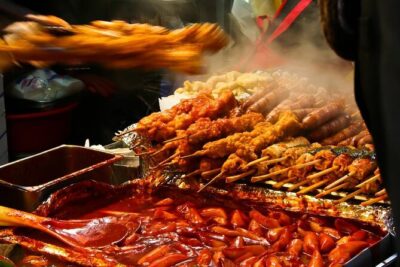
Gyeongbok Palace, Bukchon Village, and Gwangjang Tour
Read our review →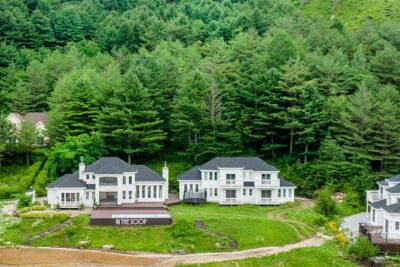
Full Day Tour In The Soop BTS Ver in PyeongChang Filming Location
Read our review →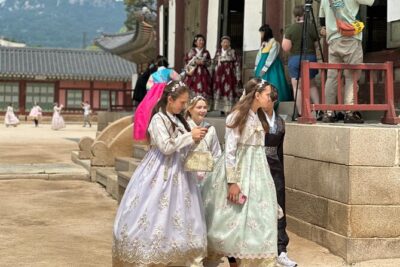
Best Seoul City Tour (Gyeongbokgung Palace,Insadong,Namsan Tower)
Read our review →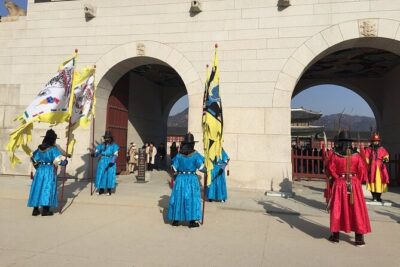
Small-Group Royal Palace and Seoul City Tour (hotel pick-up)
Read our review →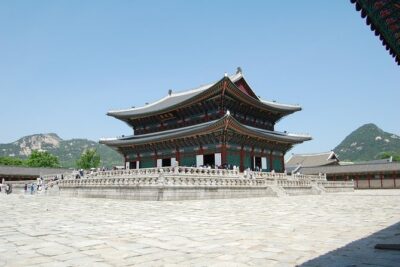
Seoul City Sightseeing Tour Including Gyeongbokgung Palace, N Seoul Tower, and Namsangol Hanok Village
Read our review →
Gyeongbok Palace, Bukchon Village, and Gwangjang Tour
Read our review →
Local Home Korean Cooking Class & Market Adventure in Seoul
Read our review →Browse the lists this tour appears in