
Reviewed · SEOUL TOURS
Make your K-scent perfume: Modern oneday class in Seoul
Making perfume is part science lesson, part personality test, and part edible introduction to Korea. At Casamu, you begin with Korean tea and snacks, then work through top, heart, and base notes before mixing a fragrance that is entirely yours. The final product is a 50ml bottle, not a quick spray from a shop shelf.
I especially like the Korean scent choices, which can include notes such as green tea, and the fact that you actually measure and blend the perfume yourself. The small group size, capped at four, also gives you room to ask questions and change your mind.
The one catch is decision fatigue. Forty selected accords is enough choice to make the final formula exciting, but also enough to leave you sniffing strips and second-guessing yourself. Give yourself time, and remember that the class lasts about two hours.
Key points to know before booking
- Korean tea starts the class: Seasonal tea and Korean sweets help set the mood and connect scent with memory.
- You test three formulas: The class includes three 5ml trial perfumes before you settle on your final blend.
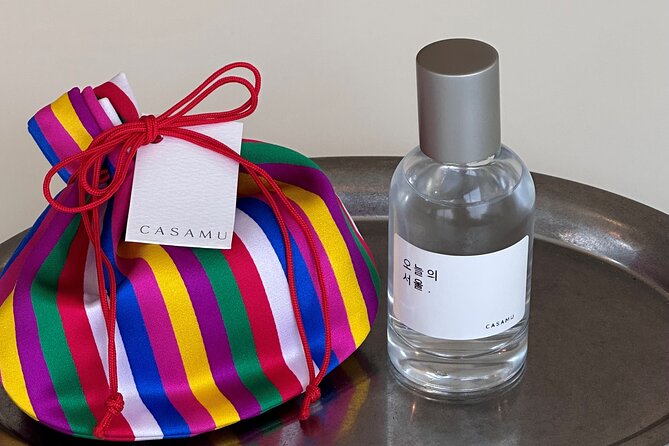
- You leave with a 50ml bottle: Your finished perfume is packed in a Korean blessing pouch with a small gift.
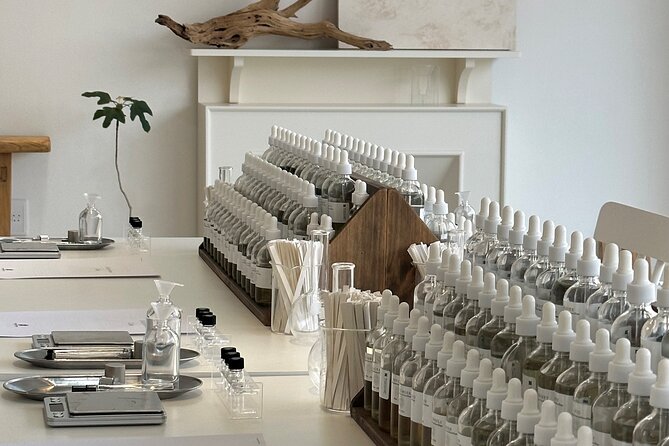
- You work with 40 selected accords: These come from Casamu’s wider collection of about 250 fragrances and include Korean-inspired materials.
- The group is very small: A maximum of four people makes this more hands-on than a large craft class.
- The setting is central: Casamu is on Eonju-ro 164-gil in Seoul’s Apgujeong area, close to public transportation.
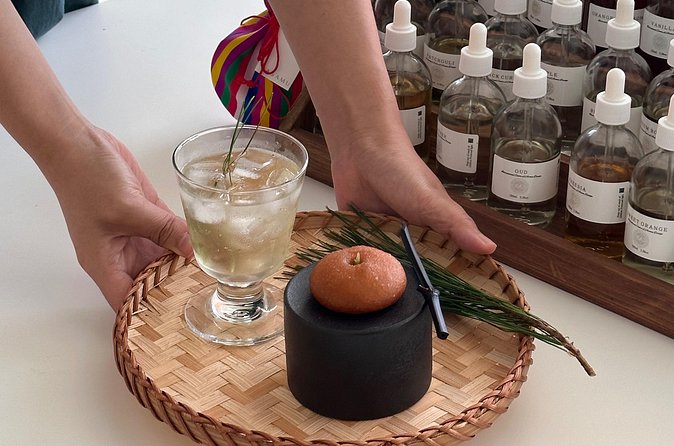
Starting with tea and a Korean scent memory
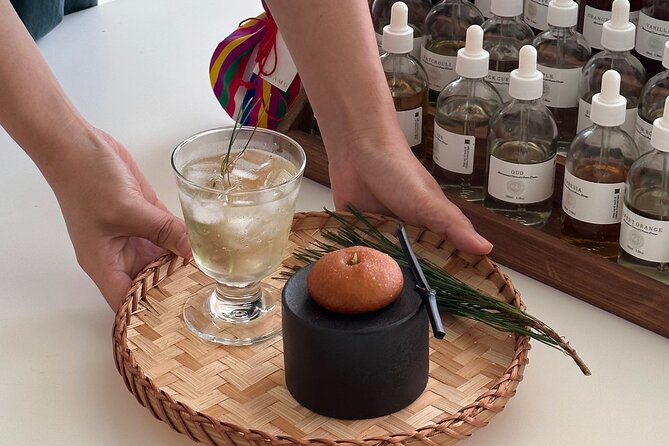
Casamu’s class begins in a bright, modern studio in Apgujeong, one of Seoul’s trend-focused areas. The opening da-gwa time pairs seasonal Korean tea with small traditional snacks. This is not just a polite welcome before the real activity starts. It gives you a way to think about familiar Korean tastes and smells before you begin mixing.
You might connect green tea with a quiet afternoon, roasted grains with a market visit, or a sweet snack with a favorite stop on your trip. The point is to bring a specific memory to mind. Instead of choosing a perfume at random, you have a story or feeling to guide the blend.
I like this start because it makes the class feel connected to Seoul. You are not simply combining generic floral and citrus scents. You have a chance to build a souvenir around Korean ingredients and impressions. One especially appealing option mentioned in the class experience is Korean green tea, a note that can remind you of time spent in Korea long after the trip ends.
The tea and snacks also make this a comfortable activity for people who know little about perfume. You do not need to arrive with a trained nose or a favorite fragrance family. The host leads you into the subject in a relaxed way.
More Craft Workshops in Seoul:
- Carve Your Personal Korean Stone Seal with Jeongju in Insadong
★ 5.0 · 134 reviews - Seoul: Create Your Own Natural Perfume with a Perfumer
★ 4.9 · 109 reviews - Write a Meaningful Korean Calligraphy Scroll in Insadong
★ 5.0 · 36 reviews
Learning the perfume pyramid without a lecture overload
Before you start blending, the instructor explains basic perfume structure. You learn about top, heart, and base notes, often called the olfactory pyramid. Top notes are the first scents you notice, heart notes form the main character, and base notes help the fragrance last and settle.
This short lesson matters because it gives you a plan. You can begin with a fresh top note, add a central floral, tea, or fruit character, then balance it with a warmer base. Without that framework, it is easy to pile favorite smells into one bottle and end up with a muddled result.
The instructors also explain where scents come from and how different ingredients behave. The class uses 40 selected accords and natural raw materials from Casamu’s larger collection of about 250 fragrances. The selection is broad enough for experimentation, but it is not an entire wall of options that leaves you on your own.
Safety is another useful detail. Casamu identifies as the ICAD Korean center and uses IFRA-certified fragrance materials for the perfume-making class. That does not turn the activity into a medical consultation, but it does show that the materials are chosen with established fragrance safety standards in mind.
The teaching style is friendly and patient. Henny is named as an instructor in the experience, and the class is offered in English for international customers. If you are unsure about a scent, ask for help before adding it. A patient guide can help you spot when a favorite note is overpowering the rest of the formula.
Testing three small perfumes before the final bottle
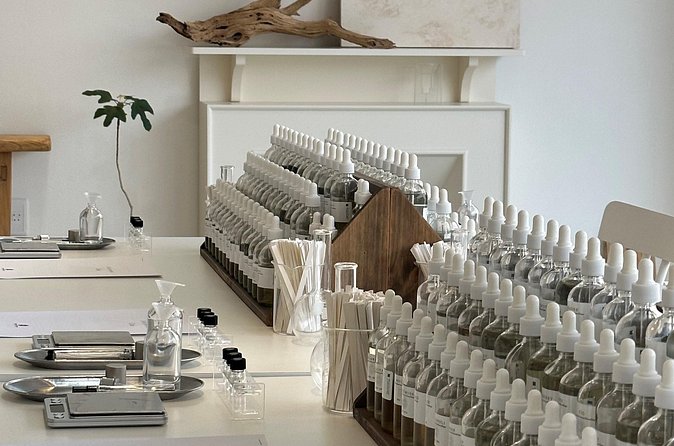
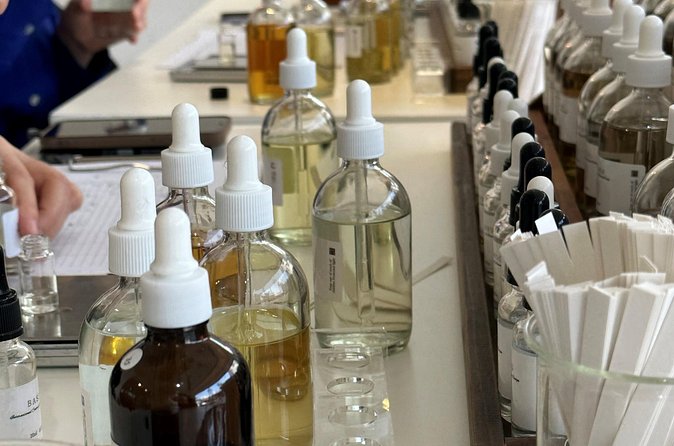
The most hands-on part begins at an individual perfume organ, the traditional-looking arrangement used to hold small scent bottles. Here, you smell, compare, and choose the ingredients for your own formulas.
You are not pushed straight into the 50ml bottle. First, you make three trial perfumes of 5ml each. This is the smart part of the process. A scent that seems appealing on a paper strip may change once it is blended with other materials. The trial stage lets you compare different balances before committing to the final version.
I suggest making your three tests meaningfully different. For example, one might lean fresh and green, another warmer and sweeter, and a third closer to the Korean scent you want to remember. If you use tiny variations in each trial, it can be harder to tell what you actually prefer.
The class lets you drop and measure the essences yourself. That gives you real ownership of the result. You are not merely choosing a label from a menu and handing the work to the staff. You take part in the blending and can see how the formula comes together.
Still, perfume making requires patience. Your sense of smell can tire after repeated sampling. Take short pauses between groups of scents, and do not assume the strongest smell is the best one. A gentle fragrance may become more appealing after it rests and settles.
This is also where the small group limit makes a difference. With no more than four participants, the instructor can spend time with each person. Families and small groups can compare choices, while a solo participant may receive very focused help. One person even had the session continue as a one-on-one class, though you should not assume every booking will work the same way.
Creating a 50ml signature scent
After the trial blends, you choose the formula for your final 50ml perfume. This is the moment when the activity shifts from experiment to keepsake. You can name the perfume and connect it to a particular day, person, meal, neighborhood, or feeling from your time in Seoul.
The final bottle is much more useful than a tiny craft sample. Fifty milliliters is a practical size for personal use, while the separate 10ml travel-sized bottle makes it easier to carry a smaller amount. The class also includes the three 5ml trial perfumes, so you have several ways to take the experience home.
The supplied details describe both the trial bottles and the travel-sized bottle, so confirm the exact packaging arrangement when you arrive if that matters to you. The important point is that you do not leave with only one untested mixture. You get repeated chances to refine the scent and a finished 50ml bottle at the end.
Your perfume is packed in a Korean blessing pouch with a small gift. That wrapping adds cultural character and makes the bottle ready to give as a present. It also helps the final product feel like a Seoul memento rather than a chemistry project in a plain container.
I would pay attention to the name you give your perfume. A name turns an attractive smell into a personal travel memory. Years later, Apgujeong Green Tea or Rainy Seoul Afternoon may tell you more than a standard souvenir ever could.
More Workshops in Seoul:
- Local Home Korean Cooking Class & Market Adventure in Seoul
★ 5.0 · 1,024 reviews - Seoul: Korean Cooking Class at a Local Home and Market Tour
★ 5.0 · 348 reviews - Korean Cooking Class with Grocery Shopping at Seoul Local Market
★ 5.0 · 107 reviews - Royal Seoul Cooking Class in a 100-Year-Old Hanok
★ 5.0 · 81 reviews
Why the Korean ingredients matter
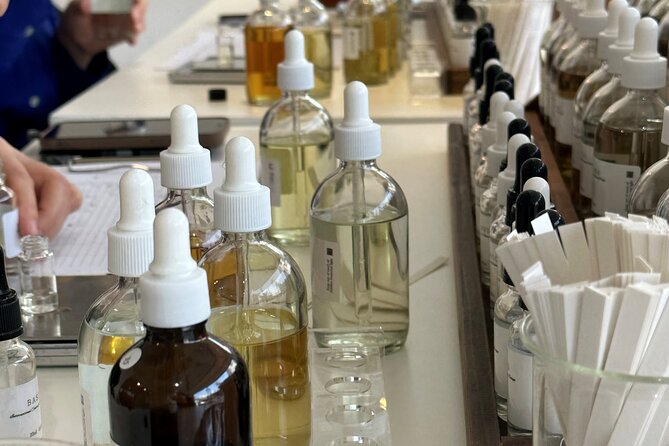
The class works best when you use at least one scent that feels connected to Korea. You can still build a familiar fragrance with floral, fruit, woody, or fresh notes, but a Korean ingredient gives the bottle a stronger sense of place.
Green tea is a natural choice because it can feel clean, soft, and recognizable without becoming too heavy. Other Korean-inspired materials may be available among the selected accords, but the supplied information does not promise a fixed list. Ask the instructor which Korean scents are being offered on your date.
This flexibility is useful. You can create something that smells distinctly Korean, or you can use one local note as a small accent in a fragrance that matches your usual style. That makes the class suitable for people who want a cultural souvenir and for people who simply want a personal perfume.
The activity also works for more than one kind of group. Parents and adult children can create scents together. Teenagers can take part in the creative decisions. Couples can make matching or contrasting fragrances. The class has also been described as suitable for a wedding or life-event scent, since each person can make something tied to a particular occasion.
It is not limited to women, despite the way perfume classes are sometimes marketed. The process suits anyone interested in scent, design, memory, or Korean culture. You may prefer a clean, woody, tea-based, spicy, or fresh formula, and the class gives you room to find that out.
The Apgujeong setting and two-hour schedule
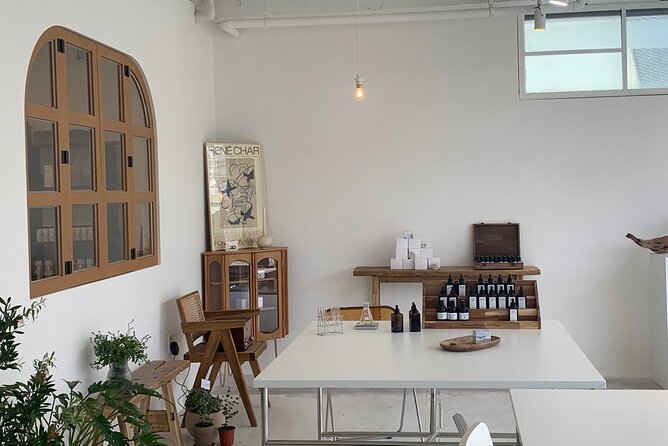
The activity lasts about two hours and starts and ends at Casamu, at 32 Eonju-ro 164-gil, second floor, in Gangnam District. It is near public transportation, so you can fit it into a day in southern Seoul without treating it as a full-day outing.
Apgujeong is a good setting for this kind of class. The area is associated with fashion, beauty, and new design, so a modern perfume studio feels at home there. You can pair the class with other plans in Gangnam, but keep your schedule reasonable. The scent work is more enjoyable when you are not watching the clock.
A two-hour class is long enough for teaching, tasting, testing, and final mixing, but not so long that it becomes an all-day commitment. If you are traveling with children or teenagers, the pace gives them a clear project and a finished result. If you are alone, it offers a quiet break from crowded shopping streets and major sights.
Arrive on time. The operator has a 30-minute no-show policy, and late arrival can cut into the scent-testing portion. That matters here because missing the introduction or first sampling stage could make the final choices feel rushed.
The activity is confirmed at booking, and the group limit is four. You can cancel for a full refund up to 24 hours before the start time. Changes or cancellations inside that window are not refunded, so keep your Seoul plans firm once the class is close.
Is the $96 price fair?
At $96 per person, this is not a bargain craft stop. You are paying for instruction, the tea and snacks, scent materials, three trial blends, a 10ml travel-sized bottle, and a finished 50ml perfume with gift packaging. The value depends on whether you want a usable, personal souvenir rather than a quick activity with a low entry price.
I think the price is easier to justify for a small group. You receive direct help while testing and mixing, and the instructor can respond to individual preferences. A family of four will spend more overall, but each person gets a separate creation and a shared activity.
The class also compares well with a standard fragrance purchase if you value the process. A shop can sell you a bottle in minutes, but it cannot give you the memory of selecting each note, testing different formulas, and naming the finished scent. If you are mainly looking for the cheapest perfume in Seoul, this is not the right choice.
The real value is the combination of product and experience. You leave with something you can wear, plus a stronger understanding of how fragrance is built. For a birthday, mother-daughter outing, last-day activity, or special trip souvenir, that combination may be worth the cost.
Who will enjoy Casamu most?
I would recommend this class to you if you like creative activities with a clear finished result. It is also a good choice if you want to bring home something more personal than cosmetics bought in a department store.
It suits:
- Couples making different scents from the same Seoul memory
- Families with teenagers who enjoy hands-on choices
- Solo visitors who want a calm, social activity
- Perfume beginners who want simple guidance
- Fragrance fans who want to work with Korean-inspired notes
- Anyone marking a birthday, wedding, or important trip
You may want to skip it if you dislike strong smells, find scent comparisons tiring, or prefer sightseeing with little structure. The class asks you to focus carefully for two hours. It is fun, but it is not passive.
If you are indecisive, do not worry. The trial blends are built into the experience, and the instructors are there to help. The better strategy is to arrive with a broad idea, such as fresh, warm, clean, sweet, or woody, rather than a rigid recipe.
Should you book this Seoul perfume class?
Book it if you want a small, personal activity that connects Korean culture with a useful souvenir. The tea, Korean-inspired notes, hands-on blending, and blessing pouch give the class more character than a standard fragrance workshop.
The best reason to choose Casamu is the ownership you get over the finished scent. You do not just select a fragrance from a shelf. You test three versions, adjust the balance, fill the bottle, and take home a 50ml perfume that can recall your Seoul trip.
Skip it if $96 feels too high for a two-hour activity or if you are not interested in wearing perfume. For everyone else, especially families, couples, solo visitors, and small groups, this is a thoughtful way to spend an afternoon in Apgujeong. Just arrive on time, keep your first choices open, and leave room for your nose to change its mind.
FAQ
Where does the perfume class take place?
The class takes place at Casamu, 32 Eonju-ro 164-gil, second floor, in Gangnam District, Seoul. It starts and ends at the same location.
How long does the activity last?
The class lasts approximately two hours.
How many people can join the class?
The activity has a maximum of four participants.
What do you make during the class?
You make three trial perfumes of 5ml each, receive a 10ml travel-sized bottle, and finish a personalized 50ml perfume.
Are Korean scents included?
Yes. The class includes selected Korean-inspired scents and natural raw materials among its fragrance choices. The available selection can include Korean green tea and other Korean scent options.
Is tea and food included?
Yes. The class begins with seasonal Korean tea and snacks during a short da-gwa session.
What happens if I need to cancel?
You can cancel at least 24 hours before the start time for a full refund. Cancellations or changes made less than 24 hours before the start time are not accepted for a refund.
Newest Seoul trips on the site
- Seoul : Must-see & Hidden Gems Private Walking Tour★ 4.9 · 8 reviews
- Seoul: Lotte World Aquarium Ticket★ 4.5 · 10 reviews
- Seoul: Max Out Must Visit City Highlights Panoramic Day Tour★ 5.0 · 7 reviews
- Seoul: K-Fashion Shopping Tour with a Professional Stylist★ 5.0 · 5 reviews
- From Seoul: Korea Spring Cherry Blossom Day Tour★ 4.8 · 6 reviews
- Seoul: Guided Street Food Tour at Namdaemun Market★ 5.0 · 10 reviews
- Seoul: Jisan Forest Winter Ski Day Tour with Basic Lesson★ 4.4 · 6 reviews
- Jisan Forest Resort: Ski Full-Day Tour or Shuttle from Seoul★ 5.0 · 4 reviews
Seoul Tours, compared.

Gyeongbok Palace, Bukchon Village, and Gwangjang Tour
Read our review →
Full Day Tour In The Soop BTS Ver in PyeongChang Filming Location
Read our review →
Best Seoul City Tour (Gyeongbokgung Palace,Insadong,Namsan Tower)
Read our review →
Small-Group Royal Palace and Seoul City Tour (hotel pick-up)
Read our review →
Seoul City Sightseeing Tour Including Gyeongbokgung Palace, N Seoul Tower, and Namsangol Hanok Village
Read our review →
Gyeongbok Palace, Bukchon Village, and Gwangjang Tour
Read our review →
Local Home Korean Cooking Class & Market Adventure in Seoul
Read our review →Browse the lists this tour appears in