
Reviewed · SEOUL TOURS
Korean Palace and Temple Tour in Seoul: Gyeongbokgung Palace and Jogyesa Temple
Gyeongbokgung Palace gives you the grandest introduction to Seoul’s royal past, while Jogyesa Temple shows a quieter, living side of Korean culture. In one morning, you move from palace courtyards and Joseon-era customs to Buddhist prayer and lotus-covered temple grounds.
I like the hotel pickup and air-conditioned vehicle, especially when you are still finding your way around Seoul. I also like the contrast between the palace and temple, plus the National Folk Museum, which adds everyday life to what could otherwise be a parade of monuments.
The main catch is the 30-minute ginseng shopping stop. Several guides have earned warm praise for their humor and clear explanations, but the sales presentation can feel forced, and one hour of a short tour is a lot of time to give to shopping.
Key points to know before booking
- Gyeongbokgung Palace is the centerpiece: You get about an hour to explore Seoul’s largest Joseon palace.
- The National Folk Museum adds useful context: Its displays connect royal history with ordinary Korean life.
- Jogyesa Temple is an active religious site: Colorful floral offerings and prayer activity can make this the most atmospheric stop.
- The tour is fast but efficient: In roughly three and a half hours, you see several major sights with a guide keeping the group together.
- The ginseng center is not optional: Plan for a sales-oriented shopping visit as part of the morning.
- Hotel pickup is included, but not hotel drop-off: The advertised finish is around Seoul City Hall.
A compact introduction to Seoul’s royal and religious traditions
This tour is built for a first look at Seoul. You are not spending half a day at one palace or taking a slow walk through one neighborhood. Instead, you get a guided sweep through royal architecture, folk customs, Buddhist practice, a shopping center, and central Seoul.
That range is the tour’s strength. If you have only one morning, it gives you a useful framework for the city. You see how Korea’s past is presented, how traditional beliefs remain part of daily life, and how modern tourism fits into the picture.
The pace is brisk. The group may include up to 20 people, and the vehicle moves between stops. At Gyeongbokgung, you are on foot for much of the visit, so comfortable shoes matter. The tour starts at 8:30 am, and morning pickup helps you avoid the work of navigating to the first sight on your own.
Guides make a large difference here. AJ was praised for bringing palace details to life and explaining the meaning behind Jogyesa’s beauty. Katie was repeatedly described as organized, warm, and helpful with photographs. Grace, Chloe, Lizzy, Charles, Jun, Rebecca, David, Eden, Yeoni, and Sadie were also singled out for clear explanations, good humor, patience, or careful group management.
Guide assignments vary, so you cannot book specifically for one person unless the operator confirms it. Still, the pattern is clear: a good guide turns a quick succession of stops into a connected story.
More Temple Tours in Seoul
- Best Things to Do – Half Day Seoul Trip (Seoul Palace & Temple)
★ 5.0 · 190 reviews - Half day Morning Seoul City Tour(Temple & Gyeongbok Palace)
★ 5.0 · 54 reviews - Seoul Mountain Hike: Temples, Folklore & Traditional Meal
★ 5.0 · 42 reviews
Gyeongbokgung Palace: one hour in Seoul’s royal center
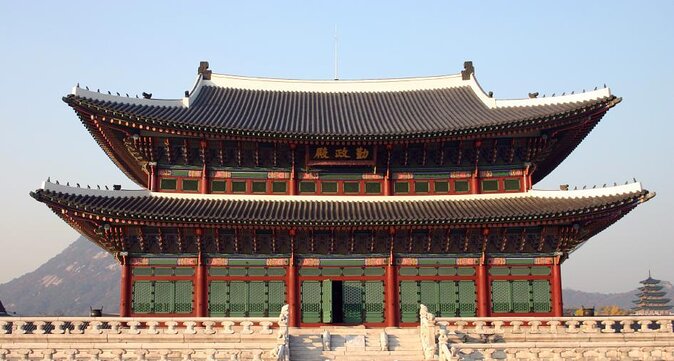
Gyeongbokgung was the main residence of the royal family during the Joseon Dynasty. It is also the largest of Seoul’s Five Grand Palaces, and its broad courtyards, ceremonial buildings, and formal layout make it the most imposing introduction to Korea’s royal past.
You enter with an admission ticket included. The allotted hour is enough to see the main compound and hear the basic story of the palace, but it is not enough for a slow inspection of every building and garden. If you like photography, architecture, or traditional clothing, you may wish the visit were longer.
A guide helps you notice details you might otherwise walk past. AJ, in particular, was praised for helping the group picture royal life and for pointing out features that would be easy to miss without explanation. That is important at a large palace. Without context, a sequence of courtyards can blur together.
The tour may approach the palace from the rear and work toward the main gate. One guide timed the route to reach the front gate for the changing of the guard. That ceremony is not presented as a guaranteed feature in the tour details, so treat it as a possible bonus rather than the main reason to book.
You should expect walking on palace grounds, gathering near the guide, and keeping an eye on the clock. The vehicle can hold larger belongings, which is useful if you do not want to carry everything through the compound. You still need to keep personal essentials with you.
The palace is the stop that most rewards preparation. Read a little about the Joseon period before you go, and the buildings will feel less like a collection of grand roofs and more like the center of a former royal government.
The National Folk Museum: from palace life to ordinary households
The National Folk Museum sits within the Gyeongbokgung compound, making it an efficient second stop. You spend about 20 minutes here, with no separate admission fee.
That is a short visit, but the museum serves an important purpose. Gyeongbokgung tells you about rulers and court life. The museum shifts attention to customs and routines from ancient times through Korea’s rapid modernization. It helps answer the practical question behind palace history: how did ordinary people live?
Expect a guided introduction rather than a full museum visit. You will not have time to examine every gallery at length, but the stop gives you a clearer sense of Korean traditions and daily life. One guide led the group through an exhibition and connected it to ancient Korean customs.
I like this pairing. Many palace tours stop after the grand buildings, leaving you with royal history but little social context. Even a brief museum visit makes the morning more useful, especially if this is your first exposure to Korean culture.
If museums are your main interest, this schedule may feel too tight. You can return independently for a longer visit, but the tour itself treats the museum as a focused introduction.
Jogyesa Temple: a living place of Korean Buddhism
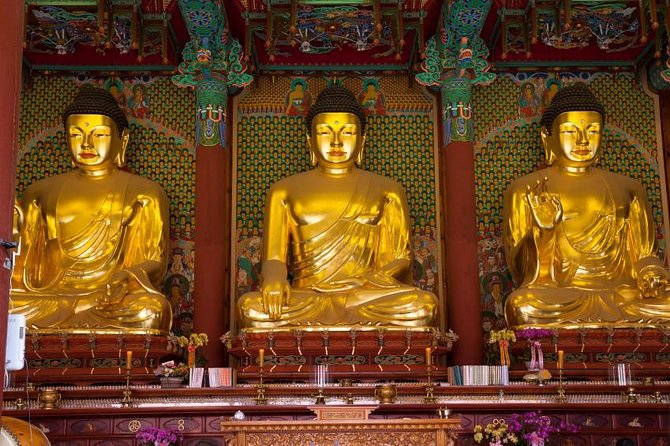
Jogyesa Temple is the leading temple for Zen Buddhism in Korea and gives the tour a strong change of mood. After the formal scale of Gyeongbokgung, you visit a place connected with active religious practice.
The stop lasts about 20 minutes and is free to enter. You can expect an explanation of Buddhism’s role during the Joseon period and an introduction to the temple’s place in present-day Seoul. The value here comes less from the size of the site than from seeing belief practiced in the middle of the capital.
Floral offerings can make the grounds especially colorful. One group arrived while a prayer leader was present and people were taking part in worship, which made the visit feel more immediate than a simple historical stop. That sort of activity cannot be scheduled, but it shows why a short temple visit can still be memorable.
The guide’s tone matters at Jogyesa. A good explanation helps you understand what you are seeing without treating worship as a display. AJ was praised for giving the temple’s peaceful appearance real meaning, while Rebecca was described as attentive and helpful during a difficult moment for someone in the group.
You should behave quietly, follow any posted instructions, and remember that this is an active religious setting. The 20-minute stop gives you an introduction, not an extended meditation or a detailed study of Buddhist practice.
Some departures visit Jogyesa first rather than last. That can work, but changing the order may leave the palace portion rushed if the group is trying to reach a particular guard ceremony. If the palace is your priority, ask about the planned order at the start.
More Palace Tours in Seoul:
- Seoul: Gyeongbok Palace, Bukchon Village, and Gwangjang Tour
★ 4.9 · 2,321 reviews - Best Seoul City Tour (Gyeongbokgung Palace,Insadong,Namsan Tower)
★ 5.0 · 1,647 reviews - Small-Group Royal Palace and Seoul City Tour (hotel pick-up)
★ 5.0 · 1,474 reviews - Seoul City Sightseeing Tour Including Gyeongbokgung Palace, N Seoul Tower, and Namsangol Hanok Village
★ 5.0 · 1,423 reviews
The ginseng center: useful context with a sales pitch attached
The ginseng center is the least appealing part of the experience for many people. It is included as a 30-minute shopping stop, even though the main attraction is meant to be the palace and temple.
You may learn something about Korean ginseng and its place in local commerce. The problem is the presentation. The stop can feel like a hard sell, and the center is described as being out of the way. On a short half-day tour, that matters.
I would not book this experience expecting a relaxed morning entirely focused on heritage sites. The shopping stop is part of the package, and the schedule gives it roughly as much time as the National Folk Museum and Jogyesa Temple combined.
You do not have to purchase anything simply because the group has stopped there. Keep your expectations clear, listen if the information interests you, and treat the visit as the tradeoff for convenient transport and a lower-cost packaged tour.
This is the biggest difference between the experience you may imagine from its title and the morning you actually receive. The palace and temple are the heart of the tour. The ginseng center is an added commercial stop that some people find interesting and others find a waste of time.
Seoul City Hall and the practical end of the morning
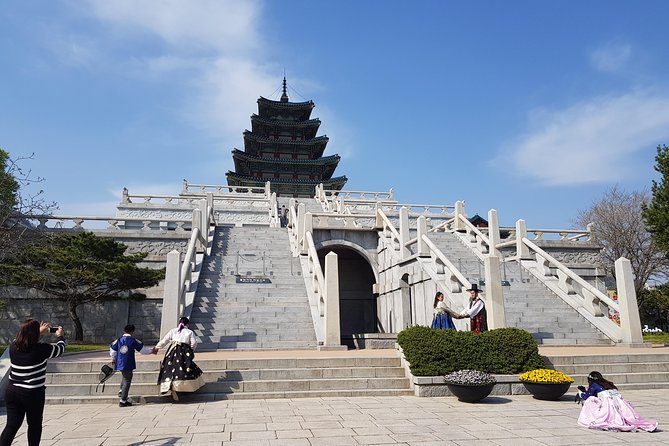
The final arrangements are a little unusual. The schedule includes Seoul City Hall and indicates that you will be taken to the ginseng center before being dropped off at City Hall. Hotel drop-off is not included.
That ending can be useful if you want to continue exploring central Seoul after the tour. It can also be inconvenient if your hotel is far away or you expected to return directly to your accommodation. Check the drop-off plan before booking, especially if you have luggage, a timed reservation, or an afternoon flight.
The tour description lists 30 minutes for the City Hall portion, but the main heritage visits are the palace, museum, and temple. Think of City Hall as the finishing point rather than a major guided sightseeing stop.
Is $40 a fair price for this half-day tour?
At $40 per person, the value depends on what you need. Admission, hotel pickup, a local guide, and air-conditioned transport are included. You also avoid arranging separate transportation between the palace and temple.
For a first morning in Seoul, that is a reasonable package. Public transport and individual admission may cost less, particularly for someone comfortable using the city’s buses and subway. One low-rated experience made exactly that comparison, finding the tour’s information too limited to justify the extra expense.
The paid premium is supposed to be the guide and the convenience. When the guide is strong, the difference is clear. AJ, Katie, Grace, Lizzy, Chloe, and others were praised for history explanations, humor, organization, photographs, and keeping the group together. A good guide can save you time and help you understand what you are seeing.
The value drops if the guide gives only basic information or if the ginseng stop dominates the morning. You are also paying for a group experience, not a private tour. The group can reach up to 20 people, so you should expect some waiting and a fixed pace.
I see the price as fair for a visitor who values pickup and structure. If your main goal is maximum time inside Gyeongbokgung, or if you are comfortable planning your own route, a self-guided visit may offer better control.
Timing, walking, and what to bring
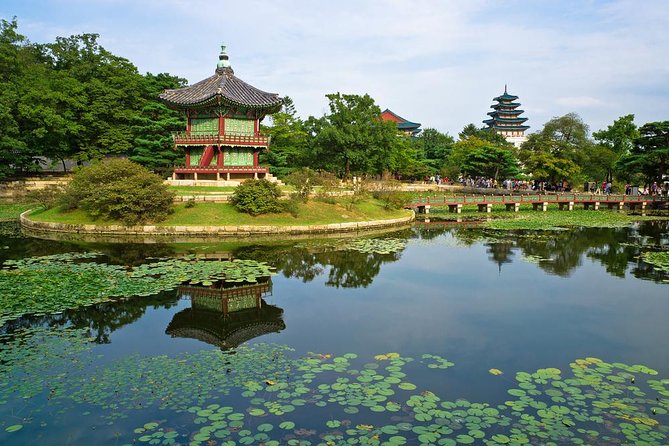
The tour begins at 8:30 am and lasts about three and a half hours. The schedule is full, and some departures have felt closer to two and a half hours when the order changed or time was lost.
Wear comfortable walking shoes. The palace compound requires walking, and the group moves between several stops. Food and drinks are not included, so eat before pickup or plan around the morning schedule.
Hotel pickup is included, but the exact pickup arrangement should be confirmed when you book. The vehicle is air-conditioned, a welcome feature during Seoul’s hotter or wetter periods. One group completed the tour in pouring rain and still found the guide helpful and entertaining, but weather can make the palace walking portion less comfortable.
Most people can participate, and the tour involves a moderate amount of walking. If you need a very slow pace or long periods at each sight, this is probably not the right format.
Cancellation is free up to 24 hours before the start time. Changes or cancellations made less than 24 hours in advance are not accepted for a refund.
Who will get the most from this Seoul tour?
I would suggest this experience to you if:
- You have only one morning for major Seoul sights.
- You want a guide to explain Joseon history and Korean customs.
- You prefer hotel pickup and a vehicle to arranging several transfers.
- You want both a palace and a functioning Buddhist temple in one outing.
- You are comfortable with a brisk schedule and a required shopping stop.
I would be more cautious if you dislike commercial stops, want extensive museum time, or prefer to set your own pace. The National Folk Museum and Jogyesa Temple are brief visits, and Gyeongbokgung gets only about an hour.
This is also a good foundation for a broader Seoul program. Afterward, you will have enough historical background to make later visits to the War Memorial of Korea or a DMZ tour more meaningful. The palace shows royal Korea, the museum introduces daily life, and Jogyesa adds religion and continuing tradition.
Should you book the Korean Palace and Temple Tour?
Book it if you want an organized first morning and understand the compromise. You will see three important cultural sites, hear useful explanations, ride in comfort, and finish in central Seoul for $40.
Do not book it expecting a slow palace exploration or a shopping-free heritage tour. The ginseng center is the clear drawback, and the quality of the morning depends heavily on the assigned guide. If your guide is as engaging as AJ, Katie, Grace, or Lizzy, the compressed schedule can work very well. If the explanations are thin, the price feels less convincing.
My advice is simple: choose this tour for breadth and convenience, not depth. It is a practical way to get your Seoul bearings, provided you accept the sales stop and keep your expectations realistic.
FAQ
What sights are included in the tour?
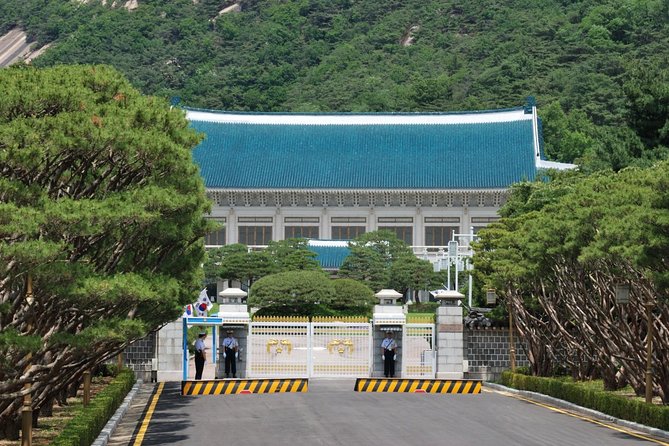
The tour includes Gyeongbokgung Palace, the National Folk Museum of Korea, Jogyesa Temple, a ginseng shopping center, and a finish near Seoul City Hall. It also passes the Blue House, known as Cheongwadae.
How long does the tour last?
The scheduled duration is approximately three hours and 30 minutes. The tour starts at 8:30 am.
Is hotel pickup included?
Yes. Hotel pickup is included, along with transport in an air-conditioned vehicle. Hotel drop-off is not included, and the stated drop-off point is Seoul City Hall.
Are admission fees included?
Admission to Gyeongbokgung Palace is included. Entry to the National Folk Museum and Jogyesa Temple is listed as free.
Is the ginseng center visit required?
The ginseng center is included as a 30-minute shopping stop in the tour schedule. You should expect a sales presentation as part of the visit.
How much walking is involved?
A moderate amount of walking is involved, especially at Gyeongbokgung Palace. Comfortable walking shoes are recommended.
Newest Seoul trips on the site
- Seoul : Must-see & Hidden Gems Private Walking Tour★ 4.9 · 8 reviews
- Seoul: Lotte World Aquarium Ticket★ 4.5 · 10 reviews
- Seoul: Max Out Must Visit City Highlights Panoramic Day Tour★ 5.0 · 7 reviews
- Seoul: K-Fashion Shopping Tour with a Professional Stylist★ 5.0 · 5 reviews
- From Seoul: Korea Spring Cherry Blossom Day Tour★ 4.8 · 6 reviews
- Seoul: Guided Street Food Tour at Namdaemun Market★ 5.0 · 10 reviews
- Seoul: Jisan Forest Winter Ski Day Tour with Basic Lesson★ 4.4 · 6 reviews
- Jisan Forest Resort: Ski Full-Day Tour or Shuttle from Seoul★ 5.0 · 4 reviews
Seoul Tours, compared.
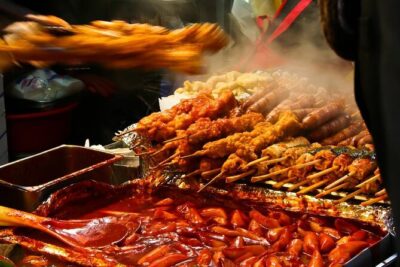
Gyeongbok Palace, Bukchon Village, and Gwangjang Tour
Read our review →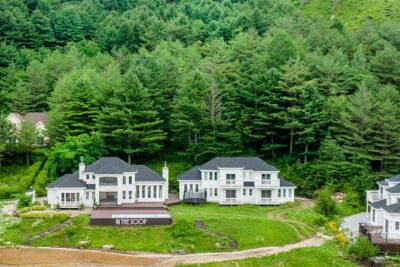
Full Day Tour In The Soop BTS Ver in PyeongChang Filming Location
Read our review →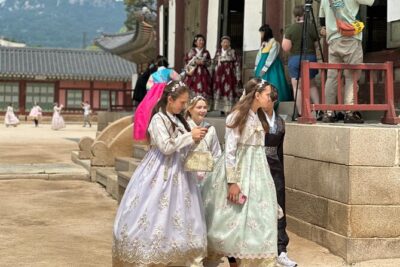
Best Seoul City Tour (Gyeongbokgung Palace,Insadong,Namsan Tower)
Read our review →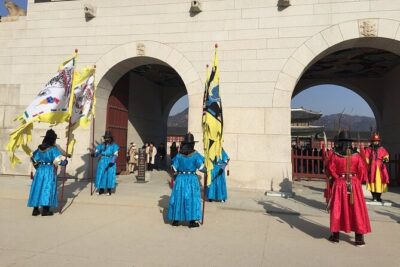
Small-Group Royal Palace and Seoul City Tour (hotel pick-up)
Read our review →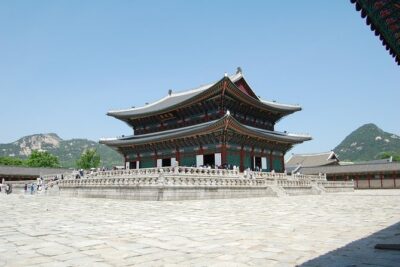
Seoul City Sightseeing Tour Including Gyeongbokgung Palace, N Seoul Tower, and Namsangol Hanok Village
Read our review →
Gyeongbok Palace, Bukchon Village, and Gwangjang Tour
Read our review →
Local Home Korean Cooking Class & Market Adventure in Seoul
Read our review →Browse the lists this tour appears in