
Reviewed · BUSAN TOURS
Busan: Small-Group Traditional Korean Food Cooking Class
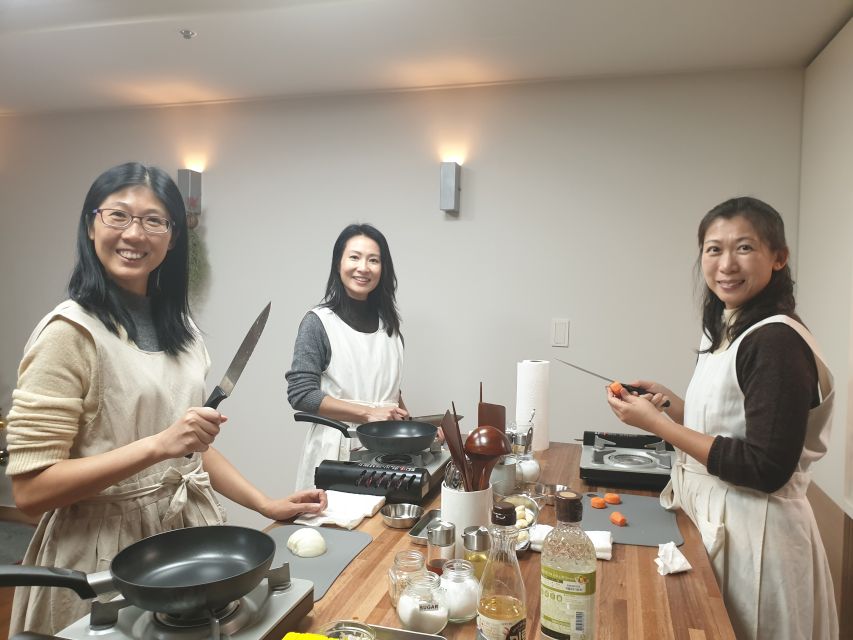
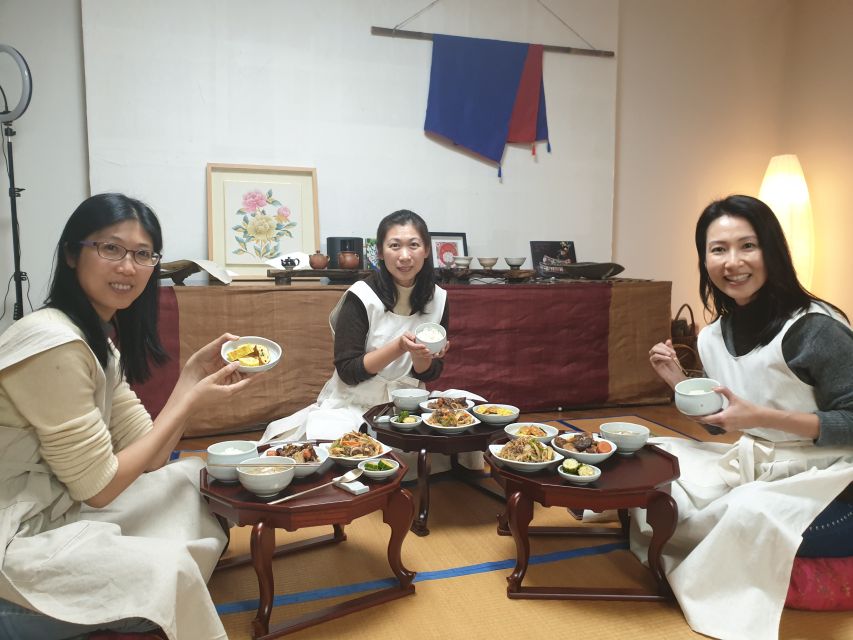
The best part of this Busan experience is that you do not simply watch a chef cook. You taste Korean sauces, chop and prepare fresh seasonal ingredients, then sit down to eat food you made yourself at a traditional bapsang table. Min is the main teacher named in the class feedback, and she explains both the cooking steps and the cultural background behind each dish.
I like the small group of up to 9 people, which gives the lesson a friendly, hands-on feel. I also like the full meal at the end, complete with Korean tea and dessert. The main drawback is the price, $98 per person, which is more than a simple market meal. You are paying for instruction, ingredients, equipment, and cultural context, so it suits you best if you want an activity rather than just lunch.
Key points to know before booking
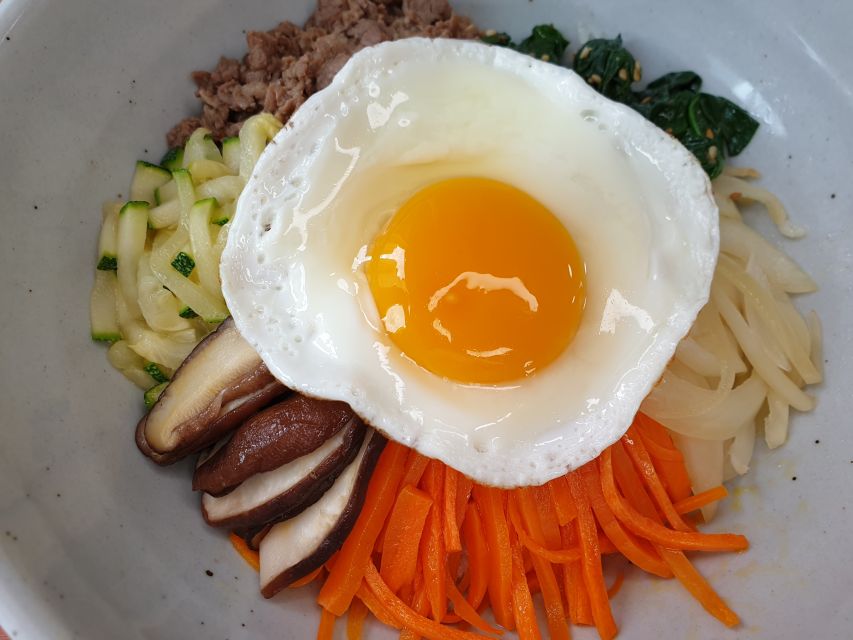
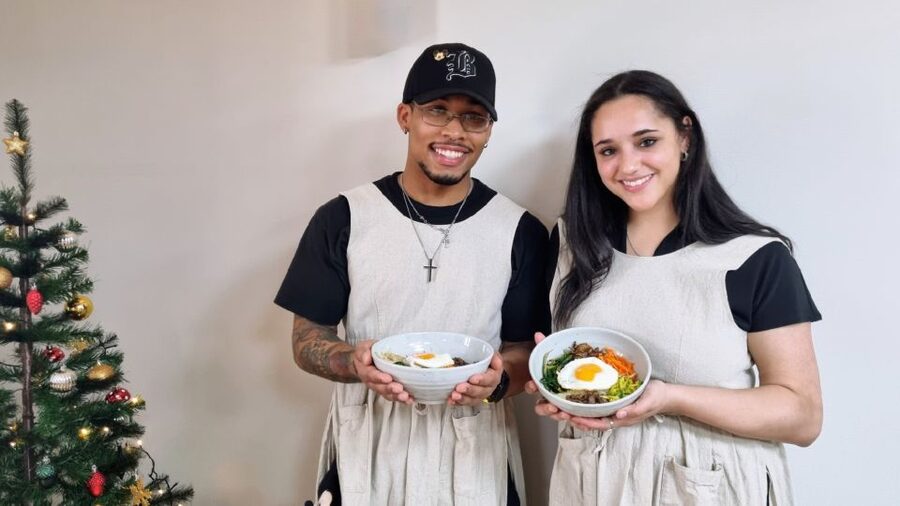
- Bibimbap is the central dish: You prepare the famous rice bowl with vegetables, meat, and Korean seasonings.
- The menu can include three dishes: Past classes have featured bibimbap, miyeok guk seaweed and beef soup, and buchu jeon vegetable fritters.
- Min teaches cooking and culture: Expect explanations about ingredients, sauces, food customs, and the stories behind the dishes.
- You eat at a traditional bapsang: Your finished food is arranged on a personal Korean dining table before the meal.
- The class is near Haeundae Beach: It is held in Hoabin Busan Haeundae, about 10 minutes on foot from Dongbaek subway station.
- Vegan preparation needs notice: Request a vegan meal when booking or at least 24 hours before the class.
A hands-on introduction to Korean cooking
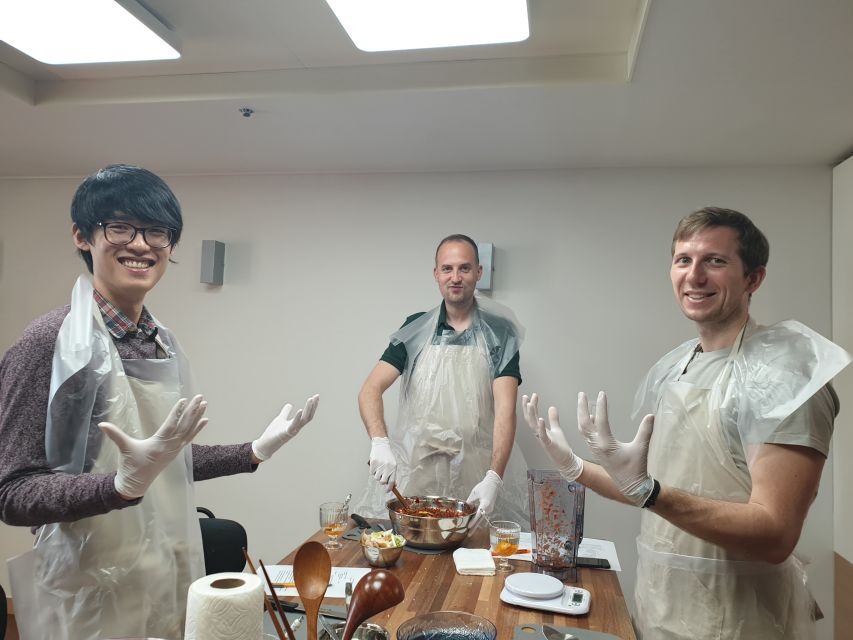
This is a practical class, not a demonstration where you sit quietly and take notes. You work through the dishes step by step, with the instructor showing you what to do and explaining why each ingredient matters.
The session begins with a welcome drink. Then the teacher introduces the ingredients and lets you taste Korean sauces. That early tasting is useful because Korean cooking depends heavily on seasoning. You get a sense of the balance between salty, sweet, spicy, fermented, and savory flavors before adding them to your food.
The headline dish is bibimbap, one of Korea’s best-known meals. It combines rice with assorted vegetables and meat, usually brought together with a seasoned sauce. The appeal of making it in class is not just the recipe. You see how separate ingredients become one balanced bowl, and you can take home the instructions to repeat it later.
Past class menus have also included miyeok guk, a seaweed and beef soup, and buchu jeon, a Korean vegetable pancake. The exact selection may vary, but the pattern is clear: you prepare several recognizable Korean dishes rather than spending three hours on one complicated recipe.
That makes the class a good choice if you want a broad first look at Korean home cooking. You will not become a Korean chef in three hours, but you can leave with a workable set of recipes and a better sense of how Korean meals are put together.
More Food Tours in Busan
- 4-Hours Hiking and Tasting Rice Wine in the Mountain of Busan
★ 5.0 · 79 reviews - Busan: Hiking and Tasting Rice Wine in the Hidden Village
★ 4.9 · 74 reviews - Busan history and market food tour with local chef
★ 5.0 · 58 reviews
Min’s clear teaching style
The strongest reason to book is the instruction. Min is repeatedly praised for explaining each step clearly, speaking English well, and creating a relaxed atmosphere. She also adds background about the dishes and Korean food culture, so the class is not just a sequence of chopping and stirring tasks.
That matters if you are new to Korean food. Ingredients and sauces can be unfamiliar, and a recipe alone will not always tell you how a dish should taste or look. A teacher can show you the right texture, explain how flavors fit together, and help you avoid the common mistake of treating every Korean sauce as simply hot.
Min also gives practical suggestions for things to see and do around Busan. That is a useful extra, particularly early in your stay, when you are still planning your time in the city. The class itself is the main event, but the local advice adds a personal touch.
One piece of information needs a little care. The supplied experience details mainly identify Min as the instructor, while one account names Kim. If having a particular teacher matters to you, confirm the current instructor when booking. The teaching language is English and Korean.
What the three-hour schedule feels like
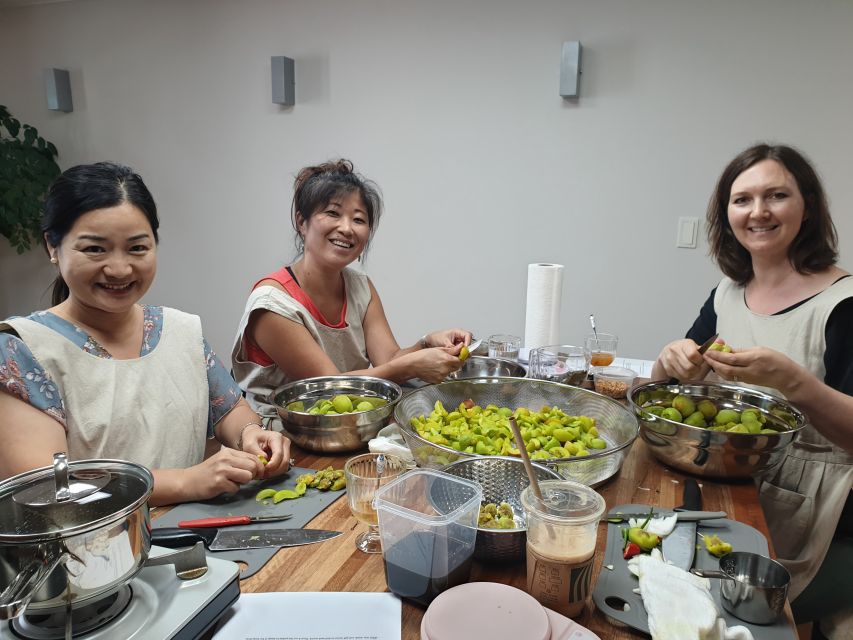
The class is long enough to feel substantial without taking an entire day from your Busan plans. You should allow three hours for the welcome, ingredient introduction, cooking, meal, tea, dessert, and final extras.
A typical flow looks like this:
- You arrive at the cooking studio and receive a welcome drink.
- The instructor introduces the ingredients and Korean sauces.
- You prepare bibimbap and other local dishes with guided help.
- You arrange the finished food on a personal bapsang table.
- You eat the meal you prepared.
- You finish with traditional Korean tea and dessert.
- You receive recipes, a certificate, and a small surprise gift.
The pace should suit beginners because the work is broken into clear steps. Parents can also consider it for older children. One class was enjoyed by a 12-year-old and a parent, with the instructor explaining the process in a way that worked for both.
You should still expect to participate. This is not the right pick if you want a purely passive food tasting or a polished restaurant meal with no kitchen work. The fun comes from making the food, including the small mistakes and adjustments along the way.
Eating at a personal bapsang table
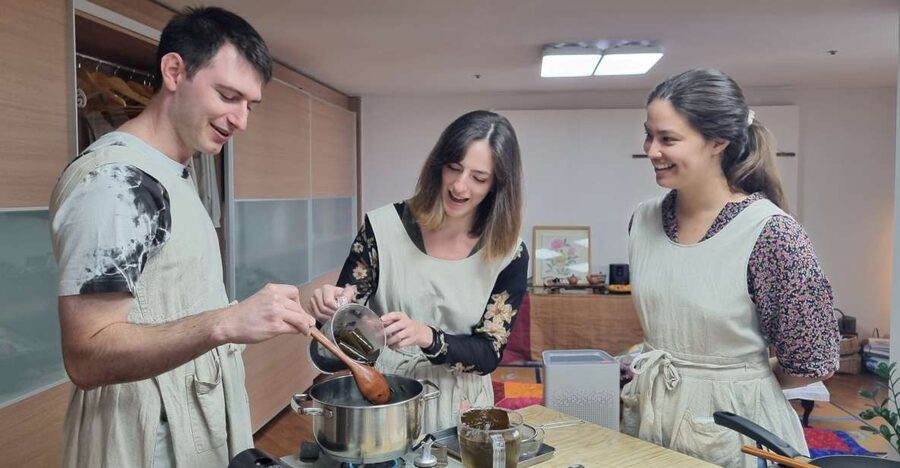
The meal at the end gives the class a stronger sense of place. Instead of eating from a large shared serving arrangement, you put your finished food on a bapsang, a traditional personal dining table.
That presentation helps you understand Korean dining customs in a simple, physical way. The food you prepared becomes a complete meal rather than a set of disconnected samples. You can see how rice, soup, vegetables, pancakes, sauces, and side dishes work together.
The class also includes Korean tea and dessert. This is a welcome finish after the savory cooking, and it gives you a chance to try something beyond the better-known Korean staples. The exact dessert is not specified, so you should not book expecting one particular sweet.
Water is included, as are the ingredients, utensils, and apron. You do not need to bring kitchen equipment or buy food separately during the class.
More Cooking Classes in Busan:
- Korean cooking class in Haeundae, Busan
★ 5.0 · 92 reviews - Busan Tailored Korean cooking class (Vegan OK)with market tour
★ 5.0 · 66 reviews - Local Home Korean Cooking Class & Market Adventure in Seoul
★ 5.0 · 1,024 reviews - Master Korean traditional cooking with a Kimchi chef
★ 5.0 · 385 reviews
Fresh ingredients and seasonal flavors
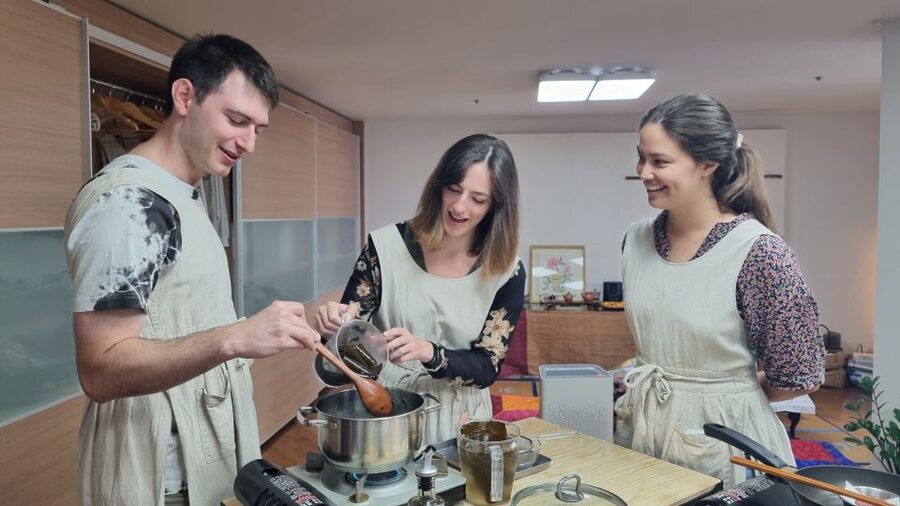
The experience uses fresh local seasonal ingredients. That phrase is important because it suggests the menu is tied to what is available, rather than being a fixed international cooking course that happens to take place in Busan.
Seasonal cooking can mean the exact vegetables or side elements change. That is a benefit if you want food connected to the time of year, but it also means you should not assume every advertised or previously prepared dish will appear on your date.
The recipes are provided to take home. This adds real value because Korean cooking often depends on several sauces and preparation steps that are hard to remember after one lesson. You can refer back to the recipe instead of trying to reconstruct the class from memory.
You also receive a certificate and a surprise gift. These are small extras, not reasons by themselves to pay $98, but they make the experience feel complete and give you something tangible to take away.
Is $98 a fair price?
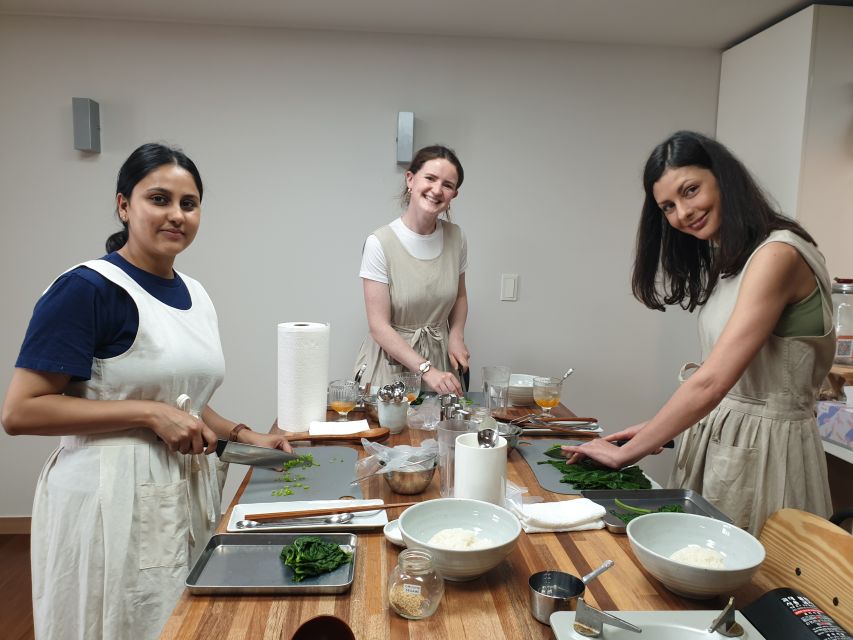
At $98 per person, this is not a budget meal. If your goal is simply to eat bibimbap in Busan, you can spend far less at a restaurant. The price makes more sense when you count the three-hour lesson, the ingredients, the meal, tea, dessert, equipment, apron, recipes, certificate, and small-group attention.
I see the value most clearly for people who want to carry part of the experience home. A restaurant gives you a finished dish. This class gives you a method, recipes, and the confidence to recognize Korean flavors when you cook again.
The group limit also matters. The activity information describes a small class with up to 9 participants, while the general notice says the maximum may be 10. Either way, this is far more personal than a large food workshop. You should have a chance to follow the teacher and ask questions, though the amount of one-to-one attention depends on the final group size.
For couples, families with older children, and food-focused visitors, the price can be reasonable. For solo visitors on a tight budget, it may feel high unless cooking is one of the main reasons you are visiting Busan.
Getting to the Haeundae cooking studio
The meeting point is Flat 2406, Hoabin Busan Haeundae, 37 Marine City 3-ro, U 1(il)-dong, Haeundae, Busan.
The easiest public transport option is Dongbaek Station on Busan Metro Line 2, the green line. From Exit 1, the walk takes about 10 minutes. You can also use the Daewoo Marina Apartment bus stop, about a seven-minute walk away, served by buses 139, 307, and 1003 from Busan Train Station.
The Dongbaek bus stop is another option, though it is about a 15-minute walk. Routes listed include 31, 38, 39, 40, 63, 100, 100-1, 115-1, 141, 181, and 200.
The Haeundae location works well if you are already spending time around the beach and Marine City. It is less convenient if your schedule is built around Busan’s old downtown or far eastern districts, so allow enough time for the trip. Pickup and drop-off are not included.
Because the meeting point is inside a building, check the flat number and building name before setting out. Arriving with a little extra time is sensible, especially if you are unfamiliar with Busan’s apartment and office towers.
Dietary needs and practical limits
Vegan guests can be accommodated, but you must request this when booking or contact the provider at least 24 hours before the class. Do not wait until you arrive. The ingredients need to be prepared in advance, and the standard menu may include meat or other animal products.
The activity is wheelchair accessible. You should still confirm any specific access needs when booking, since accessibility can depend on the route from the street to the exact room.
The class is taught in English and Korean. English-language instruction is a strong fit for international visitors, particularly because the lesson includes explanations of ingredients and food culture, not just physical demonstrations.
Free cancellation is available up to 24 hours before the start time for a full refund. You can also reserve now and pay later, which helps if your Busan schedule is still changing. Starting times vary, so check availability for your date.
Who will enjoy this class most?
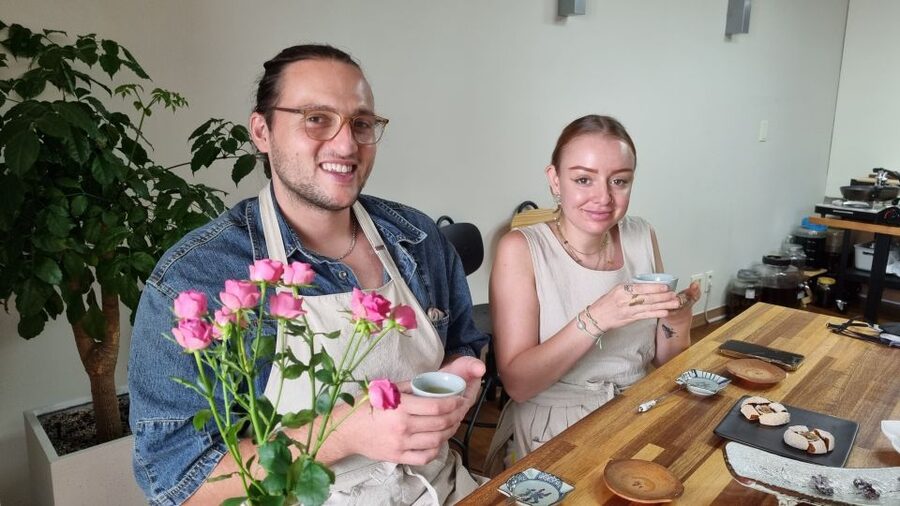
I would recommend it to you if you like food with a story and want more than a quick restaurant stop. It is especially suitable for:
- First-time visitors to Korea who want an approachable introduction to local food.
- Couples looking for a shared activity near Haeundae Beach.
- Families with older children who can follow kitchen instructions.
- Home cooks who want Korean recipes to try after returning home.
- Solo visitors who enjoy meeting a small group through a hands-on activity.
- People who appreciate cultural explanations along with the meal.
It is less suitable if you dislike cooking, have very limited time, or are mainly looking for the cheapest way to eat Korean food. The class requires three hours and costs considerably more than a casual lunch.
Should you book the Bapsang cooking class?
Book it if you want to understand Korean food by preparing it yourself. The strongest features are the small group, Min’s clear English instruction, the chance to taste sauces before cooking, and the full meal at the end with tea and dessert.
The $98 price is justified only if you value the lesson and the take-home recipes. If you are happy to order bibimbap at a restaurant, save your money. If you want a warm, practical introduction to Korean home cooking near Haeundae, this is one of Busan’s better food-based activities.
FAQ
How long does the Korean cooking class last?
The class lasts three hours. This includes the welcome drink, ingredient and sauce tasting, cooking, the meal, Korean tea, dessert, and the final materials.
Where does the class meet?
It meets at Flat 2406, Hoabin Busan Haeundae, 37 Marine City 3-ro, U 1(il)-dong, Haeundae, Busan, South Korea.
How do I reach the cooking class by subway?
Take Busan Metro Line 2, the green line, to Dongbaek Station. From Exit 1, the walk to the meeting point takes about 10 minutes.
What dishes will I cook?
Bibimbap is included as the main dish. The class may also include dishes such as miyeok guk, a seaweed and beef soup, and buchu jeon, a Korean vegetable pancake. The exact menu can vary.
Can I request a vegan meal?
Yes. You need to request a vegan meal when booking or contact the provider at least 24 hours before the class so suitable ingredients can be prepared.
Is the activity suitable for wheelchair users?
Yes, the activity is listed as wheelchair accessible.
What is included in the $98 price?
The price includes cooking ingredients, utensils, an apron, water, the prepared meal with dessert, and recipes to take home. Pickup and drop-off are not included.
More Workshops in Busan
- Seoul: Korean Cooking Class at a Local Home and Market Tour
★ 5.0 · 348 reviews - Korean Cooking Class with Grocery Shopping at Seoul Local Market
★ 5.0 · 107 reviews - Royal Seoul Cooking Class in a 100-Year-Old Hanok
★ 5.0 · 81 reviews - Seoul : Taste of Korea, Authentic Home-Style Cooking Class
★ 5.0 · 64 reviews
Newest Busan trips on the site
- Busan: Sky Capsule+ Huinnyeoul+ Gamcheon+ Songdo+ Night View★ 4.9 · 10 reviews
- Busan: Jagalchi Market & Gamcheon village Walking Tour★ 5.0 · 7 reviews
- Busan: Night Small Group Photo Tour (Max 7)★ 5.0 · 33 reviews
- Busan: Private Chartered Car Tour★ 4.1 · 7 reviews
- Busan: Naejangsan National Park Autumn Foliage One Day Tour★ 4.8 · 4 reviews
- Busan: Haeundae LCT Tower ‘X the Sky’ Entry Ticket★ 4.7 · 23 reviews
- Busan: Hidden Gems Private Tour with a Certified Guide★ 4.9 · 53 reviews
- Busan: Haeundae 100-Minute Walking Tour★ 5.0 · 48 reviews
Busan Tours, compared.

Coastal Treasures Beach Train, Culture Village & More
Read our review →
Busan’s Cultural Wonders with Beach Train & Gamcheon Village etc
Read our review →
Private Busan Tour -Explore Cultural Landmarks with a Local Guide
Read our review →
Gamcheon Village and Haeundae Blueline Park Tour
Read our review →

Busan Coastal Charm & Culture: Gamcheon Village & opt Sky Capsule
Read our review →
Browse the lists this tour appears in