
Reviewed · BUSAN TOURS
Busan Tailored Korean cooking class (Vegan OK)with market tour
A walk through Bujeon Market is the real opener here. You shop for ingredients with local host Suyang Chang, then carry them to his kitchen and turn them into a Korean meal. This is more than a quick pancake lesson. You may prepare dishes such as braised tofu, japchae, seasoned spinach, pollack soup, kimchi, or soy-sauce chicken, depending on your choices.
I like the freedom to shape the menu, and I like that the class reaches beyond the usual bibimbap and barbecue lineup. Suyang also shares food tips, Korean culture, language help, restaurant ideas, and recipes for home use. The main consideration is that the first group to book may choose the menu if several groups join the same session, so confirm your preferred dishes early.
What makes this Busan food experience different
- Bujeon Market comes first: Shop for ingredients with a local host rather than arriving at a kitchen with everything already prepared.
- You choose three dishes: The standard format includes two banchan, or side dishes, plus one stew or soup.
- Vegan and vegetarian menus are available: The host has adapted recipes with guests’ dietary needs in mind, including gluten-free soybean paste on request.
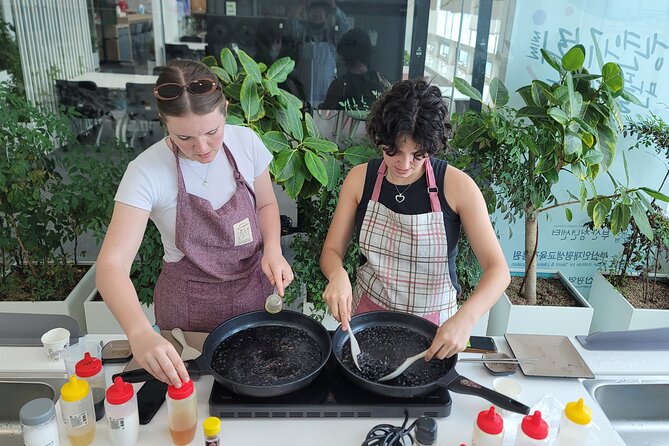
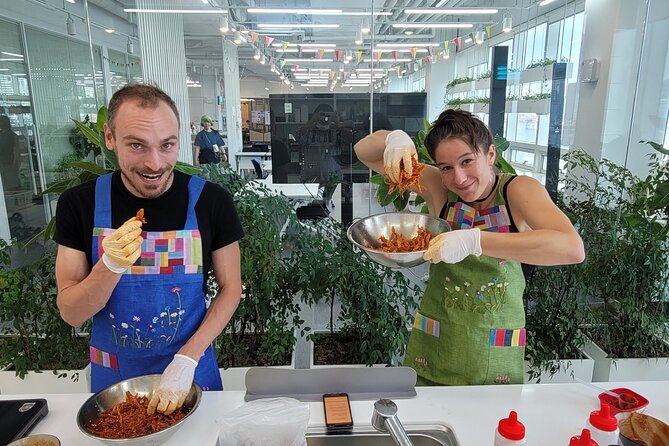
- The cooking is genuinely hands-on: You chop, season, stir, fry, and cook rather than simply assemble prepared ingredients.
- Suyang Chang adds local context: He is also known by the nickname Busan oppa and offers help with food, culture, restaurants, and places to visit.
- The class suits small groups and families: The stated maximum is 15 people, and larger family groups have taken part together.
Starting at Bujeon Market near Seomyeon
Meet at the KB Kookmin Bank on Seomyeon Joongang2 Saessak-ro in Busanjin District. The location is near public transportation, which helps if you are staying around Seomyeon, one of Busan’s main areas for hotels, shopping, and food.
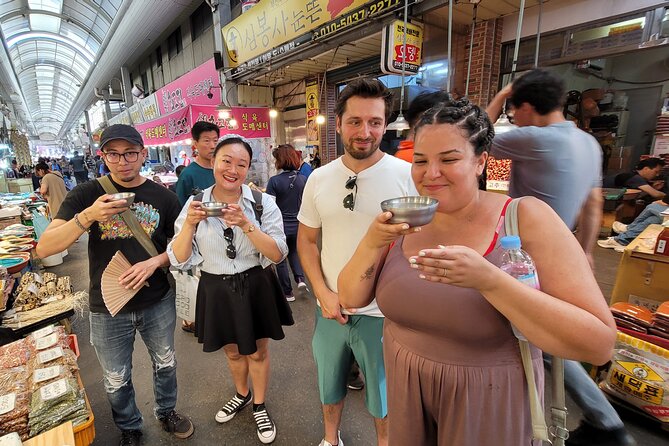
From there, you head into Bujeon Market. The market is not just scenery before the real activity begins. It is where you see the ingredients that shape Korean home cooking: vegetables, dried seafood, fresh fish, sauces, pickles, beans, noodles, and other everyday staples.
Suyang’s role matters here. A market can be hard to read when labels are unfamiliar and many products look alike. With him, you can ask what an ingredient is, how Koreans use it, how long it keeps, and what could replace it at home. The market visit also gives you a better sense of how Korean cooking balances fresh produce with dried and preserved foods.
You should expect an active market setting rather than a quiet food museum. Floors may be crowded, stalls may be close together, and the focus is on buying what you will cook. Wear comfortable shoes and keep your hands free for moving through the market.
A small snack may be included in some arrangements. One family was taken to a market restaurant for bibimbap and dumplings, while another group tried tteokbokki and fried fish cakes. These extras should not be treated as part of the standard package, though. The official inclusions are the food you prepare, bottled water, and coffee or tea.
More Market Tours in Busan
- Busan Seafood Tour : Jagalchi market Seafood Tour & Dinner
★ 5.0 · 74 reviews - Gamcheon Culture Village, Jagalchi fish market story telling Tour
★ 4.5 · 63 reviews - Busan history and market food tour with local chef
★ 5.0 · 58 reviews
Choosing your Korean menu
The standard class lets you select three dishes:
- Two banchan, or side dishes
- One stew or soup
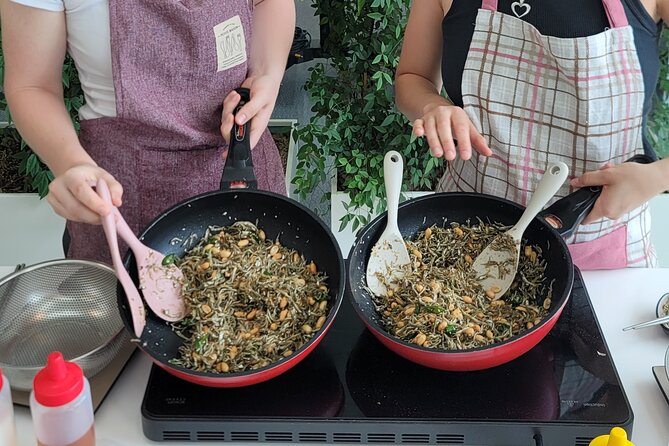
The side-dish list covers a wide range of Korean home cooking. Options include stir-fried anchovies, seasoned dried pollack, soy-braised black beans, soy-seasoned eggs, kimchi pancakes, seafood pancakes, beef pancakes, bracken salad, bean sprout salad, braised radish, spicy braised tofu, steamed tofu with egg, pickled radish and perilla leaves, cucumber kimchi, seasoned eggplant, and pan-fried shrimp with seaweed.
The soup and main-dish choices include kimchi stew with pork, soybean paste stew, seaweed soup with clam or dried pollack, pollack soup, spicy stir-fried chicken, soy-sauce chicken, braised pollack, and braised flat fish.
This is a useful list for a second or third visit to Korea. You may already know Korean barbecue, kimchi pancakes, or bibimbap. Here, you can choose less familiar dishes and learn how they fit into an ordinary Korean meal.
The menu is not completely fixed. Special choices have included marinated abalone, japchae, mini kimbap, kimchi and pork stew, dried pollack, and seasoned spinach. One important detail is that a special menu can change the structure of the meal. A guest who selected braised beef short ribs was served that main dish without the usual side dishes. Ask exactly what your selected option includes before the class begins.
If you have dietary restrictions, explain them clearly when booking. Vegetarian and vegan menus are available, and the host has prepared dishes such as braised black beans, spicy braised tofu, and spinach soybean paste soup. Gluten-free soybean paste was also provided for a guest who requested it. That does not mean every ingredient is automatically suitable for every diet, so confirm sauces, stock, seafood, eggs, and meat in advance.
Cooking from scratch in a home kitchen
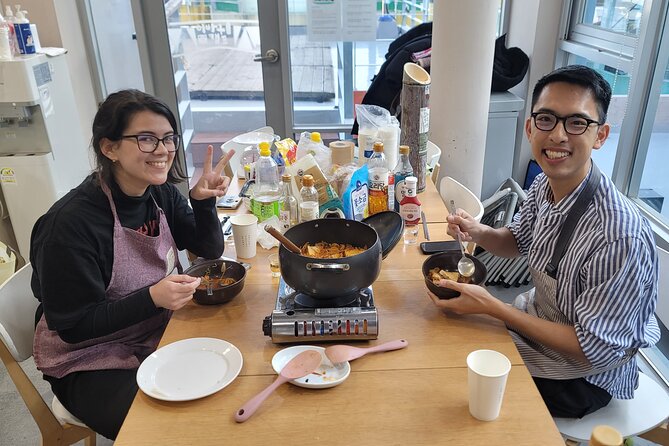
After shopping, you move to the kitchen and begin preparing the meal. This is where the experience earns its price. The cooking is not limited to watching a demonstration or putting together ingredients that someone else has already cooked.
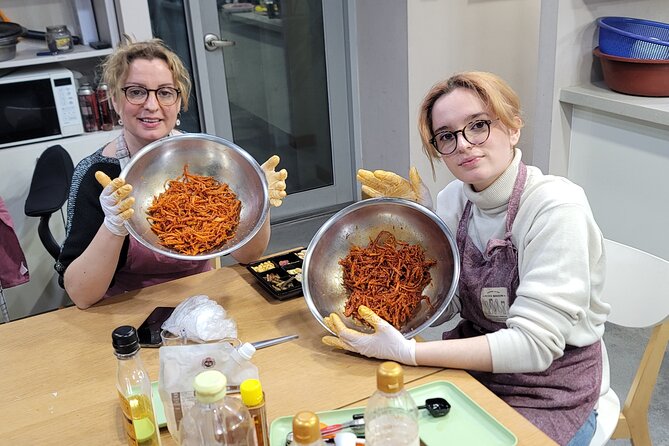
You take part in the basic work: handling ingredients, mixing sauces, frying, simmering, and judging when a dish is ready. The class teaches techniques you can repeat at home, not just one impressive dish that depends on restaurant equipment.
Suyang’s recipes are designed to be manageable outside Korea. That is important. Some Korean dishes depend on ingredients that are difficult to find abroad, but many of the recipes here use methods and ingredients that can be adapted for home kitchens. You receive recipes afterward, making it easier to recreate the meal in the United States, Europe, or elsewhere.
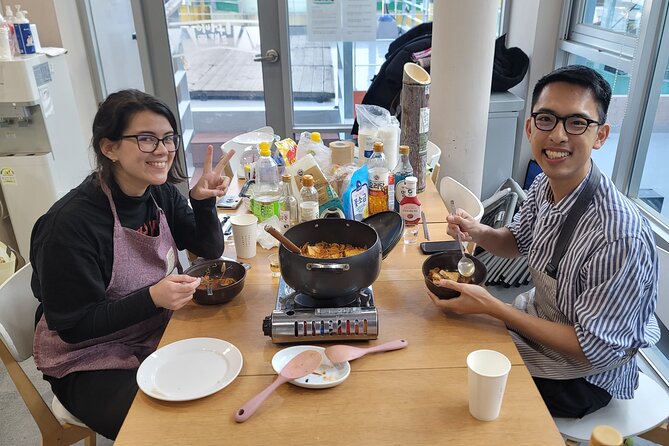
The food also comes in generous portions. One pair had enough for six people even though only two people attended. That makes this feel closer to preparing a family meal than taking a short demonstration class.
The class can be social and relaxed. Past sessions have included families, couples, friends, and a group of eight. You may spend as much time talking about Korean customs and daily food habits as you do discussing cooking. If you prefer a fast, tightly timed professional lesson, the conversational pace may feel slow. If you want cultural exchange, it is a strong part of the experience.
What you can learn beyond the recipes
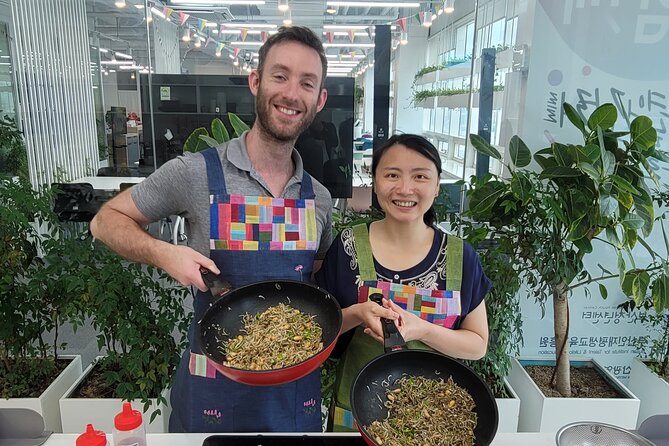
Korean food is often reduced to a handful of famous dishes. This class gives you a wider view. Stir-fried anchovies and braised black beans, for example, are practical side dishes that keep well and can be served with several meals. Soybean paste soups show how a few ingredients can produce a strong, savory broth.
You may also learn how Koreans use dried pollack, seaweed, perilla leaves, radish, tofu, eggplant, and bean sprouts. These ingredients appear in home kitchens but are easy to miss when you eat only at restaurants.
The market makes these lessons more useful. You see the raw ingredients before you cook them, learn how they are sold, and then watch them change during preparation. That connection helps you remember the recipe. It also gives you a better idea of what to look for in a Korean grocery store after you return home.
Suyang has also helped people with Korean phrases, restaurant suggestions, and ideas for things to do in Busan. Those conversations are not listed as formal sightseeing stops, but they can be valuable when you are still planning the rest of your visit.
More Cooking Classes in Busan:
- Korean cooking class in Haeundae, Busan
★ 5.0 · 92 reviews - Busan: Small-Group Traditional Korean Food Cooking Class
★ 4.9 · 58 reviews - Local Home Korean Cooking Class & Market Adventure in Seoul
★ 5.0 · 1,024 reviews - Master Korean traditional cooking with a Kimchi chef
★ 5.0 · 385 reviews
Is $95 a fair price?
At $95 per person, this is not the cheapest way to eat lunch in Busan. It is also not simply a meal. The price covers about five hours, a market visit, ingredient shopping, instruction, the food you prepare, bottled water, and coffee or tea. You also leave with recipes and a better sense of how Korean dishes are built.
The value is strongest for people who want a skill to take home. A restaurant meal may be cheaper, but it will not teach you how to make braised tofu, pollack soup, japchae, or seasoned vegetables. A shorter cooking class may cost less, but it may also offer only one dish or use pre-prepared ingredients.
Group discounts are available, and the maximum group size is 15. Since the experience can include multiple groups, ask how many people are expected in your session if personal attention is important to you. The host has worked with both small pairs and larger family groups, but the level of one-to-one instruction naturally changes with group size.
The price does not include alcoholic drinks, personal expenses, travel insurance, or transportation. The activity begins and ends at the stated Seomyeon meeting point, so plan your own route there and back.
Planning around the five-hour schedule
Set aside a full half-day. You begin at the meeting point, walk through the market, shop for ingredients, move to the kitchen, cook, and eat what you have made. The end point is back at the meeting point.
The start time can affect how the class feels. An early session may work well if you want a market breakfast or a full afternoon afterward. An evening class can function as dinner, though you should not assume that extra market snacks or a separate meal are included.
The experience is booked an average of 45 days ahead, so do not leave it until the last moment if your Busan schedule is tight. Confirmation is sent within 48 hours, subject to availability.
The cancellation rule is strict: the experience is non-refundable and cannot be changed for any reason. Only book once your date, group size, and dietary needs are settled.
Who should book this class?
I would choose this for you if you enjoy food markets, want direct contact with a local host, and prefer making something rather than only eating it. It is especially useful for people who have already tried Korea’s most famous dishes and want to understand the everyday side-dish tradition.
It also suits families and mixed-age groups. The menu can be adjusted, the work is shared, and the final meal gives everyone a common project. Couples and friends can choose dishes that match their interests, while larger groups can use the meal as a shared activity.
Vegans and vegetarians should consider it, but they need to communicate clearly before arrival. The host has a record of adapting dishes, yet the exact menu should be confirmed in advance.
I would skip it if you want a short, polished demonstration, dislike market conditions, or need a fully private class with guaranteed one-to-one attention. The description allows for multiple groups, and the first booking may influence the menu. Those details matter more here than they would on a standard restaurant tour.
Should you book the Bujeon Market cooking class?
Book it if you want a practical Busan food experience with a real market visit and a meal you help create from start to finish. The strongest reasons are the flexible menu, the less familiar Korean dishes, the useful recipes, and Suyang Chang’s personal guidance.
Before paying, send your preferred menu, dietary restrictions, group size, and expectations about shared participation. If those details work for you, $95 buys much more than lunch. It gives you a half-day of cooking, shopping, conversation, and food skills you can carry home.
FAQ
How long does the Busan cooking class last?
The experience lasts approximately five hours, including the Bujeon Market visit, ingredient shopping, cooking lesson, and meal.
Where does the activity begin and end?
It begins at the KB Kookmin Bank on Seomyeon Joongang2 Saessak-ro in Busanjin District, Busan. The activity ends back at the meeting point.
How many dishes can I choose?
The standard format allows you to choose three dishes: two banchan, or side dishes, and one stew or soup.
Are vegetarian and vegan menus available?
Yes. Vegetarian menus are available, and the host has also prepared vegan meals. You should explain your dietary needs when booking so the menu can be arranged properly.
What is included in the price?
The price includes the food you prepare and eat, bottled water, and coffee or tea, including barley tea or corn tea and instant coffee. Alcoholic drinks, personal expenses, and travel insurance are not included.
How large can the group be?
The activity has a maximum of 15 participants. If multiple groups join, the first group to reserve has the right to choose the menu.
Is the booking refundable?
No. The experience is non-refundable and cannot be changed for any reason after booking.
More Shopping Tours in Busan
- Busan: Jagalchi Market & Gamcheon village Walking Tour
★ 5.0 · 7 reviews - Seoul: Mt.Seorak, Nami Island & Korean Garden, No Shopping
★ 4.8 · 614 reviews - Private DMZ Tour (No Shopping): 3rd Tunnel & Suspension Bridge
★ 5.0 · 607 reviews - Seoul: Korean Cooking Class at a Local Home and Market Tour
★ 5.0 · 348 reviews
More Food Tours in Busan
- Busan Night Food Market with Night View points
★ 5.0 · 12 reviews - Seoul Street Food Market Tour
★ 5.0 · 1,226 reviews - Seoul: Night Market Food Tour with Local Guide
★ 4.9 · 943 reviews - Downtown Seoul Guided Food & Market Tour with 8+ Local Tastings
★ 5.0 · 580 reviews
Newest Busan trips on the site
- Busan: Sky Capsule+ Huinnyeoul+ Gamcheon+ Songdo+ Night View★ 4.9 · 10 reviews
- Busan: Jagalchi Market & Gamcheon village Walking Tour★ 5.0 · 7 reviews
- Busan: Night Small Group Photo Tour (Max 7)★ 5.0 · 33 reviews
- Busan: Private Chartered Car Tour★ 4.1 · 7 reviews
- Busan: Haeundae LCT Tower ‘X the Sky’ Entry Ticket★ 4.7 · 23 reviews
- Busan: Hidden Gems Private Tour with a Certified Guide★ 4.9 · 53 reviews
- Busan: Naejangsan National Park Autumn Foliage One Day Tour★ 4.8 · 4 reviews
- Busan: Haeundae 100-Minute Walking Tour★ 5.0 · 48 reviews
Busan Tours, compared.

Coastal Treasures Beach Train, Culture Village & More
Read our review →
Busan’s Cultural Wonders with Beach Train & Gamcheon Village etc
Read our review →
Private Busan Tour -Explore Cultural Landmarks with a Local Guide
Read our review →
Gamcheon Village and Haeundae Blueline Park Tour
Read our review →

Busan Coastal Charm & Culture: Gamcheon Village & opt Sky Capsule
Read our review →
Browse the lists this tour appears in