
Reviewed · BUSAN TOURS
Korean cooking class in Haeundae, Busan
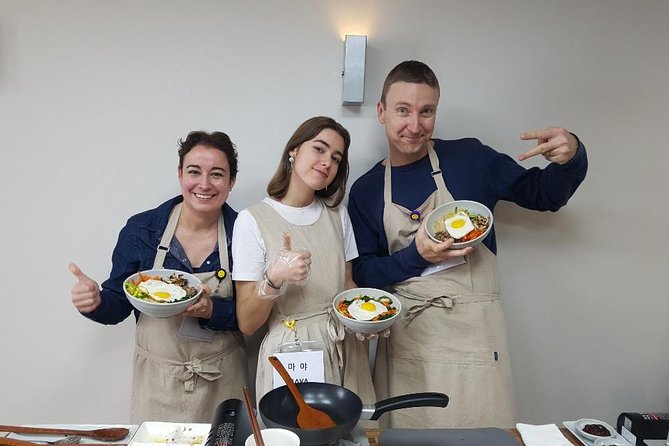
Korean food makes more sense once you have cooked it yourself. At Bapsang in Haeundae, Min leads a small, hands-on class built around classic dishes such as bibimbap, seaweed soup, and Korean pancakes, with history and table customs folded into the lesson.
I like the personal cooking station, which lets you work rather than watch from the sidelines. I also like the small group limit of seven people, though the stated maximum is eight, since that leaves room for individual help. The main consideration is price: at $100 per person, this is not a budget meal, but it includes several hours of instruction, food, cultural background, dessert, and a certificate.
Key points before you book

- Cook at your own station: You prepare the dishes yourself, with one-on-one help from Min.
- Joseon-era context: The class connects modern Korean food with palace cooking traditions and traditional aprons.
- Small group setting: The class is advertised for a maximum of seven people, with an overall activity limit of eight.
- A complete meal follows: You eat your finished dishes at a Korean bapsang table, with chairs available if floor seating is difficult.
- A useful souvenir: Each participant receives a certificate of participation.
- Plan around the menu: The dishes may change by date, and special temple-food dates were not scheduled for 2025.
What makes this Haeundae cooking class different
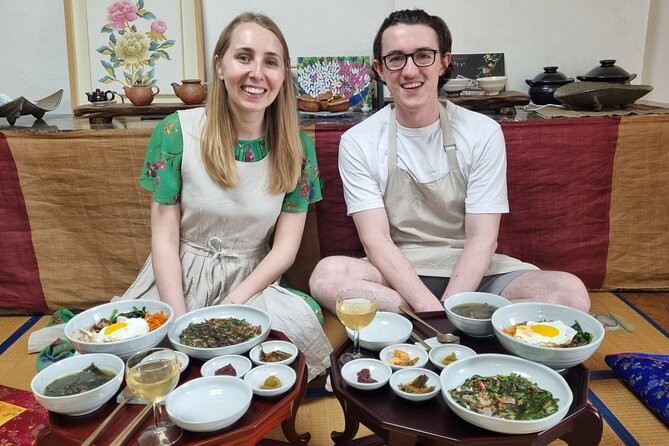
Many cooking classes give you a recipe, a workstation, and a quick meal. This one tries to explain the ideas behind Korean food as well. You taste the main Korean sauces, hear about cooking customs from the Joseon dynasty, and learn why the apron and table setting matter.
That cultural layer is important. Bibimbap is not just rice with toppings, and seaweed soup is not just a simple broth. The class presents Korean food as part of family life, celebrations, language, and older court traditions. Min also teaches some Korean menu reading and shares practical advice about Busan, which can help you order food with more confidence after class.
You do not need previous cooking experience. The instructions are broken down clearly, and Min works closely with the group. That makes this a good choice if you enjoy eating Korean food but rarely cook at home. It also works for families. A parent who attended with children aged 12 and 16 found that Min kept both younger cooks involved, while another participant described the dishes as manageable enough to recreate at home.
More Cooking Classes in Busan:
- Busan Tailored Korean cooking class (Vegan OK)with market tour
★ 5.0 · 66 reviews - Busan: Small-Group Traditional Korean Food Cooking Class
★ 4.9 · 58 reviews - Local Home Korean Cooking Class & Market Adventure in Seoul
★ 5.0 · 1,024 reviews
Meeting Min at 10 a.m. in Marine City
The meeting point is at 37 Marine City 3-ro in Haeundae, and the activity begins at 10 a.m. It finishes back at the same meeting point. This is a useful location if you are staying near Haeundae or Marine City, but you should allow time to find the exact building and arrive ready to start.
The class is near public transportation, and you receive confirmation when you book. A mobile ticket is accepted, so you do not need to print anything. The class is listed as lasting about three hours, which gives the morning a clear shape: welcome, explanation, cooking, lunch, tea, dessert, and a closing certificate.
Min is the central reason this experience feels personal rather than mechanical. Her teaching style is warm and conversational, with plenty of chances to ask questions. She is also described as attentive to special diets. Gluten-free and vegetarian adjustments have been handled during past classes, but you should communicate any requirements in advance rather than assume every menu can be changed.
The apron, welcome drink, and sauce lesson
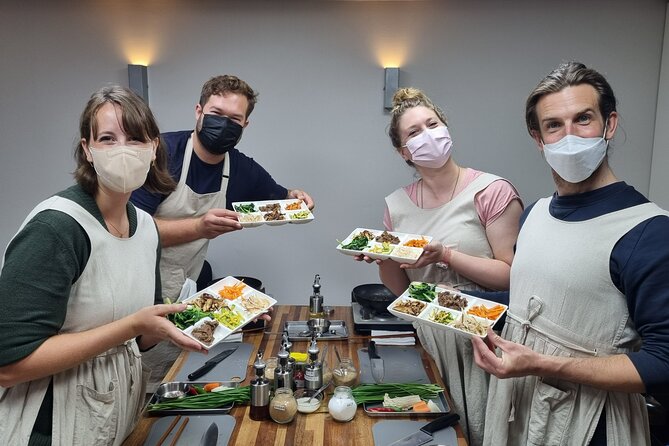
The class begins with a traditional Korean apron. You wear an apron modeled on clothing associated with cooks in the palace, which gives the opening a pleasant sense of occasion without making the class feel stiff.
You are then served a welcome drink before the cooking begins. The pace here matters. Rather than throwing you straight into chopping and mixing, Min first introduces Korean cooking ideas and lets you taste the main sauces. This is one of the most useful parts for a first-time cook because Korean food relies heavily on seasoning bases, fermented flavors, and careful balance.
You can ask questions at this point, and Min also brings in language and culture. If you are planning to eat at local restaurants afterward, learning how Korean dishes and menu terms fit together can be just as helpful as learning one recipe.
Cooking three Korean dishes at your own station
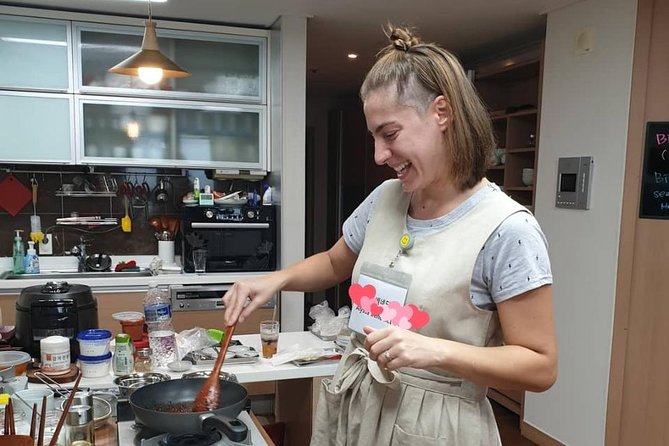
The standard menu described for the class includes bibimbap, seaweed soup, and a Korean pancake, often identified in the class material as a chive pancake or buchon jeon. The exact menu can vary by date, so treat those dishes as the usual format rather than a guarantee.
The personal station is a major advantage. You are not simply watching a chef prepare a demonstration plate. You cut, mix, season, and assemble your own food, with Min stepping in when you need help. That hands-on approach also makes the recipes easier to remember when you return home.
Bibimbap gives you a good lesson in balance and presentation. You bring together rice, vegetables, sauce, and other prepared elements, then combine them at the table. The dish looks simple, but the class helps you understand how separate flavors become one meal.
Seaweed soup is a quieter dish, but it carries cultural meaning in Korea and is often connected with birthdays and family meals. Learning it alongside bibimbap gives you a better sense of how Korean home cooking includes both a main mixed rice dish and a warm soup.
The Korean pancake is likely to be the most immediately rewarding dish for many people. It is practical, savory, and easy to imagine making again. Several participants especially enjoyed the chive pancake, and the recipe appears simple enough for a home cook to attempt without special equipment.
More Workshops in Busan:
- Seoul: Korean Cooking Class at a Local Home and Market Tour
★ 5.0 · 348 reviews - Korean Cooking Class with Grocery Shopping at Seoul Local Market
★ 5.0 · 107 reviews - Royal Seoul Cooking Class in a 100-Year-Old Hanok
★ 5.0 · 81 reviews - Seoul : Taste of Korea, Authentic Home-Style Cooking Class
★ 5.0 · 64 reviews
Eating your meal at a traditional bapsang table
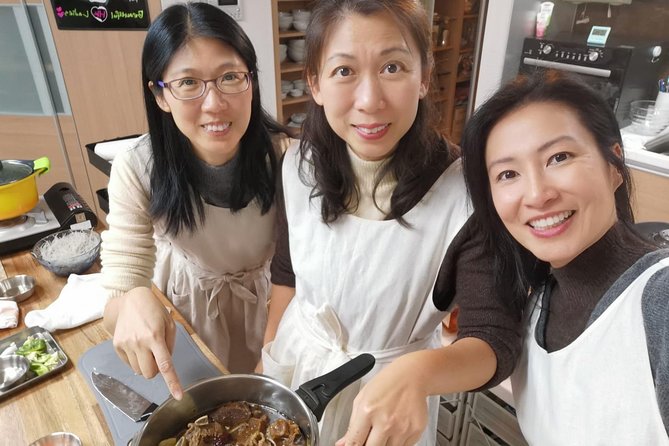
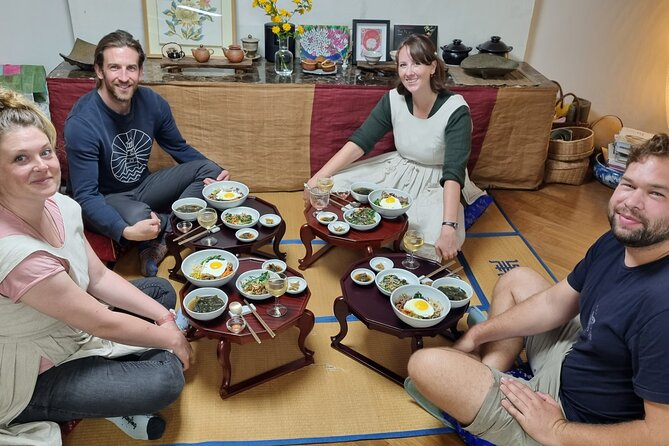
Once the food is ready, you sit down to eat what you prepared. The meal is served on a bapsang, the traditional Korean dining table, and this changes the feel of the class. You are not rushing away with a takeaway box. You are seeing how Korean food is arranged and enjoyed as a complete meal.
Floor seating is part of the traditional setup, but it is not required. If sitting on the floor is uncomfortable, you can eat at a normal table with a chair. This is a small but important practical detail for older visitors, anyone with knee or back concerns, or people who simply do not enjoy floor dining.
The meal is also a good test of the class itself. You get to taste the results while the techniques are still fresh in your mind. If a sauce seems too strong or a texture surprises you, you can ask Min about it immediately.
Tea, dessert, and a certificate at the end
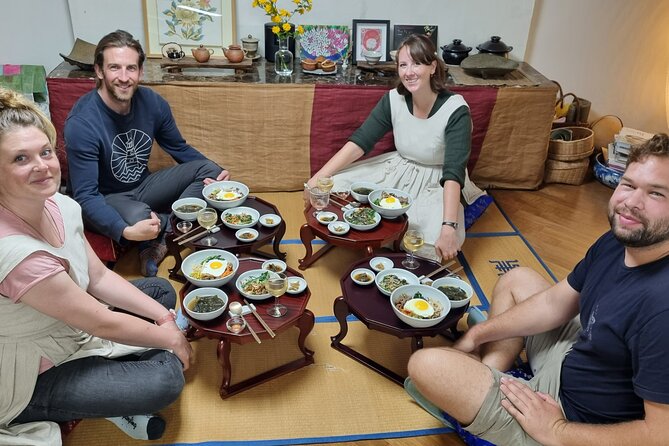
After lunch, the class moves to tea and a simple Korean dessert. This gives the experience a calm finish and adds another small piece of Korean food culture beyond the main dishes.
You receive a certificate of participation at the end. It is not a professional cooking qualification, of course, but it is a pleasant keepsake and gives the class a definite ending. Some participants also received a small surprise gift, such as a pouch, though you should not book the class expecting a particular gift.
The closing conversation can also include local advice. Min has offered suggestions for places to visit and things to do around Busan, which is useful if this is one of your first mornings in the city.
How the listed Haeundae stops fit in
The itinerary lists Dongbaekseom, Haeundae Beach, The Bay 101 Yacht Club, and Nurimaru APAC House. These are all notable Haeundae-area places, but the supplied schedule does not describe a separate guided sightseeing route to each one.
The cooking activity begins and ends at the Marine City meeting point. I would treat the listed locations as nearby area references or places for your own before-and-after exploring, not as guaranteed sightseeing stops during the three-hour class.
Dongbaekseom is known as a pleasant coastal area beside Haeundae, while Haeundae Beach is one of Busan’s best-known waterfront areas. The Bay 101 Yacht Club is associated with Marine City’s modern waterfront setting, and Nurimaru APAC House is a notable venue in the same broad area.
The practical benefit is that you can pair the cooking class with a walk around Haeundae. The drawback is that you should not assume the class itself provides time for a full visit to all four places. If sightseeing is your main goal, allow a separate block of time before or after the lesson.
Is $100 a fair price?
At $100 per person, this is a premium activity compared with simply eating lunch in Busan. You are paying for more than ingredients. The price covers a three-hour guided class, an individual workstation, instruction from Min, food, a welcome drink, tea, dessert, the traditional dining setup, and a certificate.
The small group helps justify the cost. With a maximum of seven people advertised, Min can correct technique, answer questions, and adjust the pace. That is much more useful than a large demonstration where you can barely see the work surface.
The value is strongest if you want to learn recipes and understand Korean food customs. It is weaker if you only want a cheap meal or a quick photo opportunity. The dishes are designed to be cooked and eaten, not presented as a luxury tasting menu.
I also think the class has good value for families and mixed-ability groups. Beginners can follow along, experienced cooks can ask more detailed questions, and the meal gives everyone a shared activity. Past participants have also found it suitable for people who do not cook often.
Who should choose this experience?
I would choose this class if you want a cultural activity with a real meal at the end. It is a particularly good fit for:
- First-time visitors who want an introduction to Korean food beyond restaurant dining
- Couples or friends who enjoy hands-on activities
- Families with older children or teenagers
- People who want recipes they can try at home
- Visitors staying near Haeundae and Marine City
- Anyone interested in Korean food traditions, language, or table customs
You may want to skip it if you dislike group activities, have very limited time in Busan, or prefer a formal restaurant meal. The three-hour duration is a real commitment, and the menu can change. You should also be comfortable with basic kitchen participation, even though no prior experience is needed.
The class has received a five-star rating from 92 people, with 100 percent recommending it. That level of approval fits the strongest parts of the experience: Min’s personal teaching, the easy pace for beginners, the cultural background, and the chance to eat food you prepared yourself.
Practical details that can affect your morning
The activity has a maximum capacity of eight people, while the class is described as limited to seven. Either way, this is a small group rather than a large bus tour.
Service animals are allowed. The class is near public transportation, and confirmation arrives at booking. Free cancellation is available if you cancel at least 24 hours before the local start time. Changes or cancellations made inside that window are not accepted for a refund.
The experience requires good weather according to its conditions. If poor weather causes cancellation, you are offered another date or a full refund. That condition may seem unusual for a cooking class, so check the notice carefully when booking.
Special Korean dishes and temple-food sessions were not scheduled for 2025. If you specifically want vegan Korean temple food or a particular seasonal menu, confirm the date and menu before paying.
Should you book the Bapsang cooking class?
I would book it if you want more than a checklist of Haeundae sights. The class gives you a practical introduction to Korean cooking, a meal you have helped make, and a friendly setting where questions are welcome. Min’s clear teaching and attention to dietary needs add real value.
The decision comes down to priorities. At $100, it is not the cheapest way to eat lunch in Busan, but it is a strong choice for a memorable cultural activity. Choose it for the personal instruction, Joseon-era context, traditional table setting, and recipes you can carry home. Skip it only if you want a short, inexpensive meal or a sightseeing tour rather than a hands-on kitchen experience.
FAQ
How long does the Korean cooking class last?
The class lasts about three hours.
What time does the class begin?
The stated start time is 10 a.m.
Where does the activity begin and end?
It begins at 37 Marine City 3-ro in Haeundae, Busan, and ends back at the same meeting point.
How much does the class cost?
The listed price is $100 per person.
What dishes will I cook?
The described menu includes bibimbap, seaweed soup, and a Korean pancake. The menu may vary by date.
Do I need cooking experience?
No. Previous culinary experience is not necessary, and the instructor provides guidance during the class.
Is floor seating required for the meal?
No. You can eat at a table with a chair if sitting on the floor is difficult.
Do I receive anything at the end of the class?
Yes. Each participant receives a certificate of participation.
Newest Busan trips on the site
- Busan: Sky Capsule+ Huinnyeoul+ Gamcheon+ Songdo+ Night View★ 4.9 · 10 reviews
- Busan: Jagalchi Market & Gamcheon village Walking Tour★ 5.0 · 7 reviews
- Busan: Night Small Group Photo Tour (Max 7)★ 5.0 · 33 reviews
- Busan: Private Chartered Car Tour★ 4.1 · 7 reviews
- Busan: Haeundae LCT Tower ‘X the Sky’ Entry Ticket★ 4.7 · 23 reviews
- Busan: Hidden Gems Private Tour with a Certified Guide★ 4.9 · 53 reviews
- Busan: Naejangsan National Park Autumn Foliage One Day Tour★ 4.8 · 4 reviews
- Busan: Geoje Coastal Escape, Sea Breeze, Oedo Botania Island★ 4.7 · 44 reviews
Busan Tours, compared.

Coastal Treasures Beach Train, Culture Village & More
Read our review →
Busan’s Cultural Wonders with Beach Train & Gamcheon Village etc
Read our review →
Private Busan Tour -Explore Cultural Landmarks with a Local Guide
Read our review →
Gamcheon Village and Haeundae Blueline Park Tour
Read our review →

Busan Coastal Charm & Culture: Gamcheon Village & opt Sky Capsule
Read our review →
Browse the lists this tour appears in