
Reviewed · JEJU TOURS
Jeju island Southern UNESCO Day Tour With Hallasan MT
Southern Jeju packs a lot into one day: a short Hallasan hike, flower gardens, three waterfalls, volcanic sea cliffs, tea fields, and a traditional market. This tour links those sights by air-conditioned vehicle, so you can cover ground without wrestling with Jeju’s bus routes or renting a car.
I like two things right away. First, the route has a good mix of active and easy stops. Second, guides such as Steven, Chloe, Peter, and Sunny add local stories, Korean phrases, and practical help. The main catch is time. With six stops in about nine hours, some places may feel brisk rather than leisurely.
Key points to know before booking
- Eoseungsaengak gives you a short taste of Hallasan: Expect a scenic walk rather than a full mountain climb.
- The route balances nature and food culture: Camellia Hill, waterfalls, lava columns, green tea, and a final market stop all appear in one day.
- Guide quality is a major part of the experience: Steven, Chloe, Peter, Elin, Sam, and Sunny are among the guides praised for friendly, clear service.
- Lunch costs extra: A one-hour lunch break is provided, but the meal is not included.
- Weather can change the order: Guides may rearrange stops so you have a better chance of seeing Hallasan.
- The final market stop is unguided: Dongmun Market is a useful place to continue on your own, but the tour has only one drop-off point.
Why this southern Jeju route works
Jeju is not an island you can understand from one beach or one museum. Its appeal comes from the contrast between the volcanic interior, the flower gardens, the storm-shaped coast, and the island’s tea and citrus traditions.
This day tour gives you a broad first look. You get a little walking, a little sightseeing from paved paths and viewpoints, time for tea and desserts, and a chance to buy local products. It is especially useful if you have only a short stay or do not want to drive.
The vehicle, fuel, parking, entrance fees, and guide are included. At $56.86 per person, that is a reasonable price for a full nine-hour outing, particularly because several entrance fees are covered. You still need to budget for lunch, personal purchases, tea, desserts, and tips.
The day can include up to 100 people, so do not expect the intimacy of a private car. The upside is a low per-person price. The tradeoff is that boarding, regrouping, and moving through popular sights can take time.
More UNESCO Sites in Jeju
- Jeju: Eastern Jeju UNESCO Spots Day Tour
★ 4.9 · 1,148 reviews - East Jeju Essentials – Seongsan Ilchulbong (UNESCO) & Haenyeo
★ 5.0 · 939 reviews - Jeju: Southern Top UNESCO Spots Bus Tour
★ 4.9 · 648 reviews
Starting with Hallasan at Eoseungsaengak
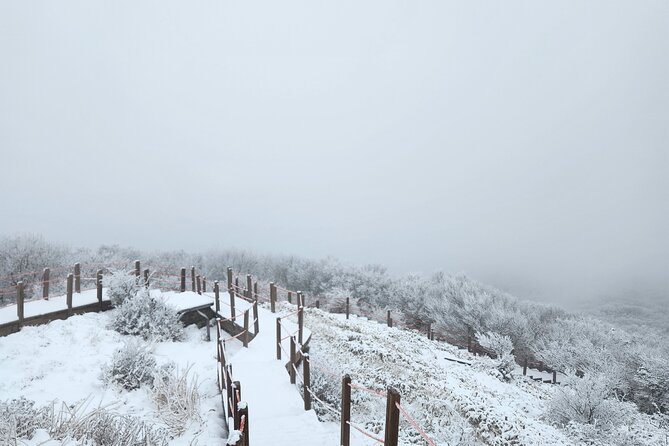
The first stop is Eoseungsaengak Trail, a short walking route on the slopes of Hallasan. The scheduled visit lasts about one hour and 40 minutes, including the time needed to walk, pause, and take in the views.
This is not a summit expedition. That matters. You get a taste of Hallasan’s volcanic setting without committing to a full-day climb or specialized mountain plan. The route is described as suitable for all ages, though you should still bring shoes with a good grip and be ready for outdoor conditions.
The appeal here is the change in scale. From the trail, Jeju feels larger and quieter than it does from the coast. Forest, open sky, and volcanic ground replace roads and buildings. On a clear day, the views can be one of the best reasons to choose this itinerary.
Weather matters greatly at Hallasan. Clouds can hide the mountain and rain can make walking less pleasant. The tour can change the order of stops when conditions shift. Guides such as Peter have adjusted the schedule so the group could visit Hallasan during a better weather window.
That flexibility is useful, but it also means you should not treat the listed order as fixed. Bring a light waterproof layer, water, and sun protection. The trail is only one part of the day, yet it is the part most affected by poor weather.
Camellia Hill and Jeju’s flower calendar
Camellia Hill follows with about one hour and 40 minutes in a large garden containing more than 6,000 camellia trees from around the world. From November through April, the flowers are a major draw, with red, pink, and white blooms adding color to the paths.
This stop softens the pace after the Hallasan walk. You can stroll, take photographs, and enjoy the planted setting without needing to cover a long distance. The garden works well for people who want scenic beauty but do not want every stop to involve a strenuous walk.
The season will shape what you see. Camellias are especially important from late autumn through early spring, while other flowers may appear at different times of year. It is best to think of Camellia Hill as a garden visit with changing displays rather than a guaranteed single-season spectacle.
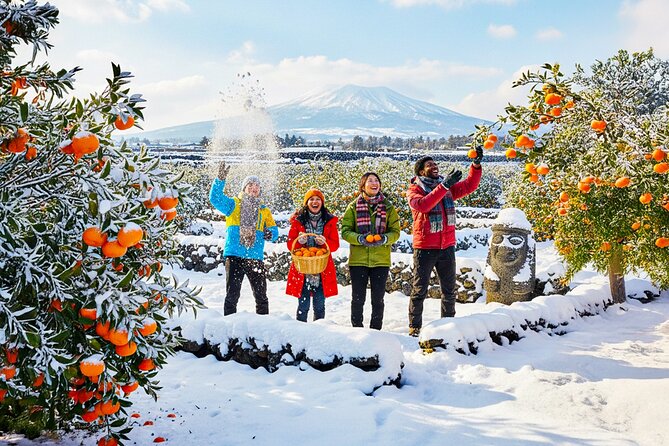
The tour description also mentions tangerine picking in winter. Treat that as a seasonal possibility, not something to expect on every departure. Jeju’s citrus culture is one of the pleasant details woven through the day, and you may also find citrus drinks, ice cream, or other local treats during breaks.
One practical point: this garden can easily absorb more time than the schedule allows. If you enjoy flowers and photography, you may want to keep an eye on your meeting time. The itinerary has many stops still ahead.
Cheonjeyeon Falls, the Pond of the Gods
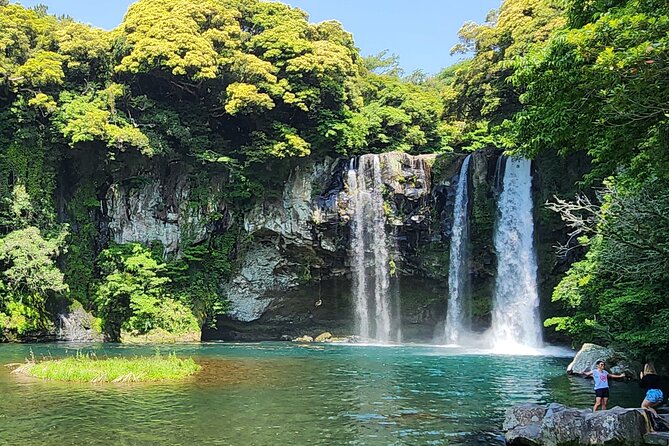
Cheonjeyeon Waterfall is known as the Pond of the Gods. The site has three waterfall sections, with water moving through forest and rock formations.
The first tier is especially dependent on rainfall and water conditions, so the appearance of the falls can vary. The surrounding paths and greenery remain part of the experience even when the flow is not at its strongest.
You should expect some walking and steps here. The stop is not simply a roadside photo break. Give yourself enough time to enjoy the forest, look at the rock formations, and reach the main viewpoints without rushing.
This is also a place where sturdy shoes help. The route includes natural outdoor surfaces, and Jeju weather can make them damp. The entrance fee is included, so you do not need to handle an extra ticket during the visit.
Cheonjeyeon adds an important element to the route: water. After forested Hallasan and the formal flower garden, the falls offer a more dramatic natural setting. Still, the one-hour-and-40-minute schedule includes both sightseeing and group movement, so do not expect a long, quiet hike through the area.
Same base, a completely different sort of day:
- Jeju: Western and Southern Sightseeing Day Tour
★ 4.8 · 972 reviews - South-West Jeju Essentials: Hallasan & Signature Highlights
★ 5.0 · 620 reviews - Jeju Island English Private & Flexible Tour any number anywhere
★ 5.0 · 561 reviews - East Jeju: Day Tour with Seongsan Peak & Haenyeo Performance
★ 4.9 · 478 reviews
Jusangjeolli Cliff and hexagonal lava columns
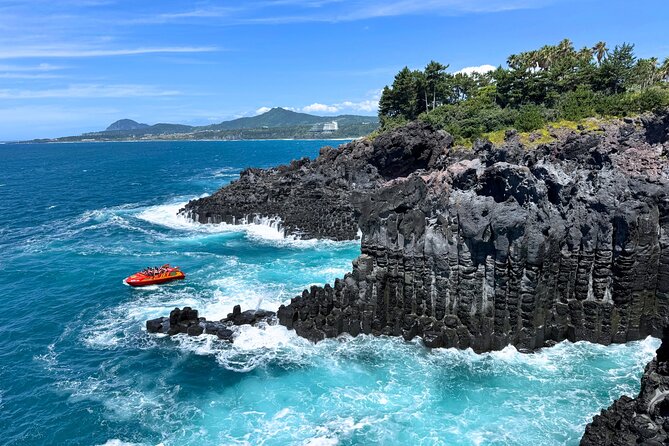
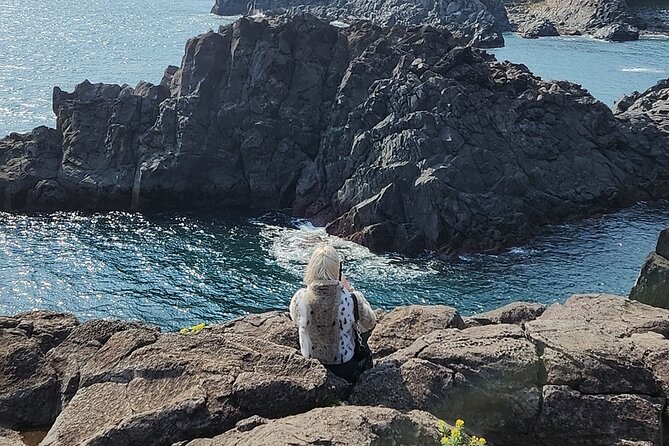
At Daepo Haean Jusangjeolli Cliff, the sea has shaped cooled volcanic rock into striking column patterns. Many of the columns are hexagonal, giving the cliff face a geometric look that seems almost constructed.
The cliffs rise about 20 to 30 meters, and the viewpoint lets you see how the rock meets the coast. This is one of the clearest places on the tour to understand Jeju’s volcanic origins. Hallasan gives you the mountain side of the story, while Jusangjeolli shows what happens when volcanic rock meets waves and time.
The scheduled visit lasts about one hour and 30 minutes. That is enough for the main viewing areas and photographs, though not enough for an open-ended coastal walk. Stay aware of the meeting time, especially if sea views and photography are your priorities.
This stop can be windy and exposed. A hat that fits well, a light jacket, and comfortable shoes are useful. The cliffs are visually powerful, but the visit is about viewpoints rather than getting close to the water.
Along with Cheonjeyeon Falls, Jusangjeolli is one of the strongest nature stops of the day. It gives the tour a sense of scale and drama before the pace turns toward tea, shopping, and food.
O’sulloc Tea Museum and Jeju green tea
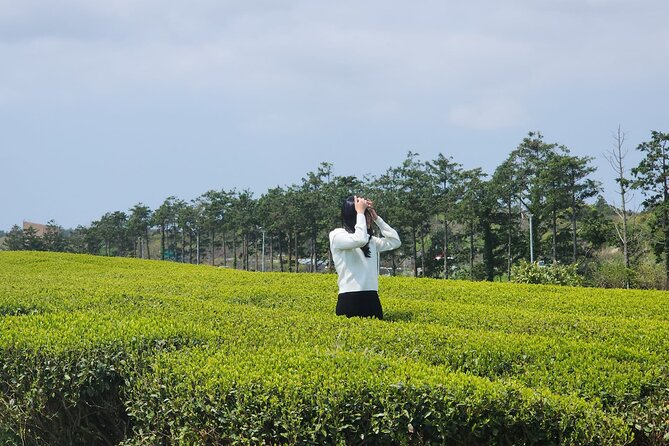
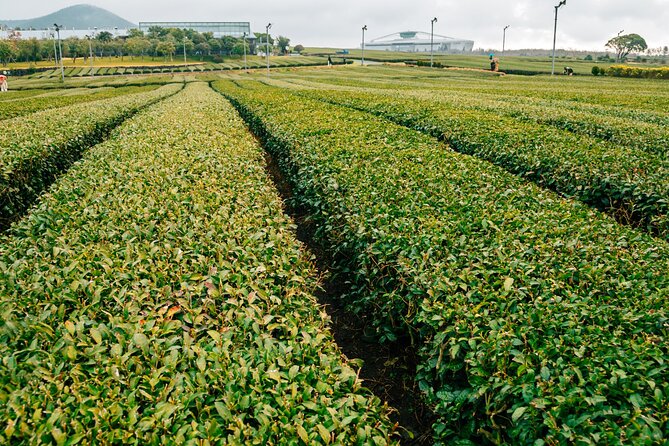
O’sulloc Tea Museum gives the afternoon a calmer finish. The museum sits beside green tea fields, and the visit includes time to learn about Jeju’s tea culture, sample different flavors, and browse tea-based drinks and desserts.
The tour allows about one hour and 30 minutes here. That may feel short if you want to sit down with tea, walk through the fields, shop for gifts, and try sweets. The tea museum is also one of the easiest places to spend extra money, so set a personal budget before you arrive.
A green tea field gives you a different view of Jeju’s agriculture. The island is often associated with oranges, but tea is another important local product. The setting also provides a welcome pause after several outdoor sights.
Several guide-led days have included suggestions such as matcha ice cream, fresh orange juice, or local souvenirs. Those small recommendations can make the stop more useful than simply taking photographs and leaving.
If you care most about tea, ask your guide how much free time you will have once the group reaches the museum. Some people could happily spend another hour here. Others will prefer the balance of a shorter visit and a final market stop.
Ending at Dongmun Market
Dongmun Market is the final stop, and this part is unguided. It is Jeju’s oldest and most active traditional market, with food, gifts, and local products available for browsing.
The scheduled time shown for this stop is only one minute, which effectively means the tour ends here rather than providing a guided market visit. You are free to continue exploring on your own after the drop-off.
This arrangement can be useful if you want to eat, shop, or continue into Jeju City. It is less convenient if you expected the guide to lead you through the market or return you directly to your hotel.
The tour offers several pickup points but only one drop-off point. Check that Dongmun Market works for your evening plans before booking. If it does, ending here gives you flexibility. You can shop without watching the clock, find dinner, or make your own way onward.
Guides, language, and the human side of the day
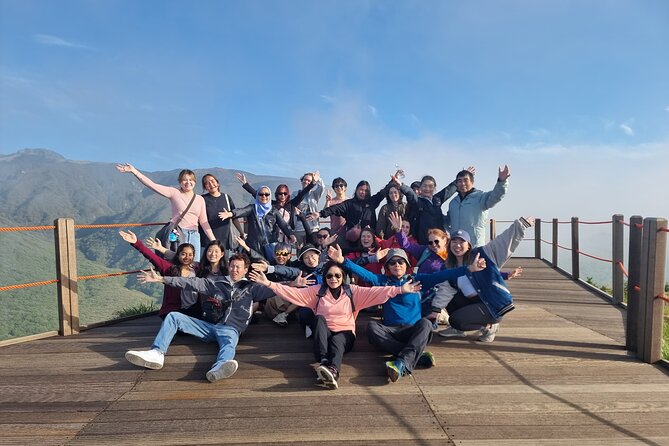
The guide can make a large group feel organized or disjointed. Here, guide names that appear repeatedly in the service details include Steven, Chloe, Peter Kim, Elin, Sam, and Sunny.
Steven is described as cheerful, funny, punctual, and able to speak English, Chinese, and Japanese. He has helped with restaurant translation, suggested local food, and shared Korean phrases during the drive. Chloe is noted for clear communication, multilingual help, and steady pacing. Peter is praised for storytelling, humor, and changing the schedule around weather.
Those details matter because the tour includes several transitions. A good guide needs to explain meeting points, keep the group moving, answer questions, and help people feel comfortable at lunch and during outdoor stops.
You should still remember that guides vary by departure. You cannot assume you will have a particular person unless the operator confirms it. The experience is strongest when the guide adds context rather than simply announcing the next stop.
Lunch, weather, and what to pack
Lunch is not included, but the schedule provides a one-hour break. A restaurant is selected during the day, and the available choices may suit different tastes. Seafood pancake and other Korean dishes have been part of the meal experience, but the exact restaurant and menu can change.
If you need halal food or have strict dietary requirements, ask before departure. A dietary concern has been identified as a weak point for at least one participant, so do not rely on finding a suitable meal without checking.
Pack for several kinds of weather:
- Comfortable walking shoes
- Water
- A light rain layer
- Sun protection
- A small amount of cash or a payment card for food and shopping
- Space for tea, citrus products, and souvenirs
Outdoor activities carry some risk, and personal travel insurance is recommended. The tour requires good weather and may be canceled if conditions are poor. In that case, you are offered another date or a full refund.
You need to provide a phone number with the country code when booking. The guide uses it to contact you, and WhatsApp is the suggested backup if you do not hear from the operator the day before.
Who should book this Jeju day tour?
I would choose this tour if I wanted to see many sides of southern Jeju in a single day without driving. It suits first-time visitors, couples, families, and solo visitors who prefer a planned route and live guidance.
It is also a good match for anyone staying briefly. You see Hallasan, flowers, waterfalls, lava cliffs, tea fields, and a market without arranging separate tickets or transportation.
I would hesitate if you prefer slow travel. Six stops plus driving and lunch create a full day. The schedule can feel rushed, especially at O’sulloc Tea Museum or Camellia Hill. A private tour or a two-day plan would give you more breathing room.
The tour is also not the best fit if you want a serious Hallasan hike. Eoseungsaengak is a short scenic walk, not a full mountain ascent. Choose it for variety and views, not for a demanding trekking day.
Final verdict: good value for a first look at southern Jeju
At $56.86, this is a strong value for a nine-hour guided route with transport, parking, fuel, and entrance fees included. The best parts are the variety, the weather-aware scheduling, and the chance to hear local stories from guides such as Steven, Chloe, and Peter.
The price comes with tradeoffs: a potentially large group, a separate lunch bill, limited time at some sights, and a single final drop-off at Dongmun Market. If you accept that pace, the tour gives you an efficient and enjoyable introduction to southern Jeju.
Book it if you want broad coverage and practical guidance. Skip it if you want long walks, private attention, or hours at each attraction.
FAQ
How long does the Jeju Southern UNESCO Day Tour last?
The tour lasts about nine hours, including travel time and a one-hour lunch break.
Is lunch included in the price?
No. The tour provides a one-hour lunch break, but you pay for your own meal.
What languages are available from the guide?
Professional guides are available in English and Chinese. The guide team also includes multilingual guides who may speak Japanese and other languages.
Is the Hallasan walk a full mountain hike?
No. The visit is a short walk on the Eoseungsaengak Trail, designed as a scenic introduction to Hallasan and Jeju’s volcanic setting.
Can the tour schedule change?
Yes. The order and timing may change due to weather or other conditions. Guides may rearrange the stops to improve the chance of seeing Hallasan.
What happens if bad weather cancels the tour?
If poor weather causes cancellation, you are offered a different date or a full refund. Free cancellation is available up to 24 hours before the experience begins.
Newest Jeju trips on the site
- Jeju: Seogwipo City Walking Tours with Sunset★ 5.0 · 11 reviews
- Jeju: Western Jeju K-Drama Spots Tour with Hotel Pickup★ 5.0 · 4 reviews
- Jeju: West of Jeju Island Bus Tour from Seogwipo City★ 5.0 · 20 reviews
- Jeju: Western & Southern Jeju Hydrangea Festival Tour★ 5.0 · 3 reviews
- Jeju: K-Drama Spot When Life Gives You Tangerines Hotel Pick★ 5.0 · 4 reviews
- Jeju Premium Small Group UNESCO Day Tour – East★ 4.8 · 33 reviews
- Jeju: Sunset Tour Olle Trail Walking Tour with Hotel Pickup★ 4.9 · 7 reviews
- Jeju West: Small Group Healing Tour w/Caves & Dolphins★ 5.0 · 8 reviews
Jeju Tours, compared.

East Jeju Essentials – Seongsan Ilchulbong (UNESCO) & Haenyeo
Read our review →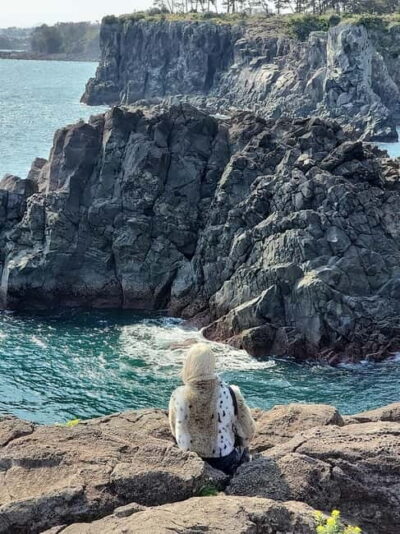
South-West Jeju Essentials: Hallasan & Signature Highlights
Read our review →
Jeju Island English Private & Flexible Tour any number anywhere
Read our review →
East Jeju: Day Tour with Seongsan Peak & Haenyeo Performance
Read our review →South-West Jeju Essentials: Hallasan & Signature Highlights
Read our review →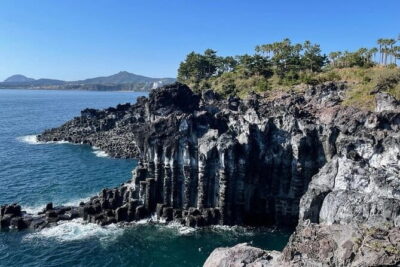
Jeju Southern UNESCO Full Day Tour with Mt.Halla
Read our review →Browse the lists this tour appears in