
Reviewed · GYEONGJU TOURS
Busan: Gyeongju Guided Day Trip to Three Kingdoms Capital
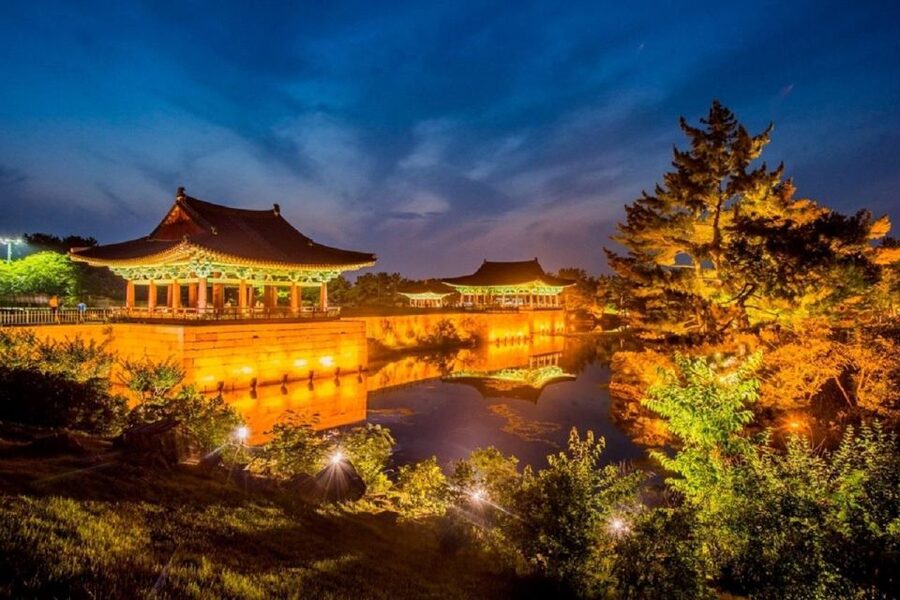
Gyeongju is South Korea’s best history lesson outside Seoul, and this long day trip packs its biggest sights into one well-managed route. You’ll see Bulguksa Temple, royal tombs, old village lanes, and Donggung Palace glowing beside Wolji Pond after sunset.
I like the way the tour combines clear historical storytelling with time to wander on your own. I also like the practical Busan pickup, comfortable coach, and guides such as Kayla, Bada, Katrina, and Hyony, who are praised for humor, photos, and keeping large groups moving. The tradeoff is simple: this is an 11 to 12-hour day with plenty of walking, stairs, hills, and several quick stops.
Key points to know before booking
- Four major sights anchor every package: Bulguksa Temple, Daereungwon Tomb Complex, Hwangridan-gil, and Donggung Palace and Wolji Pond.
- Your selected package changes the extra stops: the Three Kingdoms version adds Gyochon Traditional Village and Woljeonggyo Bridge, while other options feature Seokguram, Cheomseongdae, or Yangdong Folk Village.
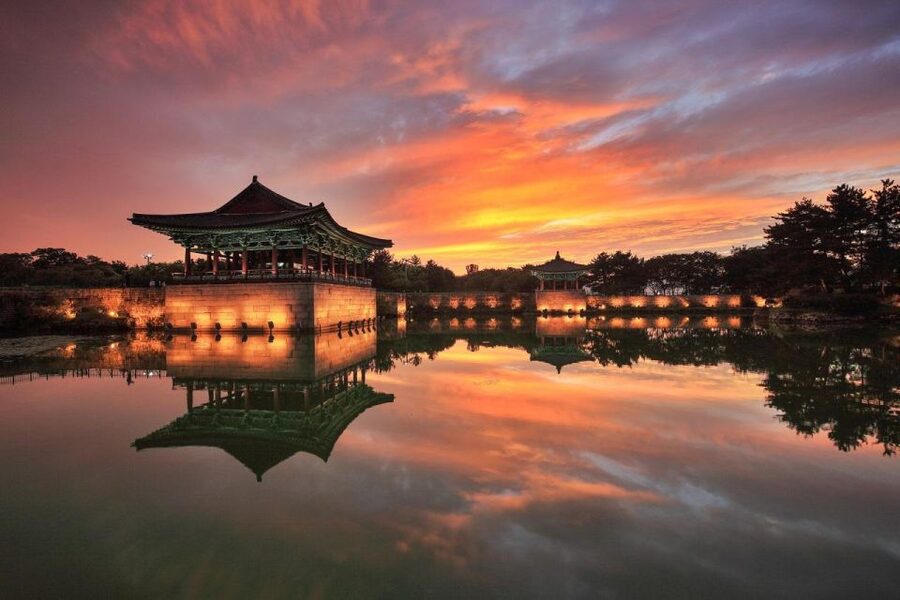
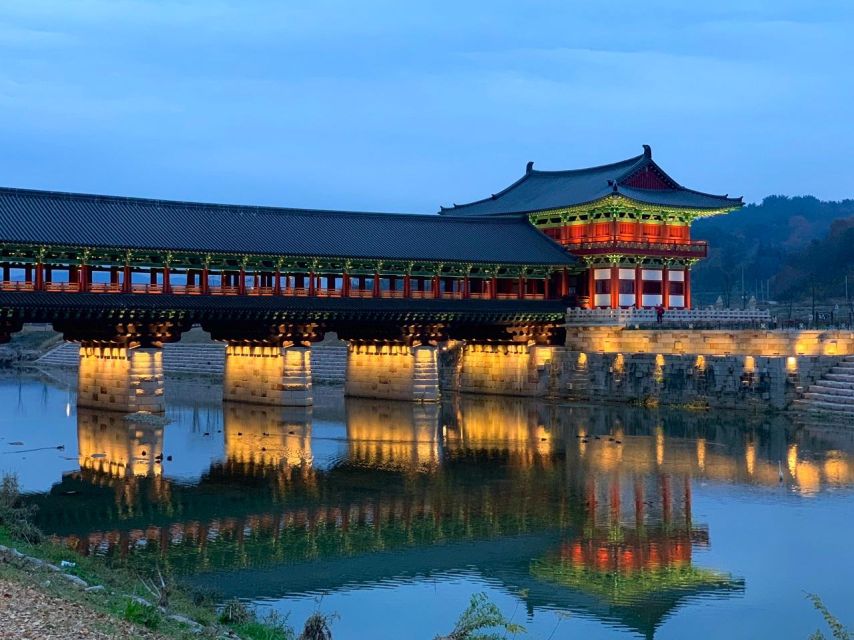
- The palace visit is timed for evening: Wolji Pond is especially striking when the lights come on and the buildings reflect in the water.
- English-speaking guides add real value: Kayla, Bada, Katrina, Hyony, Yuna, and others are noted for lively explanations, local tips, and help with photographs.
- The $52 price is strong for the distance covered: transport, a guide, and some admissions are included, but lunch and certain package-specific entrance fees are not.
- This suits active sightseers: the route is not suitable for wheelchair users or people with mobility impairments.
Why Gyeongju makes a rewarding day from Busan
Busan gives you beaches, markets, and modern city life. Gyeongju gives you Korea’s ancient Silla heart. From 57 BC to AD 935, the Silla Kingdom made Gyeongju its capital, and the city still holds temples, tombs, observatories, bridges, and palace grounds from that long era.
Doing this independently is possible, but the sights are spread out. A guided vehicle saves you from piecing together local transport between Bulguksa, the central tomb district, and the eastern palace area. You also get the context that turns a mound of grass or a stone stairway into part of a much bigger story.
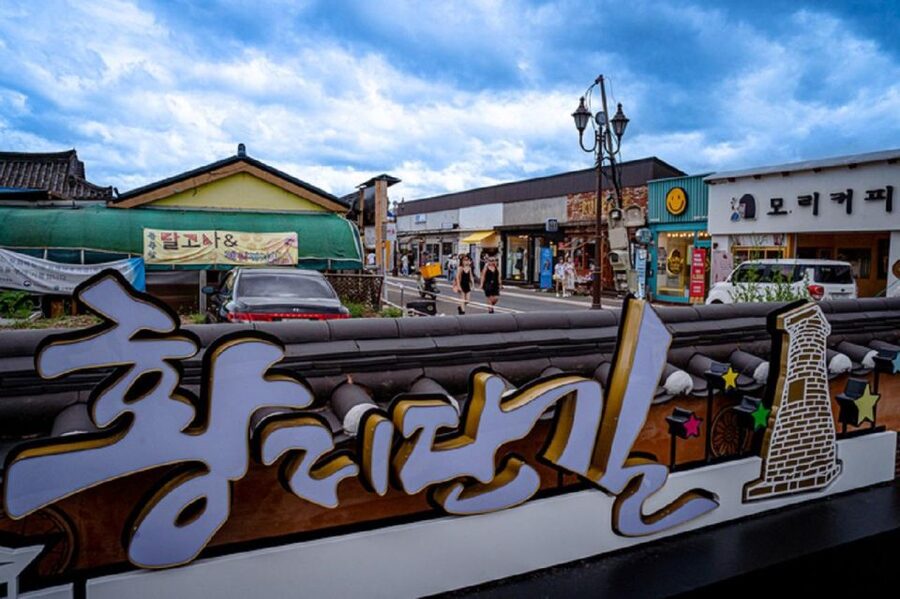
I particularly like the mix of grand monuments and ordinary walking streets. One moment you are looking at Buddhist architecture in a forested temple setting. Later, you are browsing Hwangridan-gil, where older buildings now hold cafés, shops, and food stops.
The trip costs $52 per person. That is good value if you want to cover the main Gyeongju sights in one day, especially since transportation and a guide are included. Food, drinks, personal spending, and travel insurance are extra. Admission details depend on your package, so check the selected option carefully before paying.
More Day Trips in Gyeongju:
- Busan: 7 Highlights Gyeongju City One Day Tour
★ 4.9 · 10 reviews - From Busan: Busan & Gyeongju One Day Tour
★ 5.0 · 5 reviews - Busan: Winter Healing Park and (Gyeongju/Daegu) One Day Tour
★ 5.0 · 5 reviews
The three package choices matter
The product is sold in three versions. All share four main stops: Bulguksa Temple, Daereungwon Tomb Complex, Hwangridan-gil, and Donggung Palace and Wolji Pond.
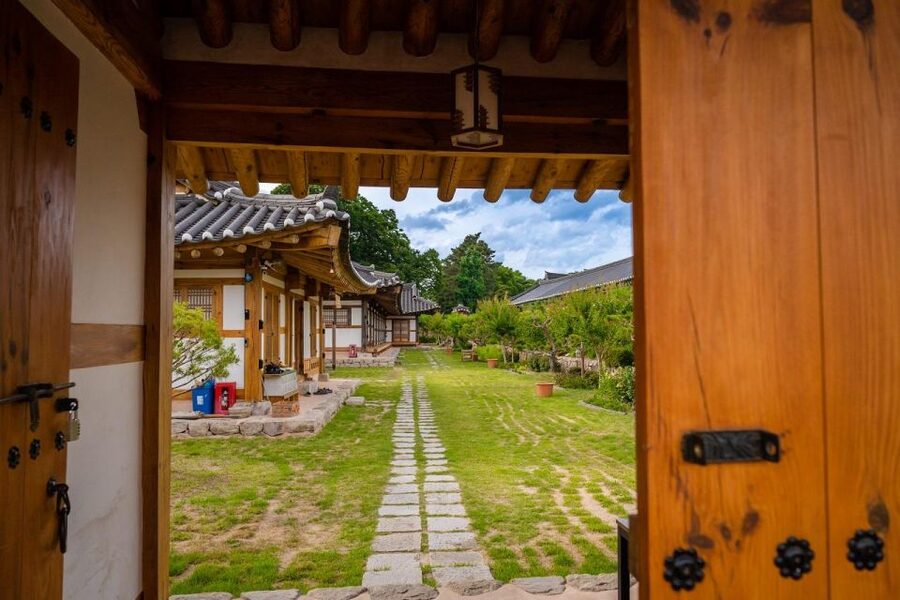
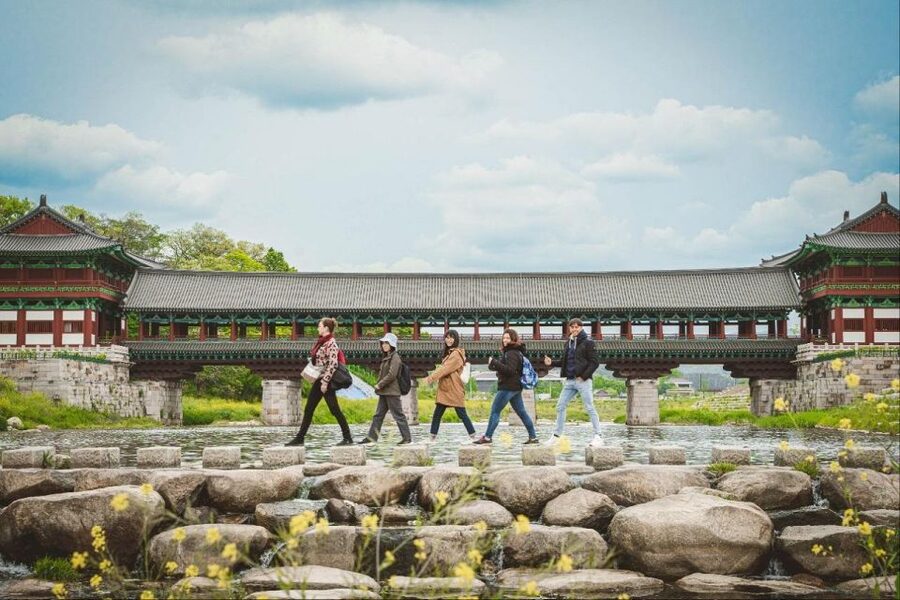
The Gyeongju Three Kingdoms Trip adds Gyochon Traditional Village and Woljeonggyo Bridge. This is the clearest match for anyone interested in old neighborhoods, hanok houses, Gyeongju Hyanggyo, and the famous illuminated bridge.
The Seokguram Grotto Tour adds Seokguram Grotto and Cheomseongdae Observatory. Seokguram is the choice for Buddhist sculpture and mountain scenery, while Cheomseongdae adds ancient science to the day.
The UNESCO Tour 2025 APEC package adds Yangdong Folk Village and Cheomseongdae Observatory. Yangdong is Korea’s largest UNESCO-listed traditional village, with hanok homes and Confucian heritage linked to the Joseon period.
The supplied route description includes all of these places in one master schedule, but the package descriptions make clear that the two special stops change with your selection. Confirm your exact package and included admissions before departure. This is the most important booking detail.
Bulguksa Temple and the meaning behind its stonework
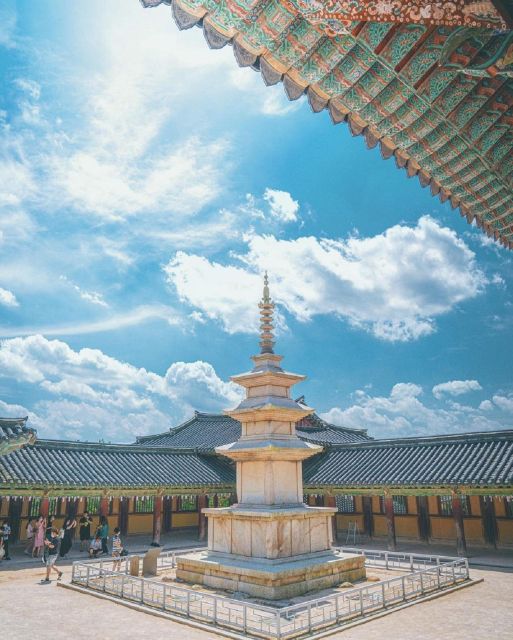
Bulguksa is one of the day’s essential stops. The temple is UNESCO-listed and known for the way its buildings sit with the surrounding natural setting. You get about 80 minutes here, including a guided visit, free time, and walking.
This is not a quick photo stop. The guide can explain the Buddhist purpose of the temple and point out details in the stone stairs, gates, courtyards, and pagodas. Several guides are praised for explaining Buddhist subjects in a clear, engaging way, which matters here because the site can otherwise feel like a series of beautiful but unfamiliar objects.
You will walk and may use stairs. Wear shoes that can handle uneven surfaces. The schedule gives you time to explore, but not enough for a slow, exhaustive study of every building.
Daereungwon turns grassy mounds into royal stories
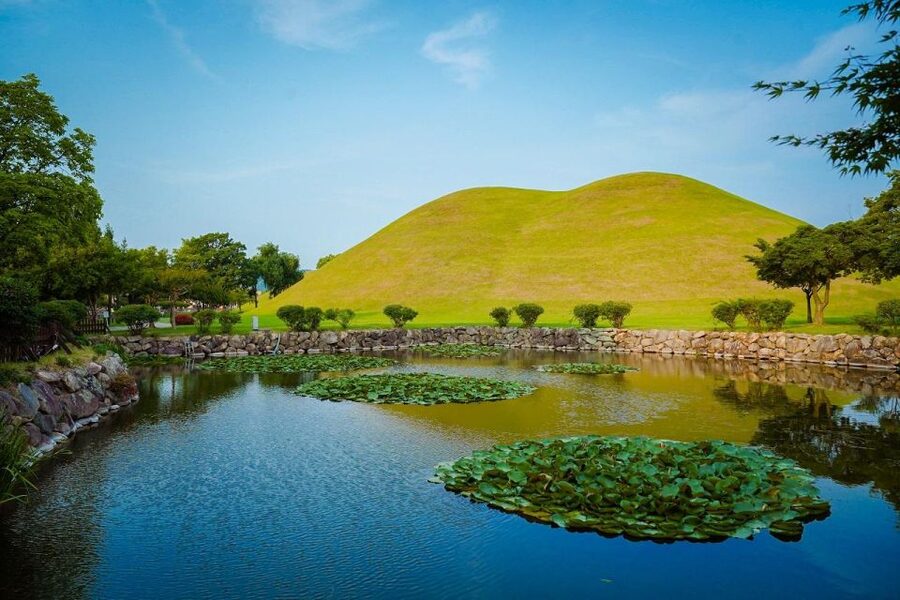
The Daereungwon Tomb Complex offers one of Gyeongju’s most distinctive sights: broad grassy burial mounds belonging to Silla royalty and aristocrats. They look simple from the outside, but their scale and construction become more impressive once the guide explains how the tombs were made.
You have about an hour here, with guided information and free time. The open grounds make this one of the easier stops for photographs, though the walk adds to the day’s total distance.
This is also where the tour’s historical focus pays off. Instead of seeing anonymous hills, you learn how royal burial practices reflected status, power, and Silla society. The site feels calm, but it carries a lot of meaning.
A few more Gyeongju trips worth comparing
- From Busan: Gyeongju UNESCO World Heritage Guided Day Tour
★ 4.8 · 1,250 reviews - Gyeongju UNESCO World Heritage Guided Day Tour from Busan
★ 5.0 · 660 reviews - Old Korea Thousand History Tour of Gyeongju from Busan
★ 5.0 · 518 reviews - Gyeongju UNESCO sites Private tour with licensed tour guide
★ 5.0 · 275 reviews
Lunch is flexible, not included
The itinerary allows about an hour at a local restaurant. Food and drinks are not included in the $52 price, so bring money for lunch.
That arrangement gives you some choice, but the actual restaurant selection and menu are not specified. One guide, joanne, singled out the restaurant as a positive part of the day, while other comments describe the lunch break as enjoyable. Still, you should treat the meal as an extra cost rather than part of the ticket.
An hour is enough for a proper break and helps keep the long schedule manageable. Use it to rest your feet, refill water, and prepare for the second half of the route.
Gyochon Traditional Village and Woljeonggyo Bridge
If you select the Three Kingdoms package, Gyochon Traditional Village gives the day a more lived-in feel. You can walk among hanok houses, see Gyeongju Hyanggyo, and reach Woljeonggyo Bridge. The stop lasts about an hour and includes both guided time and free wandering.
Gyochon is useful because it shows more than monuments. The traditional buildings, historic school, and village lanes help you picture how education, family life, and Confucian customs shaped Korean society.
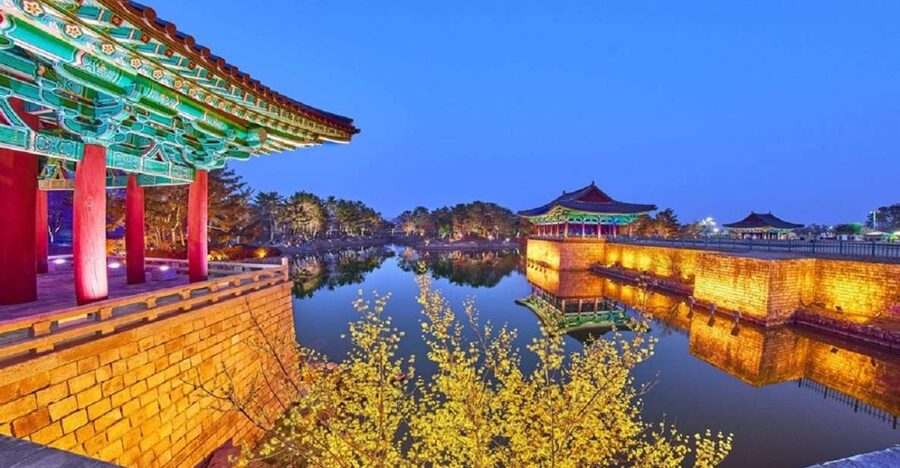
Woljeonggyo Bridge is a separate highlight in the route, with about 30 minutes for a visit. Its evening illumination and reflection on the water provide one of the strongest photo moments of the day. The atmosphere changes as daylight fades, and this late stop can feel more memorable than a daytime visit.
The route information lists Gyochon and Woljeonggyo as the special stops for the Three Kingdoms option. If those are your priorities, choose that package rather than assuming every version includes them.
Seokguram Grotto adds Buddhist art and mountain roads
The Seokguram option replaces the Three Kingdoms extras with Seokguram Grotto and Cheomseongdae Observatory. The grotto receives about an hour for a guided visit, sightseeing, and walking.
Seokguram is a UNESCO World Heritage site known for its serene Buddhist sculpture and spiritual setting. It offers a different experience from Bulguksa. Bulguksa is an open temple complex with courtyards and buildings, while Seokguram focuses attention on the grotto and its central Buddha.
The road journey from Busan is about 90 minutes before the first major stop, and the day includes several other transfers. If you are prone to motion sickness, plan accordingly. The tour takes place rain or shine, so a wet day may change how comfortable the walking feels, even though the route continues.
Cheomseongdae shows Silla’s scientific side
Cheomseongdae Observatory gives the trip a welcome change of subject. It is described as Korea’s oldest astronomical observatory, a small but important reminder that Silla culture was not only about temples and royal power.
You receive about an hour at the stop, with guided explanation and free time. The structure itself is not huge, so the value comes from understanding what it represents: careful observation of the sky, organized knowledge, and ancient engineering.
Cheomseongdae is included in the Seokguram and UNESCO APEC packages according to the package descriptions. It is not listed as one of the special stops for the Three Kingdoms option.
Yangdong Folk Village gives the UNESCO package a wider view
Yangdong Folk Village is the special feature of the UNESCO APEC version. It is described as Korea’s largest UNESCO-listed traditional village, with hanok houses and Confucian heritage that bring the Joseon period into view.
This stop lasts about an hour and includes a photo stop, guided explanation, and free time. It is a good choice if you want traditional architecture and village patterns rather than another palace or temple.
The admission is included in the UNESCO APEC package. It is not presented as an included stop in the Three Kingdoms or Seokguram versions, so again, package selection matters.
Hwangridan-gil offers a modern pause
Hwangridan-gil is a short, 30-minute stop for free time, shopping, sightseeing, and self-guided exploration. The street is lined with preserved 1960s architecture and has a more casual feel than the formal heritage sites.
You will not get a long café break here, but the stop helps vary the day. After several guided monuments, you can browse, take photos, and see how Gyeongju’s older building stock has found a new life.
Half an hour passes quickly. If you want to buy snacks or souvenirs, decide promptly. This is a taste of the area, not an extended shopping session.
Donggung Palace and Wolji Pond after sunset
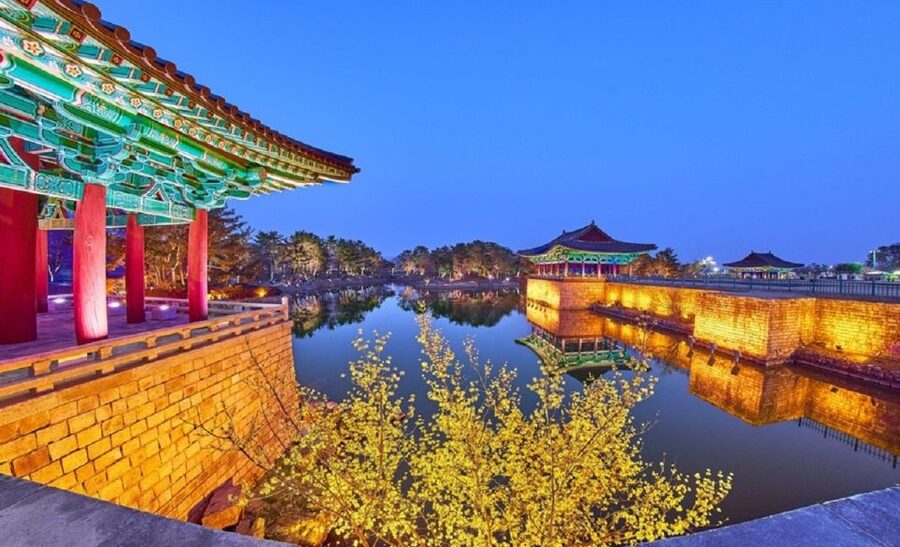
Donggung Palace and Wolji Pond is the shared finale and one of the tour’s strongest stops. You get about an hour for a guided visit and free time.
The site was connected to the Unified Silla period and is arranged around a tranquil pond. The buildings, water, and evening lights create the visual payoff that many people hope for when they book Gyeongju. Several accounts describe the final stops, especially when the sun sets and the lights come on, as magical.
Timing and weather will affect the exact mood. On a cloudy or rainy day, reflections may be less sharp, but the tour runs in all conditions. Bring a light rain layer when the forecast is uncertain.
The admission to Donggung Palace and Wolji Pond is included in all three packages. That makes it a reliable part of the booking, unlike the package-specific extras.
Transport, pace, and the walking reality
Pickup is available at three Busan subway stations: Busan Subway Station Exit 2, Seomyeon Subway Station Exit 12, and Haeundae Subway Station Exit 7. The stated Haeundae meeting window is 9:50 to 10:00 AM, but you must select your own pickup point before the trip.
Arrive 10 minutes early. The guide carries a white flag with a green LECIRT logo, and late arrivals or no-shows cannot receive a refund. These details matter because a large coach cannot wait long at a subway exit.
The transport rating is strong, and the coach or van gives you a practical way to reach scattered sites. The drive from Busan takes about 1.5 hours, with shorter transfers between Gyeongju stops and about 80 minutes returning to Busan.
This is a packed day, not a gentle outing. You should expect walking at temples, villages, tomb grounds, and palace paths, plus stairs and hills. The experience is not suitable for wheelchair users or people with mobility impairments.
The guides make the long day easier
The most consistently praised part of the experience is the guiding. Kayla Kim is described as energetic, funny, attentive, and generous with photographs. Bada is noted for clear explanations, patience, religious context, and keeping people from getting lost. Katrina receives similar praise for historical detail and upbeat group management.
Other named guides include Hyony, Yuna, Jack, Allan, Ethan, Jieun, and Jiseulhee. The exact guide is not guaranteed, but the pattern is useful: expect an English-speaking guide who gives a group briefing, explains each site, and leaves time for independent viewing.
Good guiding matters on a route like this. Without it, the day could become a blur of stone, timber, and translated signs. With it, you can connect Silla burial customs, Buddhism, astronomy, Confucian village life, and royal architecture.
Should you book this Gyeongju day trip?
Book it if you have only a short stay in Busan and want to see Gyeongju without arranging several train, bus, or taxi connections. At $52, the combination of transport, guiding, and major sights is hard to beat for a full day.
Choose the Three Kingdoms package for Gyochon and the illuminated Woljeonggyo Bridge. Choose Seokguram if Buddhist art is your priority. Choose the UNESCO APEC version if Yangdong Folk Village and Cheomseongdae appeal most.
Skip it if you want a slow visit, dislike fixed schedules, or cannot manage hills and stairs. For most active visitors, though, this is a practical first look at Gyeongju, with enough free time to make the day feel like more than a bus ride from one monument to the next.
FAQ
How long is the Gyeongju day trip from Busan?
The tour lasts about 11 to 12 hours, including transportation between Busan and Gyeongju and the visits to the listed sites.
Where can I meet the tour?
Pickup is available at Busan Subway Station Exit 2, Seomyeon Subway Station Exit 12, and Haeundae Subway Station Exit 7. The Haeundae meeting window is 9:50 to 10:00 AM.
Is hotel pickup included?
No. Pickup and drop-off are provided at one of the three designated subway stations, not at hotels.
What language is the tour conducted in?
The live tour guide speaks English.
Is lunch included in the price?
No. The schedule includes about one hour for lunch at a local restaurant, but food and drinks are not included.
Which sights are included in every package?
Bulguksa Temple, Daereungwon Tomb Complex, Hwangridan-gil, and Donggung Palace and Wolji Pond are the four common destinations. Admission to Donggung Palace and Wolji Pond is included in all three packages.
What is special about the Three Kingdoms package?
It adds Gyochon Traditional Village and Woljeonggyo Bridge. The bridge is especially appealing for evening views and reflections in the water.
Is the tour suitable for wheelchair users?
No. The experience is not suitable for wheelchair users or people with mobility impairments, and the route includes walking, stairs, and hills.
Newest Gyeongju trips on the site
- Gyeongju: Private Car Charter Taxi Tour★ 5.0 · 37 reviews
- From Daegu: Gyeongju UNESCO Tour 7 Highlights with Bulguksa★ 4.6 · 5 reviews
- From Busan: Echoes of Silla Gyeongju Historical Day Tour★ 4.8 · 55 reviews
- From Busan: Gyeongju Small Group Photo Tour & Hotel Pick-up★ 5.0 · 3 reviews
- From Busan: Gyeongju Historical Day Tour with Sky Capsule★ 4.7 · 17 reviews
- From Busan: Gyeongju Full-Day Historical Tour★ 4.1 · 6 reviews
- From Busan: Busan & Gyeongju One Day Tour★ 5.0 · 5 reviews
- Busan: Winter Healing Park and (Gyeongju/Daegu) One Day Tour★ 5.0 · 5 reviews
Gyeongju Tours, compared.
Gyeongju UNESCO World Heritage Guided Day Tour
Read our review →
Gyeongju UNESCO World Heritage Guided Day Tour from Busan
Read our review →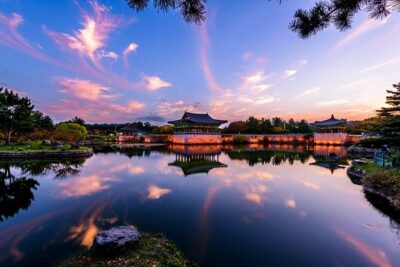
Old Korea Thousand History Tour of Gyeongju from Busan
Read our review →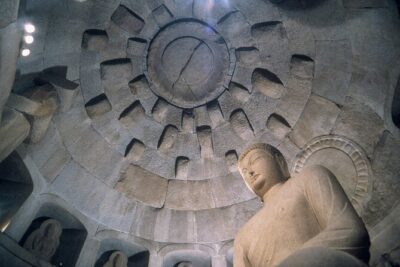
Gyeongju UNESCO sites Private tour with licensed tour guide
Read our review →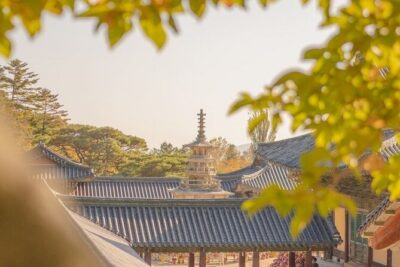
Private Gyeongju Tour – Explore Gyeongju UNESCO Sites
Read our review →
Gyeongju UNESCO Legacy Tour with National Museum
Read our review →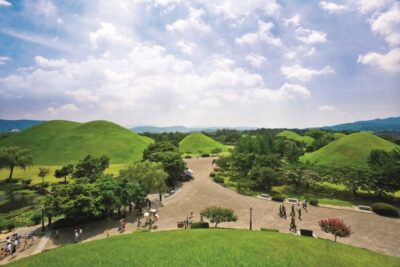
UNESCO Heritage Tour Including Bulguksa Temple
Read our review →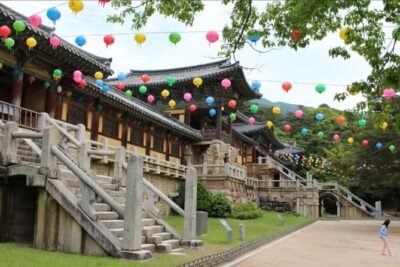
Gyeongju UNESCO World Heritage Sites and History Full-Day Tour with Lunch
Read our review →Browse the lists this tour appears in