
Reviewed · GYEONGJU TOURS
Old Korea Thousand History Tour of Gyeongju from Busan
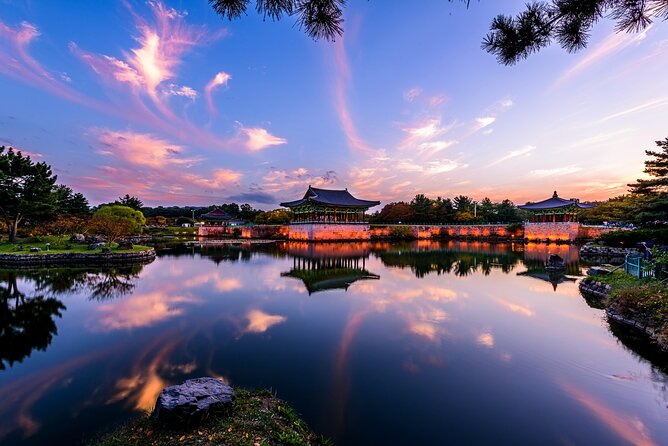
Gyeongju packs over a thousand years of Korean history into one long day. This tour takes you from Busan to Bulguksa Temple, royal burial mounds, old hanok streets, and the evening reflections at Wolji Pond and Woljeonggyo Bridge.
I like the easy round-trip bus service and the mix of famous sights with time in Hwangridan-gil. I also like the guides’ personal touch. Bada, Erica, Kayla, Hyony, and Katrina are repeatedly praised for clear storytelling, humor, patience, and taking photos for solo visitors. The catch is the pace: this can run from about 10 a.m. to 10 p.m., with more than 18,000 steps on a hot day.
Key points before you book
- Six major stops in one day: You see Bulguksa, Gyochon Village, Daereungwon, Hwangridan-gil, Wolji Pond, and Woljeonggyo Bridge.
- The evening finale is the highlight: Donggung Palace and Wolji Pond, followed by the illuminated bridge, give the final hours a special mood.
- The bus saves serious effort: Round-trip transportation lets you skip planning a long intercity day by train, bus, or taxi.
- Guides shape the experience: Bada, Erica, Kayla, Hyony, Eva, and Katrina are among the guides praised for history, humor, timing, and photo help.
- Plan for heat and walking: Bring water, sunscreen, a hat or parasol, and comfortable shoes.
- This is a value-focused day trip: At $64, admission and transport are included, but meals and hotel pickup are not.
Why Gyeongju makes a worthwhile day from Busan
Gyeongju was the capital of the Silla kingdom for roughly a thousand years. That long span gives the city a different feel from Busan. Instead of modern towers and busy port streets, you get temples, palace remains, burial mounds, traditional houses, and carefully preserved old districts.
I like this tour because it gives you the broad outline of Gyeongju in one sitting. You are not left to connect scattered sites by local bus or taxi. The route also builds toward the evening, when the palace pond and bridge are lit.
That convenience comes with a trade-off. You are covering a lot of ground, so each stop has a fixed window. The route gives you a useful first look rather than the freedom to study every building at length. If you want quiet museum time or long temple walks, spend a night or two in Gyeongju instead.
For a first visit from Busan, though, the structure makes sense. You get the major sights, a guide to explain the Silla period, and air-conditioned bus time between stops. That last point matters in Korea’s hot and humid months.
More History Tours in Gyeongju
- From Busan: Gyeongju UNESCO World Heritage Guided Day Tour
★ 4.8 · 1,250 reviews - Gyeongju UNESCO World Heritage Guided Day Tour from Busan
★ 5.0 · 660 reviews - Gyeongju: UNESCO Heritage Tour Including Bulguksa Temple
★ 4.8 · 104 reviews
The morning ride and meeting points in Busan
The tour begins with pickups at Busan Station, Seomyeon Station, and Haeundae Station before heading to Gyeongju. During the summer schedule from April through September, the stated Busan Station time is 10 a.m., with Seomyeon at 10:20 a.m. The exact meeting details on your confirmation matter, since one poor experience involved a mismatch between the voucher time and the actual pickup time.
There is no hotel pickup or drop-off. You need to reach one of the listed stations yourself, so allow extra time if you are staying far from the city center. Mobile ticketing makes the booking simple, but I would still save the meeting instructions on your phone and check the time carefully before leaving.
The bus is more than a transfer. It gives you a break between walking stops and lets the guide explain the day’s story while you ride. The group can be large, with a stated maximum of 400 people, though the English-speaking portion may be much smaller on a particular day. Large groups can slow movement, so listen closely when the guide gives a meeting time and location.
Bulguksa Temple: the strongest first stop
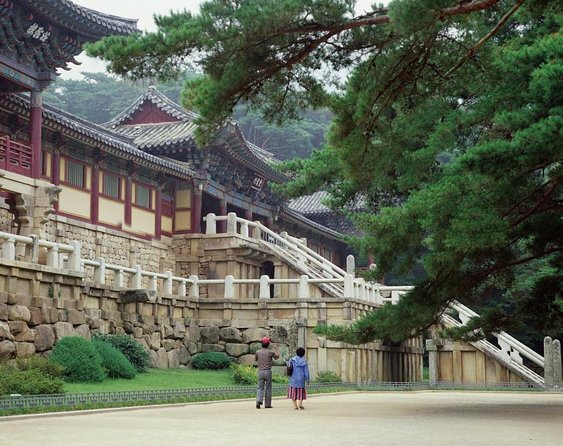
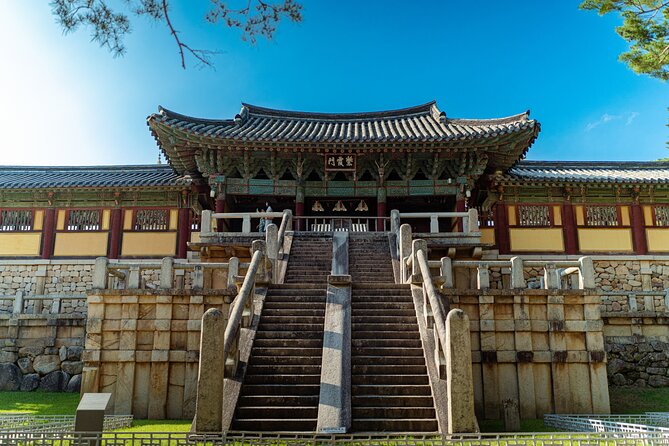
Bulguksa is one of Korea’s best-known Buddhist temples and a UNESCO World Heritage Site. It represents the Silla period and sits among wooded hills, where stone terraces, stairs, pagodas, and timber buildings work together with the natural setting.
You have about one hour here, including admission. That is enough to see the main temple area and hear the basic story of its design, but it is not enough for a slow visit. Wear shoes with good grip, since temple grounds include steps and uneven surfaces.
This is the stop I would protect most carefully. Even the less enthusiastic account of the day singled out Bulguksa as clearly worth visiting. The temple gives you a strong visual start and shows the artistry of Silla Korea better than a simple ruin would.
Hot weather can change how much you enjoy it. Bring water before leaving the bus, and use a hat or parasol. Several guides, including Hyony and Bada, are praised for reminding people to stay hydrated and find shade.
Gyochon Village and Woljeonggyo’s older setting
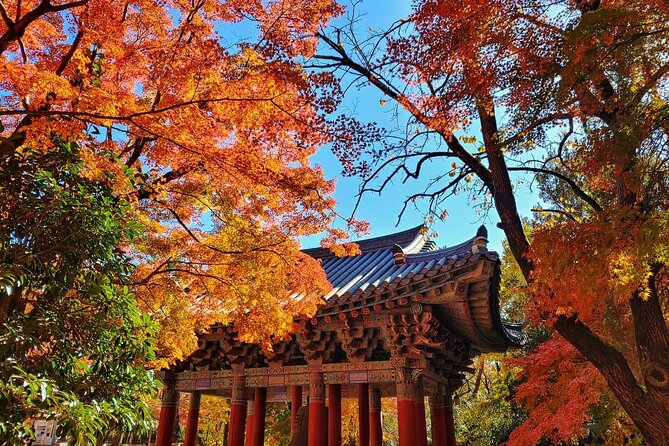
Gyeongju Gyochon Traditional Village offers a different view of the city. Here, hanok houses line stone-walled streets, alongside Gyeongju Hyanggyo, traditional food spots, and the nearby Woljeonggyo area.
The stop lasts about an hour and includes admission. It is less about one grand monument and more about the feel of old residential Gyeongju. You might find the visit especially useful after Bulguksa because it shifts the focus from religious architecture to daily life, homes, streets, and local customs.
The time can feel short. One concern raised about this portion was that only one house received much attention, leaving too little time to explore the village independently. I would treat this as a quick introduction, not a full traditional-house tour.
Woljeonggyo Bridge appears again later as a night stop, so do not worry if the daytime visit feels brief. The later lighting gives it a different character.
Same base, a completely different sort of day:
- Busan: Gyeongju Guided Day Trip to Three Kingdoms Capital
★ 4.8 · 1,925 reviews - Gyeongju UNESCO sites Private tour with licensed tour guide
★ 5.0 · 275 reviews - Private Gyeongju Tour – Explore Gyeongju UNESCO Sites
★ 5.0 · 272 reviews - Busan: Gyeongju UNESCO Legacy Tour with National Museum
★ 5.0 · 172 reviews
Daereungwon Tomb Complex: more context than spectacle
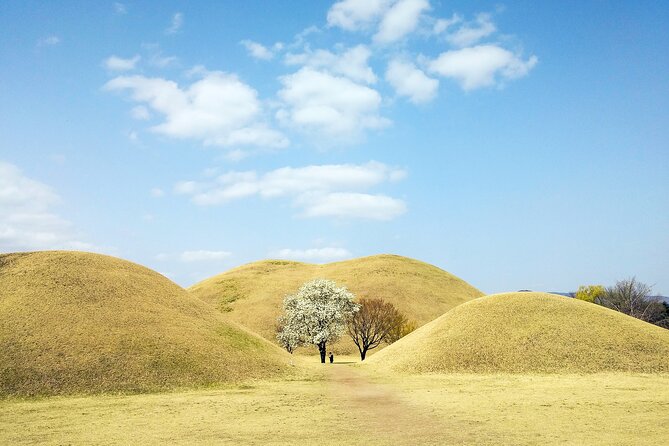
Daereungwon is a large area of grassy burial mounds connected with Silla kings, queens, and aristocrats. The rounded tombs are striking in their number and scale, but the site is open rather than filled with dramatic structures.
You have about an hour here. The value comes from understanding how Silla society marked status and memory. The mounds look simple at first, so the guide’s explanation matters. Without that context, you might see only low green hills and wonder why the stop is on the route.
This is also the part most likely to divide opinion. If you expect visible tomb chambers or elaborate ruins, the visit may feel underwhelming. If you enjoy archaeology and the meaning behind a place, the wide collection of royal and elite tombs gives Gyeongju a clear sense of place.
Use the hour for a steady walk, photographs, and questions. The site is not a major physical challenge, but the heat can make even flat paths tiring.
Hwangridan-gil: two hours for food and free time
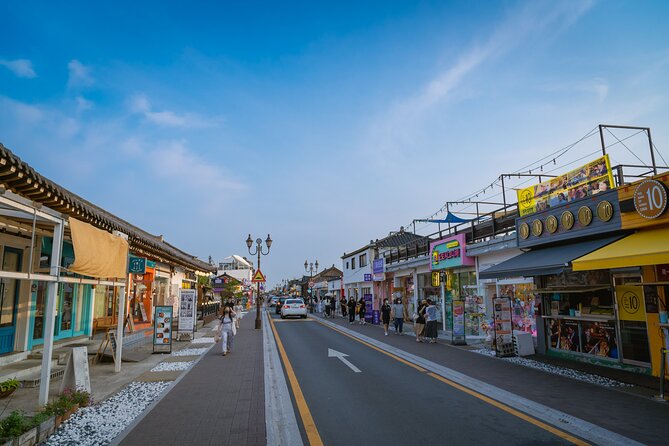
Hwangridan-gil gives the day a welcome change of pace. The street preserves old buildings from the 1960s and now has shops, cafés, restaurants, and small local businesses. It feels more like a living district than a formal monument.
The tour allows about two hours here, and no admission fee is charged. Meals are not included, so this is your best planned chance to buy lunch or snacks. You can also use the time to look around without a guide speaking continuously.
Some people may find the street too commercial or too limited. It is not a huge historic quarter, and one critical view described it as mainly a street with shops. I see its value differently, but with realistic expectations. This is a pause in the sightseeing day, not another ancient complex.
Two hours is useful because it gives you room to eat, browse, and cool down. Ask your guide about the meeting point before wandering too far. On a packed day, a late return can make the evening stops feel rushed.
Donggung Palace and Wolji Pond after dark
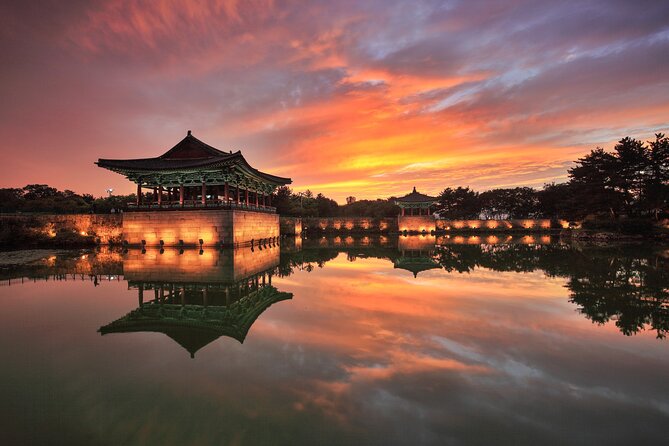
The tour saves one of Gyeongju’s most atmospheric places for the evening. Donggung Palace and Wolji Pond were part of a Unified Silla palace site. The original palace complex is no longer fully standing, but reconstructed structures sit beside the water.
You have about an hour here, and admission is included. The pond is the reason this stop works so well at night. Reflections from the buildings and lights create the most memorable views of the day, especially after the more earthbound tomb and village visits.
This stop is not a full palace visit in the usual sense. You will not walk through a complete royal residence. Instead, you are seeing a carefully presented historic site, with water, reconstructed architecture, and remains that help show how the palace area once functioned.
Several accounts singled out the pond as a high point, and I understand why. It gives you time to slow down and take photographs, though the fixed schedule means you still need to stay aware of the meeting time.
Woljeonggyo Bridge under lights
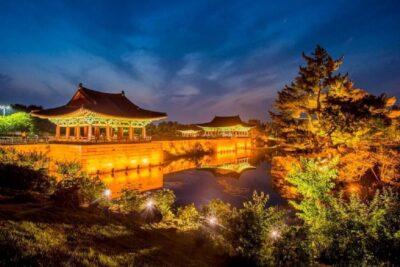
The final sightseeing stop is a 30-minute visit to Woljeonggyo Bridge. The traditional-style bridge looks especially good after dark, when its lights reflect across the water.
Half an hour is enough for photographs and a short walk. It is not enough for a long, unhurried stroll, so decide quickly where you want to frame your pictures. The bridge is a strong closing scene because it brings together old design, water, and evening light without requiring another long walk.
The bridge also helps explain the tour’s late finish. This is not a daytime-only Gyeongju outing. You are staying for the night views, then returning to Busan after the final stop.
Guides, group size, and the human side of the day
The guides are a major part of the experience. Bada is praised for clear speech, history, humor, heat reminders, and taking photographs. Kayla is described as energetic and funny, with a knack for keeping a long day light. Erica receives praise for her positive attitude, explanations, timing, and help with solo photos.
Hyony is noted for sharing Korean history and culture while helping people handle a hot day. Katrina is praised for careful explanations and practical help, while Eva is described as attentive and well organized at the sites. The exact guide depends on the date, but these names give you a useful sense of the expected style: live, social, and involved rather than silent transport between monuments.
There is one important etiquette point. Tipping is optional in Korea, and one complaint involved pressure to tip and give a five-star rating. Do not feel obligated. The tour price covers the stated service, and you can decide for yourself how you rate or tip.
Is $64 a fair price?
At $64 per person, the value is solid if you want to see Gyeongju from Busan in one day. Round-trip transportation, a professional guide, and admission to the listed attractions are included. You are paying for saved planning time as much as for the bus ride.
You still need to budget for meals, drinks, and personal purchases. Hotel transfers are not included, and the route begins at designated stations. That keeps the price down, but it makes the tour less convenient for anyone staying far from those pickup points.
A private tour would offer more control over timing, meals, and time at each sight. This group tour costs less and covers more famous locations for the price, but you accept a set schedule and the possibility of a large overall group.
Who should book this Gyeongju day trip?
I would choose this tour if you have limited time in Busan and want a guided introduction to Silla-era sites without arranging several connections. It suits first-time visitors, solo visitors who appreciate help with photos, and anyone who prefers clear historical context at major sights.
It also suits people who enjoy full days. The route may involve around 18,000 steps, and the total outing can last from roughly 10 a.m. to 10 p.m. Families with young children should think carefully about that length, especially in hot weather.
I would look elsewhere if you dislike fixed schedules, large groups, or short visits at important sites. An overnight stay in Gyeongju would give you more freedom, especially at Bulguksa, Daereungwon, and the traditional village.
Should you book it?
Book it if you want the most efficient first look at Gyeongju from Busan, especially for the evening pond and bridge views. The mix of included admissions, transport, and lively guides makes $64 a fair deal.
Skip it if you need a gentle pace or want to explore each site in depth. Bring water, sun protection, comfortable shoes, and patience for a long day. With those expectations, this is a practical and memorable way to meet Korea’s ancient capital.
FAQ
How long does the Gyeongju tour take?
The experience lasts about 12 hours. The listed schedule and direct accounts indicate a day running roughly from 10 a.m. until 10 p.m., including the return to Busan.
Where does the tour begin in Busan?
Pickup points are provided at Busan Station, Seomyeon Station, and Haeundae Station. Hotel pickup and drop-off are not included.
What is the summer departure time?
From April through September, the stated departure time at Busan Station is 10 a.m., followed by Seomyeon Station at 10:20 a.m. Check your confirmation for the full meeting details.
Are entrance fees included?
Yes. Admission to Bulguksa Temple, Gyochon Traditional Village, Daereungwon Tomb Complex, Donggung Palace and Wolji Pond, and the other listed attractions is included where an admission fee applies.
Are meals included?
No. Meals are not included. You can use the two-hour Hwangridan-gil stop to purchase food, with lunch available at an additional cost.
How much walking is involved?
You should expect a moderate level of physical activity. One account recorded more than 18,000 steps, so comfortable walking shoes are important.
Is the tour suitable in hot weather?
The tour operates in hot and humid conditions, and Gyeongju may feel warmer than Busan. Bring plenty of water, sunscreen, and a hat or parasol.
Is the tour wheelchair accessible?
The provided information specifies that participants should have moderate physical fitness. It does not give detailed wheelchair-access information, so contact the provider before booking if this is important for you.
Can I cancel for a full refund?
You can cancel at least 24 hours before the local start time for a full refund. Changes or cancellations made less than 24 hours in advance are not accepted for a refund. If poor weather cancels the tour, you will be offered another date or a full refund.
Newest Gyeongju trips on the site
- Gyeongju: Private Car Charter Taxi Tour★ 5.0 · 37 reviews
- From Daegu: Gyeongju UNESCO Tour 7 Highlights with Bulguksa★ 4.6 · 5 reviews
- From Busan: Echoes of Silla Gyeongju Historical Day Tour★ 4.8 · 55 reviews
- From Busan: Gyeongju Small Group Photo Tour & Hotel Pick-up★ 5.0 · 3 reviews
- From Busan: Gyeongju Historical Day Tour with Sky Capsule★ 4.7 · 17 reviews
- From Busan: Gyeongju Full-Day Historical Tour★ 4.1 · 6 reviews
- From Busan: Busan & Gyeongju One Day Tour★ 5.0 · 5 reviews
- Busan: Winter Healing Park and (Gyeongju/Daegu) One Day Tour★ 5.0 · 5 reviews
Gyeongju Tours, compared.
Gyeongju Guided Day Trip to Three Kingdoms Capital
Read our review →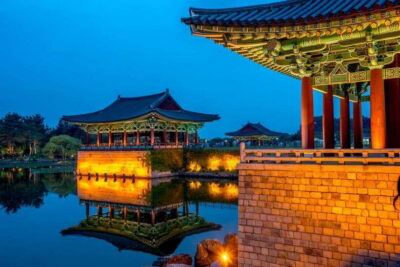
Gyeongju UNESCO World Heritage Guided Day Tour
Read our review →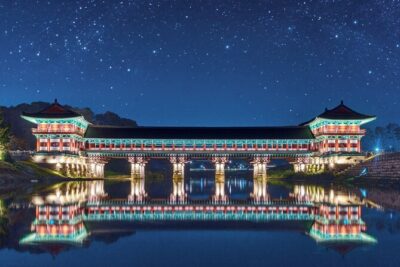
Gyeongju UNESCO World Heritage Guided Day Tour from Busan
Read our review →
Gyeongju UNESCO sites Private tour with licensed tour guide
Read our review →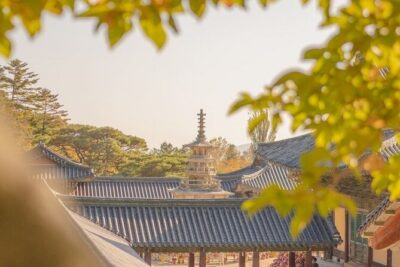
Private Gyeongju Tour – Explore Gyeongju UNESCO Sites
Read our review →
Gyeongju UNESCO Legacy Tour with National Museum
Read our review →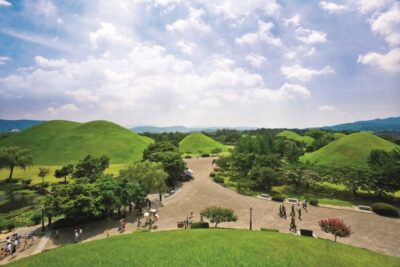
UNESCO Heritage Tour Including Bulguksa Temple
Read our review →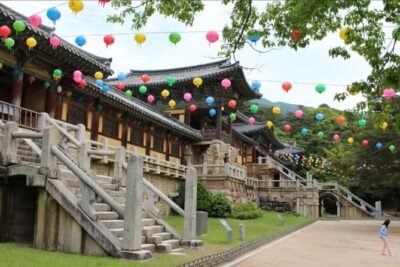
Gyeongju UNESCO World Heritage Sites and History Full-Day Tour with Lunch
Read our review →Browse the lists this tour appears in