
Reviewed · SEOUL TOURS
Korean Kimchi Making Day Experience with a Local Market Tour
Kimchi making is the real event here, but the Mangwon Market walk gives it context. You meet Jomin at Mangwon Station, taste local snacks, inspect the cabbage and radishes you’ll use, then head to a cooking studio to prepare four kinds of kimchi by hand.
I like the personal teaching and the useful souvenir: your own kimchi, plus recipes you can repeat at home. I also like the final meal of kimchi with boiled pork and fried tofu, which turns a lesson into a proper Korean food experience. The main point to check is group size. The experience is promoted as a class of up to four, but the general activity details allow as many as 11 people.
Key points to know before booking
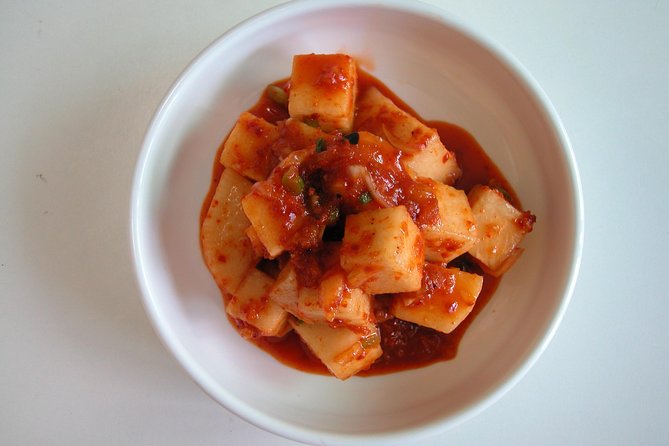
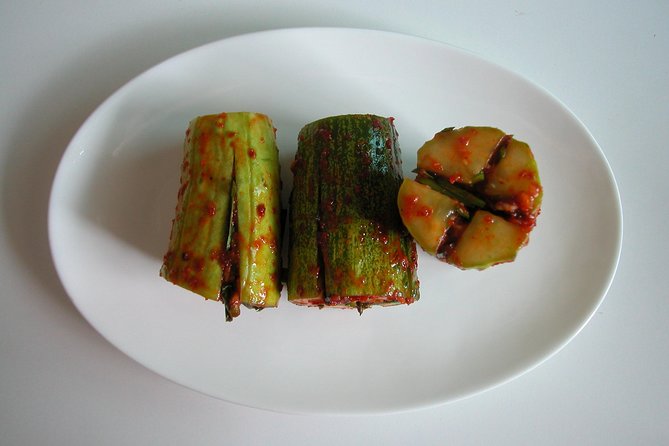
- Four kimchi recipes in one class: You work with cabbage, radish, cucumber, and other fresh ingredients.
- Mangwon Market comes first: Jomin explains the produce and Korean food culture before you cook.
- Hands-on rather than a demonstration: You prepare the kimchi yourself, with guidance throughout.
- A meal is included: Eat your finished kimchi with boiled pork and fried tofu, with makgeolli mentioned in the experience details.
- You take a large amount home: Bring room in your luggage, and pack the container in checked baggage for the flight home.
- Plan ahead: The activity often sells around 30 days before the date, and it can be canceled if the required minimum of four people is not reached.
Starting at Mangwon Station and entering the market
The meeting point is entrance 2 of Mangwon Metro Station on Line 6. This is useful to know because Seoul has many station exits, and meeting at the correct one saves you from wandering around a large neighborhood trying to find the group.
From the station, Jomin leads you toward Mangwon Market. This is not simply a transfer point before the cooking class. The market walk is part of the lesson, helping you recognize the ingredients and food habits that later appear in the studio.
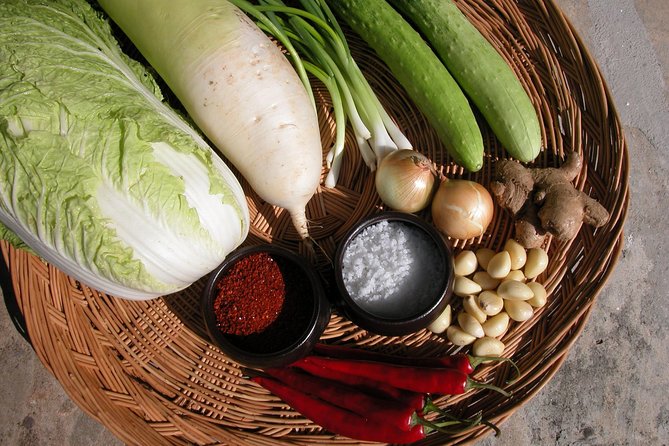
You’ll see produce, seafood, prepared foods, and stalls selling snacks. Jomin points out the vegetables used for the class, including Korean cabbage, radish, and cucumber. You also have the chance to taste street food along the way. That tasting matters because it gives you a quick sense of how Korean food balances spice, salt, freshness, and fermentation.
I like this order. If you began with a bowl and a cutting board, kimchi could feel like a list of steps. Seeing the ingredients in a real neighborhood market gives those steps a place. You learn what the vegetables look like before they are chopped, seasoned, and packed into containers.
The market is also a good contrast to Seoul’s polished shopping areas and major sights. It gives you a look at ordinary food shopping, with the noise, variety, and practical energy of a local market. The walk is not presented as a long historical tour, so you should book it for food culture rather than architecture or major landmarks.
More Market Tours in Seoul
- Seoul Street Food Market Tour
★ 5.0 · 1,226 reviews - Local Home Korean Cooking Class & Market Adventure in Seoul
★ 5.0 · 1,024 reviews - Seoul: Night Market Food Tour with Local Guide
★ 4.9 · 943 reviews
Learning how Koreans choose kimchi ingredients
Kimchi is often treated by first-time visitors as one dish, usually the familiar napa cabbage version. This class shows you a wider range. The plan is to make four types, with cabbage, radish, and cucumber among the main ingredients.
That variety is one of the strongest reasons to book the experience. You can compare textures and seasoning instead of learning only one formula. The recipes also help you understand that kimchi is a method as much as a single food: vegetables are prepared, salted or seasoned, mixed with a flavor base, and left to develop.
Jomin explains the ingredients during the market visit and then connects them to the cooking process. The class is designed for participation, so you should expect to handle the vegetables and follow the preparation rather than watch from the side.
The pace appears to be steady. Some class details describe a very small group, while the general capacity allows up to 11 people. In a group of four, you can expect more direct help and an easier chance to ask questions. With a larger group, the lesson may feel less personal, although the activity still centers on hands-on work.
If group size matters to you, ask for confirmation before booking. The published information also says the class can be rescheduled or canceled if the minimum of four participants is not met. That is worth keeping in mind when building a tightly scheduled Seoul itinerary.
Cooking four kinds of kimchi in a home-style studio
After the market, you go to a cooking studio in a home setting. Jomin guides you through the preparation of four kimchi varieties, using the fresh ingredients introduced earlier.
The practical value is clear: you leave knowing what to buy and how to begin. Several people who took the class found the process approachable enough to repeat at home, and that is an important distinction. Some cooking activities are fun for an afternoon but difficult to recreate. Here, the aim is to give you recipes and basic technique that work beyond Seoul.
Jomin is described as patient, clear, and good at explaining both the steps and the background of the ingredients. English is used for the class, and the teaching is presented as easy to follow. You should still expect a practical cooking lesson, not a formal culinary-school course. The goal is confidence and understanding, not professional knife skills.
The recipes are supplied in a small cookbook or recipe booklet. That adds value, especially if you do not cook from memory. It also makes the class more useful for people who want to adjust the spice, texture, or fermentation time later.
The preparation produces a generous amount. This is good news if you love kimchi, but it creates a packing problem. You receive a large container to take home, so leave space in your luggage. One useful tip is to put the container in checked baggage rather than carry-on luggage, although you should also consider airline and customs rules for bringing food into your destination.
Eating kimchi with pork, tofu, and makgeolli
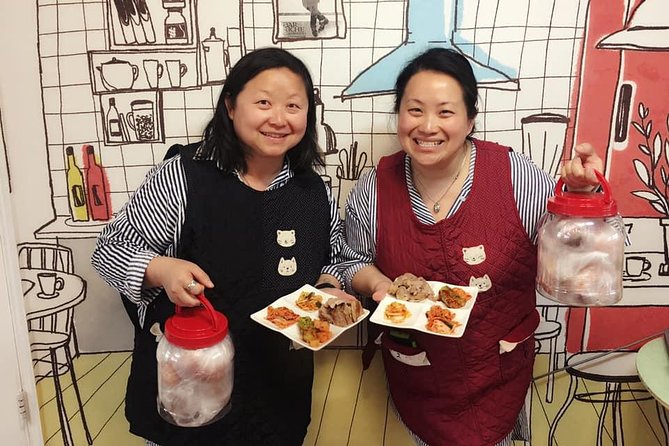
Once the cooking is finished, you sit down and eat the kimchi you prepared. It is served with boiled pork and fried tofu, a combination that makes the meal feel more like a Korean family occasion than a tasting session.
The pork gives the sharper kimchi a rich partner, while the tofu offers a softer, mild contrast. Eating the food immediately after making it also lets you taste the fresh version before it changes with time. Kimchi is not only about heat. Texture, salt, sourness, and fermentation all develop differently, and this meal gives you a first reference point.
Makgeolli is also mentioned as part of the serving. The available details do not make clear whether it is included for every session, so do not treat it as the main reason to book. The central part of the meal is the kimchi, pork, and tofu.
This final sitting is especially useful for families, couples, and solo food lovers who want time to talk with the other people in the class. One family used it as a shared activity, and a teenager was able to take part. The class can work for beginners because the instructor guides each stage and mistakes are treated as part of learning.
More Kimchi Classes in Seoul:
- Master Korean traditional cooking with a Kimchi chef
★ 5.0 · 385 reviews - Seoul Cultural Tour – Kimchi Making, Gyeongbok palace with Hanbok
★ 5.0 · 25 reviews - Kimchi class with Chef Hakyung near Gyeongbokgung place
★ 5.0 · 20 reviews
What you take home after the class
The most memorable souvenir is not a factory-sealed jar. It is the kimchi you made yourself. You take home leftovers in a large container, along with the recipes.
That creates a direct link between the Seoul experience and your kitchen at home. You can try the recipes again, compare your own results, and use the market lesson when shopping at a Korean grocery store. The recipes may also encourage you to try other Korean dishes included in the booklet.
You should plan your travel schedule around the container. If you are leaving Seoul immediately, moving through several hotels, or traveling with only a small cabin bag, the kimchi may be inconvenient. If you have checked luggage and enjoy food souvenirs, it is a strong extra.
The container also means this is not a light, hands-free activity at the end of your sightseeing day. You will return to the original meeting point with food to carry. That is a small price for the souvenir, but it is worth planning for.
Price, timing, and who gets the best value
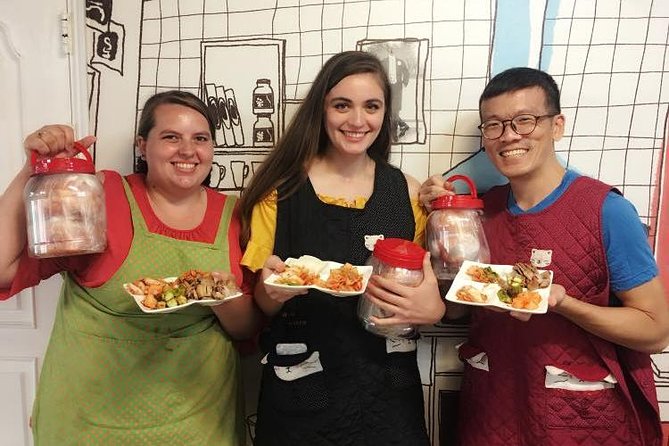
The cost is $89 per person for about three and a half hours. At first glance, that is more than a simple market walk or a short cooking demonstration. The price makes more sense when you count the market tour, street-food tasting, four recipes, direct instruction, the sit-down meal, the recipe booklet, and the kimchi you take home.
For me, the strongest value comes from the combination of market and class. A cooking lesson alone can teach you technique without helping you shop. A market tour alone can show you ingredients without teaching you what to do with them. This experience connects those two parts.
You get the most from it if you enjoy cooking, want a food-based cultural activity, or plan to make Korean dishes at home. It also suits families and couples who want something more active than a standard restaurant meal. If you dislike fermented food, spicy flavors, or carrying food through the rest of your trip, the value is weaker.
The experience is commonly booked about 30 days in advance, so reserve early if your Seoul dates are fixed. Confirmation is provided at booking, and mobile tickets are available. Vegetarian and vegan options are offered, but you should state your needs when arranging the activity.
Free cancellation is available up to 24 hours before the start time for a full refund. Changes or cancellations inside that 24-hour window are not accepted, and the local time controls the cutoff.
A practical look at the three-and-a-half-hour schedule
The first stage is meeting Jomin at Mangwon Station entrance 2. Allow enough time to reach the correct exit, especially if you are unfamiliar with Seoul’s subway system.
The next stage is the market walk. You learn about the ingredients, see seafood and produce stalls, and taste local snacks. You may also have some time to look around or buy items for yourself, so do not assume every minute is a guided explanation.
The final stage is the cooking studio. You prepare four kimchi varieties, eat a meal with your finished food, receive recipes, and pack the remaining kimchi to take away. The activity ends back at the original meeting point.
The schedule is long enough to feel substantial without taking an entire day. That makes it easy to fit into a Seoul visit, though you should avoid scheduling an important timed attraction immediately afterward. Market visits and hands-on cooking do not always finish to the exact minute.
Is this kimchi class right for you?
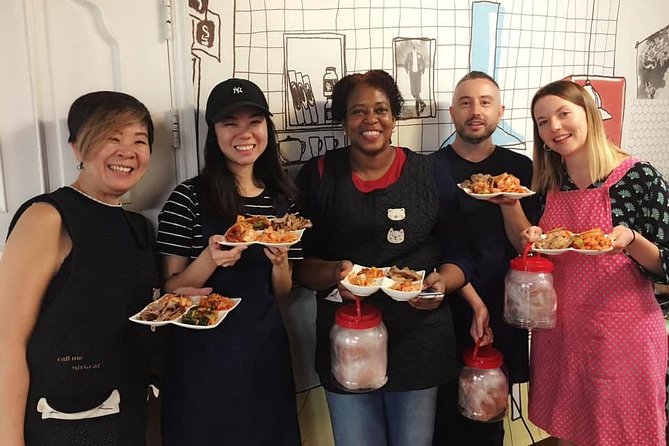
Book it if you want to learn a Korean staple by doing it yourself, not just tasting it. The market visit, four recipes, meal, cookbook, and take-home kimchi give the experience more substance than a quick demonstration.
I would especially recommend it to food-focused visitors, home cooks, families, and anyone who wants a quieter neighborhood activity away from Seoul’s major sightseeing routes. Jomin’s friendly instruction and the small-class format make it approachable for beginners.
Think twice if your luggage is already full, if you cannot eat the ingredients used, or if you need a guaranteed very small group. The activity details give two different group-size limits, so confirm that point. Also keep the four-person minimum in mind when booking close to your travel date.
For most visitors who enjoy Korean food, I would book it. You leave with more than a full stomach. You leave knowing how to shop for the ingredients, how to make four kinds of kimchi, and how to continue the experience at home.
FAQ
Where does the kimchi-making experience begin?
It begins at entrance 2 of Mangwon Metro Station in Seoul, on Line 6.
Where does the activity end?
The experience ends back at the original meeting point.
How long does the experience last?
The activity lasts approximately three hours and 30 minutes.
How many types of kimchi will I make?
You will learn to make four types of kimchi.
What ingredients are used?
The class uses fresh ingredients including Korean cabbage, radish, and cucumber.
Is the class suitable for vegetarians or vegans?
Vegetarian and vegan options are available.
Can I take the kimchi home?
Yes. You can take the kimchi you make, including leftovers, in a provided container.
What happens if the minimum number of participants is not reached?
The experience may be canceled or rescheduled if the minimum of four participants is not met. You will be offered another date or experience, or a full refund.
Can I cancel for a full refund?
Yes. You must cancel at least 24 hours before the experience start time for a full refund. Cancellations or changes made less than 24 hours before the start time are not accepted.
More Shopping Tours in Seoul
- Downtown Seoul Guided Food & Market Tour with 8+ Local Tastings
★ 5.0 · 580 reviews - Seoul: Korean Cooking Class at a Local Home and Market Tour
★ 5.0 · 348 reviews - Seoul Night Palace & Market Food Tour with Vehicle
★ 5.0 · 275 reviews - Cook 3 Authentic Korean Dishes with Local Market Tour
★ 5.0 · 231 reviews
Newest Seoul trips on the site
- Seoul : Must-see & Hidden Gems Private Walking Tour★ 4.9 · 8 reviews
- Seoul: Lotte World Aquarium Ticket★ 4.5 · 10 reviews
- Seoul: Max Out Must Visit City Highlights Panoramic Day Tour★ 5.0 · 7 reviews
- Seoul: K-Fashion Shopping Tour with a Professional Stylist★ 5.0 · 5 reviews
- From Seoul: Korea Spring Cherry Blossom Day Tour★ 4.8 · 6 reviews
- Jisan Forest Resort: Ski Full-Day Tour or Shuttle from Seoul★ 5.0 · 4 reviews
- Seoul: Guided Street Food Tour at Namdaemun Market★ 5.0 · 10 reviews
- Seoul: Jisan Forest Winter Ski Day Tour with Basic Lesson★ 4.4 · 6 reviews
Seoul Tours, compared.
Gyeongbok Palace, Bukchon Village, and Gwangjang Tour
Read our review →
Full Day Tour In The Soop BTS Ver in PyeongChang Filming Location
Read our review →
Best Seoul City Tour (Gyeongbokgung Palace,Insadong,Namsan Tower)
Read our review →
Small-Group Royal Palace and Seoul City Tour (hotel pick-up)
Read our review →
Seoul City Sightseeing Tour Including Gyeongbokgung Palace, N Seoul Tower, and Namsangol Hanok Village
Read our review →
Gyeongbok Palace, Bukchon Village, and Gwangjang Tour
Read our review →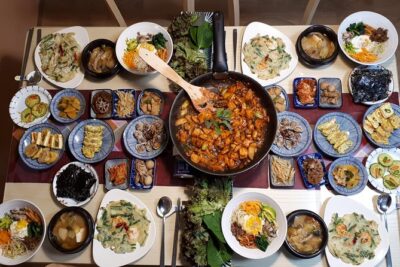
Local Home Korean Cooking Class & Market Adventure in Seoul
Read our review →Browse the lists this tour appears in