
Reviewed · SEOUL TOURS
Seoul: 4-Hour Guided Tour to Palace, Bukchon, Jogyesa Temple
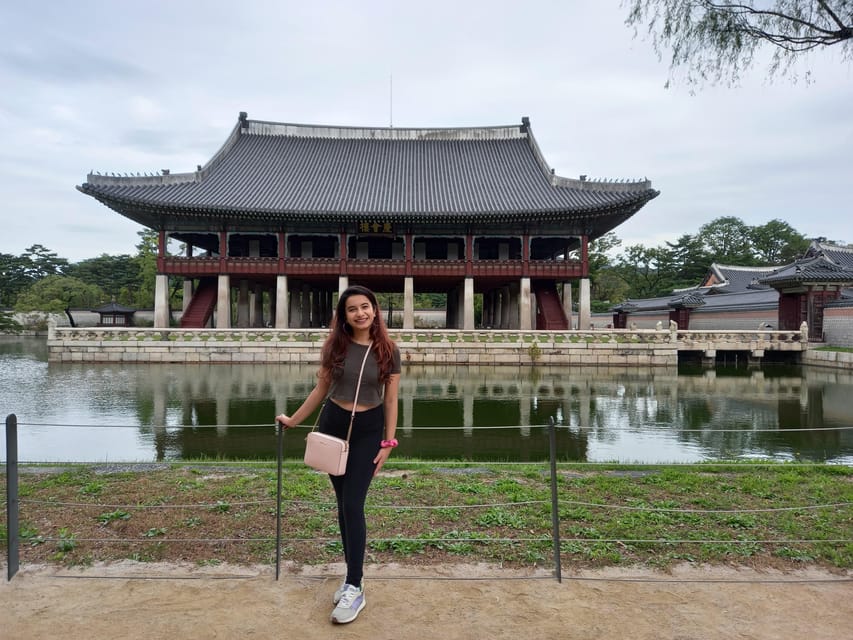
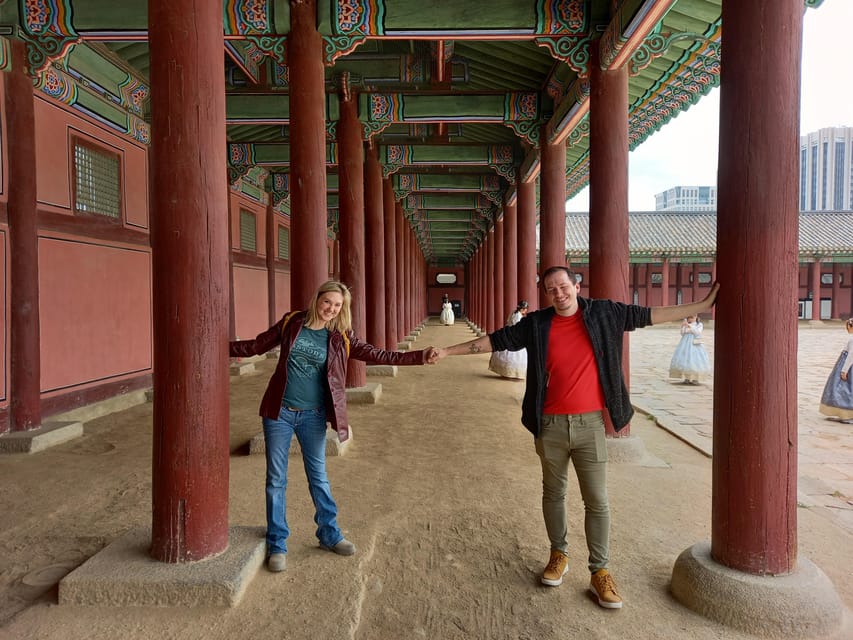
Gyeongbokgung Palace gives this private Seoul tour its focus, but the best part is the explanation behind the roofs, gates, courtyards, and strict layout. Guide Paul Koo presents Korean architecture through Confucian thought, so you see more than pretty buildings. You get a reason for the design.
I like the private format for up to two people, which lets you set the meeting time and hotel pickup point after booking. I also like the clear route through the National Folk Museum, Bukchon, and Insadong. The main consideration is cost: at $152 per group, it is good value for two people who want a specialist guide, but less so for a solo visitor. Palace admission and transport are extra.
Key points to know before booking
- Confucian ideas shape the tour: Paul explains how Joseon values appear in palace design and traditional homes.
- Gyeongbokgung gets most of the time: About 2 hours and 20 minutes are set aside for Korea’s grandest palace.
- The route covers four central Seoul stops: You visit Gyeongbokgung, the National Folk Museum, Bukchon Hanok Village, and Insadong.
- A private group keeps the pace personal: The price covers up to two people, with the meeting place and time chosen after booking.
- Photo help is part of the appeal: Paul can point out strong viewpoints and angles around the historic sites.
- Budget for extras: Entry fees, transport between stops, meals, drinks, and insurance are not included.
Why the Confucian angle changes Gyeongbokgung
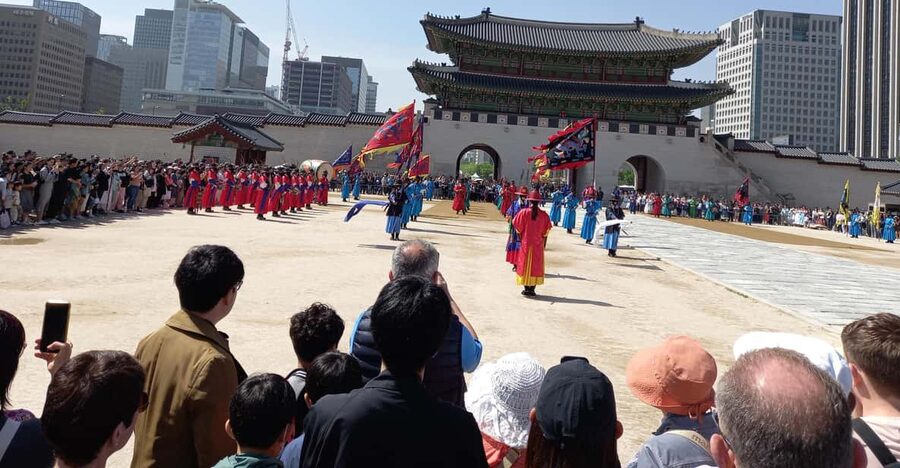
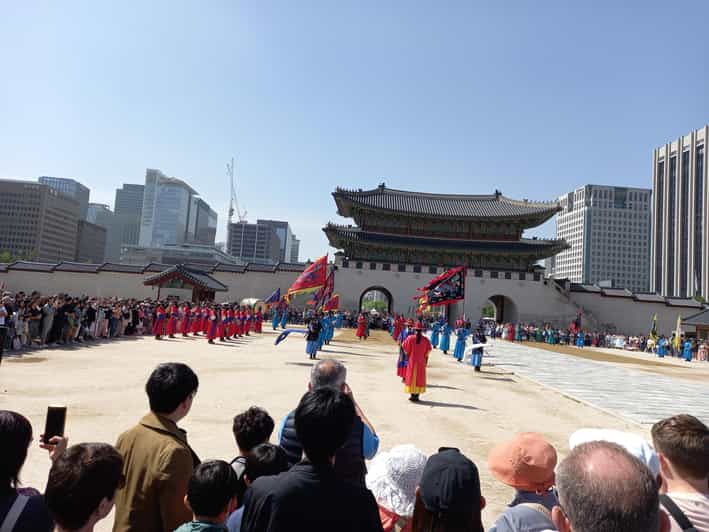
Many palace visits become a march from one gate to the next. You take photos, read a few signs, and move on. This tour tries to give the buildings a central idea: Confucianism was the guiding force of the Joseon Dynasty, and the palace reflects that political and social order.
That approach gives you a useful way to read the site. The architecture is not simply decorative. The placement of buildings, the formal paths, and the palace’s scale relate to authority, ceremony, and the values of the state. Without that background, much of Gyeongbokgung can look like a series of handsome courtyards. With it, the complex becomes easier to understand.
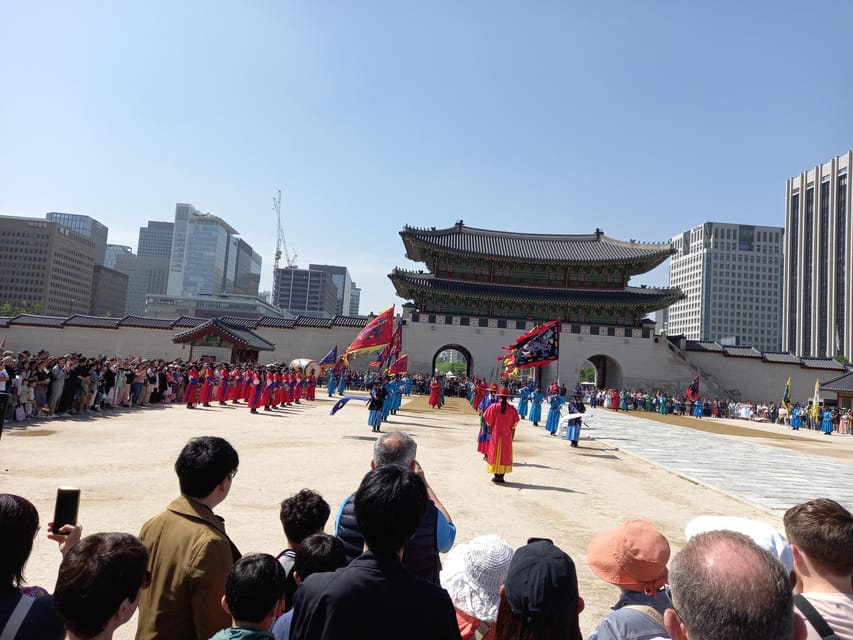
Gyeongbokgung was built in 1395 as the main palace of the Joseon Dynasty. It is described as the largest and most magnificent of Korea’s palaces, and its broad, level setting allowed builders to follow a formal Confucian palace plan. That makes this a strong first stop for anyone who wants the ideas behind Korean traditional architecture, not just a quick photo visit.
The tour allocates about 2 hours and 20 minutes here. That is a generous share of a four-hour experience. You should have time for explanations rather than a rushed circuit, though the actual pace can depend on questions, walking time, and how much detail you want from Paul.
The tradeoff is that Gyeongbokgung can occupy most of your energy. If you prefer a quick overview with more time for shopping or cafés, this may feel quite academic. If you want a guide who can explain why a place looks the way it does, the longer palace visit is the main reason to book.
More Hanok Village Tours in Seoul
- Seoul: Gyeongbok Palace, Bukchon Village, and Gwangjang Tour
★ 4.9 · 2,321 reviews - Seoul City Sightseeing Tour Including Gyeongbokgung Palace, N Seoul Tower, and Namsangol Hanok Village
★ 5.0 · 1,423 reviews - Seoul: Gyeongbok Palace, Bukchon Village, and Gwangjang Tour
★ 5.0 · 1,044 reviews
The National Folk Museum shows everyday Joseon life
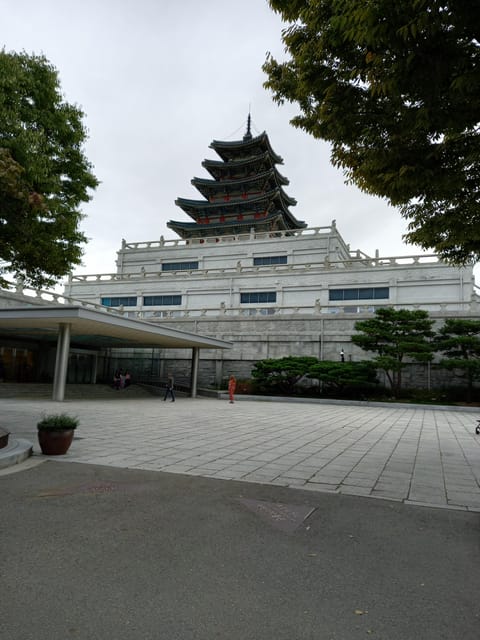
The National Folk Museum of Korea adds something the palace cannot. Gyeongbokgung represents royal and state power. The museum turns toward ordinary people and the routines that shaped daily life.
The planned museum visit lasts about 30 minutes. That is not enough for every exhibition, but it gives the tour a useful change of scale. You move from palace ceremonies and government ideals to family life, seasonal customs, and the major stages of a person’s life.
The museum presents folk culture through subjects such as birth, growth, marriage, aging, illness and treatment, and death. It also covers ceremonial and commemorative events. These themes help connect architecture and social customs. A palace tells you how a dynasty wanted order to look. A folk museum helps you consider how that order affected normal households.
I would treat this as an introduction rather than a full museum visit. If you are passionate about Korean material culture, you may want to return later with more time. Within this tour, though, the stop is well chosen because it prevents the day from becoming a palace-only lesson.
It is also a good stop for first-time visitors who do not yet know the basic shape of Joseon society. Paul’s explanations can help you place what you see in a wider cultural setting, instead of looking at objects without knowing their purpose.
Bukchon Hanok Village brings old Seoul into the modern city
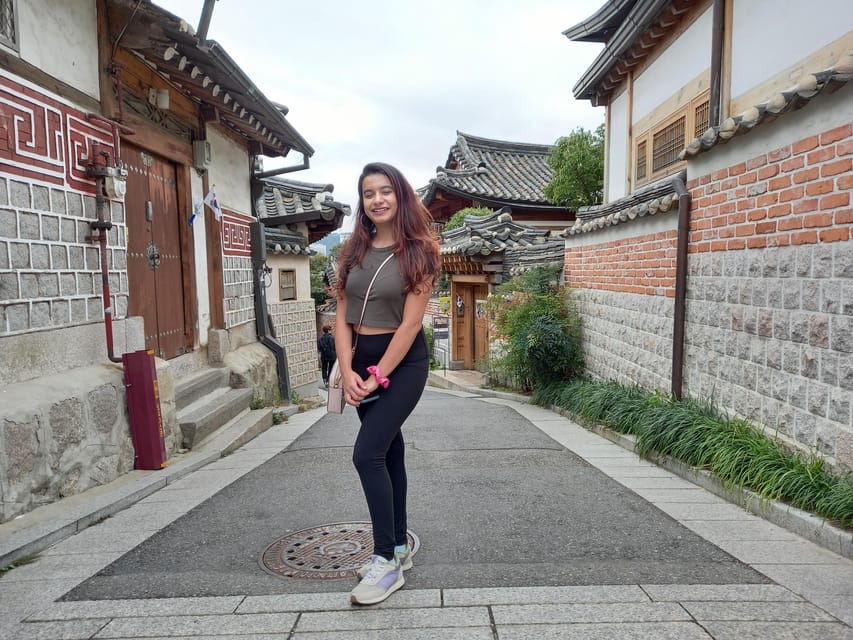
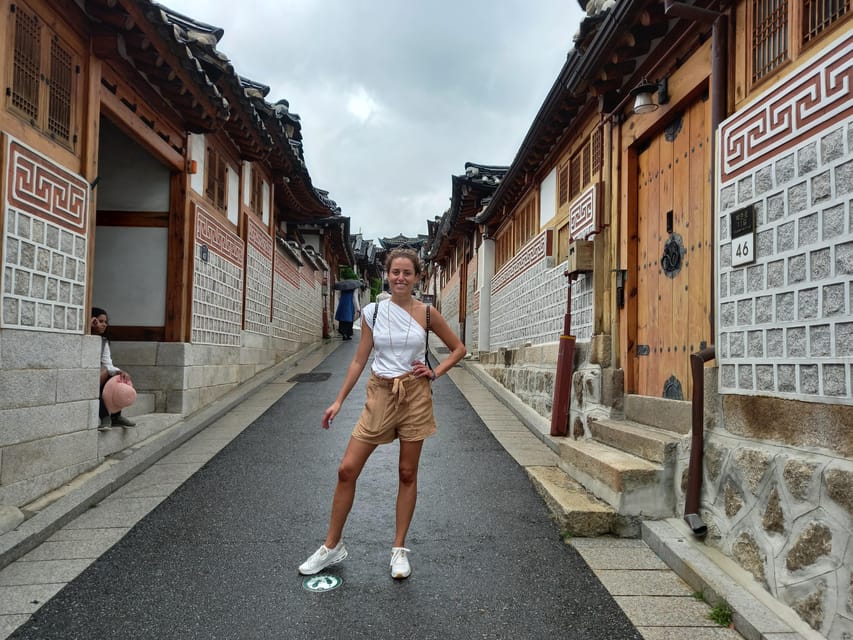
Bukchon Hanok Village offers a different kind of Korean architecture. Here, the focus is not a royal compound but a historic residential area filled with traditional hanok homes. The village contains about 1,000 hanoks, making it one of the largest concentrations of these houses.
The visual appeal comes from contrast. Traditional tiled roofs and narrow streets meet the modern city, with Seoul’s taller buildings and N Seoul Tower appearing in the distance from certain viewpoints. This is one of the clearest places on the route to see old and new Seoul in the same frame.
The scheduled guided visit is about 40 minutes. That gives you time to see the character of the area and learn how hanok design differs from palace architecture. It is not a full neighborhood exploration, so keep your expectations in check. You will get an introduction to Bukchon, not an entire afternoon of wandering.
Bukchon is also a lived-in area, not simply an open-air museum. The supplied details do not specify local rules or access arrangements, so follow Paul’s guidance and stay respectful around homes. The value of having a guide here is partly practical: he can keep the walk focused and help you understand what you are seeing rather than sending you uphill through residential streets without context.
Photo help is another useful feature. One past booking specifically praised Paul for knowing good spots and angles. That matters in Bukchon, where a small shift in position can change the balance between tiled roofs, city towers, and the distant tower.
Insadong finishes with culture close to the palace
The final listed stop is Insadong, with about 30 minutes of guided time. Insadong is also where Jogyesa Temple is located nearby, so this part of the route connects traditional culture, religion, and central Seoul.
Jogyesa is a small temple, but it has national importance as the headquarters of Korea’s Buddhist organization. It was built in 1926 in Insadong and sits close to Gyeongbokgung. Its size makes it a useful reminder that significance is not always measured by grand scale.
The supplied route lists Insadong rather than a separate timed stop at Jogyesa. Since the highlights also mention Jogyesa, you should confirm with Paul before booking exactly how the temple fits into your four hours. The same point applies to Bongeunsa Buddhist Temple and N Seoul Tower, which appear in the broader activity information but are not included in the four-stop itinerary as written.
That clarification is important. Bongeunsa is described as a beautiful place where old and new Seoul meet, but it is not one of the listed itinerary stops. N Seoul Tower is mentioned in the admission notes, yet no timed visit appears in the route. Do not assume either site is included unless the guide confirms it.
Insadong works well as the closing area because it keeps you near the historic center while giving the tour a final cultural note. You may find that the half-hour passes quickly, especially if you want detailed temple explanations, shopping time, or photographs.
More Temple Tours in Seoul
- Best Things to Do – Half Day Seoul Trip (Seoul Palace & Temple)
★ 5.0 · 190 reviews - Half day Morning Seoul City Tour(Temple & Gyeongbok Palace)
★ 5.0 · 54 reviews - Seoul Mountain Hike: Temples, Folklore & Traditional Meal
★ 5.0 · 42 reviews - Korean Palace and Temple Tour in Seoul: Gyeongbokgung Palace and Jogyesa Temple
★ 4.5 · 38 reviews
What Paul Koo adds to the experience
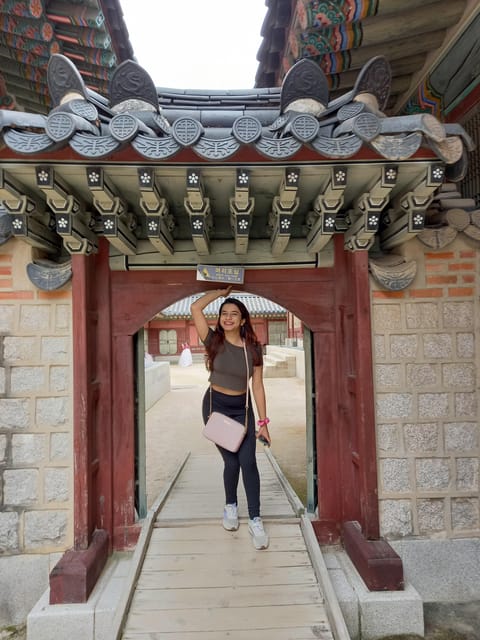
The guide is the main reason to choose this tour over visiting the same sites on your own. Paul presents himself as a specialist in Korean Confucian culture, and the tour is built around that subject rather than around a general sightseeing script.
The available feedback gives a consistent picture of his strengths. One person praised his detailed explanations of Korean history. Another highlighted the way he connected cultural, historical, and religious subjects through Confucianism. A third noted that he covered the planned places, explained the background clearly, and helped with photographs.
That combination matters. You are not only paying for directions between landmarks. You are paying for interpretation, a suitable pace for a private group, and the chance to ask questions. If you like to understand why a custom or building matters, Paul’s approach should suit you.
The style may not suit every visitor. Some people want a light walk with a few facts and plenty of free time. This tour puts architecture, history, and ideas at the center. The language is English, and the guide’s subject focus may make the experience feel more like a cultural lesson than a casual stroll.
Four hours, private pricing, and extra costs
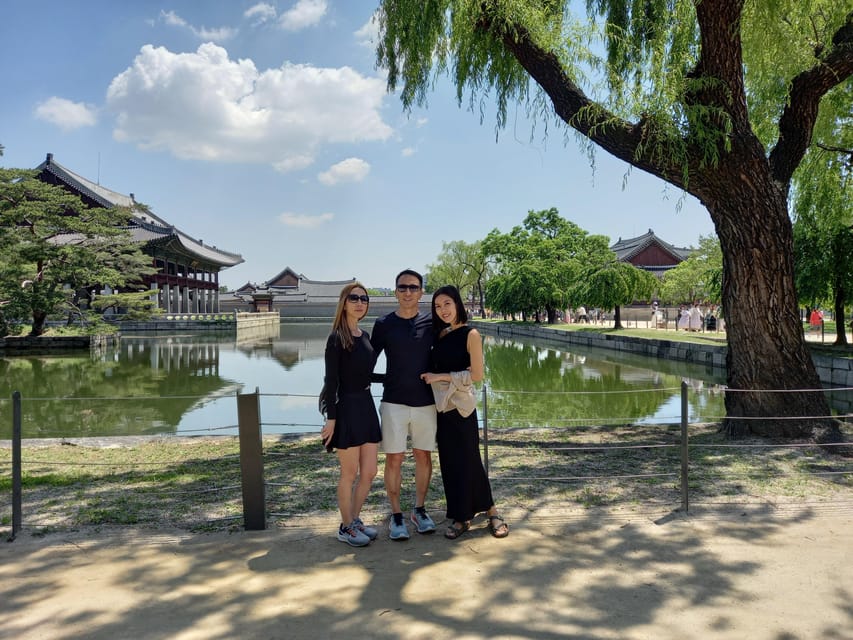
The price is $152 for a group of up to two people. For a couple or two friends, that works out to $76 each before admission and transport. For a solo visitor, the same price is harder to justify unless having a private specialist guide is a top priority.
The private format gives you more control than a large scheduled group. You can choose the meeting place and time after booking, and meeting at your hotel is possible. That is useful in Seoul, where a simple start from your accommodation may save time and reduce the stress of finding a central meeting point.
The four-hour plan is tightly filled:
- Gyeongbokgung Palace: about 2 hours and 20 minutes
- National Folk Museum: about 30 minutes
- Bukchon Hanok Village: about 40 minutes
- Insadong: about 30 minutes
Those times add up to the full four hours, so transport between places is not built into a separate spare block. Transportation is not included, and you should budget for moving between stops. Food and drinks are also extra, as are palace admission, any N Seoul Tower admission, and insurance.
The booking terms are flexible. You can cancel up to 24 hours in advance for a full refund, and you can reserve while paying later. You need to request the reservation in advance and wait for guide confirmation, so do not assume an instant booking is enough.
Who will get the most from this Seoul walk
I would choose this tour if you are visiting Seoul for the first time and want the historic center explained in clear English. It is especially suitable if you enjoy architecture, political ideas, religious culture, or the way ordinary life connects with national history.
It also suits couples and pairs who want a private pace. The price makes the most sense when two people share it. Families may appreciate being able to choose the meeting time, though the supplied information does not specify child pricing or a child-specific program.
You may prefer another plan if you want to visit every major palace, spend a long time in cafés and shops, or include Bongeunsa and N Seoul Tower without extra planning. This is a focused four-hour introduction, not a complete Seoul sightseeing day.
Wear comfortable shoes and keep your schedule realistic. The route combines a large palace, a museum, a traditional residential district, and a central cultural area. Since transport is extra and each stop has a set portion of the four hours, avoid booking a tight appointment immediately afterward.
Should you book this private palace and hanok tour?
Book it if you want meaning behind the monuments, not just a checklist of Seoul sights. Paul Koo’s Confucian focus gives Gyeongbokgung a clear thread, while the Folk Museum, Bukchon, and Insadong show how royal ideals, daily life, traditional housing, and religion fit together.
The strongest value comes when two people share the $152 fee and actively ask questions. The main caution is to confirm the role of Jogyesa, Bongeunsa, and N Seoul Tower before booking, since the stated four-hour route specifically lists Gyeongbokgung, the National Folk Museum, Bukchon, and Insadong. If that route matches your interests, this is a thoughtful way to get oriented to Seoul’s traditional core.
FAQ
How long does the tour last?
The tour lasts four hours.
Where does the tour start?
The stated starting point is Gwanghwamun Square. After booking, you can choose the meeting place and time, and meeting at your hotel is possible.
Is this a private tour?
Yes. It is a private group experience for up to two people.
Which language is the tour offered in?
The tour is offered in English with a live guide.
Which places are included in the timed route?
The route includes Gyeongbokgung Palace, the National Folk Museum of Korea, Bukchon Hanok Village, and Insadong.
Is admission included?
No. Admission to the palace and N Seoul Tower is not included.
Are transportation, food, and drinks included?
No. Transportation, food, and drinks are not included. Insurance is also excluded.
Can I cancel the booking?
Yes. You can cancel up to 24 hours in advance for a full refund.
More Palace Tours in Seoul
- Best Seoul City Tour (Gyeongbokgung Palace,Insadong,Namsan Tower)
★ 5.0 · 1,647 reviews - Small-Group Royal Palace and Seoul City Tour (hotel pick-up)
★ 5.0 · 1,474 reviews - Seoul Highlights: Gyeongbok Palace, Insadong & N Seoul Tower
★ 4.7 · 726 reviews - Seoul: Hanbok Rental with Gyeongbokgung Palace Entry
★ 4.6 · 611 reviews
Newest Seoul trips on the site
- Seoul : Must-see & Hidden Gems Private Walking Tour★ 4.9 · 8 reviews
- Seoul: Lotte World Aquarium Ticket★ 4.5 · 10 reviews
- Seoul: Max Out Must Visit City Highlights Panoramic Day Tour★ 5.0 · 7 reviews
- Seoul: K-Fashion Shopping Tour with a Professional Stylist★ 5.0 · 5 reviews
- From Seoul: Korea Spring Cherry Blossom Day Tour★ 4.8 · 6 reviews
- Seoul: Guided Street Food Tour at Namdaemun Market★ 5.0 · 10 reviews
- Seoul: Jisan Forest Winter Ski Day Tour with Basic Lesson★ 4.4 · 6 reviews
- Jisan Forest Resort: Ski Full-Day Tour or Shuttle from Seoul★ 5.0 · 4 reviews
Seoul Tours, compared.
Gyeongbok Palace, Bukchon Village, and Gwangjang Tour
Read our review →
Full Day Tour In The Soop BTS Ver in PyeongChang Filming Location
Read our review →
Best Seoul City Tour (Gyeongbokgung Palace,Insadong,Namsan Tower)
Read our review →
Small-Group Royal Palace and Seoul City Tour (hotel pick-up)
Read our review →
Seoul City Sightseeing Tour Including Gyeongbokgung Palace, N Seoul Tower, and Namsangol Hanok Village
Read our review →
Gyeongbok Palace, Bukchon Village, and Gwangjang Tour
Read our review →
Local Home Korean Cooking Class & Market Adventure in Seoul
Read our review →Browse the lists this tour appears in