
Reviewed · SEOUL TOURS
Hidden Stories & Flavors: Traditional Market Food Tour
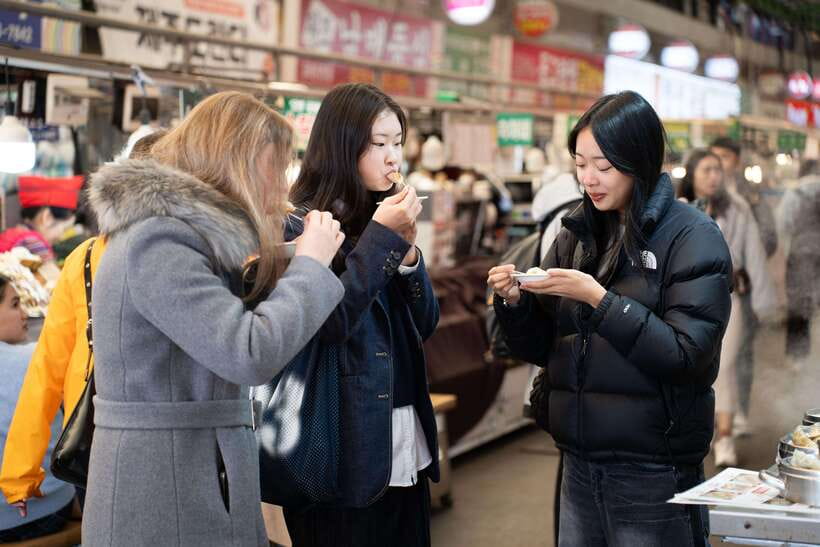
At Gwangjang Market, a dumpling or sweet pancake becomes more than a snack. Your English-speaking guide connects each bite with modern Korean life, Seoul’s sights, and the unusual reality of a country still divided. I like the mix of market food and personal stories, and I like that the conversation can include Korea’s military and reserve forces, topics you rarely hear explained in a casual food walk.
The main thing to consider is the amount of food. Eight listed tastings, plus water, can make this a full meal rather than a light nibble. I would arrive hungry, especially since one portion may be large, but I would not plan a heavy breakfast beforehand.
Key points at a glance
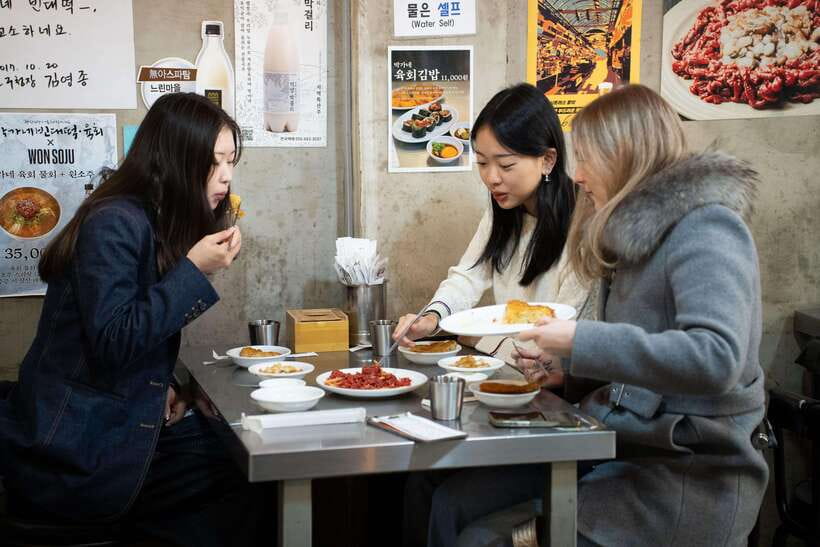
- Eight Korean market foods: Expect dumplings, meatballs, Korean hot dogs, rice rolls, spicy rice cakes, fish cakes, sweet Korean pancakes, and fish-shaped buns.
- Gwangjang Market setting: The entire two-hour experience takes place in one of Seoul’s best-known traditional market areas.
- More than a food crawl: Your guide discusses modern Korea, Seoul’s sights, social life, the peninsula’s division, and military service.
- Small English-speaking group: The group is limited to 10 people, giving you a better chance to ask questions.
- Guide Taeseong may lead the walk: He is described as friendly, sociable, and clear when explaining the dishes and Korean life.
- Plan for a hearty meal: Large portions may make it hard to finish every tasting if you eat breakfast first.
Meeting your guide at Jongno 5-ga Station Exit 8
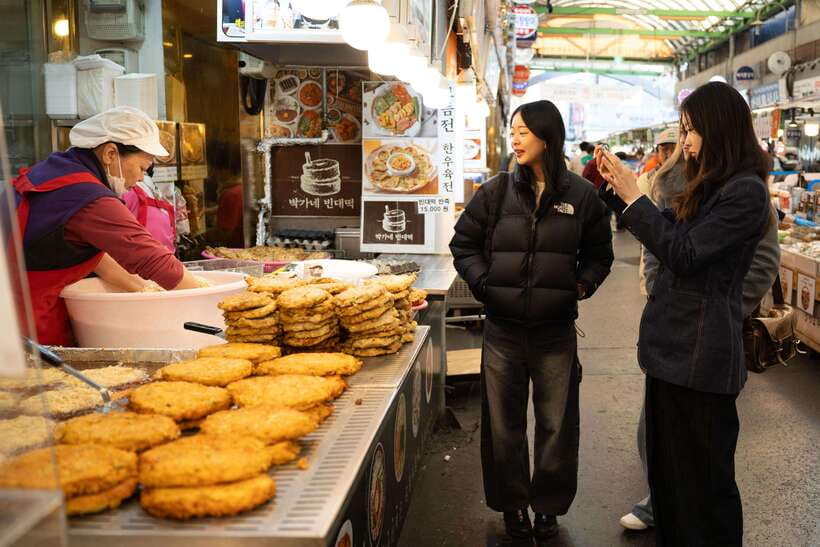
The tour starts at Jongno 5-ga Station Exit 8, a useful meeting point for a market visit. You do not need to arrange separate transport between food stops because the route stays within Gwangjang Market.
The format is simple: meet the guide, enter the market, and spend about two hours walking from stall to stall. Since the group has a maximum of 10 people, the pace should feel more personal than a large coach-style outing. You can ask what you are eating, how it is made, and how it fits into Korean daily life.
I would arrive a little early. Subway exits in Seoul can be busy, and finding the correct exit is easier before the meeting time than after the group has moved into the market.
More Market Tours in Seoul
- Seoul Street Food Market Tour
★ 5.0 · 1,226 reviews - Local Home Korean Cooking Class & Market Adventure in Seoul
★ 5.0 · 1,024 reviews - Seoul: Night Market Food Tour with Local Guide
★ 4.9 · 943 reviews
What makes Gwangjang Market a good food setting
Gwangjang Market gives this experience its strongest sense of place. You are not seated in a restaurant with a fixed menu and polished service. You move through an active traditional market, where food is prepared and served in the same setting.
That matters because the market lets you see the food in context. The stalls, cooking areas, smells, movement, and close seating all help explain why these dishes are part of ordinary Korean eating culture. You get a short introduction to many foods instead of spending two hours on one formal meal.
The tradeoff is that markets can be crowded and noisy. This is not the right choice if you want a quiet tasting with plenty of space between courses. It is a better fit if you enjoy trying food in a lively public setting and do not mind sharing the flow of the market with other people.
Eight foods, from dumplings to fish-shaped buns
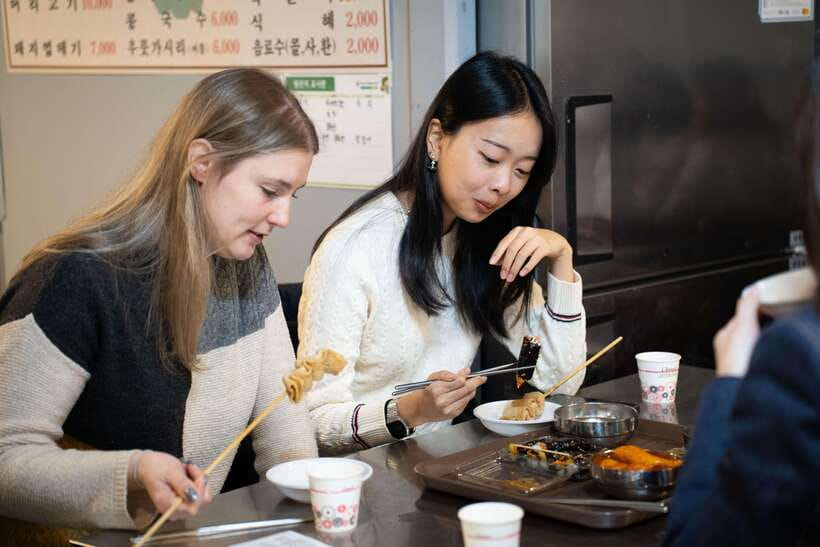
The food list gives you a broad sample of Korean market favorites. The exact menu can change with circumstances, so you should treat the following as the expected range rather than a strict promise.
Dumplings
Dumplings are a familiar starting point for many people, but the market setting gives you a chance to compare them with versions you may already know. Your guide explains the dish as you eat, helping you notice more than just the filling and wrapper.
More Street Food Tours in Seoul
- Seoul: Gyeongbok Palace, Bukchon Village, and Gwangjang Tour
★ 4.9 · 2,321 reviews - Seoul: Gyeongbok Palace, Bukchon Village, and Gwangjang Tour
★ 5.0 · 1,044 reviews - Seoul Night Palace & Market Food Tour with Vehicle
★ 5.0 · 275 reviews - Seoul Night Tour (Gwangjang Market, Royal Palace and Naksan Park)
★ 5.0 · 92 reviews
Meatballs
The meatball tasting adds another savory stop. Since the tour includes several different food types, this is one part of a larger sequence rather than a complete course on its own.
Korean hot dog
A Korean hot dog is not necessarily the same thing as the American version. It is a fun item for first-time visitors because it shows how familiar fast food can take on a local style. Ask your guide about the preparation and how the dish fits into Korean street-food culture.
Rice roll
The rice roll brings a different texture and shape to the meal. It also helps break up the heavier fried and savory foods. Your guide can explain the dish while you are eating it, which makes the stop more useful than simply receiving an unnamed sample.
Spicy rice cake
Spicy rice cakes are one of the foods most likely to test your comfort with heat. The menu description does not state a spice level, so I would ask before taking a large bite if you are sensitive to chili.
This is also a good moment to ask for help with the Korean names of the dishes. Knowing what to order later can be one of the most practical results of the tour.
Fish cake
Fish cake gives you another common market flavor and texture. It is often served in a simple way, making it easy to focus on the taste and on the guide’s explanation of where the food fits into daily life.
Sweet Korean pancake
The sweet pancake provides a welcome change after several savory samples. It is one of the dishes that can make the route feel like a full meal rather than a set of tiny bites.
Fish-shaped bun
The fish-shaped bun finishes the listed food sequence on a playful note. Its shape makes it easy to remember, especially if you want to recognize it later at another Korean market or snack stall.
Water is included, which is useful as you move between foods. Still, I would not count on the listed items being small samples. The portion sizes can be generous, and eating everything may be difficult after a substantial breakfast.
The guide adds context beyond the plate
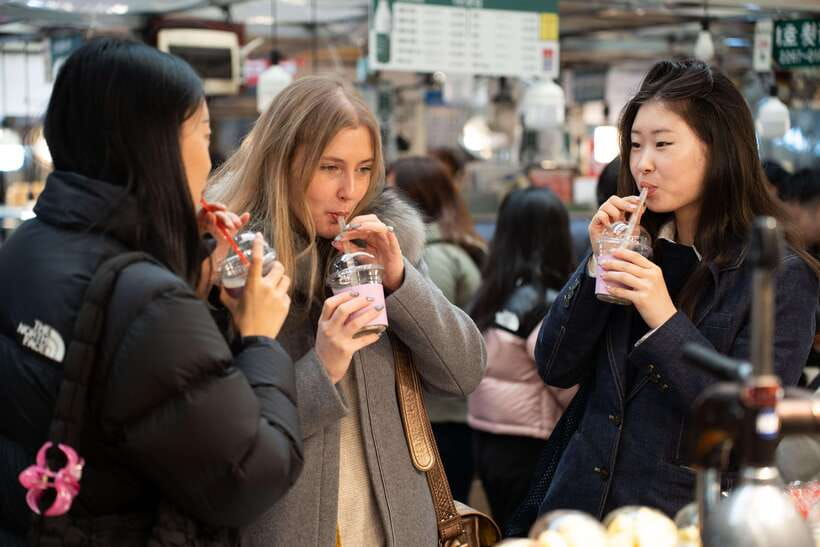
The most unusual part of this experience is the conversation. This is not presented as a formal historical tour, and you should not book it expecting a chronological lesson about Korea. Instead, the guide uses the food walk to explain parts of modern Korean society.
The discussion can include stories about Seoul’s attractive sights, everyday social behavior, and the realities of the Korean peninsula’s division. That gives the experience a wider purpose. You are not just learning what to eat. You are getting a local explanation of the country behind the food.
Military service is another unusual subject. The guide draws on personal experience as a member of the reserve forces, giving you a perspective that is hard to find in a standard sightseeing visit. This does not turn the tour into a military program. It simply adds a personal angle to a major part of life in South Korea.
Guide Taeseong is specifically identified as leading some departures. His style is described as enthusiastic, kind, social, and easy to understand in English. If Taeseong is your guide, you can expect the walk to include conversation as well as food explanations.
The group size helps here. With no more than 10 participants, you have a fair chance to ask about the dishes, Korean manners, the division of the peninsula, or the guide’s own experiences. In a larger group, those personal questions can get lost.
Why the food and conversation work well together
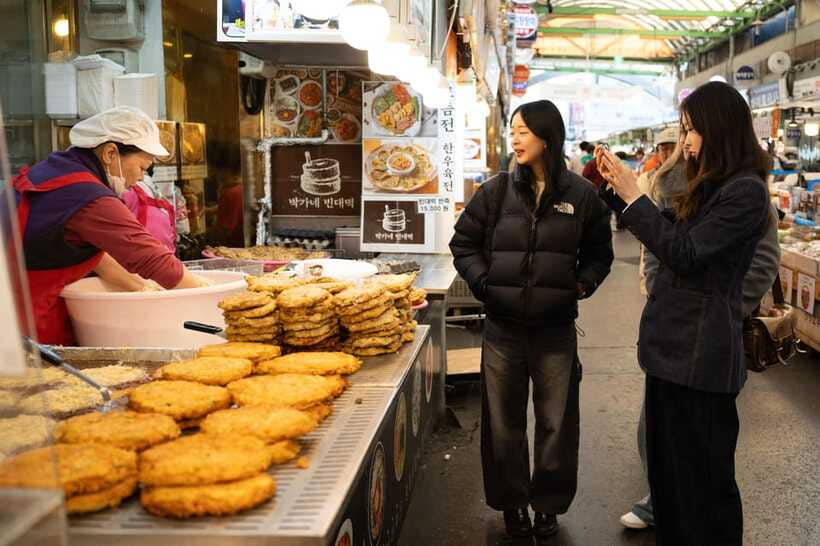
A food tour can sometimes feel like a string of unrelated samples. This one has a stronger idea behind it: use familiar market food as an entry point into modern Korea.
You may begin by asking about a dumpling and end up discussing how people eat together, how Seoul has changed, or how division affects everyday life. That kind of shift is useful because it keeps the conversation grounded. You are not receiving abstract facts in a classroom. You are standing in a market while the guide explains how food and society connect.
I also like that the experience does not pretend to be a complete account of Korean history. The description clearly says it is not a historical tour. That is helpful. You can enjoy the personal and modern focus without expecting museum-level coverage of every period.
If your main goal is ancient palaces, dynasties, or a detailed timeline, choose a separate history walk. If you want present-day context alongside food, this tour is a better match.
How two hours feels in practice
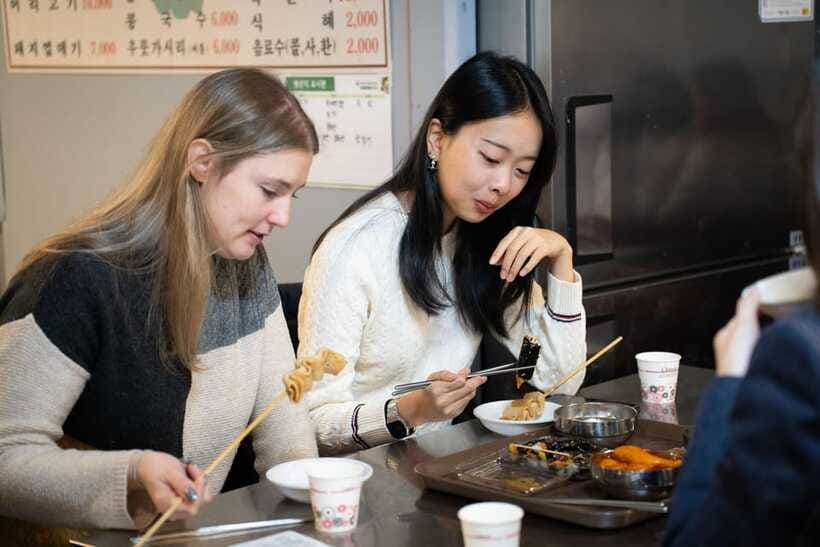
Two hours is long enough to sample a substantial number of foods without taking over your whole day. You can schedule another activity before or after it, but I would avoid placing it immediately before a formal meal.
The pace should involve repeated short walks and stops at market stalls. That keeps things moving, though it also means you may not linger over each food. The guide needs to balance eating, explanation, and movement through the market.
A small group makes the timing easier. Ten people is still enough for conversation, but it is not so large that every stop becomes a slow head count. You should still expect the exact order of foods and stops to change if the market conditions require it.
The menu may change, and this is worth keeping in mind if you have your heart set on one particular dish. The experience is better approached as a broad taste of the market rather than a guaranteed checklist.
Is the $100 price good value?
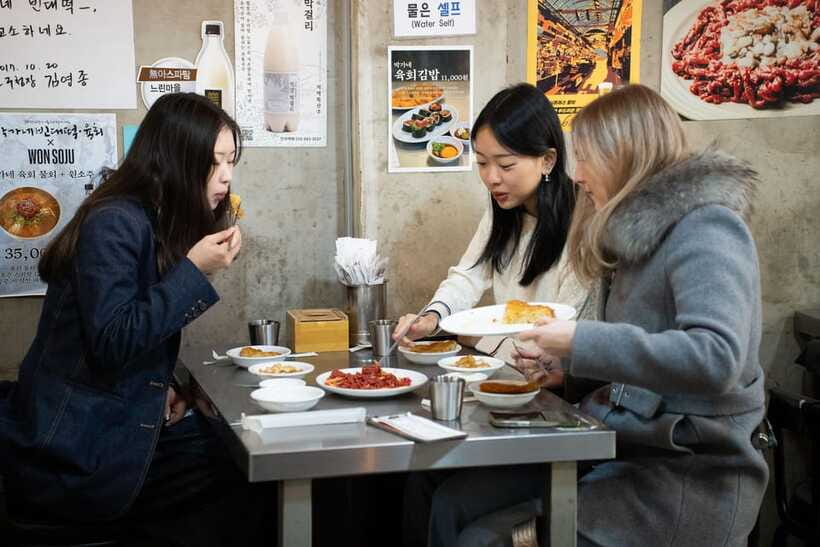
At $100 per person, this is not the cheapest way to buy snacks in Seoul. If you only want to eat a few market foods, you can spend less by ordering on your own.
The value comes from the package. Your price includes eight listed tastings, water, a two-hour guided route, English explanations, and a small group capped at 10 people. You are also paying for the conversation about Korean culture, social life, the peninsula’s division, and military service.
I would consider the price reasonable for someone who wants help choosing food and wants a personal introduction to modern Korea. It is less compelling for a confident market eater who already knows the dishes, speaks Korean, and prefers to explore alone.
The food quantity also improves the value if you treat the tour as lunch or an early dinner. If you eat breakfast first and leave half the food untouched, you lose part of what you paid for.
Who should book this experience?
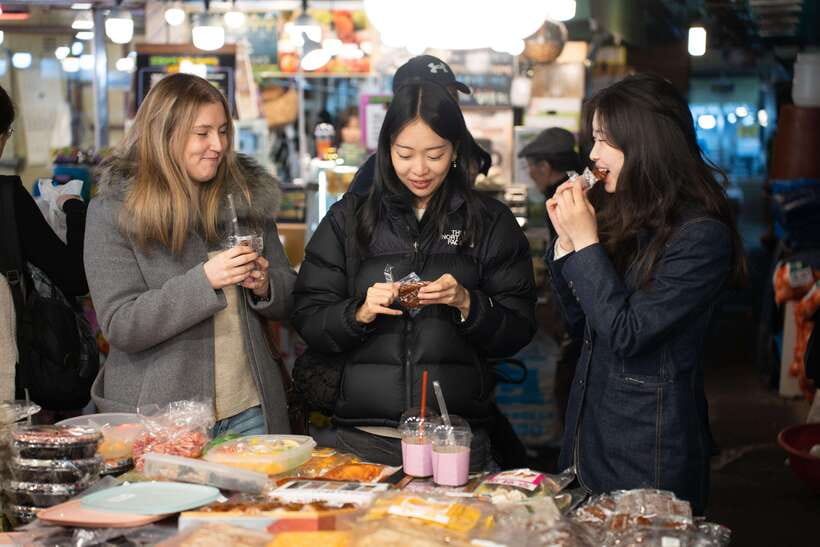
I would recommend it to first-time visitors who want a gentle introduction to Korean market food without having to guess what to order. It also suits solo visitors and couples who enjoy conversation and want a small group rather than a large sightseeing crowd.
It is a good pick for people curious about present-day Korea. The guide’s perspective on military service and the division of the peninsula gives the walk a subject range that most food tours do not offer.
Families with older children may also find it appealing, especially if the children enjoy trying several small dishes. The supplied information does not specify a minimum age, child pricing, or special family arrangements, so you would need to confirm those details before booking.
I would think twice if you have strict dietary needs. The menu may change, and no dietary information is provided for the listed dishes. The same applies if you dislike spicy food or want a quiet, seated meal. Ask about ingredients and spice before eating anything that concerns you.
Booking flexibility and useful planning notes
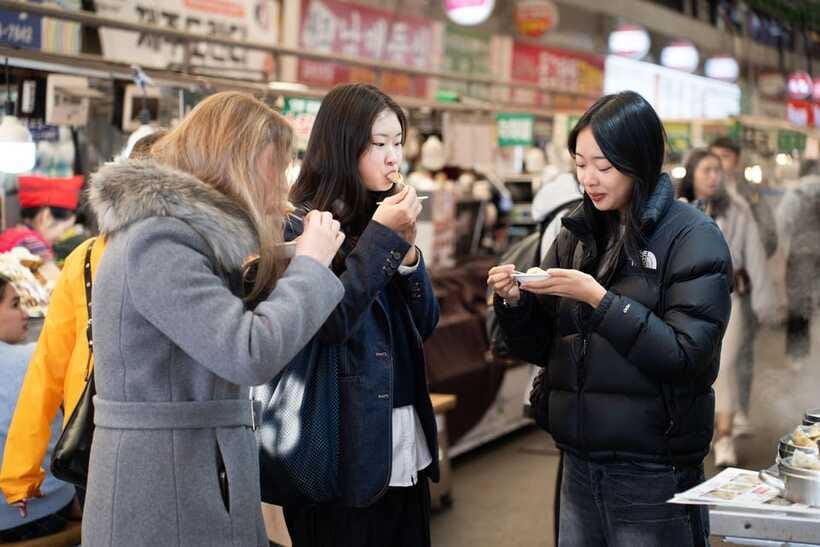
You can cancel up to 24 hours in advance for a full refund. You can also reserve now and pay later, which helps if your Seoul schedule is still changing.
The tour is conducted in English, and the group is limited to 10 participants. Check the available starting times when booking, since the exact departure schedule is not fixed in the information provided.
Wear something comfortable for two hours of walking and eating, and arrive ready for a full food session. The simplest tip is the most useful one: keep breakfast light or skip it.
Should you book the Gwangjang Market food tour?
Book this experience if you want market food with a personal Korean perspective, not just a list of dishes. The strongest reasons are the range of eight tastings, the small English-speaking group, and the chance to discuss modern Korea, the peninsula’s division, and military life while you eat.
Skip it if you want a detailed historical tour, a guaranteed fixed menu, or a low-cost snack run. For most curious first-time visitors, the $100 price makes sense when you count the food, guidance, and conversation together. Just arrive hungry, keep your schedule flexible, and let the market determine part of the experience.
FAQ
Where does the tour meet?
The meeting point is Jongno 5-ga Station Exit 8.
How long does the experience last?
The guided market visit lasts two hours.
Where does the food tour take place?
The tour takes place at Gwangjang Market in Seoul, South Korea.
What language is the tour conducted in?
The live tour guide speaks English.
How many people can join the group?
The group is limited to 10 participants.
What foods are included?
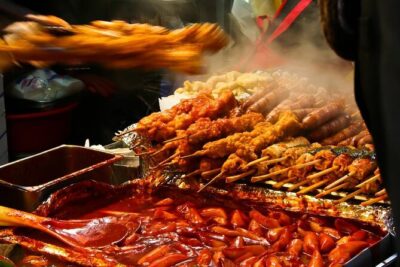
The listed foods are dumplings, meatballs, Korean hot dogs, rice rolls, spicy rice cakes, fish cakes, sweet Korean pancakes, and fish-shaped buns. Water is also included.
Will the menu always include the same dishes?
No. The menu items may change depending on circumstances.
Is this a historical tour?
No. It is not presented as a historical tour. The guide focuses on food, modern Korean culture, Seoul, the division of the Korean peninsula, and military-related perspectives.
How much does the tour cost?
The price is $100 per person.
Can I cancel for a refund?
Yes. You can cancel up to 24 hours in advance for a full refund.
More Shopping Tours in Seoul
- Seoul: Korean Cooking Class at a Local Home and Market Tour
★ 5.0 · 348 reviews - Cook 3 Authentic Korean Dishes with Local Market Tour
★ 5.0 · 231 reviews - Korean Palace and Market Tour in Seoul Including Insadong and Gyeongbokgung Palace
★ 4.0 · 174 reviews - Seoul: Nighttime Tour of Palace, Market, Naksan Park & More
★ 4.9 · 143 reviews
More Food Tours in Seoul
- Downtown Seoul Guided Food & Market Tour with 8+ Local Tastings
★ 5.0 · 580 reviews - Seoul Fun Food Tour: 12 different food tastings
★ 5.0 · 266 reviews - Soju Tasting at Distillery – story of 3 pigs
★ 5.0 · 166 reviews - The Award-Winning PRIVATE Food Tour of Seoul: The 10 Tastings
★ 4.5 · 128 reviews
Newest Seoul trips on the site
- Seoul : Must-see & Hidden Gems Private Walking Tour★ 4.9 · 8 reviews
- Seoul: Lotte World Aquarium Ticket★ 4.5 · 10 reviews
- Seoul: Max Out Must Visit City Highlights Panoramic Day Tour★ 5.0 · 7 reviews
- Seoul: K-Fashion Shopping Tour with a Professional Stylist★ 5.0 · 5 reviews
- From Seoul: Korea Spring Cherry Blossom Day Tour★ 4.8 · 6 reviews
- Seoul: Guided Street Food Tour at Namdaemun Market★ 5.0 · 10 reviews
- Seoul: Jisan Forest Winter Ski Day Tour with Basic Lesson★ 4.4 · 6 reviews
- Jisan Forest Resort: Ski Full-Day Tour or Shuttle from Seoul★ 5.0 · 4 reviews
Seoul Tours, compared.
Gyeongbok Palace, Bukchon Village, and Gwangjang Tour
Read our review →
Full Day Tour In The Soop BTS Ver in PyeongChang Filming Location
Read our review →
Best Seoul City Tour (Gyeongbokgung Palace,Insadong,Namsan Tower)
Read our review →
Small-Group Royal Palace and Seoul City Tour (hotel pick-up)
Read our review →
Seoul City Sightseeing Tour Including Gyeongbokgung Palace, N Seoul Tower, and Namsangol Hanok Village
Read our review →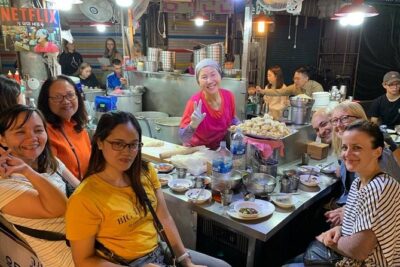
Gyeongbok Palace, Bukchon Village, and Gwangjang Tour
Read our review →
Local Home Korean Cooking Class & Market Adventure in Seoul
Read our review →Browse the lists this tour appears in