
Reviewed · SEOUL TOURS
Seoul: Korean Cooking Class at a Local Home and Market Tour
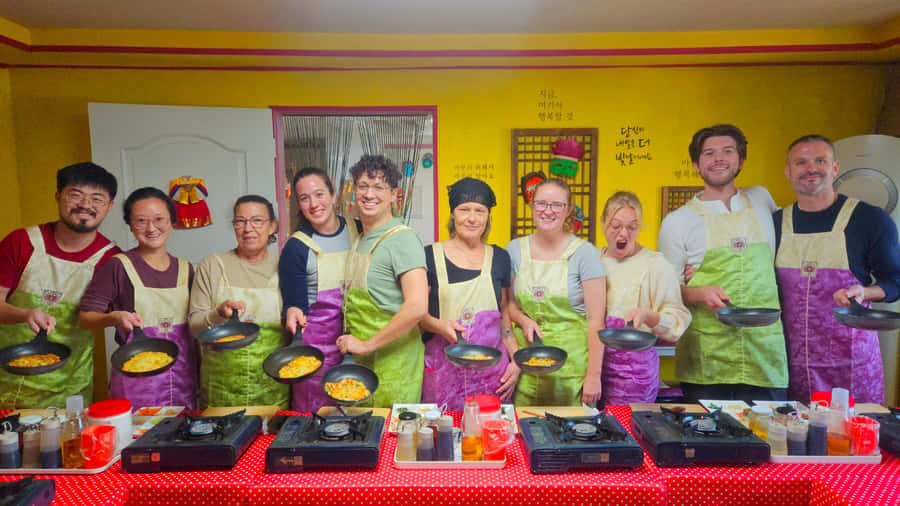
Korean food makes the best kind of souvenir: one you can cook again. This 3.5-hour experience takes you from a local market to a Korean home, where you prepare four familiar dishes with a native chef-guide, then sit down to a generous Hanjeongsik meal.
I like the market stop because it shows you how ingredients look before they reach a restaurant table. I also like the small group, limited to 10 people, and the warm, social teaching style associated with hosts such as Sarah, Sara, and Junghee. The main drawback is practical: the home has no elevator, and you must reach Mangwon Station on your own.
Key points at a glance
- Shop before you cook: Visit a less touristy local market, identify class ingredients, and sample Korean street food.
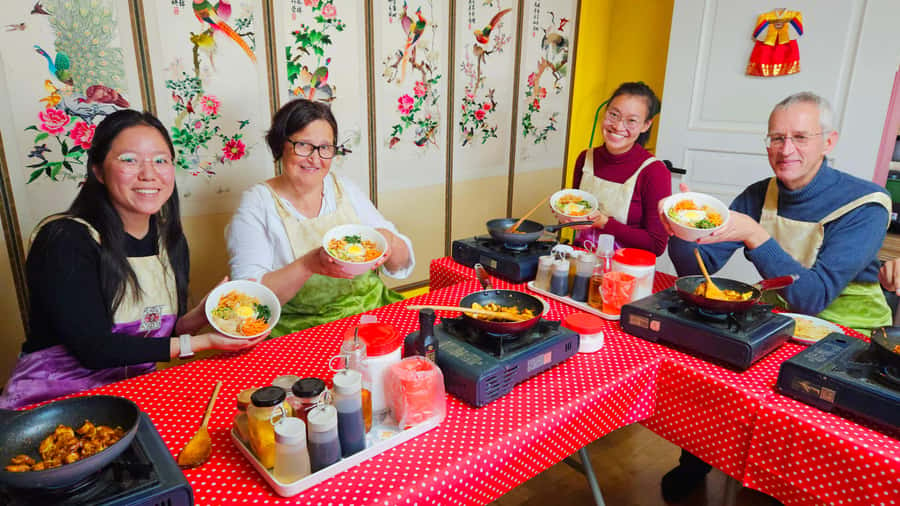
- Four dishes in one class: Prepare bibimbap, dakgalbi, haemul-pajeon, and doenjang-jjigae with guidance from a professional chef.
- A meal, not just a lesson: Finish with Hanjeongsik, more than 10 side dishes, rice, seasonal fruit, and rice wine.
- Small and social: The group is capped at 10, giving the host room to help beginners and involve everyone.
- Culture beyond recipes: Learn a few Korean phrases and try on a Tal mask linked with Korean heritage festivals.
- Plan your arrival: Meet outside Mangwon Station Exit 2. There is no hotel pickup or drop-off, and the home has no elevator.
From Mangwon Station to the market stalls
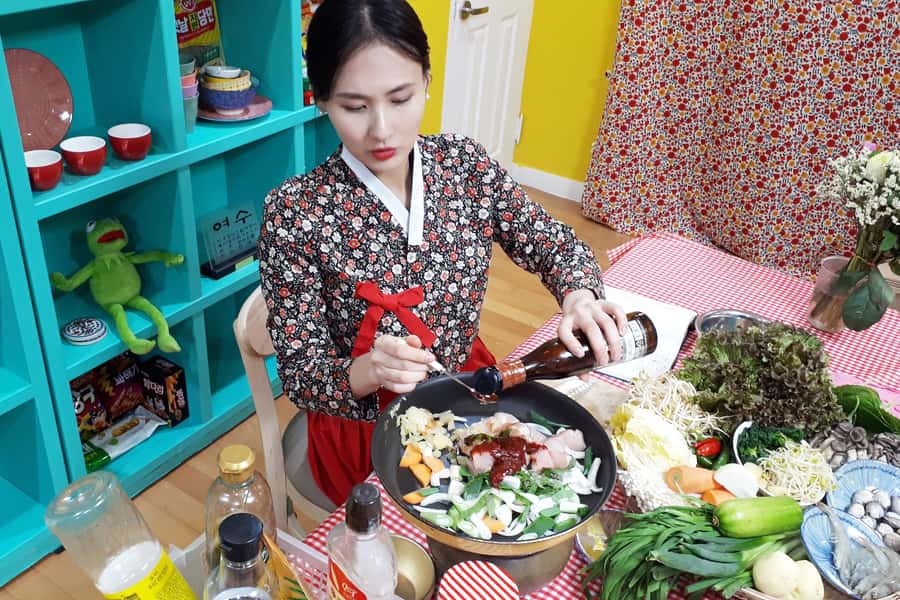
Your meeting point is outside Exit 2 at Mangwon Station. From there, the experience begins on foot with a visit to a local market, often described as less touristy than Seoul’s best-known food markets. That matters because you are not simply looking at prepared snacks for visitors. You are seeing the everyday ingredients used in Korean kitchens.
The guide helps you find what is needed for the class and explains the food along the way. You might see vegetables, seafood, meat, sauces, and other pantry staples in their market setting, rather than lined up in measured cooking-class bowls. This is a useful introduction if Korean food still feels like a list of unfamiliar names.
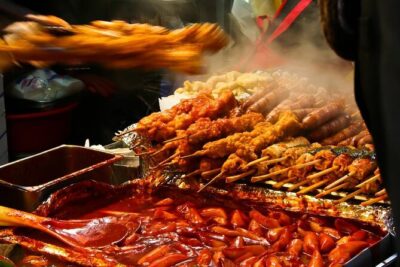
You also get street food samples during the market visit. The exact samples can vary, but the point is to taste food as it is commonly enjoyed outside the home. Bring an appetite, but do not fill up too early. The class meal later is substantial.
The market walk is one of the strongest parts of the experience for first-time visitors to Korea. A restaurant can explain what is on your plate, but a market shows you how food fits into daily life. It also gives you a chance to ask practical questions about ingredients you may want to find at home.
More Market Tours in Seoul
- Seoul Street Food Market Tour
★ 5.0 · 1,226 reviews - Local Home Korean Cooking Class & Market Adventure in Seoul
★ 5.0 · 1,024 reviews - Seoul: Night Market Food Tour with Local Guide
★ 4.9 · 943 reviews
Learning Korean phrases before the cooking begins
After the market, you go to the local home where the class takes place. You receive a welcome tea or another welcome drink, then learn a few simple Korean phrases. This is a small touch, but it helps break the ice and gives the group an easy way to connect with the host and one another.
The hosts are a major part of the experience. Sarah and Sara are described as energetic, clear, and highly engaging, while Junghee is known for a welcoming, funny style. The teaching seems designed for ordinary home cooks, not culinary professionals. If you are a complete beginner, you should not feel out of place.
The class also includes a chance to try on an artful Tal mask. Tal masks are associated with Korean heritage festivals, so this adds a cultural note beyond the kitchen. It is a short activity, not the central focus, but it gives the session some personality and makes for a memorable photo.
Photo and video service is included. You also receive the recipes, with some participants receiving them through WhatsApp. A printed mini cookbook is not promised, so save the digital recipes carefully if you want to recreate the meal later.
Four Korean dishes, four different skills
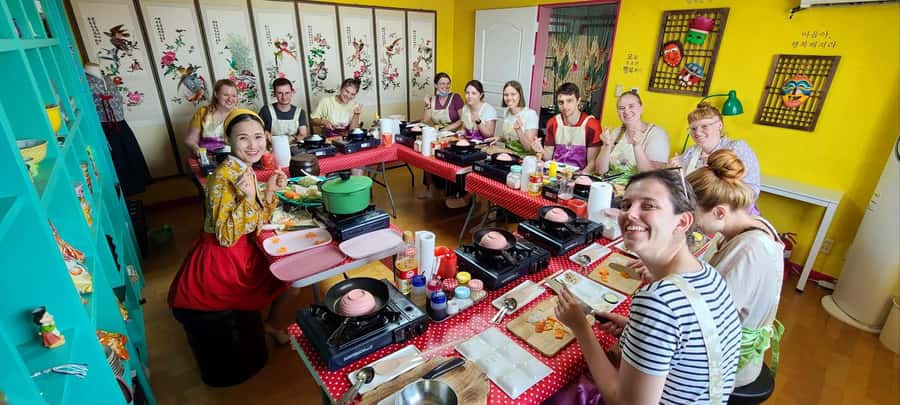
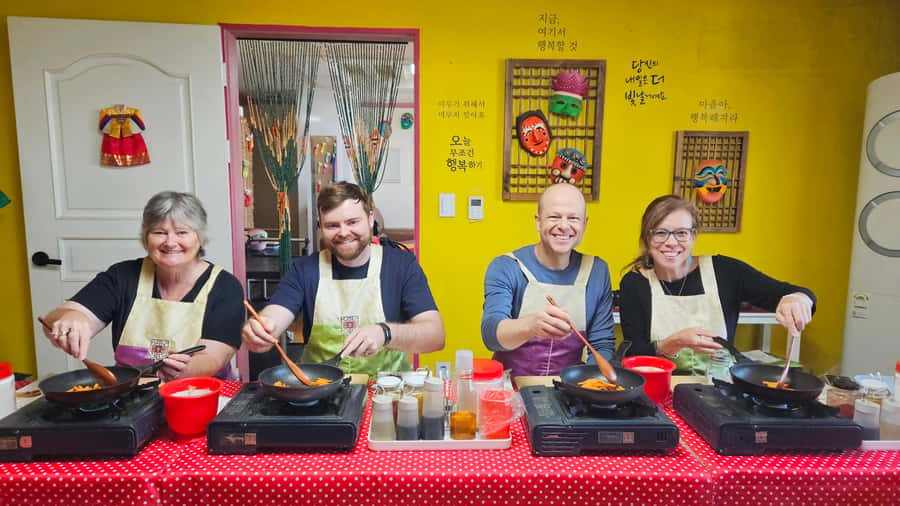
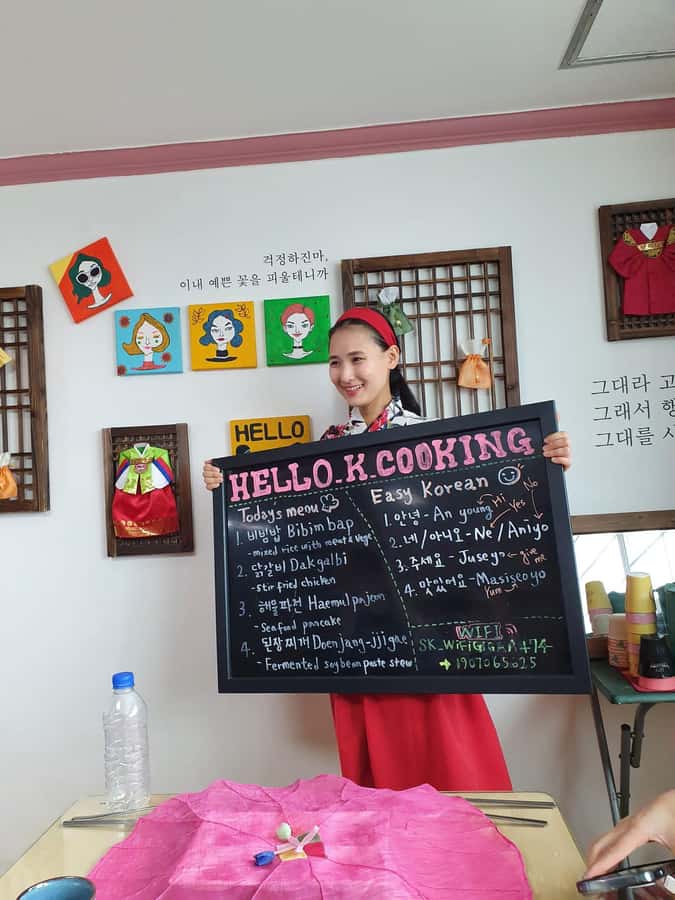
The cooking portion covers four dishes. You do not simply watch a chef prepare them. The format is hands-on, with your own cooking space and clear instructions for each recipe.
Bibimbap
Bibimbap combines rice, meat, and vegetables. It is a good teaching dish because it introduces the balance of separate ingredients before they come together in one bowl.
You learn how the components are prepared and arranged, then mix them into a complete meal. For you, the value is not just learning one recipe. You begin to understand how Korean meals combine rice, vegetables, protein, and seasoning in a single serving.
More Cooking Classes in Seoul:
- Master Korean traditional cooking with a Kimchi chef
★ 5.0 · 385 reviews - Seoul: Korean Cooking at Seoul Cooking Club!
★ 5.0 · 311 reviews - Korean Cooking at Seoul Cooking Club
★ 5.0 · 220 reviews - Korean Cooking Class with Grocery Shopping at Seoul Local Market
★ 5.0 · 107 reviews
Dakgalbi
Dakgalbi is stir-fried chicken. This brings a different technique to the class, with more direct cooking and attention to timing. The dish is hearty and strongly seasoned, making it a useful contrast to the lighter vegetable elements of bibimbap.
The chef-guide demonstrates each step and helps the group keep pace. You should expect some cooking together with the rest of the group, so it is a social class rather than a private lesson.
Haemul-pajeon
Haemul-pajeon is a seafood and green onion pancake. It is one of the most entertaining dishes to prepare because the texture and shape depend on how the batter and ingredients are handled in the pan.
Participants have particularly enjoyed the hands-on fun of flipping the pancakes. If you have never cooked Korean food before, this is the kind of simple, practical skill you can try again at home without needing specialist equipment.
Doenjang-jjigae
Doenjang-jjigae is a stew made with fermented soybean paste. It gives you a direct introduction to one of the classic savory flavors in Korean cooking.
The stew also helps explain why Korean meals often include several dishes at once. A bowl of rice, a stew, a main dish, and small side dishes are meant to work together. You get to taste that balance during the final meal, rather than treating each recipe as a separate restaurant course.
The Hanjeongsik meal is the real payoff
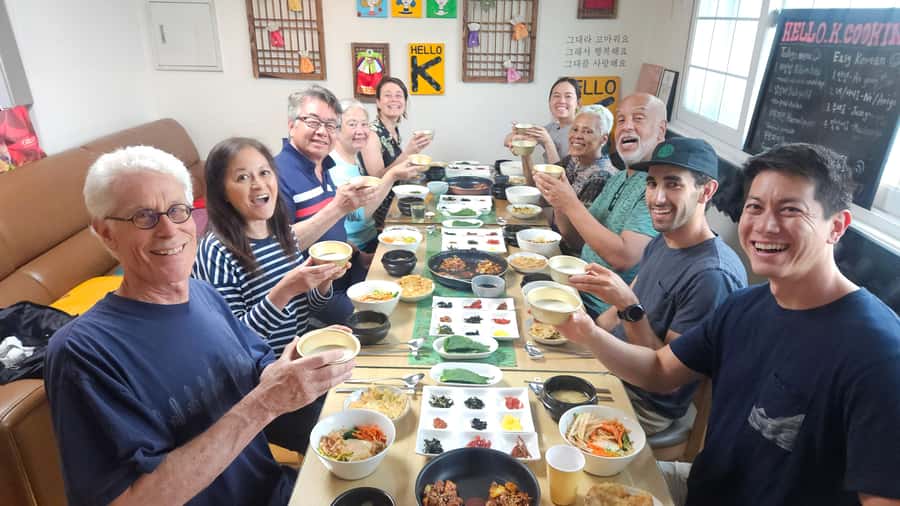
After cooking, you sit down to eat what you have made. The meal is served with Hanjeongsik, a Korean course-style table featuring more than 10 side dishes, along with rice and seasonal fruit.
This is where the experience becomes more than a standard cooking lesson. You can taste your own bibimbap, chicken, pancake, and stew in the wider setting of a Korean home meal. The side dishes show how Korean dining is built around variety, shared plates, and several flavors on the same table.
Rice wine is included, as well as water. If you do not drink alcohol, the class still includes plenty to eat and drink, but you should tell the host about any dietary needs or allergies before attending. The supplied information specifically asks participants to contact the local host about restrictions, so do not wait until you arrive.
The meal is generous enough that you should plan this as lunch or an early dinner, depending on your starting time. Since the total session lasts 3.5 hours, it is not a quick snack stop squeezed between major sightseeing appointments.
Why the small group matters
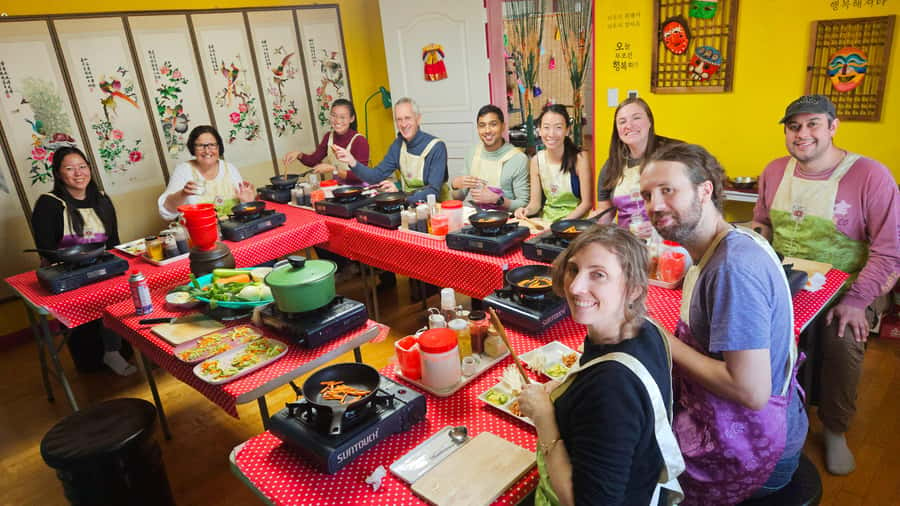
The group limit is 10 people. That is large enough to create conversation, but small enough for the host to interact with each participant.
This matters most during the cooking. Novice cooks can ask questions without holding up a large class, and the host can check how each person is doing. The teaching style described by the hosts is lively and personal, with humor and direct interaction rather than a long demonstration from across the room.
The social side is also important. You may be cooking with people from several countries, and the shared meal gives everyone a natural reason to talk. If you want a silent, highly technical kitchen lesson, this may feel too informal. If you want to meet people while learning a practical skill, the format is a strong fit.
Sarah and Sara are praised for clear English and confident instruction. The activity is offered in English and Korean. That does not mean every part follows a fixed script, so expect some conversation and cultural explanation alongside the recipes.
What the $98 price includes
At $98 per person, this is not the cheapest food activity in Seoul. The price is easier to justify when you count what is included: the market tour, street food samples, professional instruction, ingredients, cooking equipment, welcome tea, four prepared dishes, side dishes, rice, fruit, rice wine, water, recipes, and photo or video service.
You are also paying for access to a local home and a host who can explain food in context. A restaurant meal would cost less, but it would not teach you how to make the dishes or show you the market where the ingredients are selected.
The value is best for someone who will use the recipes later, enjoys meeting people, or wants a cultural activity with a proper meal at the end. If you only want to taste Korean food, Seoul offers cheaper options. If you want to understand how several Korean dishes fit together, the price is more reasonable.
The class also saves you from buying every ingredient and piece of equipment yourself. You get a guided introduction without having to work out unfamiliar measurements, cooking order, or seasoning on your own.
Timing, meeting point, and comfort notes
The activity lasts 3.5 hours, with starting times shown according to availability. You should keep the rest of your schedule flexible because the market walk, cooking, and meal all form one continuous experience.
You meet at Mangwon Station, Exit 2, outside. Hotel pickup and drop-off are not included, so you are responsible for getting to the station and returning afterward. Allow extra time to find the exit and meeting point, especially if you are unfamiliar with Seoul’s subway system.
The local home has no elevator. If stairs are difficult for you, contact the provider before booking. This is the most important physical consideration supplied for the experience.
Wear clothes and shoes that are comfortable for walking and cooking. A market visit comes first, and then you will spend time standing and working in the kitchen. The class provides the ingredients and equipment, but you should still contact the host about allergies or dietary restrictions before the day of the activity.
Cancellation is free up to 24 hours in advance for a full refund. You can also reserve now and pay later, which is useful if your Seoul plans are still changing.
Who should book this Korean cooking class?
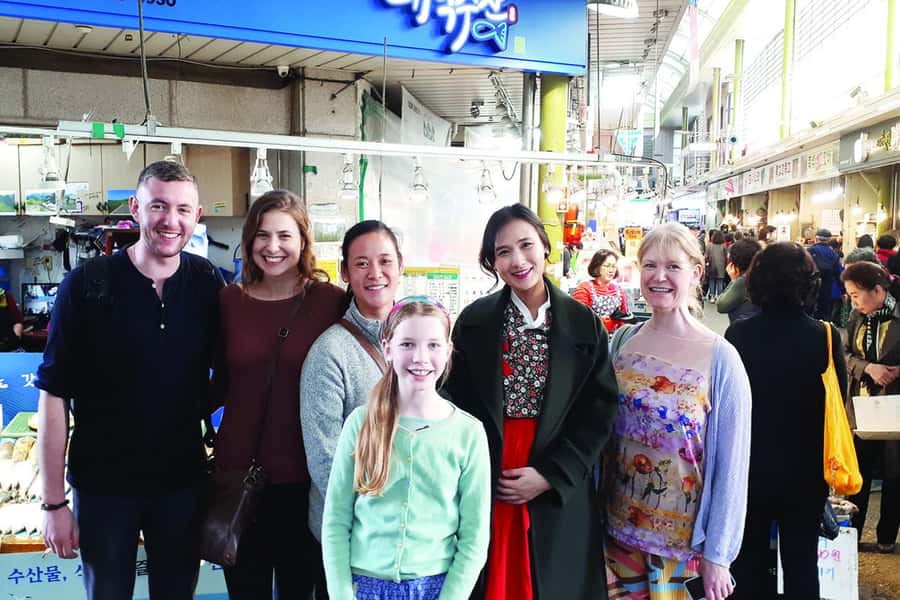
I would recommend it to first-time visitors who want food and culture in the same outing. The market gives you a look at local shopping, while the home setting makes the cooking feel personal rather than like a formal demonstration.
It is also a good choice for solo visitors. The group structure gives you people to talk with, and the shared meal makes the session feel less awkward than dining alone. Couples, families with older children, and small friend groups should also find the format easy to enjoy.
Beginners are welcome. The instruction is designed to be clear, and participants with little or no cooking-class experience have been able to take part. You do not need to arrive with advanced knife skills or a background in Korean cuisine.
I would be more cautious if you have serious allergies, strict dietary rules, or difficulty with stairs. The host may be able to discuss restrictions, but that needs to happen before booking. I would also skip it if your Seoul schedule is so tight that a 3.5-hour activity feels rushed.
Should you book it?
Book this experience if you want to do more than eat Korean food. You will shop for ingredients, sample street food, cook four dishes, learn a few phrases, try a Tal mask, and share a Hanjeongsik meal in a local home.
The strongest reasons to choose it are the personal hosts, the small group, and the complete path from market to table. The main tradeoffs are the $98 price, the lack of hotel transport, and the stairs to the home.
For a food-focused day in Seoul, this is a well-rounded choice. Arrive hungry, leave enough time for the subway, tell the host about allergies in advance, and save the recipes when they arrive.
FAQ
Where does the cooking class meet?
Meet your guide outside Mangwon Station at Exit 2. The activity ends back at the meeting point.
How long does the experience last?
The cooking class and market tour last 3.5 hours. Starting times depend on availability.
What dishes will I cook?
You will prepare bibimbap, dakgalbi, haemul-pajeon, and doenjang-jjigae.
Is a meal included after cooking?
Yes. You eat the dishes you prepare and receive a Hanjeongsik meal with more than 10 side dishes, rice, seasonal fruit, and rice wine.
Are ingredients and cooking equipment provided?
Yes. The ingredients and equipment needed for the class are included.
Is hotel pickup available?
No. Hotel pickup and drop-off are not included. You must make your own way to Mangwon Station and return afterward.
Is the class suitable for people who do not speak Korean?
Yes. The activity is offered in English and Korean, and the chef-guide teaches the class in English for English-speaking participants.
Are dietary restrictions and allergies accommodated?
You should contact the local host before the activity about any dietary restrictions or allergies. The supplied information does not guarantee that every request can be accommodated.
More Workshops in Seoul
- Royal Seoul Cooking Class in a 100-Year-Old Hanok
★ 5.0 · 81 reviews - Seoul : Taste of Korea, Authentic Home-Style Cooking Class
★ 5.0 · 64 reviews - Make your K-scent perfume: Modern oneday class in Seoul
★ 5.0 · 40 reviews - Traditional Soju Class and Makgeolli Tasting in Seoul
★ 5.0 · 35 reviews
More Shopping Tours in Seoul
- Downtown Seoul Guided Food & Market Tour with 8+ Local Tastings
★ 5.0 · 580 reviews - Seoul Night Palace & Market Food Tour with Vehicle
★ 5.0 · 275 reviews - Cook 3 Authentic Korean Dishes with Local Market Tour
★ 5.0 · 231 reviews - Korean Palace and Market Tour in Seoul Including Insadong and Gyeongbokgung Palace
★ 4.0 · 174 reviews
Newest Seoul trips on the site
- Seoul : Must-see & Hidden Gems Private Walking Tour★ 4.9 · 8 reviews
- Seoul: Lotte World Aquarium Ticket★ 4.5 · 10 reviews
- Seoul: Max Out Must Visit City Highlights Panoramic Day Tour★ 5.0 · 7 reviews
- Seoul: K-Fashion Shopping Tour with a Professional Stylist★ 5.0 · 5 reviews
- From Seoul: Korea Spring Cherry Blossom Day Tour★ 4.8 · 6 reviews
- Seoul: Guided Street Food Tour at Namdaemun Market★ 5.0 · 10 reviews
- Seoul: Jisan Forest Winter Ski Day Tour with Basic Lesson★ 4.4 · 6 reviews
- Jisan Forest Resort: Ski Full-Day Tour or Shuttle from Seoul★ 5.0 · 4 reviews
Seoul Tours, compared.
Gyeongbok Palace, Bukchon Village, and Gwangjang Tour
Read our review →
Full Day Tour In The Soop BTS Ver in PyeongChang Filming Location
Read our review →
Best Seoul City Tour (Gyeongbokgung Palace,Insadong,Namsan Tower)
Read our review →
Small-Group Royal Palace and Seoul City Tour (hotel pick-up)
Read our review →
Seoul City Sightseeing Tour Including Gyeongbokgung Palace, N Seoul Tower, and Namsangol Hanok Village
Read our review →
Gyeongbok Palace, Bukchon Village, and Gwangjang Tour
Read our review →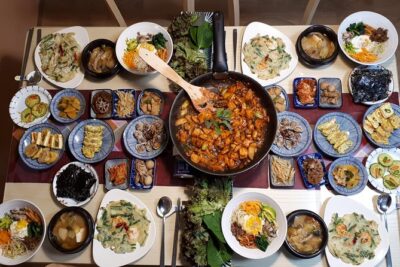
Local Home Korean Cooking Class & Market Adventure in Seoul
Read our review →Browse the lists this tour appears in