
Reviewed · SEOUL TOURS
Traditional Soju Class and Makgeolli Tasting in Seoul
The best part of this Seoul class is the chance to meet Korean alcohol on its own terms. You’ll taste fresh makgeolli from Baekusaeng Brewery, then work through 10 premium sojus instead of treating the familiar green bottle as the whole story. Joe, the host, brings clear explanations and a playful blind tasting to the table.
I like the small group, capped at 10, and the way the class compares commercial drinks with traditional versions. I also like that you get more than samples: there are light snacks, cocktail-making, and useful background on Korean food and drinking culture. The main drawback is practical: the meeting place at 346-35 Ahyeon-dong is tucked away, so you should allow extra time to find it.
Key points at a glance
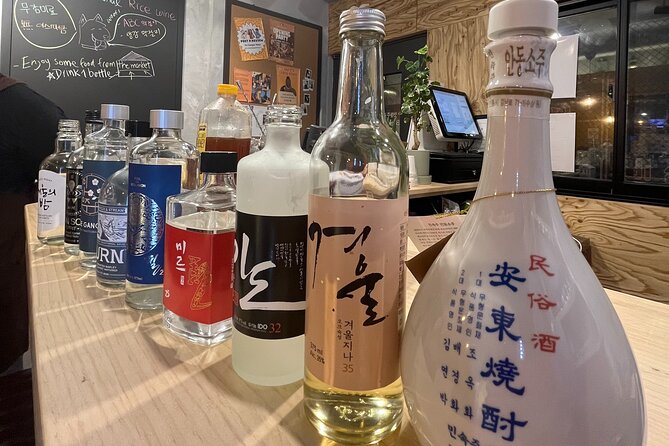
- Ten premium sojus in one sitting: A blind tasting helps you compare styles instead of judging every bottle by its label.
- Fresh makgeolli from Baekusaeng Brewery: You taste brewery-made makgeolli alongside commercial and traditional examples.
- Joe leads the class: His English presentation covers production, history, flavor, and the role of Korean alcohol in daily life.
- Small, social setting: The maximum group size is 10, which leaves room for questions and conversation.
- More than a drink flight: Light snacks and cocktail-making keep the session active.
- A 90-minute introduction: The compact format suits a Seoul itinerary, though serious drink enthusiasts may want more time.
Why this Seoul alcohol class is different
Many visitors first meet soju in a green bottle, served cold beside Korean barbecue. That version has its place, but it gives you only a narrow view of the drink. This class is built around the idea that soju can have very different aromas, textures, strength, and finish depending on how it is made.
The class also gives makgeolli equal billing. This cloudy Korean rice drink is often sweeter and more refreshing than first-time tasters expect, but traditional versions can show grain, tang, gentle fizz, and a fuller body. Comparing those examples with commercial bottles makes the lesson easy to understand. You taste the difference instead of simply hearing a lecture about it.
I would treat this as a guided tasting rather than a formal cooking or distilling course. You learn about the drinks, compare them, and create cocktails, but the stated program does not promise that you will make soju or brew makgeolli yourself. One person who enjoyed the session later returned for a separate makgeolli-making class, which suggests that this tasting works well as an introduction before a hands-on workshop.
More Soju and Makgeolli Tastings in Seoul:
- Soju Tasting at Distillery – story of 3 pigs
★ 5.0 · 166 reviews - Learn and Make Your Very Own Craft Makgeolli
★ 5.0 · 94 reviews - Makgeolli Brewing Class
★ 5.0 · 21 reviews
Starting with Baekusaeng Brewery makgeolli
The session begins with premium makgeolli from Baekusaeng Brewery. This is a smart starting point because makgeolli gives you a sense of Korean alcohol before the class moves into the larger soju tasting.
You’ll learn how commercial makgeolli differs from traditional versions. The point is not that one category is always good and the other always bad. Instead, you get a way to notice what changes from bottle to bottle: sweetness, sourness, freshness, texture, and the character of the rice.
Freshness matters especially with makgeolli. The drink is cloudy and can have a lively, slightly fermented character. A brewery-made example gives you a reference point for the rest of the tasting, so you can better judge the bottles you encounter later in Seoul or back home.
This opening section is also useful if you have never tried makgeolli. The class does not assume that you already know Korean drinks. You can ask basic questions and still get something from the more advanced comparisons.
The blind tasting of 10 premium sojus
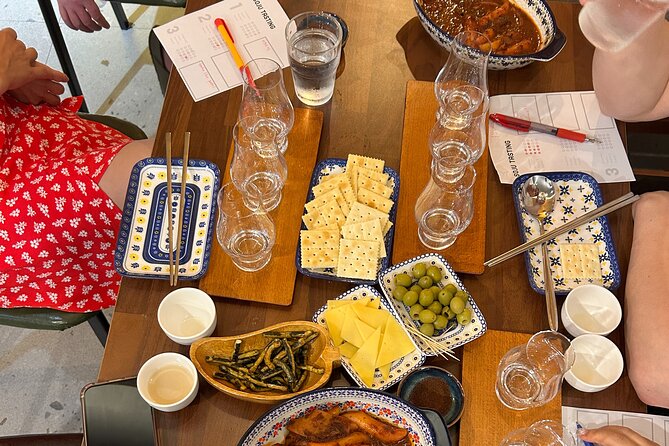
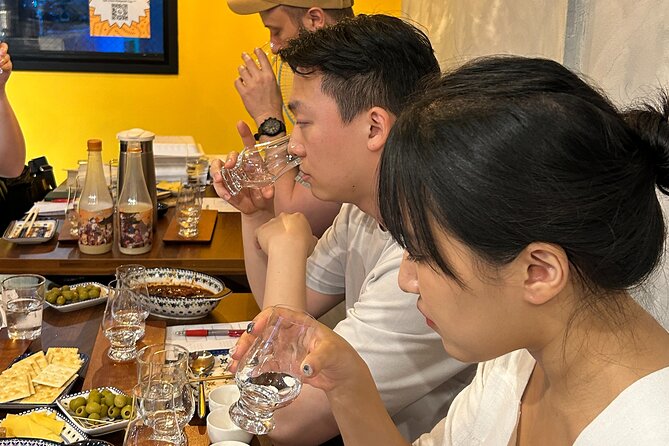
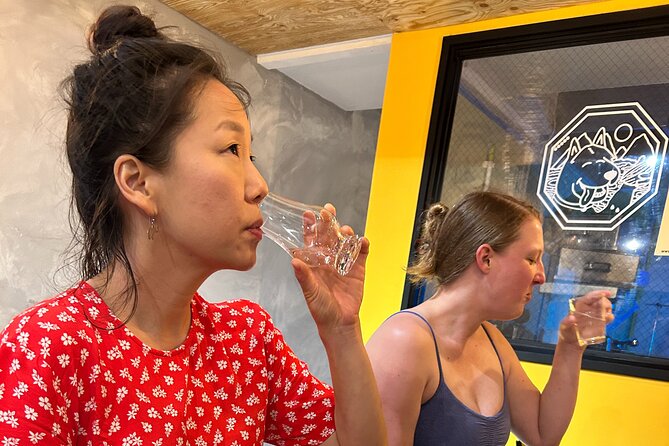
The centerpiece is a blind tasting of 10 premium sojus paired with light snacks. Removing the labels changes the way you taste. You are less likely to decide that a bottle must be good because it looks expensive, or that a familiar brand must be your favorite.
Instead, you can focus on the drink itself. Some sojus may seem clean and mild, while others may have more grain character or a stronger finish. The class is designed to show that soju is not just a neutral spirit with fruit flavoring.
The blind format should also make the session social. You can compare your impressions with the people around you, then see how your guesses match the actual bottles. The group size matters here. With no more than 10 people, the tasting should feel more like a conversation than a crowded bar demonstration.
The supplied program specifies 10 premium sojus. Some descriptions of the session refer to a larger number of samples, so the exact pour count may vary by class, but you should plan around the advertised 10-soju tasting. That is already a substantial amount for a 90-minute class.
The light snacks serve a practical purpose. Alcohol tastes different on an empty stomach, and small bites give you something to eat as you move through the samples. Do not think of the food as a full meal. You should plan separate dining if you need lunch or dinner.
Learning the difference between traditional and commercial bottles
The strongest educational feature is the comparison between traditional and mass-produced alcohol. You probably already know the standard green soju bottle, even if you have never visited Korea. This class explains why that familiar product does not represent every kind of soju available.
You’ll hear about the ingredients and methods behind Korean alcohol, along with its place in Korean culinary life. The lesson connects the drink to meals, social customs, and older production methods. That context helps you understand why soju and makgeolli remain such visible parts of Korean food culture.
Joe is the key to this section. The supplied information identifies him by name, and the feedback about his teaching is especially strong. He is described as passionate, personable, and able to explain the subject clearly in English. The appeal is not just a list of facts. He helps you understand how to compare drinks and recognize what you are tasting.
That skill is useful after the class. When you see Korean alcohol in a restaurant, market, or shop, you’ll have a better idea of what questions to ask. You may also look at the green bottle differently, not as an inferior drink, but as one style within a much wider category.
More Food Tours in Seoul:
- Seoul Street Food Market Tour
★ 5.0 · 1,226 reviews - Seoul: Night Market Food Tour with Local Guide
★ 4.9 · 943 reviews - Downtown Seoul Guided Food & Market Tour with 8+ Local Tastings
★ 5.0 · 580 reviews - Seoul Night Palace & Market Food Tour with Vehicle
★ 5.0 · 275 reviews
Making cocktails and keeping the class lively
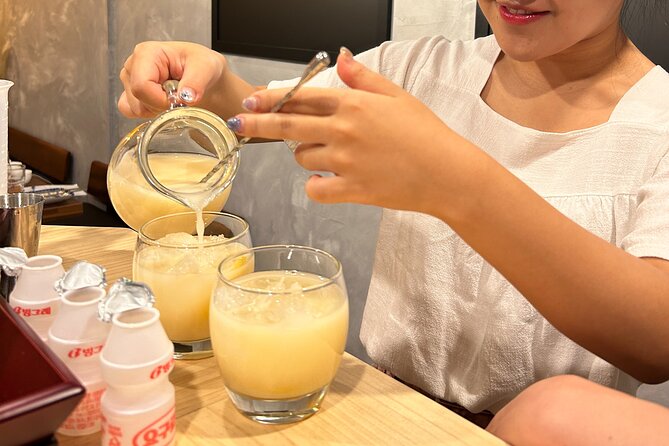
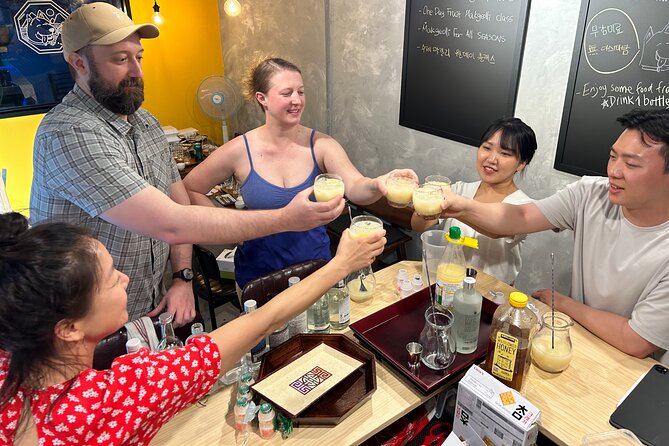
The session includes cocktail-making, which breaks up the tasting and gives you another way to use soju. This is helpful if you like spirits but do not want to drink every sample neat. It also shows how soju can work in a mixed drink rather than only as a shot or meal companion.
The cocktail section adds an informal, hands-on touch, but you should keep your expectations in check. The class is short, and the main focus remains tasting and education. You are not signing up for a full bartending lesson with a long list of recipes.
The mix of tasting, explanation, snacks, and cocktails makes the 90 minutes pass quickly. Several parts of the session call for attention, so this is not simply a row of glasses placed in front of you. At the same time, the format remains relaxed enough for conversation and questions.
You should also plan to pace yourself. Ten sojus plus makgeolli can leave you tipsy, particularly if you arrive without eating. The class is intended to be fun, but alcohol remains the main feature. Eat beforehand or make a meal part of your wider Seoul plan.
What the 90-minute format means
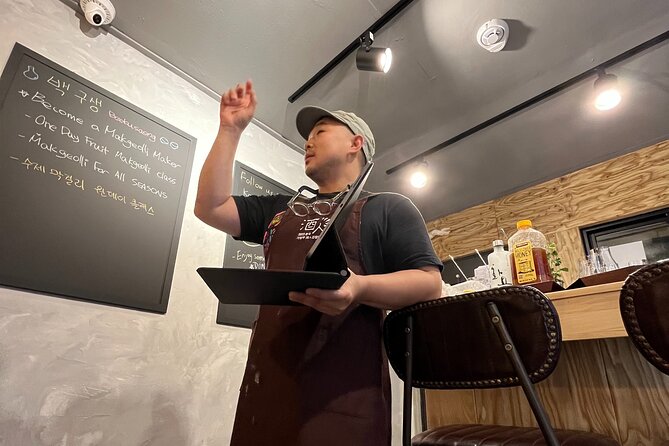
An hour and a half is long enough for a solid introduction but short enough to fit into a busy day in Seoul. You will not spend half a day getting to a countryside brewery or touring a large production site. Instead, you receive a focused lesson in a small space.
That compact timing is a benefit for first-time visitors. You can schedule the class before dinner, after sightseeing, or between other activities. Since the class ends back at the meeting point, you do not need to arrange a separate return transfer.
The trade-off is that each drink cannot receive a long explanation. If you want detailed production science, extensive food pairings, or time to taste dozens of regional styles, this may feel brief. The program aims to give you a useful foundation, not train you as a professional taster.
I see the short format as best for curious drinkers and people building their first Seoul itinerary. It offers enough structure to make the experience memorable without requiring a major time commitment.
Finding the Ahyeon-dong meeting point
The class starts and ends at 346-35 Ahyeon-dong, Mapo-gu, Seoul. The location is near public transportation, but the space can be tucked away. You should not arrive at the last minute, especially if Seoul is still new to you.
Use the mobile ticket for entry and keep the address available on your phone. Give yourself extra time to navigate the final stretch. The small, somewhat tucked-away setting is part of the charm, but it also means you should expect less obvious signage than you might find at a major attraction.
Because the activity ends where it begins, the address also makes planning easier. You can choose a nearby meal or continue on to another part of Seoul after the class. The provider is Baekusaeng Makgeolli, so the setting has a direct link to the drink you taste at the start.
Service animals are allowed, and most people can participate. The activity is limited to a maximum of 10 people, which is a useful detail if you prefer a close-up class rather than a large group event.
Is $66.97 a fair price?
At $66.97 per person, this is not a bargain if you judge it as a simple bar tasting. You are paying for a guided session, a broad range of premium sojus, fresh brewery makgeolli, snacks, instruction, and cocktail-making in a small group.
The value improves if you want context. Buying several bottles on your own could cost less or more depending on the brands, but it would not give you Joe’s comparisons or a clear way to understand what you are drinking. You would also need to know which bottles to buy, and a shop visit does not usually include a blind tasting.
The number of pours is another reason to consider the price carefully. Ten sojus plus makgeolli is a lot of sampling for a 90-minute class. If you are interested in Korean spirits, the session can save you from spending money on bottles that do not suit your taste.
It is less suitable for someone who only wants a quick taste of standard soju. The price makes the most sense for you if you enjoy guided food and drink activities, want to understand Korean alcohol, or plan to seek out makgeolli and premium soju during the rest of your trip.
Who should book this class?
This is a good pick for first-time visitors who want an introduction to Korean drinking culture without committing to a long excursion. You do not need prior knowledge of soju or makgeolli, and the class works for people who want to ask basic questions as well as those who already enjoy Korean spirits.
It also suits couples and small groups of friends. The room is limited to 10 people, and the format leaves time to socialize. The class may be especially useful for anyone who has only tried flavored or mass-produced soju and wants to learn what else is available.
Food-focused visitors should find plenty of interest here. Makgeolli and soju are tied to meals and social customs, so the lesson adds useful context to Korean barbecue, market snacks, and other dishes you may try in Seoul.
I would be more cautious if you dislike alcohol, need a full meal, or prefer activities with little standing and no tasting pressure. The class centers on drinking, and the amount of alcohol is not minor. Even with snacks, you should pace yourself.
Booking, cancellation, and practical details
Confirmation is provided when you book, and the ticket is mobile. You can cancel for a full refund up to 24 hours before the start time. Cancellations or changes made within 24 hours are not refunded or accepted.
The activity requires a minimum number of participants. If the provider cancels because that minimum is not met, you will be offered another date or experience, or a full refund.
The class has a 100 percent recommendation rate and a five-star rating based on 35 reviews. The most consistent praise centers on Joe’s teaching, the number and variety of drinks, the fresh makgeolli, and the intimate setting. Those are the elements I would use to judge the class, rather than expecting a full brewery tour or a complete meal.
Should you book the Baekusaeng Makgeolli class?
Book it if you want to understand why Korean alcohol is more interesting than the familiar green bottle suggests. The combination of fresh makgeolli, 10 premium sojus, blind tasting, snacks, cocktails, and Joe’s clear English instruction gives you a useful and enjoyable introduction.
The decision is less clear if you are looking for a low-cost drink or a hands-on brewing workshop. This is a guided tasting, not a full meal and not a class in making makgeolli. Allow extra time to find the Ahyeon-dong address, eat something before you arrive, and plan a calm activity afterward.
For curious drinkers, food lovers, and anyone who wants a more informed Seoul night out, the $66.97 price is reasonable. You leave with a better sense of Korean spirits and a practical idea of what to order next.
FAQ
Where does the class take place?
The meeting point is 346-35 Ahyeon-dong, Mapo-gu, Seoul, South Korea. The activity ends back at the same meeting point.
How long does the experience last?
The class lasts approximately 1 hour and 30 minutes.
How many people can join the class?
The maximum group size is 10 people.
What drinks are included?
The class includes premium makgeolli from Baekusaeng Brewery and a blind tasting of 10 premium sojus. You will also compare commercial and traditional varieties.
Are snacks included?
Yes. The soju tasting is paired with light snacks.
Is cocktail-making part of the class?
Yes. The experience includes creating cocktails with soju.
Who leads the class?
Joe leads the session. The class covers Korean alcohol, production methods, cultural background, and tasting comparisons, and Joe teaches in English.
Can I cancel for a refund?
Yes. You can cancel at least 24 hours before the start time for a full refund. Cancellations or changes made less than 24 hours before the start time are not refunded or accepted.
More Workshops in Seoul
- Local Home Korean Cooking Class & Market Adventure in Seoul
★ 5.0 · 1,024 reviews - Seoul: Korean Cooking Class at a Local Home and Market Tour
★ 5.0 · 348 reviews - Korean Cooking Class with Grocery Shopping at Seoul Local Market
★ 5.0 · 107 reviews - Royal Seoul Cooking Class in a 100-Year-Old Hanok
★ 5.0 · 81 reviews
Newest Seoul trips on the site
- Seoul : Must-see & Hidden Gems Private Walking Tour★ 4.9 · 8 reviews
- Seoul: Lotte World Aquarium Ticket★ 4.5 · 10 reviews
- Seoul: Max Out Must Visit City Highlights Panoramic Day Tour★ 5.0 · 7 reviews
- Seoul: K-Fashion Shopping Tour with a Professional Stylist★ 5.0 · 5 reviews
- From Seoul: Korea Spring Cherry Blossom Day Tour★ 4.8 · 6 reviews
- Jisan Forest Resort: Ski Full-Day Tour or Shuttle from Seoul★ 5.0 · 4 reviews
- Seoul: Guided Street Food Tour at Namdaemun Market★ 5.0 · 10 reviews
- Seoul: Jisan Forest Winter Ski Day Tour with Basic Lesson★ 4.4 · 6 reviews
Seoul Tours, compared.
Gyeongbok Palace, Bukchon Village, and Gwangjang Tour
Read our review →
Full Day Tour In The Soop BTS Ver in PyeongChang Filming Location
Read our review →
Best Seoul City Tour (Gyeongbokgung Palace,Insadong,Namsan Tower)
Read our review →
Small-Group Royal Palace and Seoul City Tour (hotel pick-up)
Read our review →
Seoul City Sightseeing Tour Including Gyeongbokgung Palace, N Seoul Tower, and Namsangol Hanok Village
Read our review →
Gyeongbok Palace, Bukchon Village, and Gwangjang Tour
Read our review →
Local Home Korean Cooking Class & Market Adventure in Seoul
Read our review →Browse the lists this tour appears in