
Reviewed · SEOUL TOURS
Makgeolli Brewing Class
Making makgeolli turns a familiar Korean drink into something you can understand from the inside out. At The Sool Company in Hyehwa, you’ll wash rice, follow the fermentation process, taste house-made samples, and finish with either a take-home ingredient kit or a bottle of makgeolli.
I like the hands-on format and the way the class connects practical brewing with Korean alcohol culture. I also like the chance to visit the shop afterward for drinks selected from across South Korea. The main consideration is the price: at $75 per person, this is best value for drinkers who want more than a quick tasting.
Key points at a glance
- A full makgeolli process: Follow the brew from washing rice through fermentation instruction and filtering.
- Tasting built into the lesson: Sample home-brewed makgeolli while learning how Korean alcohol is made.
- Two take-home choices: Bring home a basic ingredient kit for another brew, or choose a bottle of makgeolli.
- Hyehwa setting: Meet at the brewery on the second floor of 229 Changgyeonggung-ro in Seoul’s Jongno District.
- Small enough to ask questions: The class accepts a maximum of 20 people, with a session lasting about two and a half hours.
- Guides with practical experience: Omar and Inji are named as instructors in the class feedback, with praise for clear explanations and patient answers.
Why makgeolli makes a good Seoul activity
Makgeolli is a milky Korean rice wine, but that short description misses much of its character. It is tied to rice, fermentation, local brewing customs, and the wider Korean tradition of sool, the Korean term for alcoholic drinks.
This class gives you a way to understand the drink without needing to spend an evening guessing what is in your glass. You see the basic ingredients and the steps that shape the final drink. That matters because makgeolli can vary widely in taste and texture, and a little brewing knowledge makes those differences easier to notice.
I like activities that give you something to talk about after the class. Here, you are not only tasting alcohol. You are learning why rice must be prepared carefully, how fermentation changes it, and why filtering affects the drink you pour.
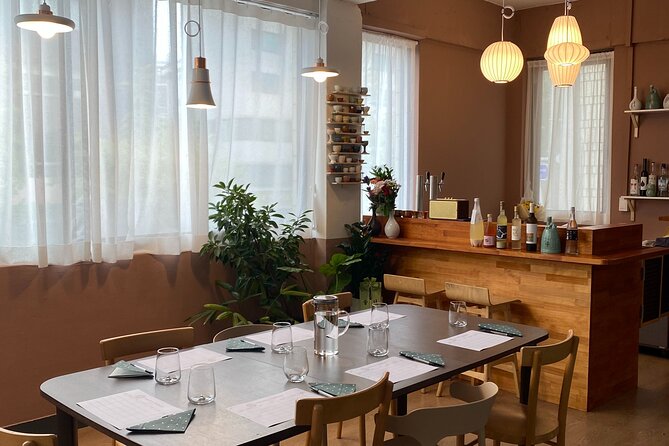
The class also suits visitors who want a more local experience than a standard sightseeing stop. It takes place at a working makgeolli brewery in Hyehwa, not in a general-purpose tourist venue. The setting is still easy to reach, but the focus stays on Korean food and drink.
More Soju and Makgeolli Tastings in Seoul:
- Soju Tasting at Distillery – story of 3 pigs
★ 5.0 · 166 reviews - Learn and Make Your Very Own Craft Makgeolli
★ 5.0 · 94 reviews - Traditional Soju Class and Makgeolli Tasting in Seoul
★ 5.0 · 35 reviews
Arriving at the Hyehwa brewery
The meeting point is on the second floor of 229 Changgyeonggung-ro, in Seoul’s Jongno District. The class begins at 1:00 pm and ends back at the same location, so you do not need to plan a separate return transfer.
The address is near public transportation, which makes it a practical afternoon activity. I would allow enough time to find the building and reach the second floor without rushing. A mobile ticket is accepted, and booking confirmation is provided at the time of booking.
Hyehwa is a useful base for an activity like this because you can pair the class with other plans in Jongno. Still, the class itself lasts about two hours and 30 minutes. Add time for getting there and for drinks afterward, and this is not a quick one-hour stop between major sights.
The maximum group size is 20 people. That is not an intimate private lesson, but it is small enough for the format to work well if the instructor keeps the group involved. The class is built around practical steps and questions, so your experience will depend in part on how actively you take part.
Starting with Korean alcohol and makgeolli
The class begins with background on Korean alcohol and the different kinds of sool. This opening gives the practical work some context. Instead of treating makgeolli as an isolated product, you learn how it fits into Korean drinking culture.
This section is especially useful if you are new to Korean alcohol. You may have seen makgeolli served in a bowl or bottle but not known how it differs from other Korean drinks. The lesson helps explain why fermentation is so important and why the brewing method affects the finished drink.
The instructors bring experience from the Korean alcohol industry, and the class is held at a functioning brewery. That combination is valuable because you are learning in a place where the process is part of daily work, not just a demonstration prepared for visitors.
The opening talk is also a good time to ask questions. The feedback highlights Omar’s patient answers and clear explanation of makgeolli’s importance in Korean culture. Inji is also praised for giving detailed instruction and plenty of tasting opportunities. Since the instructor can vary, you may not have both guides in your session, but these names give you an idea of the teaching style to expect.
Tasting home-brewed makgeolli
Before making your own brew, you taste home-brewed makgeolli. This is one of the strongest parts of the experience because it gives you a reference point for the work that follows.
Pay attention to the drink’s texture, sweetness, and overall balance. The class information does not promise a set menu of styles or a fixed number of samples, so I would not book this expecting a formal tasting flight. Instead, think of the tasting as a working lesson that helps you understand the product.
The alcohol tasting also breaks up the technical instruction. Brewing can sound abstract when you only hear about ingredients and fermentation. Once you taste the finished drink, the steps become easier to connect to something real.
You should also remember that this is an alcohol-focused activity. If you do not drink, or if you prefer to keep your alcohol intake low, check what participation options are available before booking. The class includes tasting and the option to take home a bottle, so alcohol is central to the experience rather than an optional side detail.
A few more Seoul trips worth comparing
- Learn and Craft Makgeolli in a Traditional Brewery
★ 5.0 · 12 reviews
Washing rice and learning the first brewing steps
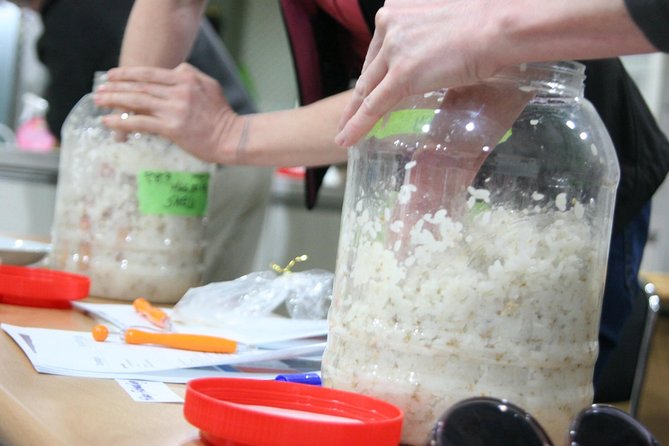
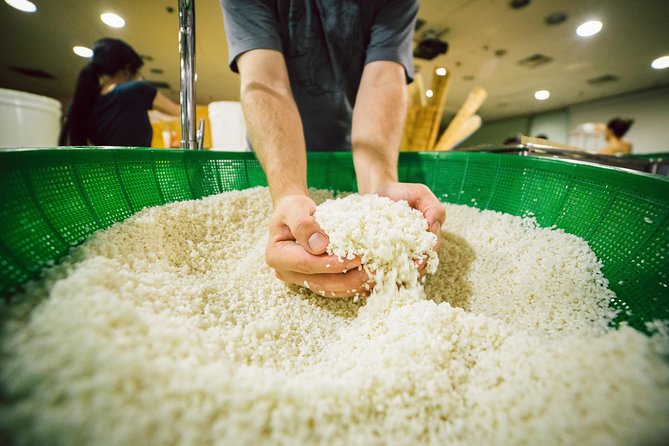
The practical section takes you from the beginning of the process. You start with washing rice, an ordinary action that becomes more meaningful when you understand its place in the brew.
The class does not simply hand you a finished mixture. You work through the early stage and learn the fundamentals behind it. This is where the activity earns its value for anyone who wants to repeat the process at home.
The instructions are designed for beginners. You do not need to arrive with brewing experience, and the class aims to give you the basics needed to continue making makgeolli after you leave. The feedback specifically praises the detailed explanations and the chance to try the steps yourself.
That hands-on approach is more useful than watching an instructor work from a distance. You get a better sense of the process, and you can ask about anything that seems unclear at the moment. If you are curious about food production, fermentation, or Korean cooking, this section will probably hold your attention.
Fermentation, the part you cannot rush
Fermentation is what gives Korean alcohol much of its character, and the class explains the techniques involved. You learn why this stage matters and how it changes the rice mixture into makgeolli.
The session cannot show the entire fermentation period from start to finish in real time. Fermentation takes place over a longer period than the class itself, so the instructor focuses on the method and the conditions needed to continue at home.
This is an important expectation to set before booking. You will learn how to prepare a brew, but you are not leaving with a finished batch that began and ended during the afternoon. The take-home ingredient kit is for continuing the process after class.
That arrangement is useful for people who want a project to carry into the rest of their Seoul stay or back home. It also requires some follow-through. If you prefer an activity with no homework, choose the bottle option instead.
Filtering and the finished drink
The final practical stage covers filtering. This is the step that brings the preparation closer to the makgeolli you recognize in a glass or bowl.
Filtering is not just a closing gesture. It affects the drink’s texture and presentation, so learning where it fits in the process helps you understand the difference between a rice mixture and a drink ready to serve.
The instructor guides you through the method rather than leaving you to work it out alone. You should expect clear, practical directions, with time to follow along and ask questions. The experience is not presented as a professional brewing qualification, but it gives you a sound starting point for home preparation.
This part also helps bring the lesson together. You have handled the early ingredients, heard about fermentation, and now see how the mixture becomes a drink. For many people, that complete sequence will be more satisfying than a tasting alone.
Choosing the take-home kit or bottle
At the end, you can choose between an ingredient kit and a bottle of makgeolli. The right choice depends on what you want from the activity.
The ingredient kit is the better pick if you enjoyed the practical work and want to repeat it at home. It gives you the basic ingredients needed to recreate your own brew, and it extends the class beyond the afternoon. This option is also a good fit if you like food projects and are happy to spend time following the process after your trip.
The bottle of makgeolli is simpler. You get a ready-made drink instead of another brewing task. Choose it if you want an easy souvenir, if your accommodation is not suitable for food projects, or if you do not expect to have time to continue brewing.
The available information does not specify the exact contents of the kit or the bottle size. I would ask the instructor about storage and follow-up instructions before leaving, especially if you are flying home soon.
Staying for more Korean drinks afterward
After the class, you can visit the shop for alcoholic drinks selected from different parts of South Korea. This adds another useful layer to the experience.
The class focuses on making makgeolli, while the shop gives you a wider look at Korean drinking culture. You may find that the drinks differ in taste, strength, or style, but the exact selection can change, so do not expect a fixed list.
I like this option because it lets you keep the afternoon centered on Korean alcohol instead of rushing away once the lesson ends. It is also a chance to compare what you have learned about makgeolli with other drinks from around the country.
Keep in mind that the shop visit is an additional opportunity, not a separate guided tour with a stated duration. Plan your time and drinking accordingly. If you have dinner reservations or an evening performance, leave enough room between the class and your next commitment.
Is $75 a fair price?
At $75 per person, this is not a budget tasting. You are paying for about two and a half hours of instruction, hands-on brewing, alcohol tasting, and a take-home choice.
The value is strongest if you would otherwise pay for both a Korean alcohol tasting and a food workshop. The class combines those two activities, and the practical lesson gives you something more lasting than a single drink.
The price is harder to justify if you only want to sample makgeolli. In that case, a bar or shop may offer a cheaper way to taste the drink. You also need to value the ingredient kit or bottle, since one of those is included as part of the end-of-class choice.
I see this as a good-value activity for curious drinkers, food-focused visitors, and anyone who likes learning by doing. It is less suitable for a person seeking a quick cultural stop or a low-cost introduction to Korean alcohol.
Who should book this class?
I would recommend it to you if you enjoy local food traditions, want a guided activity in Seoul, or hope to recreate something from your trip at home. It also works well for couples, friends, and solo visitors who are comfortable joining a group.
The class is especially useful for people who want a clear introduction rather than a highly technical brewing course. You receive practical instruction from beginning to end, but the goal is to teach you the fundamentals, not train you as a professional brewer.
Families should consider the alcohol focus before booking. The class includes tasting, and the take-home choices are alcoholic or intended to produce alcohol. The supplied information does not give an age policy, so check that point if it matters for your group.
The same applies to dietary or accessibility concerns. No detailed accessibility information is provided, and the activity involves working with ingredients and moving through a brewery space. Ask The Sool Company before booking if you need specific arrangements.
Booking, timing, and cancellation
The class starts at 1:00 pm at 229 Changgyeonggung-ro and returns to the same meeting point. Confirmation arrives when you book, and the mobile ticket makes the entry process straightforward.
Free cancellation is available if you cancel at least 24 hours before the start time. Changes or cancellations made less than 24 hours in advance are not refunded. The activity also requires a minimum number of participants, so if that minimum is not met, you will be offered another date or experience, or a full refund.
I would book this earlier in your Seoul schedule if making the brew at home matters to you. That gives you time to carry the kit through the rest of your trip and decide how you want to transport it afterward.
Should you book the Makgeolli Brewing Class?
Book it if you want to understand makgeolli by making it, not just drinking it. The class combines Korean alcohol culture, tasting, rice preparation, fermentation instruction, and filtering in one afternoon. Omar and Inji are associated with patient, detailed teaching, and the group size is capped at 20.
Skip it if you only want a cheap drink, dislike alcohol-based activities, or do not want to continue a brewing project after class. For everyone else, the $75 price is reasonable because the experience gives you both a guided workshop and a useful take-home choice.
FAQ
Where does the makgeolli class take place?
The class takes place at The Sool Company on the second floor of 229 Changgyeonggung-ro in Seoul’s Jongno District, near public transportation.
What time does the class start?
The class starts at 1:00 pm and lasts approximately two hours and 30 minutes.
What will I learn during the class?
You will learn the basics of makgeolli brewing, including washing rice, fermentation techniques, and the final filtering process. The class also includes information about Korean alcohol and sool.
Is alcohol tasting included?
Yes. The class includes tasting home-brewed makgeolli, and you can also visit the shop afterward for alcoholic drinks selected from across South Korea.
What can I take home?
You can choose between an ingredient kit for making your own brew and a bottle of makgeolli. The exact kit contents and bottle details are not specified.
How far in advance can I cancel?
You can cancel for a full refund up to 24 hours before the experience begins. Cancellations or changes made less than 24 hours before the start time are not refunded.
More Workshops in Seoul
- Local Home Korean Cooking Class & Market Adventure in Seoul
★ 5.0 · 1,024 reviews - Seoul: Korean Cooking Class at a Local Home and Market Tour
★ 5.0 · 348 reviews - Korean Cooking Class with Grocery Shopping at Seoul Local Market
★ 5.0 · 107 reviews - Royal Seoul Cooking Class in a 100-Year-Old Hanok
★ 5.0 · 81 reviews
Newest Seoul trips on the site
- Seoul : Must-see & Hidden Gems Private Walking Tour★ 4.9 · 8 reviews
- Seoul: Lotte World Aquarium Ticket★ 4.5 · 10 reviews
- Seoul: Max Out Must Visit City Highlights Panoramic Day Tour★ 5.0 · 7 reviews
- Seoul: K-Fashion Shopping Tour with a Professional Stylist★ 5.0 · 5 reviews
- From Seoul: Korea Spring Cherry Blossom Day Tour★ 4.8 · 6 reviews
- Seoul: Guided Street Food Tour at Namdaemun Market★ 5.0 · 10 reviews
- Seoul: Jisan Forest Winter Ski Day Tour with Basic Lesson★ 4.4 · 6 reviews
- Jisan Forest Resort: Ski Full-Day Tour or Shuttle from Seoul★ 5.0 · 4 reviews
Seoul Tours, compared.
Gyeongbok Palace, Bukchon Village, and Gwangjang Tour
Read our review →
Full Day Tour In The Soop BTS Ver in PyeongChang Filming Location
Read our review →
Best Seoul City Tour (Gyeongbokgung Palace,Insadong,Namsan Tower)
Read our review →
Small-Group Royal Palace and Seoul City Tour (hotel pick-up)
Read our review →
Seoul City Sightseeing Tour Including Gyeongbokgung Palace, N Seoul Tower, and Namsangol Hanok Village
Read our review →
Gyeongbok Palace, Bukchon Village, and Gwangjang Tour
Read our review →
Local Home Korean Cooking Class & Market Adventure in Seoul
Read our review →Browse the lists this tour appears in