
Reviewed · SEOUL TOURS
Learn and Make Your Very Own Craft Makgeolli
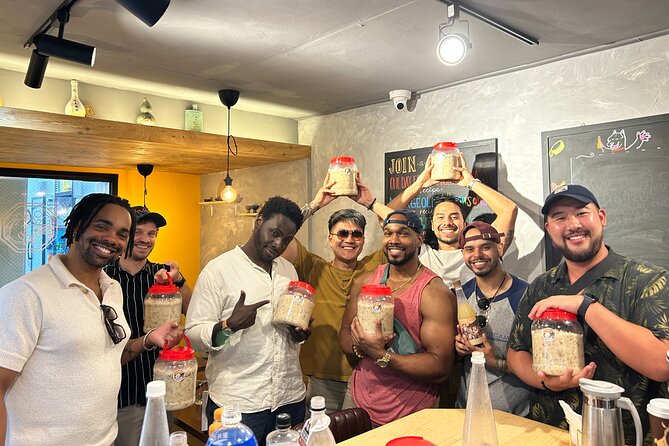
Makgeolli is not just a drink you order with Korean barbecue. At Baekusaeng Makgeolli, you learn how rice, water, nuruk, yeast, time, and touch become Korea’s cloudy traditional brew. Instructor Joe leads the class in English, explains the Korean terms, and lets you make a batch of your own.
I like two things right away: the tasting flight makes the differences clear, from sweetness and acidity to texture, and the hands-on brewing has a real payoff. You take home about 1.2 liters of makgeolli to continue fermenting, rather than leaving with only a pleasant memory and a souvenir glass.
The main consideration is that this is a working class, not simply a tasting session. You will be handling ingredients and following fermentation instructions, and your batch still needs attention after you leave. The class also includes plenty of samples, so pace yourself.
Key points to know before booking
- Taste several makgeolli styles: Compare aroma, sweetness, acidity, and texture instead of treating all makgeolli as the same drink.
- Learn with Joe: The instructor teaches in clear English and has used Korean terms, written explanations, and translation help when needed.
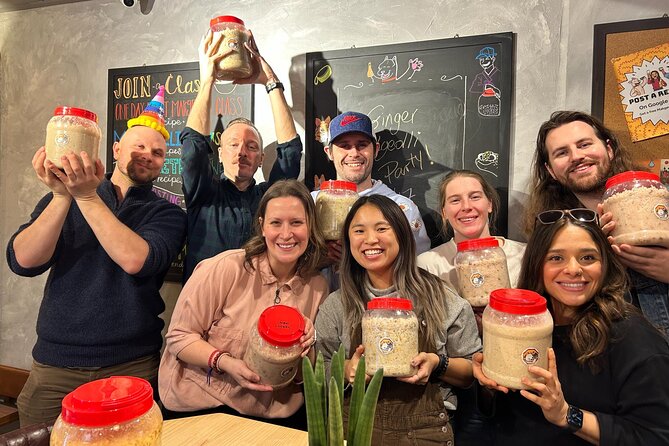
- Make approximately 1.2 liters: Your own batch goes home with you for the next stage of fermentation.
- Small group setting: The class accepts no more than 15 people, with some sessions feeling especially intimate.
- Plan for about two hours: The time covers tasting, instruction, preparation, and final packaging.
- Meet in Ahyeon-dong: The class starts and ends at 346-35 Ahyeon-dong, Mapo-gu, Seoul.
Why this Seoul class is more than a makgeolli tasting
Makgeolli is often introduced to visitors as Korea’s milky rice wine. That description is useful, but incomplete. The drink can be sweet, tart, dry, creamy, fizzy, smooth, or sharply fermented, depending on the ingredients and the way it is made.
This class gives you the tools to notice those differences. Joe explains how aroma, sweetness, acidity, and texture work together, then lets you taste examples that show the range. That matters because a supermarket bottle and a carefully made craft makgeolli may share a name while offering very different drinking experiences.
I like this approach. You are not asked to accept that makgeolli is important simply because it is traditional. You taste the reasons for yourself.
Baekusaeng Makgeolli also treats the class as a starting point. The aim is not just to show you the process for an afternoon. You learn enough about ingredients, fermentation, and conditioning to keep experimenting at home. For anyone who likes cooking, brewing, or food science, that makes the experience more useful than a standard cultural demonstration.
More Soju and Makgeolli Tastings in Seoul:
- Soju Tasting at Distillery – story of 3 pigs
★ 5.0 · 166 reviews - Traditional Soju Class and Makgeolli Tasting in Seoul
★ 5.0 · 35 reviews - Makgeolli Brewing Class
★ 5.0 · 21 reviews
Starting in a small Seoul brewing space
The meeting point is 346-35 Ahyeon-dong in Seoul’s Mapo-gu. The class takes place in a small, cozy makgeolli space that has been described as part bar and part microbrewery. It is not a large production facility with polished visitor walkways. The compact setting is part of the appeal, but it also means you should expect a close, practical atmosphere rather than lots of room.
The experience starts and ends at this same location. It is near public transportation, although the exact station and route are not provided, so check the address before setting out. One useful tip: give yourself extra time to find the shop. Joe has helped people who got turned around, but arriving with the address ready on your phone will make the beginning calmer.
The maximum group size is 15. That is small enough for a hands-on lesson, though the feel can change depending on attendance. A full group should be more social, while a quiet day may offer more direct time with Joe. One person even received an almost private session when no one else had booked, though you should not count on that happening.
The tasting comes first
The tasting portion is not an afterthought. It gives you a working vocabulary for the rest of the class.
Joe introduces different kinds of makgeolli and asks you to notice how each one behaves. You will consider the smell first, then sweetness, acidity, mouthfeel, and texture. The samples help explain why two bottles can look similar but taste quite different.
This is also where the class connects drink to method. Traditional and modern brewing choices affect the final result, and the tasting gives you something concrete to compare. Instead of hearing a long list of technical terms, you can connect those terms to what is in your glass.
The amount of makgeolli available for tasting is generous. That is a pleasant feature, especially if you want to compare several styles, but it calls for common sense. The class lasts only around two hours, and the samples add up. Eat beforehand or keep your pace steady if you want to remember the brewing lesson as clearly as the drinks.
The tasting is especially useful for people who have only tried sweet commercial makgeolli in a restaurant or supermarket. You may find that craft versions have more acidity, less sweetness, or a fuller texture. The class helps you understand those differences without turning the lesson into a lecture.
Learning rice, nuruk, yeast, and fermentation
After tasting, the class moves into the brewing process. You learn about the main ingredients and tools used in traditional and modern makgeolli making. The central idea is fermentation, and Joe explains the role of yeast and nuruk in turning a rice mixture into alcohol.
Nuruk is a traditional Korean fermentation starter. It brings the process closer to the cultural roots of makgeolli than a simplified shortcut would. The class focuses on real ingredients and practical methods, so you gain a clearer sense of what is happening inside the vessel.
You also learn about filtering and conditioning. These steps affect the drink’s texture and final character. Filtering changes how much solids remain in the finished makgeolli, while conditioning gives fermentation time to continue and flavors time to develop.
I appreciate that the class does not pretend brewing ends when the ingredients are mixed. The take-home portion makes that clear. Your work continues after the class, and the final drink depends on how you handle the next stage.
The lesson is designed for people who want to brew again. You are not expected to become an expert in one afternoon, but you should leave with a foundation for future batches. The process invites adjustment and experimentation, which is useful if you like developing your own style rather than following a single fixed recipe forever.
A few more Seoul trips worth comparing
- Seoul: Gyeongbok Palace, Bukchon Village, and Gwangjang Tour
★ 4.9 · 2,321 reviews - Full Day Tour In The Soop BTS Ver in PyeongChang Filming Location
★ 5.0 · 1,709 reviews - Best Seoul City Tour (Gyeongbokgung Palace,Insadong,Namsan Tower)
★ 5.0 · 1,647 reviews - Small-Group Royal Palace and Seoul City Tour (hotel pick-up)
★ 5.0 · 1,474 reviews
Making your own batch by hand
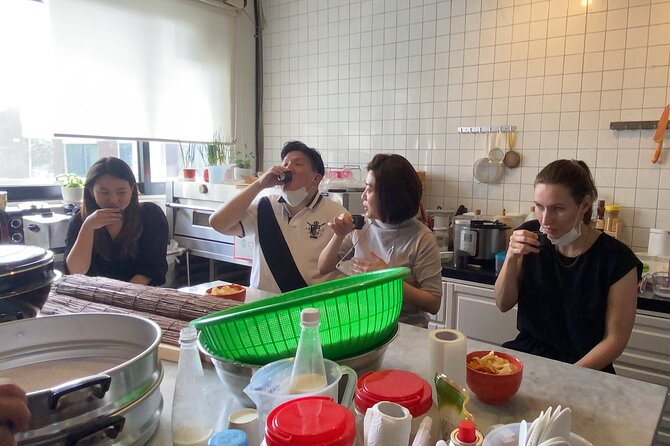
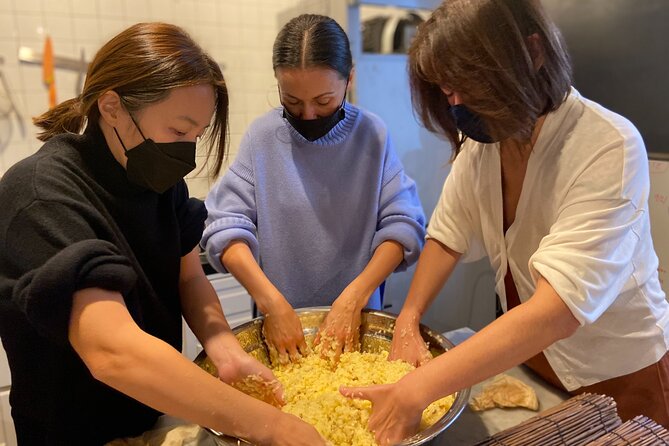
The most memorable part is the physical work. You do not simply watch Joe prepare a sample while standing safely at the edge of the room. You help make the batch, handle the ingredients, and follow the steps needed to prepare the makgeolli for fermentation.
The class has a practical rhythm. Joe explains a stage, you work through it, and questions can be answered as they come up. This format suits people who learn by doing. It is also friendly to people who are not fluent in English, since the process is visual and hands-on. One Japanese-speaking participant found that smiles, gestures, and translation support were enough to follow along.
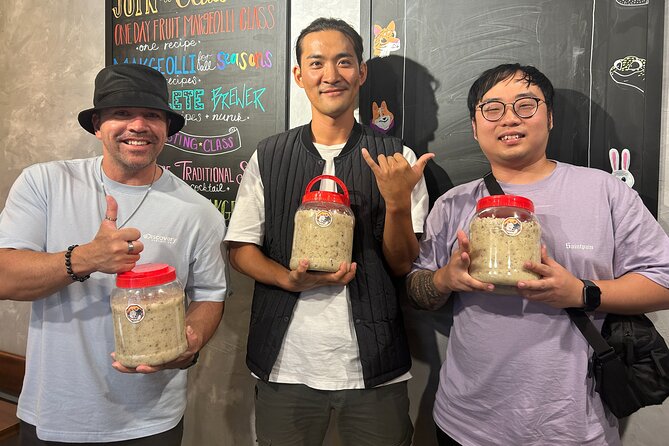
At the end, the unfinished makgeolli is placed in a large plastic bottle, similar in size to a container used for homemade fruit liquor. You take approximately 1.2 liters with you. That is a substantial amount for a class activity, not just a tiny sample.
The bottle is not the finished product in the sense of something you open immediately and forget. You continue the fermentation process yourself. Joe explains what to do next, giving you a reason to pay attention during the technical parts of the class.
This is an important difference between the experience and a typical cultural activity. You leave with a project. It may also be a mild drawback if your Seoul schedule is packed or you are flying home soon. You need to think about how you will handle the batch after the class, especially if your journey continues for several days.
What makes Joe a strong guide
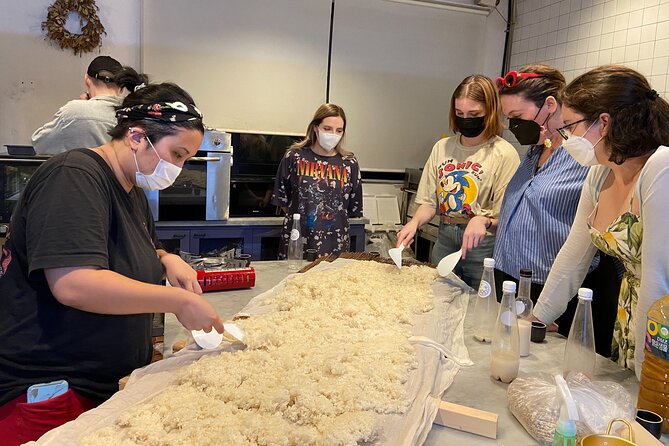
Joe is the key to the experience. He teaches in native-level English and answers questions in a patient, direct way. He has also used Korean terms on a whiteboard and shown Japanese translations through Google Translate when needed.
That flexibility matters because makgeolli has its own vocabulary. Words such as nuruk, fermentation, filtering, and conditioning can become confusing when you are also tasting drinks and working with ingredients. Joe’s habit of explaining terms in more than one way helps keep the class accessible.
His communication before and after the class is another practical advantage. He has responded quickly to date-change requests and helped people find the shop when they were lost. Those details may sound small, but they reduce stress in an unfamiliar part of Seoul.
The teaching style is friendly without being empty. You get history and cultural context, but the class keeps moving toward actual brewing. That balance works well for people who want to understand Korean food culture through a real craft rather than a passive talk.
Price, time, and the real value
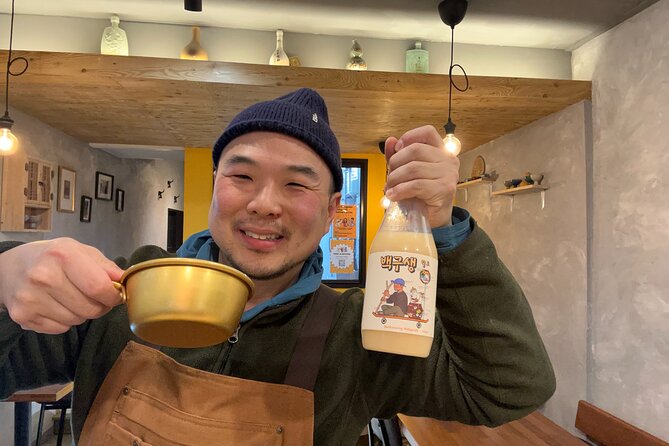
The price is $70.70 per person for roughly two hours. That is not the cheapest way to spend an afternoon in Seoul, especially if you only want a single drink. The value depends on how much use you make of the teaching.
You receive several tastings, instruction on traditional and modern makgeolli, hands-on preparation, and approximately 1.2 liters to continue fermenting at home. You are paying for a class and a brewing project, not just alcohol.
I think the price makes the most sense for three types of people:
- You already enjoy makgeolli and want to understand how it is made.
- You enjoy cooking, fermentation, or home brewing.
- You want a cultural activity that gives you something practical to continue after your Seoul visit.
If you are looking for a quick introduction to Korean alcohol, a bar visit may cost less and require less time. If you want personal instruction and a batch of your own, this class offers more substance.
The average booking time is 23 days ahead, which suggests that planning early is sensible. The group limit is 15, so popular dates may not remain open. The experience offers a mobile ticket, and confirmation is provided at booking.
Who will enjoy this experience most
I would choose this class for curious drinkers, food-focused visitors, couples, solo visitors, and anyone who likes making things with their hands. It also works well for people who have already tried makgeolli but have only encountered one or two commercial styles.
Solo participation should not be a concern. Joe’s teaching style is welcoming, and the small group setup gives you a natural chance to meet other people. Several sessions have brought together couples and mixed international groups, creating a social afternoon without making conversation the main purpose.
You do not need to be a brewer before arriving. The class is designed to give you a foundation. Still, you should be ready to pay attention, handle ingredients, and continue the process later.
I would be more cautious about booking it for someone who dislikes fermented flavors, cannot drink alcohol, or wants a polished sightseeing activity with no follow-up task. This is a class first, and a tasting second.
Booking details worth keeping in mind
The experience is offered by Baekusaeng Makgeolli and takes place in Seoul. It lasts approximately two hours, begins and ends at the Ahyeon-dong meeting point, and allows a maximum of 15 people.
Service animals are allowed, and the location is near public transportation. The available information does not specify the exact transit stop, so use the full street address when planning your route.
Free cancellation is available if you cancel at least 24 hours before the start time. Cancellations made less than 24 hours before the start time are not refunded, and changes inside that window are not accepted. Cut-off times follow Seoul local time.
Should you book the Baekusaeng Makgeolli class?
Book it if you want to understand makgeolli through your senses and your hands. The tasting flight shows how broad the drink can be, Joe gives clear instruction, and the 1.2-liter batch gives you a practical link to the experience after you leave Seoul.
Skip it if you only want a quick drink or if you cannot manage a fermentation project after the class. For everyone else, this is a focused, authentic way to spend two hours, with enough technique and cultural context to make Korean rice wine feel like a craft rather than a menu item.
FAQ
Where does the makgeolli class take place?
The class begins at 346-35 Ahyeon-dong, Mapo-gu, Seoul, South Korea.
How long does the experience last?
The class lasts approximately two hours.
How much does the class cost?
The listed price is $70.70 per person.
What does the class include?
You taste selected makgeolli, learn about ingredients and tools, study fermentation, and take part in making your own batch.
How much makgeolli can I take home?
You take home approximately 1.2 liters of makgeolli to continue fermenting.
Do I finish the makgeolli during the class?
No. The class prepares your batch for the next stage, and you continue the fermentation process yourself after leaving.
How many people can join the class?
The maximum group size is 15 people.
Is the class taught in English?
Yes. Joe teaches in English and has also used Korean terms on a whiteboard and translation support when needed.
Is the location near public transportation?
Yes. The meeting point is near public transportation, though the exact station is not specified.
Can I cancel for a full refund?
Yes, if you cancel at least 24 hours before the experience start time. Cancellations or changes made less than 24 hours beforehand are not accepted for a refund.
Newest Seoul trips on the site
- Seoul : Must-see & Hidden Gems Private Walking Tour★ 4.9 · 8 reviews
- Seoul: Lotte World Aquarium Ticket★ 4.5 · 10 reviews
- Seoul: Max Out Must Visit City Highlights Panoramic Day Tour★ 5.0 · 7 reviews
- Seoul: K-Fashion Shopping Tour with a Professional Stylist★ 5.0 · 5 reviews
- From Seoul: Korea Spring Cherry Blossom Day Tour★ 4.8 · 6 reviews
- Seoul: Guided Street Food Tour at Namdaemun Market★ 5.0 · 10 reviews
- Seoul: Jisan Forest Winter Ski Day Tour with Basic Lesson★ 4.4 · 6 reviews
- Jisan Forest Resort: Ski Full-Day Tour or Shuttle from Seoul★ 5.0 · 4 reviews
Seoul Tours, compared.
Gyeongbok Palace, Bukchon Village, and Gwangjang Tour
Read our review →
Full Day Tour In The Soop BTS Ver in PyeongChang Filming Location
Read our review →
Best Seoul City Tour (Gyeongbokgung Palace,Insadong,Namsan Tower)
Read our review →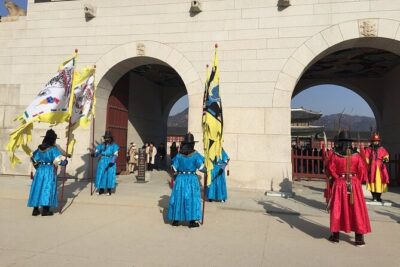
Small-Group Royal Palace and Seoul City Tour (hotel pick-up)
Read our review →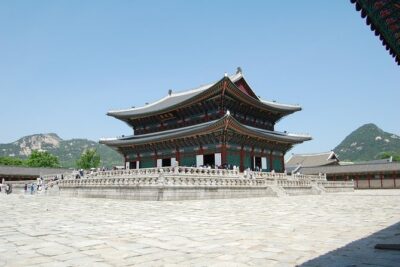
Seoul City Sightseeing Tour Including Gyeongbokgung Palace, N Seoul Tower, and Namsangol Hanok Village
Read our review →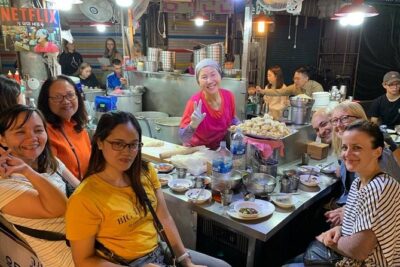
Gyeongbok Palace, Bukchon Village, and Gwangjang Tour
Read our review →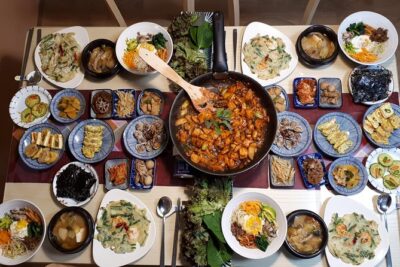
Local Home Korean Cooking Class & Market Adventure in Seoul
Read our review →Browse the lists this tour appears in